https://www.theguardian.com/us-news/2026/jan/13/supreme-court-case-trans-athletes
Skip to main contentSkip to navigationSkip to navigation
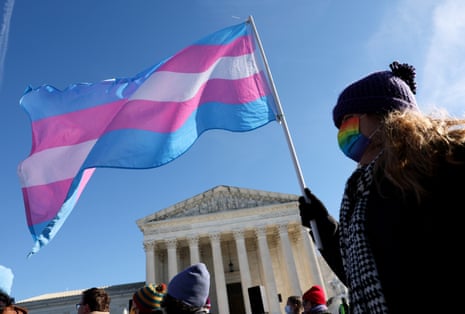
US supreme court to hear trans athletes cases that could erode key protections
A ruling against two athletes in West Virginia and Idaho could have far-reaching implications for civil rights
Tue 13 Jan 2026 06.00 EST
The US supreme court is considering the rights of transgender youth athletes on Tuesday in a major hearing on state laws banning trans girls from girls sports teams.
Oral arguments center on two cases of trans students who sued over the Republican-backed laws in Idaho and West Virginia prohibiting them from participating in girls athletic programs. The cases could have far-reaching implications for civil rights, with a ruling against the athletes potentially eroding a range of protections for trans youth and LGBTQ+ people more broadly.
In West Virginia v BPJ, 15-year-old Becky Pepper-Jackson challenged the state’s 2021 law banning her from track. A federal court blocked the ban, but the state appealed to the supreme court.
In the second case, Little v Hecox, Lindsay Hecox, a trans college student pursuing track, sued to overturn Idaho’s first-in-the-nation 2020 law categorically banning trans women and girls from women’s sports teams. She has since pushed to have the case dismissed, saying she is not doing sports in college and doesn’t want further harassment, but the supreme court is still hearing the matter.
Twenty-seven states have now restricted trans youth access to school sports – most with laws targeting trans girls, but some applying to all trans youth. Defenders of the bans argue they are promoting fairness and safety in women’s sports, while trans rights advocates counter the laws are cruel and discriminatory, and that there’s no credible evidence inclusive sports policies have endangered cis girls and women.
The laws are aimed at excluding a tiny fraction of the population, with GOP legislators at times unable to identify any trans girls playing sports in their states, and the National Collegiate Athletic Association (NCAA) president testifying he was aware of fewer than 10 trans college athletes.
Lawyers for the trans students, including the American Civil Liberties Union, argue the bans violate the equal protection clause of the constitution. In the West Virginia case, attorneys argue the ban also violates Title IX, a federal law prohibiting sex discrimination in schools. The states are supported by the Alliance Defending Freedom, a Christian legal group behind major anti-LGBTQ+ cases and anti-abortion efforts.
The court will consider whether the laws are discriminatory and merit “heightened scrutiny”, a rigorous review where the government has a higher burden to justify the bans. If the court’s conservative supermajority decides the bans don’t warrant heightened scrutiny, it could set a precedent that anti-trans laws are “presumptively constitutional”, the ACLU has warned.
If the court rules trans people are not covered by Title IX, it could boost policies meant to ban trans students’ bathroom access and ability to use chosen pronouns and names, and leave LGBTQ+ youth with fewer protections against harassment, bullying and discrimination.
Pepper-Jackson said in a statement last week that she plays sports to “make friends, have fun, and challenge myself through practice and teamwork”, adding: “All I’ve ever wanted was the same opportunities as my peers. But in 2021, politicians in my state passed a law banning me – the only transgender student athlete in the entire state – from playing as who I really am. This is unfair to me and every transgender kid who just wants the freedom to be themselves.”
We know. You’ve seen these notes to support us – 39 times so far this year – but you haven’t responded. It’s a little awkward for both of us. But wait:
In our experience, it’s not a lack of enthusiasm that stops frequent Guardian readers like you from supporting our journalism – it’s how long you imagine it’s going to take.
So we timed it, and on average it takes just 37 seconds. (Yes, you need your credit card, but it’s over there in your wallet – or you might already have the details saved on this device?)
But did you also know that, as a thank you for your support, you get access to exclusive extras (including seeing far fewer fundraising messages like this one)?
If you can, please support us on a monthly basis. It takes less than a minute to set up, and you can rest assured that you’re making a big impact every single month in support of fearless, independent journalism. Thank you.

Related stories




More from News








Most viewed

No comments:
Post a Comment