Showing posts with label bad hombres. Show all posts

Saturday, August 8, 2026

Texas’s DNA Doesn’t Run As Red as the Right Wants You to Think

Texas’s DNA Doesn’t Run As Red as the Right Wants You to Think

https://www.thenation.com/article/politics/texas-conservative-radical-populism-david-griscom-cowboys/ 

Culture / StudentNation / August 7, 2026

Texas’s DNA Doesn’t Run As Red as the Right Wants You to Think

David Griscom’s new book The Myth of Red Texas undoes the idea of Texas as a place with conservatism inherent to its political bloodline.
Lajward Zahra
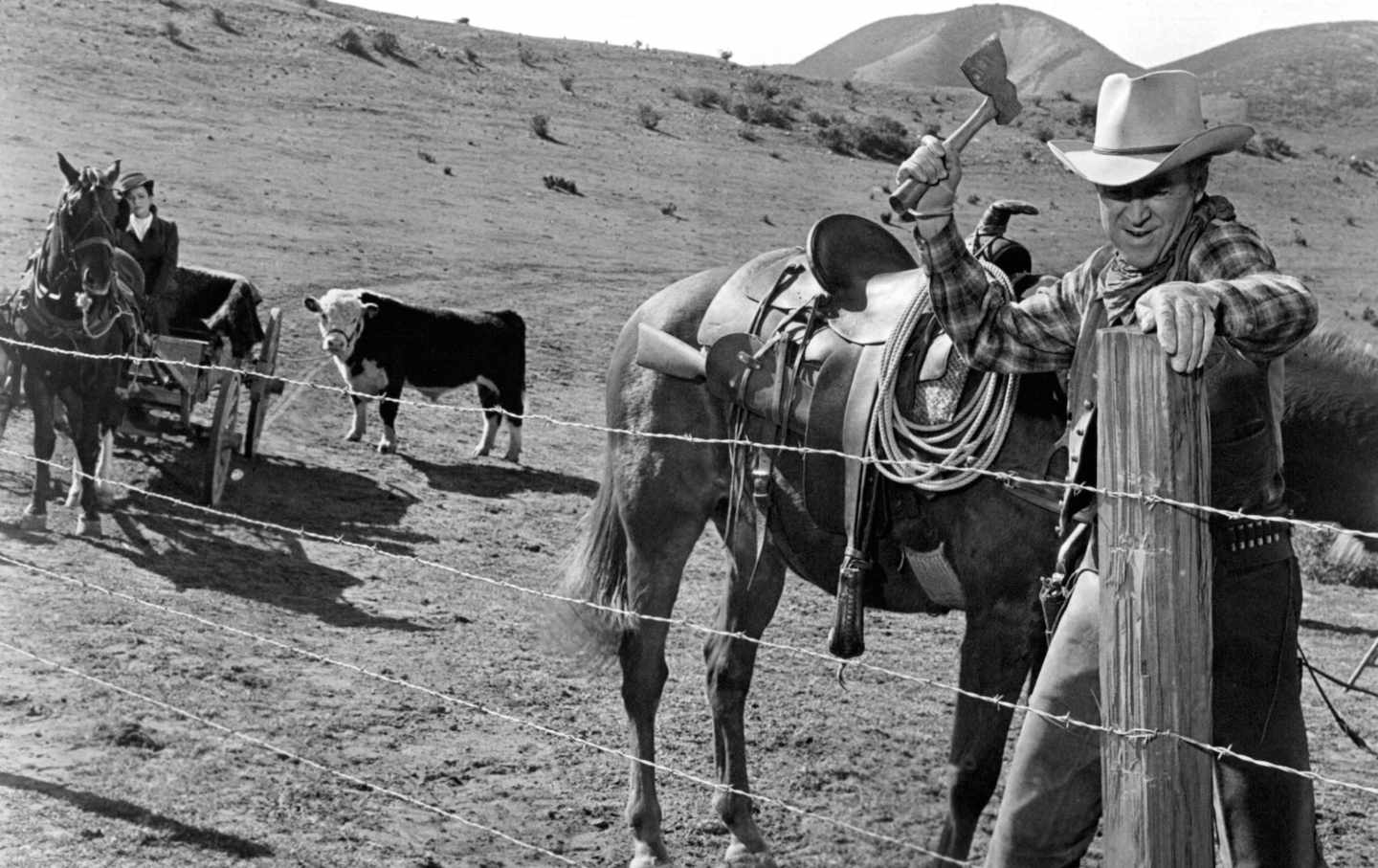
A scene from the film "The Rare Breed" showing James Stewart cutting a barbed wire fence in 1880s Texas.

A scene from the film The Rare Breed showing James Stewart cutting a barbed-wire fence in 1880s Texas.

(Universal Pictures / Getty Images)

David Griscom is a sixth-generation Texan, political commentator, and host of The Jacobin Show, a weekly political analysis broadcast. In his new book, The Myth of Red Texas: Cowboys, Populism, and Class War in the Radical South, he undoes the idea of Texas as a place with conservatism inherent to its political bloodline.

I have lived in Texas for almost my entire life, and the El Pasoans and Houstonians I have known do not easily surrender to the conservative oil-and-cattle caricature of Texas.

Griscom breaks past exactly that caricature. The book recovers a Texas whose radical past speaks directly to what still feels possible here: one filled with striking cowboys, tenant farmers, fence cutters, socialists, and Populists fighting landowners, debt, and corporate power. I sat down with him to talk about that political inheritance and what it means to remember it now, as Texas heads into a statewide Senate race in which James Talarico is trying to prove that politics for working people can actually win here.

—Lajward Zahra


Lajward Zahra: One of the first histories you return to is the Fence Cutting Wars of the 1880s, when landless cattlemen cut through the barbed-wire fences that large ranchers erected to control open-range pastures. What made you want to begin with these disputes? Were you imagining the book mainly for Texans, as a way of offering them a different political legacy, or also for the rest of the country?

David Griscom: The book really started when I began researching the story of the fence cutters a few years ago for Jacobin. The way that story is often presented in Texas history is as a story of how law and order came to Texas. But if you are a sixth-generation Texan, you are much more likely to be related to a fence cutter than to the Texas Rangers who put down that revolt.

That is really where the idea started. Both with this book and with my other work on Left Reckoning, I have wanted to encourage people to look into the radical history of the United States. A lot of the other work I have done has been around places like Louisiana and Arkansas, and they also have these very rich traditions that I think are either purposefully hidden or just understudied.

I think it is a two-way street. The right has a very active political movement trying to deny and discredit these moments. I think that on the left, while we are very good at debunking the myths of the right, we sometimes forget that it is also important to root ourselves in a tradition of resistance to dominant power.

LZ: In 1883, cowboys in the Texas Panhandle went on strike against large ranches, demanding higher wages at a moment when corporate owners were tightening control over cattle work. The usual version of the story is that the cowboys lost, but you write that the strike still set a new wage standard and showed that solidarity was there from the beginning of Texas’s cattle economy. What changes when we remember cowboys not as symbols of rugged individualism or as figures placed next to the Rangers, but as workers with shared material interests who organized against cattle barons?

The Nation Weekly

Fridays. A weekly digest of the best of our coverage.
By signing up, you confirm that you are over the age of 16 and agree to receive occasional promotional offers for programs that support The Nation’s journalism. You may unsubscribe or adjust your preferences at any time. You can read our Privacy Policy here.

DG: The history of the cowboy strike is really fascinating. Every year around May Day, some newspaper writer will write a quick essay about the cowboy strike, and the story usually goes, “Oh, this is interesting, but the cowboys all got drunk in the saloon and lost the strike.”

I am indebted to Mark Lause for [debunking this narrative] in his book on the cowboy strike for Verso. It is fascinating to go back and see the cliché in action—how the victor writes history. Almost all the records of the strike are taken either directly from spokespeople for the major ranches or from the memoirs of the daughters or grandsons of ranchers. A certain version of the story was presented, and that was the version a lot of Texas historians in the first half of the 20th century were looking at. It became one of those things that gets repeated enough that most people do not go back and look at the original government documents or the sourcing.

As I write in the book, the strike not only happened, but was incredibly successful because of the strategic and deeply wise decision by the cowboys to strike strategically when they were needed for the spring roundup.

I think this myth is especially important for them to uphold. I respond in the book to a writer who basically denies the history of the cowboy strike through a very cultural lens, as if cowboys are individualistic and the West is where solidarity goes to die. But if you look at the actual work of cowboying, it was very communal. These workers understood that they were part of a class, and that they were on the opposite side of the big landowners.

It is important to reclaim that history because the right is trying to define Texans and Texan-ness in a very particular way. We need our own version, but not only as a debunking of the right. We also need to be able to say that we have cowboys and workers throughout our history who we can look toward as models.

LZ: Populism is in the title of, and woven throughout, the book. Today, the term “populist” is often used as a pejorative, denoting the crude, reactionary, or anti-intellectual. What do we overlook when we talk about rural populism with condescension, rather than as a tradition of class consciousness and self-respect? And how does that complicate the way rural populism is discussed today, when the word is often treated as almost synonymous with Donald Trump and right-wing grievance?

DG: At the end of the day, I think it is a fight for dignity. “Populism” is probably one of the most abused terms in American politics today. It usually means a rhetorical style of us-versus-them. And do not get me wrong, the Populists certainly used that kind of style. But when they invoked “the people,” everybody knew exactly who the people were.

One thing that has been lost in the historical record is that when people hear “populism,” they think of people using fiery, inspirational language with a clear enemy. But they also had very specific plans for how they were going to improve people’s lives.

This idea that populism is just about rallying around a demagogue is something that actually existing Texas populism disproves.  After Thomas Lewis Nugent, the great leader of the Texas Populist movement, died, the movement achieved some of its most meaningful results under a completely different leader. Usually, movements like that struggle with any transfer of power or leadership. But Texas populism did something different.

That is because this was not a top-down movement. It was very much grassroots. It came out of the Southern Farmers Alliance, labor, and all these economic organizations of everyday people. That was the source of American populism, and of Texas populism in particular.

I think there is a lot to learn from it. It discredits the idea of populism as a top-down movement, and it also helps us think about how to build something like that again today.

Rural America is suffering. If we can look at the major crises people are experiencing in rural America, organize people around those economic conditions, and then bring that into politics, that is very different from making a political argument after the fact about how supporting this or that politician will improve their lives.

What made populism stick was that everyone in the community was participating in it. They were investigating the problems themselves, so when they made political demands, they understood that those demands were in their own best interest. That is very different from the top-down approaches, like you see with Donald Trump, that people mislabel as populist today.

LZ: If Texas populism was rooted in farmers’ alliances, labor organizations, radical newspapers, traveling lecturers, and communities studying their own conditions, what happened to it? How did a movement with such a robust social base get buried so deeply that Texans are surprised to hear this history at all?

DG: I think a few things happened. The Democratic Party made itself hostile to the Populist movement, but the Populists’ power came from the fact that they had an organized working-class movement of farmers and laborers behind them. When they threatened to create a schism and leave for another political movement, they actually had a social base as leverage. We do not have that in the same way today.

Race was also central. There were real efforts to bring Black Texans into the Populist movement, and Black labor leaders helped accelerate its success. That threatened the ruling class in Texas. In Grimes County, a white Populist sheriff appointed Black deputies, provoking white supremacists in the community to organize a “white man’s union” to take power back. More broadly, the implementation of Jim Crow and the restriction of the vote in Texas, which also targeted poor whites, was a direct response to the success of the Populists.

That is important to remember because these movements were not put down because they were unpopular or because people thought they were not Texan. They were met with white supremacist backlash, voter suppression, violence, and electoral fraud. Later, the right in Texas built a whole project around presenting a very specific view of who Texans are.

LZ: I want to go back to what you call the “California hypothesis,” the idea that Texas’s problems can be blamed on liberal newcomers from California, who supposedly bring Democratic politics with them and threaten the state’s conservative identity. You connect that story to the long Democratic electoral drought in Texas. But one of the paradoxes you point to is that many Republican voters in Texas are themselves recent arrivals, while native-born Texans are often less uniformly conservative than the myth suggests.

What does that reveal about Texas politics now, and about the way ideas of who counts as “really Texan” get used politically?

DG: I come from Austin, and you will see bumper stickers that say things like “Don’t LA My Austin” or “Don’t California My Texas.” I have seen them in Lockhart, too, where they say, “Don’t Austin My Lockhart.”

There is a lot of anxiety in Texas about what is happening to the culture of the state. That mixes with the fact that Texas is becoming more unaffordable. People are having a harder and harder time staying in their communities. Beloved businesses, restaurants, and activities are closing. I think that is a direct result of Republican mismanagement of the state, which has been a boon for the wealthiest Texans and very difficult for everyday Texans. Texas continues to lead the country in some of the most humiliating and devastating poverty statistics, particularly for young people and women.

The California hypothesis is a perfect way for Republicans to do what they are good at, which is culture war. They are able to speak to that anxiety: “Texas is changing, and I feel like I cannot afford it.” But instead of pointing the finger at Republican economic policies, they turn it into a cultural argument. They say Californians have come in and pushed all of this.

But the idea that Californians are moving to Texas and becoming Democratic voters is not accurate to the data we have. The original Republican takeover of Texas was built, in part, on recruiting Republicans who were moving here because of corporate relocation. Today, Texas is seeing a massive influx of people from outside the state who often move to cities like Austin, Dallas, or Houston, which are run by Democrats, but many of them are Republican voters.

In 2018, if the vote had been restricted to native-born Texans, Beto O’Rourke would have won the Senate seat. These new voters are very important to the Republican Party.

That is another part of the California hypothesis that is interesting to me. For people coming here who do not have deep roots in the state, the best way to become a “true Texan” is to vote for the Republican Party. If Texas means conservative politics, then you can become Texan by supporting conservative politics. It works on many levels for them, and I would argue that it is fairly effective.

You can see this in the way people are surprised by this book and this history. That surprise is the product of a long right-wing project to present a very specific view of Texas. One quick example is Dan Patrick, who is from Maryland and is now the lieutenant governor of one of the largest economies in the world. He regularly attacks the Alamo Museum for its programming, to the point of getting leaders at the Alamo fired over museum programming. It is amazing to watch someone in that position get so worked up over whether the Alamo mentions Native Americans.

Lajward Zahra

Lajward Zahra is a junior at Rice University. Her work can be found in Teen Vogue, The Nation, Business Insider, and The American Prospect, among others.

More from The Nation

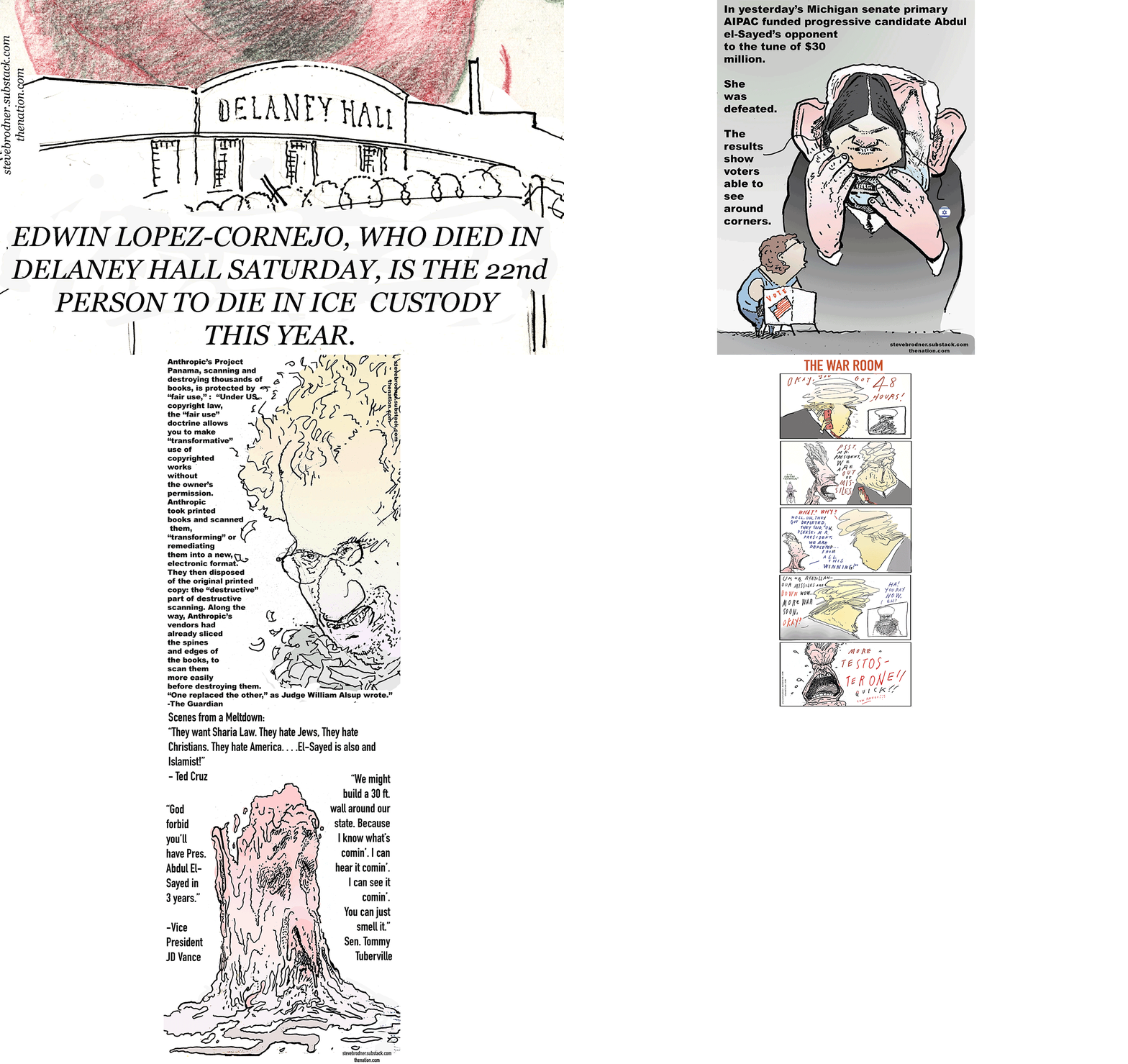
El-Sayed Wins

El-Sayed Wins El-Sayed Wins

 The big melt.

Steve Brodner

Children at a Head Start program at the Kedren Community Health Center in Los Angeles.

Trump’s Deregulation of Head Start Would Lead to Bigger Class Sizes, Lower Quality Trump’s Deregulation of Head Start Would Lead to Bigger Class Sizes, Lower Quality

The administration has now made public a proposed rule to eliminate critical standards for services in the free preschool program.

Bryce Covert

No Hospital Workers for You

No Hospital Workers for You No Hospital Workers for You

Have a nice day.

OppArt / Bill Bramhall

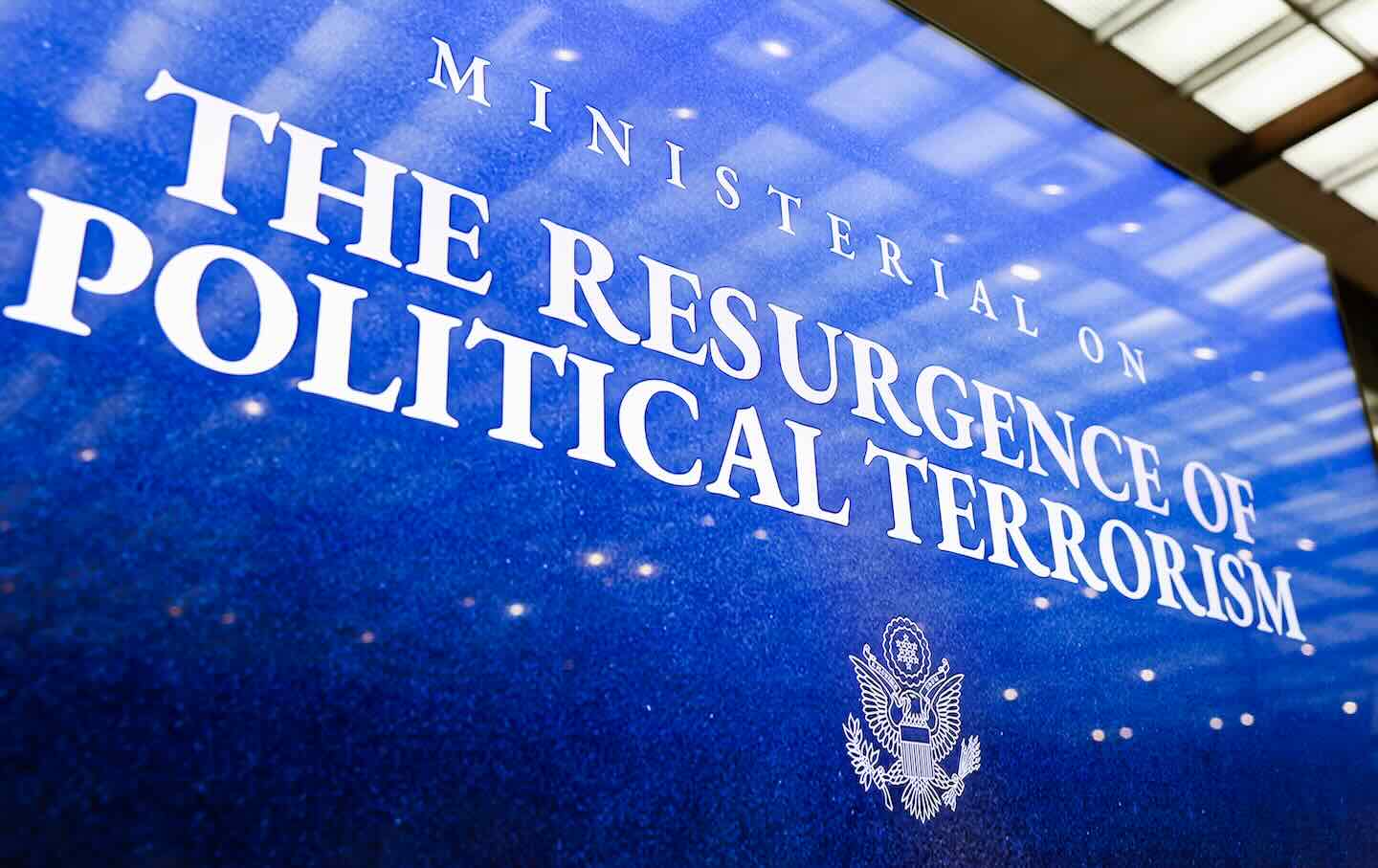
People enter before US Secretary of State Marco Rubio delivers opening remarks during the Ministerial on the Resurgence of Political Terrorism at the State Department on July 16, 2026, in Washington, DC.

The Right-Wing Terrorism Miller and Rubio Conveniently Neglected to Mention at Their DC Summit The Right-Wing Terrorism Miller and Rubio Conveniently Neglected to Mention at Their DC Summit

At their July event on “The Resurgence of Political Terrorism,” the secretary of state and the White House deputy chief of staff selectively presented information to malign the le...
Sasha Abramsky

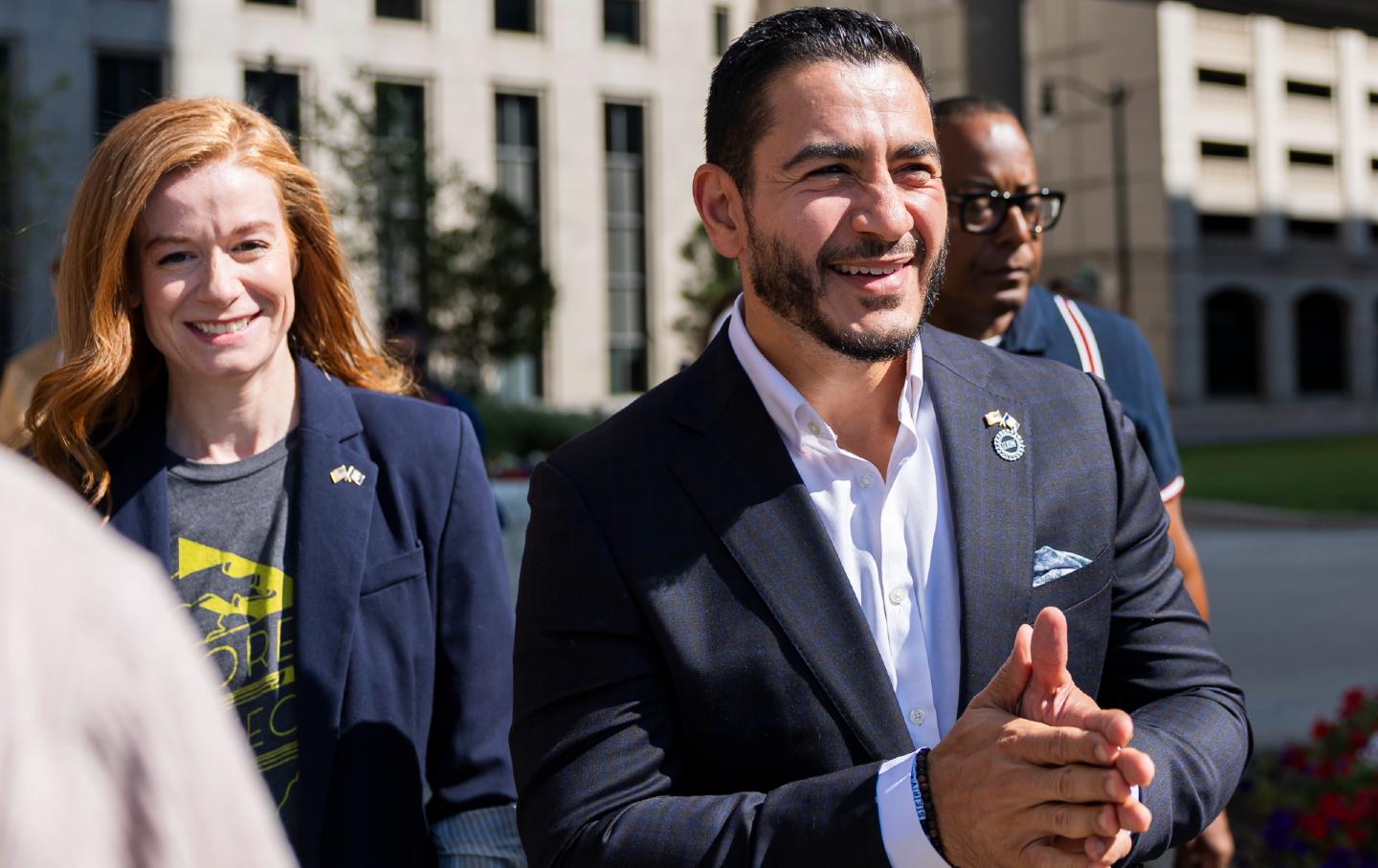
Democratic Senate primary winner Abdul El-Sayed and Michigan State Senator Mallory McMorrow on August 5, 2026, in Detroit, Michigan

Will El-Sayed’s Centrist Opponents “Vote Blue No Matter Who”? Will El-Sayed’s Centrist Opponents “Vote Blue No Matter Who”?

It’s time for the Democratic establishment to take its own medicine.
Aaron Regunberg

America Gets to Choose

America Gets to Choose America Gets to Choose

The Trump bar is so low it’s hard to decide.

OppArt / Michael James Schneider


Sunday, August 2, 2026

Rep. Max Miller denounced by Sen. Bernie Moreno, his former father-in-law

Rep. Max Miller denounced by Sen. Bernie Moreno, his former father-in-law 

https://www.politico.com/news/2026/08/02/ohio-rep-max-miller-stay-in-race-01021642 

Rep. Max Miller denounced by Sen. Bernie Moreno, his former father-in-law

“I believe Max Miller needs to seek professional help to end the clear pattern of abuse he has left in his wake,” the senator said.

By Mia McCarthy

08/02/2026 11:09 AM EDT|Updated: 08/02/2026 01:01 PM EDT

Sen. Bernie Moreno, the father of Emily Moreno who made allegations of domestic and child abuse to her ex-husband Rep. Max Miller, denounced the Ohio Republican for the first time Sunday, calling for him to exit the House.

“‘He should not serve in the House of Representatives,” the Republican Ohio senator said of Miller in a post on X. “I believe Max Miller needs to seek professional help to end the clear pattern of abuse he has left in his wake. I believe he should not be free to continue endangering others until he does.”

Miller quickly responded on X shortly after, calling the senator’s comments “political.”

“If my daughter said the same thing to me, I personally wouldn’t wait two years before holding him accountable,” Miller said in a response on X. “You know this isn’t true and the only reason you are speaking out now is to hide from your own media circus.”

Bernie Moreno’s statement comes after Miller made a public video on Sunday morning, attempting to clear his name from allegations of domestic and child abuse that he denies. He argued that his ex-wife, Emily Moreno, faced serious mental health challenges and posted a dropbox with documents he said would be further evidence to defend him.

“Just want to be clear: no court, no agency has ever substantiated any allegation of abuse against me. No criminal charge has ever been filed against me,” Miller said on a livestream on Sunday. “Every single one of these allegations were already investigated, and I cooperated fully every single time because I had nothing to hide and I have nothing to hide now.”

In a statement, Emily Moreno’s spokesperson Stefan Mychajliw said it was “shameful” for Miller “to go on a bizarre and lie-filled rant about his ex-wife to desperately try to save his political career.”

“There is a documented trove of evidence that Miller has a history of violent and dangerous behavior and no amount of victim shaming will change that,” Mychajliw said in a statement on X. “It is despicable and abhorrent that Miller lied on an unhinged and humiliating video for their daughter to watch one day.”

He added, “No loving parent would have ever used their daughter as a PR pawn to save their own political career. Miller can lie and spin on X, but he cannot do so under oath in a court of law. We are confident that justice will prevail in court.”

New details on allegations that Miller poured hot water on Emily Moreno, held a gun to her head and broke his daughter’s collarbone have drawn attention to his Ohio House race.

Miller attributed the accusation of pouring hot water on his ex-wife to “horseplay in our kitchen,” when he sprayed water from a sprayer attached to the sink. He also pointed to past comments from Emily Moreno that Miller had never harmed their daughter and that she had offered to cook empanadas and go to the playground with Miller after the alleged abuse.

“My former wife would not have been offering to cook me dinner and inviting me to playgrounds,” Miller said. “And I certainly would not have joint custody of my daughter.”

Sunday’s statement is the first from Bernie Moreno directly weighing in on Miller ahead of Wednesday’s deadline to put someone else on the ballot. Miller has made no indication he’ll drop out of the race, and Democrats now see the district as a potential flip opportunity.

Republicans, meanwhile, have largely been silent, and previously, Bernie Moreno himself had made few comments on the incident, noting in a statement through a spokesperson he doesn’t “litigate these matters in the media” and that his “top priority is the safety and well-being of his daughter and granddaughter.”

But he went further than he had before with his statement following Miller’s extensive comments on Sunday’s livestream, writing in his X post, “It has been horrific to watch this play out in full public view.”

“Our priority has always been protecting our daughter and our granddaughter,” Bernie Moreno said. “Out of concern for the safety of my family, I hoped to keep this matter private but Max Miller’s increasingly erratic and dangerous behavior has made that impossible.”

He added, “As he has admitted privately, Max Miller needs serious psychological help. He is a danger to my daughter, and I hold my breath every minute he has custody of my granddaughter.”

In addition to denying the allegations, Miller has sued Emily Moreno and her lawyer for defamation. Emily Moreno’s lawyer also filed a restraining order against Miller this week.

In the livestream, Miller once again argued that his ex-wife has “medically diagnosed” mental health challenges and that each of the allegations comes from her. He said he is “not raising that to embarrass her, to attack her” but that he hopes “she received every bit of care and support that she needs.”

“My former wife is engaging in a pattern of reporting incredible, serious, and destructive allegations with absolutely no evidence,” Miller said. “Every one of these allegations was investigated.”

He also blamed the media and encouraged reporters to look at the dropbox with documents.

“The left-wing media already has a narrative that’s chopping it up into reality for them. So I’m going to use my platform to share the facts in this very genuine way,” Miller said in a livestream Sunday morning.

Coming from a wealthy, prominent Cleveland family, Miller got his start doing advance work for President Donald Trump on his 2016 and 2020 campaigns. He was elected to Congress in 2022 to represent the suburban Cleveland district — where he has since been a vocal critic of Speaker Mike Johnson.

Miller also previously faced accusations from former White House press secretary Stephanie Grisham, which he has denied through an attorney.

Thursday, July 30, 2026

ICE’s Secret Weapon Is in Your Community

ICE’s Secret Weapon Is in Your Community

https://newrepublic.com/article/213723/ice-record-arrests-secret-weapon 

ugly alliances

ICE’s Secret Weapon Is in Your Community

While attempting to maintain a relatively lower profile, ICE is managing to arrest record numbers of people. Here’s how it’s doing that.

Four masked ICE agents guide a handcuffed man
Blake Fagan/AFP/Getty Images
On July 27, ICE agents walked a detainee out of the Ventura County Government Center in Ventura, California.
 
Last summer, we often watched ICE raids unfold live, captured by news helicopters and eyewitness video, as—almost exactly one year ago—agents descended on

Compared to the open battle the agency engaged in last year, ICE appears now to be attempting to maintain a lower profile. And yet the agency has also arrested and detained more people in recent months than at any time since Trump returned to office. Recent data released by ICE shows that in June, it hit a high—1,300 arrests on average each day. That record was then topped in July, which saw 1,474 average daily arrests over just the first 11 days of the month.This reverses a trend we saw since the early fall where overall arrest numbers had actually remained fairly consistent or declined,” observed Austin Kocher, assistant research professor at Syracuse University. “The purported shift in ICE tactics—from the manic Kristi Noem months that cost the lives of two U.S. citizens to the less spectacular tactics under Markwayne Mullin—has effectively led to more arrests without as much popular backlash.”

There is a difference between a change in ICE tactics and a change in the number of people whom ICE has detained and deported, and understanding the reason for the latter requires us to look beyond ICE for answers. ICE’s purported shift was remarked upon over the winter, when Bovino was benched after immigration agents killed Renee Good and Alex Pretti in Minneapolis. More recently, when immigration agents killed Lorenzo Salgado Araujo in Texas and Johan Sebastián Durán Guerrero in Maine within days of each other, ICE was briefly suspended from traffic stops. But immigration agents themselves have long known—or at least, some of those whose words have made it into the legal record have known—that despite public outcry over ICE operations, not much beyond appearances has really changed. “They just changed the name,” one agent said in a deposition, when questioned about “Operation At Large,” the high-profile nationwide operation last year. “We’re doing the same thing just with a different name.”

In addition to proceeding as usual under a slightly altered brand, ICE is now working in even closer collaboration with other federal agencies in order to increase arrests: arresting people who allegedly overstayed visas at airports, with the help of TSA data; and arresting people whose children were previously in migrant shelters, based on tips shared by the Office of Refugee Resettlement. But ICE has been able to arrest and detain more people not only through these kinds of agreements with other federal agencies and offices. Its reach has also been broadened by local, county, and state law enforcement, a network of collaboration that goes back to the agency’s founding, and which has become only more sprawling since ICE was formed. Today, ICE’s partnership with the criminal legal system is fully activated in service of the mass deportations agenda.

The sight of singular terrifying raids can sometimes conceal the more fearsome routine violence of anti-immigration law enforcement. This winter, at the height of ICE’s operations in the Twin Cities, about 3000 immigration agents were on the streets. “At the same time, the number of arrests in Minnesota during that operation was less than half the number made through the Miami field office over the same period,” said Silky Shah of Detention Watch Network, in an interview this month with Kelly Hayes of Truthout. The Miami ICE field office continues to make the most arrests in the country, averaging about 120 each day. “There is so much collaboration happening between ICE and local law enforcement,” Shah explained, in Florida but also Louisiana, Tennessee, and Texas, where local police, county sheriffs, and state troopers have explicit agreements with ICE, part of what’s known as the 287(g) program, in essence allowing “local law enforcement to act as de facto ICE agents with minimal training,” as journalist Jessica Pishko has reported. In those places with 287(g) agreements, Shah said, “the scale of enforcement is much greater, without the same level of spectacle.”

Former ICE officials acknowledge how working with state and local law enforcement can boost arrests. “What you’re seeing in Miami is a byproduct of a substantial immigrant presence,” former ICE acting director John Sandweg told CBS News. “You’re also seeing higher levels of cooperation between state and local agencies and ICE.” At the same time, state and local opposition to ICE has been critical in slowing the expansion of detention camps, in demanding new protective policies, and pushing local and state agencies to sever 287(g) agreements—even in Florida. Last year, Key West officials voted to end the city’s 287(g) agreement after pressure from local advocates. In response, Florida’s attorney general threatened to remove those officials from office. Miami’s new mayor, a Democrat, pledged to end the city’s 287(g) agreement, made in June 2025. But after seven months in office, she has so far refused to use her power to introduce a proposal to do so to the city commission, while the commission has stalled. The fear instilled by such agreements between local law enforcement and ICE reaches not only immigrant communities, but clearly their elected representatives as well.

Immigrants rights and justice groups have long drawn attention to the entanglement of immigration enforcement and the criminal legal system. Law scholars have dubbed this “crimmigration” law, “the new creature of legal imagination and policing reality,” as César Cuauhtémoc García Hernándezas characterized it in 2015. Because this overlap has been growing for so long, it tends not to grab the attention of those who aren’t themselves snared within it. Someone’s neighbors or coworkers, who might see a raid in progress, can’t so immediately observe a sheriff taking someone from a routine traffic stop to immigration detention. They won’t know when local police email an ICE field office to confirm that someone ICE is looking for is in their custody awaiting arraignment. Such routine policing has made the criminal legal system an ideal tool for a mass deportation regime seeking to more quietly entrench itself in everyday life.

While that police work may not be drawing public notice, the administration has not been quiet about its plans. Homan and Miller were clear during the 2024 Trump campaign: They would turn to local police to carry out mass deportations. When that campaign was underway, I spoke with Meghan Maloney de Zaldivar, now the vice president of advocacy at the New York Immigration Coalition, about how racist and xenophobic rhetoric from Trump, Miller, and Homan (among others) —rhetoric like “criminal aliens,” “invasions” at the border, and “the worst of the worst”—creates permission for police. “The people who work within those forces now feel like they don’t have to restrain themselves, and take it upon themselves to take that initiative,” Maloney de Zaldivar explained in 2024. “That message is sent to those folks that they have the power and the backing of the White House to use their authority to take out that racism and hate on immigrants in their communities.” With or without explicit 287(g) agreements, city, county, and state law enforcement still get the message: If your mayor or governor doesn’t have your back, Trump does.

Whatever political and propaganda value there was in ICE storming into communities has perhaps been drained. It is as if someone advised the mass deportation crowd that if that’s what they really want, it’s better achieved without witnesses. Or, worse: It’s as if those elected Democrats who don’t oppose ICE per se, but merely want it produce better optics, got their wish—see the calls to have ICE unmask and identify themselves, without fundamentally questioning the agency’s mission. This is what is meant by “Abolish Trump’s ICE”—not “Abolish ICE”—as some Democratic candidates have campaigned. It is too soon to know just what, if anything, has changed at the top of ICE, other than that Noem’s replacement at DHS hopes the press will look away. But we must not confuse what we aren’t seeing day in and day out for an institutional turn away from Trump’s signature promise: to ethnically cleanse the United States, using federal law enforcement. We must not ignore how the police around us day in and day out are marshalled in service of that campaign.

This summer, I write from Brooklyn, where I live close to several immigrant communities, including one now in need of urgent defense, and where our elected leaders may soon be tested. How will they respond to the possible mass deportation of Haitians, those who have been stripped of their legal status by the Trump administration? “40,000 New Yorkers are going to be losing their protections, their work authorization and their legal protections today, and it is just gutting,” said New York Immigration Coalition CEO Murad Awawdeh in an interview with The City Reporter on Monday. New York City’s still-new Mayor Zohran Mamdani believes in abolishing ICE (and has told the president he believes so), even as Tom Homan routinely threatens to flood New York neighborhoods with immigration agents.

But critically: ICE is not the only problem. The city and state’s sanctuary laws, meant to bar local police from cooperating with ICE, are only as powerful as the people holding police to account, as Spencer Ackerman wrote in his Forever Wars newsletter on Tuesday. The commissioner of the New York Police Department, Jessica Tisch, at least theoretically answers to the city’s mayor, but in practice, the police hold immense power to set their day-to-agenda, city officials be damned. “On one level, it’s important to compel Tisch to prove herself and the NYPD capable of noncooperation,” Ackerman writes. “But on another, more human level, noncooperation can hardly be sufficient against a lawless, violent deportations force empowered by the Supreme Court to racially profile.” Are we Miami or are we New York? Is “noncooperation” even enough?

As the horror of Trump’s mass deportations campaign has become part of daily life, it has only become easier for state and local Democrats to oppose ICE. One would think they have even stronger ground to contest ICE when it comes to their collaboration with state and local police. When will they?