Friday, May 8, 2026

Supreme court’s Voting Rights Act ruling cited misleading data from DoJ

Supreme court’s Voting Rights Act ruling cited misleading data from DoJ 

https://www.theguardian.com/us-news/2026/may/08/supreme-court-voting-rights-act-misleading-data-doj 
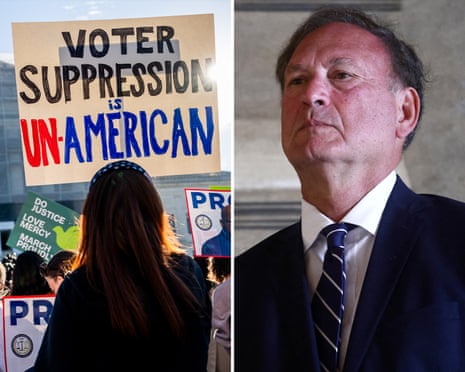
 

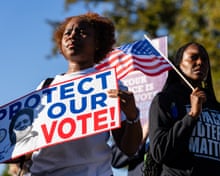
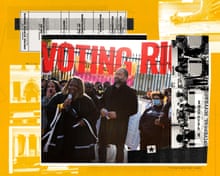
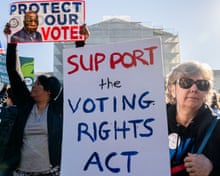
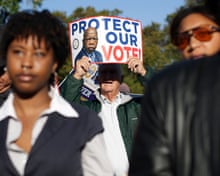
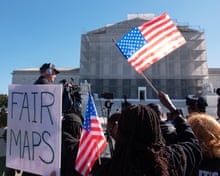
A composite image shows a person holding a sign that reads 'voter suppression is un-American' on the left and a man on the right.
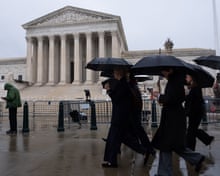
Demonstrators outside the US supreme court in Washington DC in October 2015. Composite: Bloomberg via Getty Images, Reuters

Supreme court’s Voting Rights Act ruling cited misleading data from DoJ

Exclusive: Data in justice department filing quoted by Samuel Alito in his opinion relied on questionable methodology, a Guardian analysis has found

The claims Samuel Alito, a supreme court justice, made about voter turnout in Louisiana in a landmark Voting Rights Act case were based on a misleading data analysis, a Guardian review has found.

In his opinion gutting section 2 of the Voting Rights Act last week, Alito said that Black voter turnout had exceeded white voter turnout in two of the five most recent presidential elections, both nationally and in Louisiana. Alito’s claim was copied almost verbatim from a friend-of-the-court brief filed by the justice department. It was a critical data point Alito used to make the argument that the kind of discrimination that once made the Voting Rights Act necessary no longer exists.
“Vast social change has occurred throughout the country and particularly in the South, where many Section 2 suits arise,” Alito wrote in a majority opinion in the case, which concerned Louisiana’s congressional map, joined by the five other conservative justices on the court. “Black voters now participate in elections at similar rates as the rest of the electorate, even turning out at higher rates than white voters in two of the five most recent Presidential elections nationwide and in Louisiana.”

But a review of turnout and racial data in Louisiana reveals that assertion relies on an unusual methodology. The justice department brief that Alito cited calculated Black and white voter turnout in Louisiana as a proportion of the total population of each racial group over the age of 18. Such an approach is not preferred by experts in calculating statewide turnout because the general over-18 population may include non-citizens, people with felony convictions and others who cannot legally vote. But it does yield Alito’s conclusion that Black voter turnout exceeded white voter turnout in the 2012 and 2016 presidential elections in Louisiana.

The widely accepted approach is to consider voter turnout as a proportion of the citizen voting age population or the voter eligible population, the latter of which excludes non-citizens as well as people who cannot vote because of a felony conviction or because they have been deemed mentally incapacitated. When the Guardian analyzed turnout numbers in Louisiana using the citizen voting age population, it found that Black voter turnout in Louisiana only exceeded white voter turnout in the 2012 presidential election.

“[The DoJ approach] is misleading because they’re including ineligible voters in the denominator,” said Michael McDonald, a political science professor at the University of Florida who is one of the nation’s leading experts on voter turnout. “If I wanted to manipulate the numbers in a way that was favorable to the government’s interest, I would be using voting age population.”

McDonald also said that the survey DoJ’s analysis was based on, the Census Bureau’s current population survey, is known to produce misleading turnout statistics.

“They had to fudge how they’re calculating the turnout rate to get there, and they’re not even taking into account margin of error, and all these other methodology issues about the current population survey to arrive at that number,” he said. “Someone knew what they were doing.”

A justice department spokesperson acknowledged that the agency used total voting age population and not the citizen voting age population to compute turnout figures. The spokesperson did not respond to a question asking why the department used that approach. A supreme court spokesperson did not return a request for comment about the methodology.

The Guardian also reviewed data from the Louisiana secretary of state’s office, which calculates voter turnout a third way, as a percentage of registered voters. Using that methodology, Black turnout has not exceeded white turnout in any of the last five presidential elections in Louisiana.

Alito’s claim about national turnout also misses the more recent picture that the turnout gap is actually widening, according to a Guardian review of election data. Barack Obama was the first Black US president on the ballot in 2008 and 2012, the two elections where Black turnout was higher than white turnout. In the three most recent presidential elections since then, Black voter turnout has lagged white voter turnout.

“In zero out of the last three presidential elections, did Black turnout come anywhere close to parity,” said Kevin Morris, a researcher at the Brennan Center for Justice, who has studied the turnout gap extensively. The overall national turnout gap has “exploded” over the last 15 years, he added. Alito’s claim is “simply not factual”, Morris wrote in a post last week.

“They’re both cherry picking a particular year, they’re cherry picking a particular method and they’re ignoring this long term more concerning trend in the data,” said Christopher Warshaw, a professor at Georgetown University who studies elections.

When the Voting Rights Act was enacted in 1965, there were ugly racial disparities in voting across the southern US. Black voter registration rates were 50 percentage points behind the voter registration rates of white people in states such as Louisiana, Mississippi and Alabama. Once the Voting Rights Act went into effect, that gap narrowed, in part because of federal examiners deployed to southern states to register voters. There was also a surge in Black people elected to office. In 2012, Black voter turnout reached an all time high and exceeded that of white people for the first time, at least since the passage of the Voting Rights Act.

After 2012, Black voter turnout dropped and has trailed white voter turnout in every presidential election since. That drop happened amid the supreme court’s 2013 decision in Shelby county v Holder, which gutted a requirement that places with a history of voting discrimination get election changes pre-approved by the federal government before they went into effect. The case was a major blow to the Voting Rights Act and freed up states to pass voting restrictions.

“Shelby county directly increased the racial turnout gap,” Morris said.

Kareem Crayton, a vice-president at the Brennan Center for Justice, also said it was misleading for Alito to argue the Voting Rights Act was no longer needed because disparities had decreased.

“We could have stopped the project in 1970 because things did get immediately a lot better,” he said. “It’s a bit of a ruse to say that the assessment simply is ‘if things have gotten better then the project is over.’”

Our annual appeal to defend press freedom
0 of 60,000 acts of support

At this dangerous time

We hope you appreciated this article. Before you close this tab, we want to ask if you could support our annual press freedom appeal at this dangerous time for journalism in the US. 

According to a leading global watchdog, American democracy is now more imperiled than at any point since the 1960s, marked by a precipitous decline in press freedom – driven by mounting pressure from the Trump administration in the form of threats, criminal investigations, politicized regulation, frivolous lawsuits and, for public media, catastrophic funding cuts. 

Meanwhile, organizations that are supposed to be independent like the FBI and the FCC, our radio and television regulator, have also been targeting press freedom under Trump-aligned leadership, with the FBI raiding a reporter’s home and the FCC threatening ABC’s TV licenses after Jimmy Kimmel made a joke about Melania Trump.

The response from some ultra-wealthy and corporate media owners, keen to appease the president, has been chilling: CBS News has been taken over by a Trump ally; CNN is poised to be taken over by the same billionaire; Jeff Bezos has continued to impose cuts and editorial interventions at the Washington Post; and multiple outlets have settled multimillion-dollar lawsuits from the administration to protect their business interests.

Democracy is best served by a robust, thriving free press. But when that freedom is under attack, it falls to a determined few news organizations to ensure the full truth still reaches the public. Owned neither by a billionaire nor a corporation, the Guardian remains dedicated to covering this administration with uncompromising moral and factual clarity – and to keeping trustworthy journalism paywall-free for the world.

Despite the risks of maintaining our fierce independence, what sustains us – and fills us with deep gratitude – is the unwavering support we’ve seen from readers. It is no exaggeration to say that we are here because of you: a majority of our funding comes directly from people like you responding to messages like this. Your support not only powers our work, but more importantly, it safeguards the financial independence that underpins our editorial freedom and courage.

In honor of World Press Freedom Day this month, we’re looking for 60,000 readers to support our annual appeal with $5 or more. Do you have the means to be one of them? We’re especially grateful for anyone able to set up a monthly contribution: reliable funding is vital for sustaining us throughout this dangerous period, right to its end.

We would be hugely grateful for your backing to mark this global day of solidarity for independent journalism. Anything you can spare goes directly toward our work – not into the pockets of a billionaire or corporation with other interests at heart. It takes less than a minute. Thank you for protecting the truly free press.

Recommended

Related stories

  • US supreme court expedites Voting Rights Act ruling so Louisiana can redraw its maps for midterms

  • The supreme court’s voting rights decision wasn’t about law – it was about politics

  • What is the US supreme court’s voting rights ruling about and will it affect midterms?

  • Voting rights advocates vow to ‘relocate’ fight after supreme court gutting

  • The supreme court’s voting rights decision is a death knell for American democracy

  • US supreme court ‘demolishes’ Voting Rights Act, gutting provision that prevented racial discrimination

  • Voting Rights Act on the line: key takeaways from supreme court hearing

  • US supreme court appears poised to weaken key pillar of Voting Rights Act

More from News

  • Redistricting fight
    Virginia supreme court strikes down new congressional maps in win for Republicans

  • US-Israel war on Iran
    US awaiting response from Iran over proposals for ceasefire deal, says Rubio

  • Hantavirus
    Hantavirus misinformation runs rampant as the US is unequipped to respond to infectious disease health scare

  • UFOs
    Pentagon releases first batch of previously secret files documenting reports of UFOs

  • Ukraine
    Trump announces Russia-Ukraine three-day ceasefire from 9 May

  • Venezuela
    Frustrated by Iran, Trump at last seizes enriched uranium – but from Venezuela

  • UK elections
    Keir Starmer under pressure to agree exit plan after election mauling

  • Canvas
    Cyber-attack on system widely used in US education disrupts final exams

  • World Cup
    Fifa triples price of top World Cup final ticket to $32,970 as US politicians voice concerns

PBS News Hour full episode, May 7, 2026

PBS News Hour full episode, May 7, 2026


What we know about Iran’s response to the latest US ceasefire proposal

What we know about Iran’s response to the latest US ceasefire proposal

https://www.aljazeera.com/news/2026/5/8/what-we-know-about-irans-response-to-the-latest-us-ceasefire-proposal 


What we know about Iran’s response to the latest US ceasefire proposal

Iran has not formally responded, but officials indicate a large divide remains between the two sides.

Hormuz
In this picture obtained from Iran's ISNA news agency, vessels are pictured anchored in the Strait of Hormuz off Bandar Abbas in southern Iran [File: Amirhossein Khorgooei/ISNA/via AFP]

Iran has said it is reviewing a United States peace proposal that seeks to end the war, even as the two sides exchanged fire in the Strait of Hormuz on Thursday.

In a post on his Truth Social Platform late on Thursday, US President Donald Trump called Iran’s leadership “lunatics” and warned Tehran would face more severe military action if it did not quickly agree to a deal.

Recommended Stories

list of 3 itemsend of list

But how is Iran likely to respond to the latest US ceasefire proposals? And is Tehran likely to have to make significant compromises to reach a deal?

Here’s what we know:

What is in the latest US proposal?

According to US media reports, Washington sent Iran a 14-point document earlier this week. Under its proposals, Iran would be required to agree not to develop a nuclear weapon and halt all enrichment of uranium for at least 12 years. It would also be required to hand over an estimated 440kg (970lb) stock of uranium, which it has enriched to 60 percent.

In return, the US would gradually lift sanctions and release billions of dollars in frozen Iranian assets and withdraw its naval blockade of Iranian ports.

Both sides, which are currently engaged in a naval standoff in the Strait of Hormuz, would reopen the critical waterway within 30 days of signing.

Iran has been subject to crippling US sanctions for decades. The lifting of some of these under a 2015 nuclear agreement drawn up with the former Obama administration, five other countries and the European Union, was reversed when Trump unilaterally walked out of the deal in 2018, during his first term as US president.

Billions of dollars of Iranian assets remain frozen in foreign banks due to the ongoing sanctions.

The US proposal follows one submitted by Iran via mediator Pakistan a week ago.

What has Iran said about the latest US proposal?

Iran has yet to formally respond to the latest US plan. However, Iranian leaders have pushed back against it.

Iranian lawmaker Ebrahim Rezaei, a spokesperson for the parliament’s powerful foreign policy and national security committee, described the text as “more of an American wish-list than a reality” this week.

Iran’s Parliament Speaker Mohammad Bagher Ghalibaf appeared to mock US reports that the two sides were close to a deal, writing on social media in English that “Operation Trust Me Bro failed”.

On Thursday, Iran’s military said US forces had targeted an Iranian oil tanker in coastal waters as well as a second vessel near the United Arab Emirates’ Fujairah port, while US air strikes hit civilian areas in Bandar Khamir, Sirik and Qeshm Island in southern Iran. Iranian air defences were also active over western Tehran.

The US, however, said its naval forces came under Iranian missile, drone and fast-boat attacks in the Strait of Hormuz and responded by eliminating “inbound threats” and targeting “Iranian military facilities responsible for attacking US forces”.

Despite the exchange of fire, neither side has yet announced the collapse of the ceasefire, which has been in place since April 8.

Reporting from Tehran, Al Jazeera’s Resul Serdar Atas said an Iranian Foreign Ministry spokesperson has said his side is still reviewing the US proposal.

“There were reports that the response to the proposal was expected to be sent to Pakistani mediators yesterday. This has not been confirmed, but Iranian officials are saying they’re still reviewing it,” Atas said.

“So despite this back and forth and these military confrontations, the diplomatic and mediation efforts seem to be still under way, and both sides are still interested in diplomatically engaging with each other,” he noted.

“Now, after Iran’s response, the picture is going to get pretty clear. So far, despite some optimism, Iranian officials are saying that several US demands are unreasonable, unrealistic and maximalist.”

“There’s a huge gap between the positions of the two parties,” he added.

6:39
  • Now Playing
    06:39
    Escalating Iran–US Conflict Amid Strikes and Ceasefire Uncertainty

    Escalating Iran–US Conflict Amid Strikes and Ceasefire Uncertainty

  • Next
    02:34
    US and Iran trade attacks in Strait of Hormuz as nuclear talks continue

    US and Iran trade attacks in Strait of Hormuz as nuclear talks continue


How many peace proposals have there been so far?

There has been a series of proposals and counterproposals in recent weeks.

Before the US sent Iran its latest plan this week, Tehran had offered up its own, new 14-point proposal in the latest diplomatic step to reach a permanent end to the war last week.

According to Iranian media reports, Tehran’s plan came in response to a Washington-backed nine-point peace proposal, which primarily sought a two-month ceasefire.

However, in its proposal, Iran said it wanted to focus on ending the war rather than just extending the truce and wants all issues resolved within 30 days.

Iran also called for guarantees against future attacks, a withdrawal of US forces from around Iran, the release of frozen Iranian assets worth billions of dollars and the lifting of sanctions, war reparations, the end of all hostilities, including in Lebanon, and “a new mechanism for the Strait of Hormuz”.

A day before the ceasefire between the US and Iran had come into effect, Iran had submitted a 10-point peace plan, which included an end to the conflict in the region, a protocol for safe passage through the Strait of Hormuz, the lifting of sanctions, and reconstruction, the state-run news agency IRNA reported.

Trump, however, stated that while Iran’s 10-point plan was a “significant proposal”, it was “not good enough”.

That proposal from Iran – on April 7 – had come in response to an earlier 15-point plan drafted by the US on March 25.

Washington’s plan included a one-month ceasefire while the two sides negotiated terms to end the war, via Pakistan. Iran had, however, rejected this plan and said a temporary ceasefire would give the US and Israel time to regroup and launch further attacks, and in turn proposed its 10-point plan.

Is Iran likely to compromise to meet US demands?

Some analysts say Iran may have to change its tone on its nuclear programme. Tehran has always wanted to keep the right to enrich uranium as a signatory to the Treaty on the Non-Proliferation of Nuclear Weapons (NPT), but Trump has made the nuclear issue a “red line”.

Iran is believed to have about 440kg (970lb) of uranium enriched to 60 percent. A 90-percent threshold of enriched uranium is needed to produce a nuclear weapon. Under the Obama-era Joint Comprehensive Plan of Action signed with several other states, Iran had been permitted to enrich uranium to 3.67 percent – enough to develop a nuclear power programme. Now, the US is demanding that it be reduced to 0 percent.

Analyst Negar Mortazavi said Tehran may be willing to show greater flexibility on its nuclear programme once the conflict ends, though she added that Iran is unlikely to agree to hand over its enriched uranium directly to the US.

Mortazavi told Al Jazeera that Iran believes negotiations with the Trump administration require “time and patience”, noting Tehran had previously entered talks with Washington only to come under attack on February 28 as those talks were ongoing.

But reporting from Tehran on Thursday, Al Jazeera’s Atas said: “Iranians are saying that, at this stage, they’re not negotiating their nuclear programme; it’s only about ending the war on all fronts.”

He added that Tehran will require direct guarantees from the UN Security Council that it will not be subject to renewed strikes, as well as the lifting of sanctions.

“If that is achieved, in a second phase, they’re ready to discuss their nuclear programme.”

Al Jazeera’s Almigdad Alruhaid also reported from Tehran on Tuesday that Iran has set “a very firm red line” on the nuclear file. “The nuclear enrichment programme is non-negotiable,” he said.

Ali Vaez, director of the Iran Project at the International Crisis Group, told Al Jazeera that amid recent clashes, both sides might have to compromise.

“Both sides would either have to make painful concessions or leave the main areas of disagreement vague if they are to finalise a framework understanding,” he added.

Chris Featherstone, a political scientist at the University of York in the UK, told Al Jazeera that, so far, Iran has held firm to its position in negotiations, and this has really confounded the Trump administration.

“The Iranians have been willing to hold to their positions with little compromise. Many of the positions that the Iranians are reportedly holding in negotiations are the same as those they held in negotiations prior to the US attacks,” he said.

“From the US positions, it appears that Iran would need to compromise significantly, but they have not demonstrated any appetite to make big concessions, likely because they don’t trust the Trump administration to keep to their commitments,” he added.

2:59
US says ‘self-defence strikes’ on Iran don’t violate ceasefire


Joe on Trump's Iran 'desperation': 'He just keeps backing down'


Joe on Trump's Iran 'desperation': 'He just keeps backing down'


Tennessee Republicans pass new gerrymander following Supreme Court's Voting Rights Act ruling


Tennessee Republicans pass new gerrymander following Supreme Court's Voting Rights Act ruling

https://www.politico.com/news/2026/05/07/tennessee-republicans-redistricting-voting-rights-act-midterms-00910430?mc_cid=304905c6c1 

Tennessee Republicans pass new gerrymander following Supreme Court's Voting Rights Act ruling

The map aims to give the GOP a clean sweep of the state’s nine congressional districts by fracturing Black-majority Memphis between three districts.

Tennessee Gov. Bill Lee delivers his State of the State Address.

Tennessee Gov. Bill Lee delivers his State of the State Address in the House Chamber, Feb. 6, 2023. | Mark Zaleski/AP Photo

By Samuel Benson


Tennessee’s Republican-controlled legislature approved a new congressional map Thursday that dismantles the state’s majority-Black district and will likely secure them an all-GOP federal delegation.

The redraw comes as Republican-led Southern states scramble to enact new maps in the wake of last week’s Supreme Court ruling that weakened Section 2 of the Voting Rights Act and opened the door to states blowing up blue districts drawn to protect the voting power of racial minorities.

The new map aims to draw the state’s lone Democratic congressional representative — Rep. Steve Cohen — out of his Memphis-area seat by splitting up majority-Black Shelby County. It also divides Maury County, likely delivering a more favorable district to Rep. Andy Ogles (R-Tenn.), who is on the Democratic Congressional Campaign Committee’s target list.

“The Supreme Court has opined that redistricting, like the judicial system, should be color-blind,” said Tennessee House Speaker Cameron Sexton in a social media post. “The decision indicated states can redistrict based off partisan politics.”

Tennessee Gov. Bill Lee, a Republican, is expected to sign the map into law imminently. He called the legislature into a special session last week to pass the map.

“We owe it to Tennesseans to ensure our congressional districts accurately reflect the will of Tennessee voters,” Lee said in a statement Friday. “After consultation with the Lt. Governor, Speaker of the House, Attorney General, and Secretary of State, I believe the General Assembly has a responsibility to review the map and ensure it remains fair, legal, and defensible.”

Tennessee is the first state to finalize a new congressional map after last week’s Supreme Court decision. Louisiana’s GOP-controlled legislature is expected to unveil a new map as soon as this week, and Republicans in South Carolina, Georgia, Mississippi and Alabama are pushing to do the same.

Andrew Howard contributed to this report.