The ICE List Wiki is a public, verifiable record of immigration enforcement activity in the United States.
It documents incidents, agencies, individuals, facilities, vehicles, and legal authorities involved in enforcement operations.
Entries are structured, sourced, and timestamped to support verification, cross-referencing, and long-term analysis.
The wiki is intended for use by journalists, researchers, advocates, and the general public.
Project status: This wiki is
in active development. Structure, navigation, and data standards are
being finalised. Older pages may be reformatted as standards are applied
consistently.
Detainees at Delaney Hall Detention Facility
reportedly launched a hunger and labor strike over alleged conditions
inside the facility, including claims related to medical care, food
quality, overcrowding, and treatment by staff. The protests sparked days
of demonstrations outside the facility, confrontations with federal
agents, arrests, and growing political scrutiny involving local
officials, members of Congress, and immigrant rights organizations.
Roberto Villareal is an ICE agent identified at Delaney Hall Detention
Facility during protests surrounding the ongoing hunger strike.
Published reports accuse Villareal of repeated acts of violence against
protesters, including kicking, spraying chemical agents, and physically
assaulting demonstrators. His conduct has made him one of the most
controversial ICE agents identified during the Delaney Hall campaign.
In the news
Recent ICE-related reporting from external news organisations.
No one in immigration court has the right to a public defender.
Detained adults and children often face deportation alone. The Florence
Project provides representation, Know Your Rights education, and family
support at no cost.
The ICE List Wiki is designed for public use.
Journalists, researchers, and advocacy groups use the data to track
enforcement patterns, identify repeat agencies or jurisdictions, and
contextualise individual incidents.
Pages may be cited with attribution.
ICE List in the media
The ICE List has been reported on and analysed by independent news
organisations, and indexed by academic and civic-tech projects. Read
some of that coverage here.
The .onion link requires Tor Browser. For maximum anonymity, use Tor and avoid submitting from a work device or network.
Verification and sourcing
Each page includes a verification status indicating whether claims
are supported by public records, media, video evidence, or other
documentation.
Unverified information is clearly labelled and is not presented as
established fact.
Pages may be updated as additional sources become available.
Quick links
How to report an incident
Step-by-step instructions for submitting an incident with enough detail to verify and map it.
Deportation agents
Overview of ICE ERO officers, how we document them, and how to read agent pages.
State directory
Browse state-specific portals documenting facilities, incidents, agents, and 287(g) agreements.
Submissions should be factual, specific, and supported by evidence where possible.
Speculation, harassment, or unverifiable claims are not published.
Contributors are encouraged to prioritise accuracy over speed.
On New Year’s Eve,
fireworks bloomed behind the Washington Monument. Along the side of the
550-foot structure, a birthday candle was projected, flickering as “The
Star-Spangled Banner” played. This spectacle kicked off Freedom 250’s countdown to the semiquincentennial
and was followed by animated neoclassic-style graphics overlaid with
audio narrating the nation’s “discovery, expansion, independence, and
future.” As the narrative unraveled and onlookers watched Christopher
Columbus sail across the sea and settlers in wagons push westward, there
was no mention of women or people of color.
This display, along with the announcement of a UFC fight on the White House lawn, an IndyCar grand prix
near the National Mall, and the Great American State Fair, made it
clear that this year’s semiquincentennial is more about creating
spectacle in service of President Donald Trump’s idea of America than it
is about honoring American history. With each event, the complexities
that have brought America to where it is today are erased or sidelined
in favor of blind patriotism—a celebration of an uncritical American
story centering predominantly white men.
The Freedom 250–backed Great American State Fair on the National Mall runs through July 10. Al Drago/GettyAn equestrian performs during a rodeo on the first day of the Great American State Fair. Anna Moneymaker/Getty
But state commissions are also celebrating
the anniversary. And some of them are doing a far better job honoring
the country’s complexity. These groups, formed by state governor
appointments, legislation, and executive orders, are also political and
flawed. But they are focusing on their communities, choosing to use the
semiquincentennial as a moment to embrace diversity and make history
more accessible. This anniversary is more than a celebration; it’s a
chance to reexamine America’s story and take stock of those the federal
government would rather censor from the larger narrative.
As these separate state commissions
facilitated conversations with local communities, they found that more
than any spectacle, people wanted to see themselves and their ancestors
in the celebrations of 250 years of the United States.
In Rhode Island, one of the original 13
colonies, locals know their history and take pride in it. Lauren
Fogarty, the commission’s program coordinator, said there’s been an
opportunity to hear from more families about their personal connections
to the Revolution, including from descendants of the 1st Rhode Island Regiment, the first Black battalion in US military history.
Although the history of the regiment has often been overshadowed, the
anniversary and one of the commission’s grant recipients, the Rhode
Island Historical Society, provided an opportunity for author John Rees
to discuss the experiences of those soldiers during and after the war at an April event at the John Brown House Museum.
North Carolina’s commission has drawn
attention to the Edenton Tea Party, where a group of 51 women gathered
to pledge that they wouldn’t buy British goods, one of the earliest
instances of women’s political activism. This history is presented in one of the children’s booksthe
commission created in celebration of the semiquincentennial. The
commission has sold roughly 3,700 of the three children’s books. It
recently secured funding for another children’s book, this one focused
on Martin Black, one of the 14 Harlowe Patriots, a group of free Black men who fought in the Revolution.
In Illinois, the state commission created a free passport,
similar to the National Parks Passport, that includes nearly 60 sites
across the state, illuminating how “people in Illinois have made good on
the ideals of the Declaration of Independence,” said Gabrielle Lyon,
the Illinois commission chair. “The idea is to connect things that have
happened locally here to the formation of our national story.” They’ve
distributed 100,000 of them as of June. The passport includes the Elijah P. Lovejoy memorial for the journalist and abolitionist, who was killed by a mob for wanting a free press. It also includes Cahokia Mounds State Historic Site, the remnants of the largest pre-Columbian Native American civilization north of Mexico.
State commissions have also bolstered the
work of the expert agencies and organizations that already had
programming planned around the semiquincentennial. “No one really needed
a commission to say, ‘Hey, here’s what you do and how you do it,’” said
Cameron Bean, Georgia’s commission chair. He said people,
organizations, and nonprofits needed to “have a commission that said,
‘Hey, how can we serve you?’”
So rather than investing a large portion
of its funds into hiring staff or a planning committee, Bean said the
Georgia commission decided to focus on giving out grants, helping raise
sponsorship money, and promoting events like the African Film Festival
Atlanta, the African American Heritage Symposium, and a musical about pioneer women
that uses traditional quilt patterns as a storytelling tool. Jason
Mancini, vice chair of the Connecticut commission, said over the last
three years, his commission has been able to award over $800,000 to over
80 organizations in the state.
“We didn’t want to
make this about drums and guns. This has to be something more, so that
people see their children and grandchildren as part of this story.”
Locals have responded positively to this
grassroots approach. It doesn’t pull people out of their counties or
municipalities to celebrate somewhere else; it allows them to celebrate
where they are. As Ansley Herring Wegner, director of North Carolina’s
state commission, put it, locals might “see the Washington Monument lit
up like a birthday candle on their TV, but we’re going to be at their
events. We’re at their parades. We’re at their soccer tournaments.”
These grants can also help revitalize third spaces, bring new audiences
to organizations that have been working in the state for years, and
reinforce the idea that every place has played a part in this country’s
history.
Lyon, the Illinois chair, remarked that
this year’s celebration has taken a more inclusive approach, setting it
apart from previous milestone anniversaries. She said that in 1776 and
1976, festivities left out many Americans, but in 2026, Illinois was
committed to inviting as many voices as possible into the
commemoration.
In Rhode Island, Fogarty said she spoke to
all 39 municipalities to tell them about the semiquincentennial. The
Utah state commission held monthly meetings at which community members
could share national and local updates, giving them a chance to amplify
each other’s work, draw inspiration from one another, and collaborate
with groups they hadn’t worked with before.
Bean, of Georgia, noted that this variety
in programming is a good way to meet people where they are. The hope is
that there is something in which everyone can find value and enjoyment.
Some programming also resulted from more
complex conversations with communities about reckoning with American
history. Mancini has had a long history of working with tribal
communities and communities of color, both in Connecticut and outside
the state. So when it came time to plan as a commission, he said the
group had some hard conversations with Black and Native community
members who expressed that they didn’t feel they had been seen as a part
of America’s story thus far.
He recalled one commissioner who
represented a Black community organization that had been vocal about the
hundreds of Black men who served in the Colonial militia but hadn’t
been recognized. “We want to tell those stories,” Mancini said. “We
didn’t want to make this about drums and guns. This has to be something
more, so that people see themselves today and they can see themselves
tomorrow, and they can see their children and grandchildren as part of
this story.”
Cyndi Tolosa, the Connecticut commission’s
project manager, listed other initiatives members had hoped to do to
make things more inclusive, such as translating more materials into
Spanish and doing more outreach in Spanish-speaking communities. She
also noted organizations like Integrated Refugee & Immigrant Services, which was working to create dialogue about immigrants’ and refugees’ contributions to Connecticut and the US.
Although there have been positive
responses to this approach, some, like tribal communities in
Connecticut, still express apprehension. The founding documents the
semiquincentennial celebrates refer to “merciless Indian savages,” and
the political and legal framings for much of America’s history have
leaned on erasure and extermination. Mancini noted that while some
tribes wanted to be vocal, others wanted to keep the commission at arm’s
length, a sentiment he understood. Lyon dealt with similar
conversations in Illinois with many marginalized communities.
“I think complexity is where we need to be
and get comfortable,” Lyon said. “And that’s what’s most interesting
and important about this moment. So some people want to be involved,
some people choose not to. The commission’s approach has tried to be
inclusive and specific and historically accurate to the best of our
ability, but also to connect what’s happening now.”
A year ago, after participating in a panel
about Indigenous perspectives on the 250th for a Virginia state
commission event, Kitcki Carroll, executive director of United South and Eastern Tribes,
met Virginia’s honorary chair, Carly Fiorina. As the event wrapped up,
the two continued a conversation about Indigenous perspectives and the
anniversary that would later evolve into an event in April that will be released as a documentary this week.
It included a panel surrounding tribal
nations’ inherent sovereignty and the United States’ treaty obligations
to them, a conversation about creating greater visibility for Native
Americans, and a fireside chat with Supreme Court Justice Neil Gorsuch.
Carroll noted that the day was meant to be an opportunity to pause and
understand the costs associated with the establishment of this nation.
Having more discussions about the ugly
side of America’s history serves to “make sure that for the next 250
years that we are not dealing with the same shortcomings and failures
that we dealt with during the first 250 years,” Carroll said.
Despite all the work state commissions are
doing, it hasn’t been a seamless process. Some commissions have had to
navigate funding shortfalls. DOGE cut the funding of the humanities
organization unofficially coordinating the celebration in Illinois.
Since North Carolina hadn’t passed a budget since 2023, when it ran out
after two years, its state commission had a “base budget” of $0. Both
commissions have been fundraising and using their own funds and networks
of resources to move forward with events.
“From my view, the opportunity is not just
about celebrating the 250; to me, the drive, what keeps me going, what
I’m inspired by is the idea that the legacy of this moment is the
strengthened cultural infrastructure that is at the heart of the
American experiment,” Illinois’ Lyon said.
Many of the state commissions see this
commemoration as a moment to honor the value of community. It’s a
reminder of all this country has been through, a time to celebrate our
differences, and an opportunity to rely on one another. North Carolina’s
Wegner said that as a public historian, the semiquincentennial is about
giving history to the public in ways they can understand. This happens
through the networks they’ve created, the evergreen educational
resources that people can reference, and the highlighting of libraries,
museums, and nonprofits whose work doesn’t stop after the
semiquincentennial.
As the Fourth of July fast approaches, the
state commissions’ efforts to give texture and complexity to American
history are a reminder that America’s story belongs to all of us and
doesn’t start or end with the founding—or a fireworks show. While
thinking about our history, we can consider what, and maybe who, we hope
will be displayed on the Washington Monument in the next 250 years.
Israel approves plan to establish 13 new settlements in occupied West Bank
Palestinian officials warn against the implications of the plan, saying it would further isolate East Jerusalem.
A
pro-settlement sign put up by Israeli settlers on the roadside near
Nablus City reads in Hebrew, 'Welcome to northern Samaria. We have
returned to our homes', in the occupied West Bank, Palestine [File: Alaa
Badarneh/EPA]
Israel’s Security Cabinet has approved a plan to establish 13 new settlements
in the central occupied West Bank, a move Palestinian officials say
will further fragment the territory and isolate East Jerusalem from its
surrounding Palestinian communities.
Israel’s Channel 7 reported
that the cabinet approved the construction of the illegal settlements on
Thursday in the Binyamin regional area, one of the largest settlement
blocs in the occupied West Bank.
It
is situated along Route 60, the central north-south artery running
through the West Bank that links Palestinian cities, including Nablus,
Ramallah, and Bethlehem, while also connecting major Israeli
settlements.
The first phase is
expected to begin in the coming months and will include the
establishment of four to six new settlements, backed by investments
worth millions of shekels, Palestine’s Jerusalem governorate said.
Several
existing pastoral outposts are also slated for formal legalisation,
enabling them to receive government funding and infrastructure, it
added.
The plan focuses on two main
corridors: areas northwest of Jerusalem and west of Ramallah along Route
60, and territory extending eastward towards the Jordan Valley.
The
Jerusalem governorate said the scheme is designed to link settlement
blocs, tighten Israeli control over strategic hilltops and restrict
Palestinian territorial continuity.
“The
plan seeks to create new geographical realities on the ground,” the
governorate added in a statement, warning that the expansion would
“undermine the prospects of establishing a geographically contiguous
Palestinian state.”
The governorate linked the acceleration of settlement activity to domestic political calculations in Israel, particularly with Knesset elections approaching.
It
described the measures as “a dangerous escalation” and “violations of
international law,” calling on the international community to intervene.
0:39
Now Playing
00:39
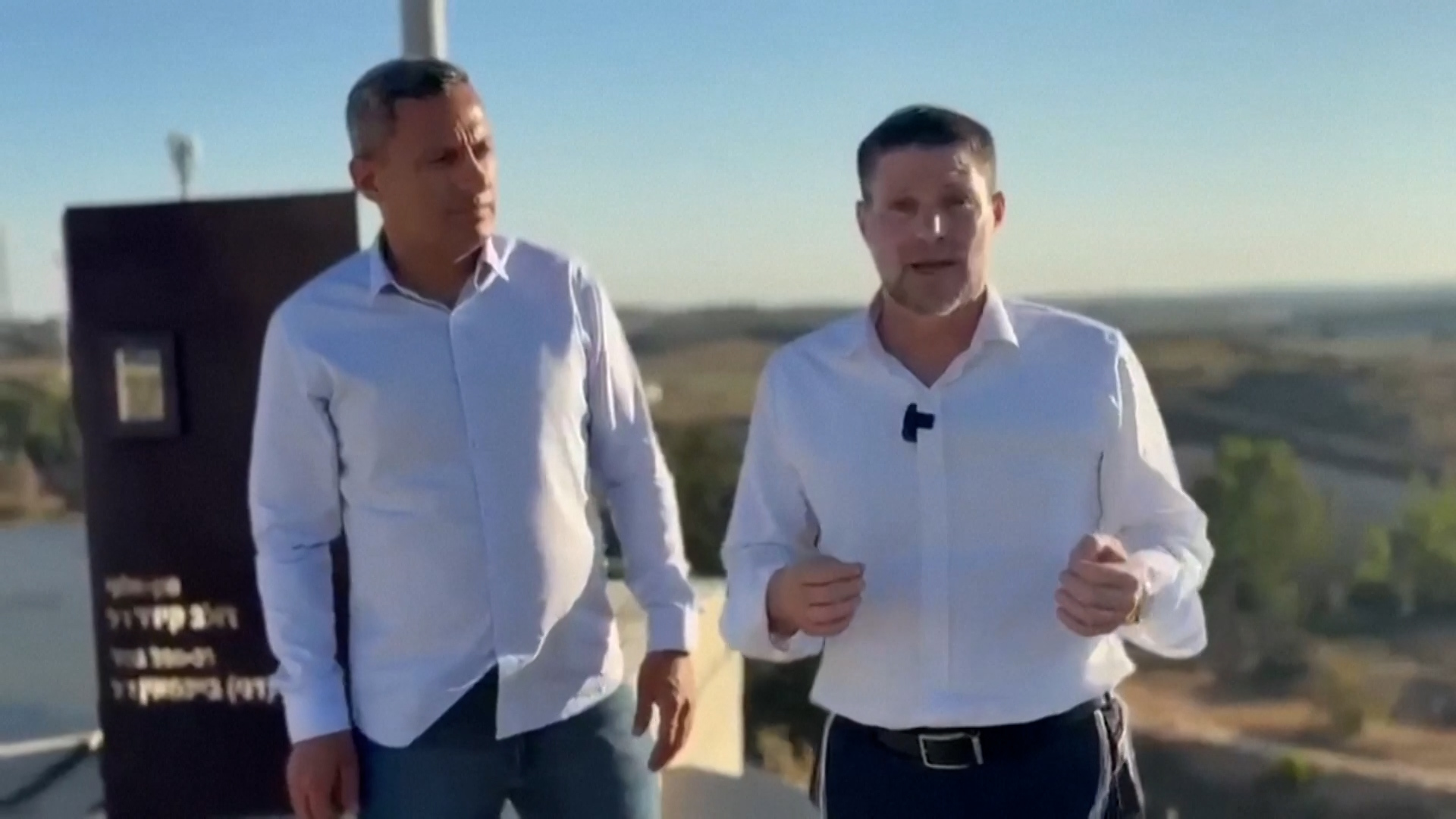
Israel's Smotrich calls for settlements, ‘conquest’ of Gaza Strip
Next
01:08
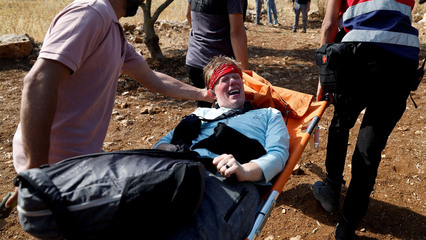
Settlers attack activists, Palestinians trying to access their land
New
data from the Palestinian Forum for Israeli Studies (MADAR) shows that
the number of new settlement outposts has soared in recent years. After
averaging approximately eight outposts annually between 2012 and 2022,
the number jumped to 32 in 2023, then 62 in 2024, reaching 86 during
2025.
The expansion has been
facilitated by significant state funding: the Israeli government
allocated 28 million shekels ($7.5m) to outposts in 2023 and 75 million
shekels ($20m) in 2024, with plans to fund a total of 70 outposts.
The
Binyamin plan follows reports that settlement movements are preparing
to target Area A, territory under full Palestinian control, in what
would constitute a violation of the Oslo Accords.
Palestinian
officials have long warned that continued settlement expansion is
eroding the viability of a two-state solution, as more than 700,000
Israeli settlers now live in the West Bank and East Jerusalem territory
Israel captured in the 1967 war.
The international community overwhelmingly considers settlements illegal under international law.





![A pro-settlement sign put up by Israeli settlers on the side of a road near Nablus City reads in Hebrew 'Welcome to northern Samaria.We have returned to our homes' in the West Bank. [FILE: Alaa Badarneh/EPA]](https://www.aljazeera.com/wp-content/uploads/2026/07/13815310-1783063702.jpg?resize=770%2C513&quality=80)