Live updates: Trump administration plans to announce new sanctions against Iran
https://apnews.com/live/trump-economy-news-updates-08-24-2026
Live updates: Trump administration plans to announce new sanctions against Iran
Follow the latest news on President Donald Trump and his administration | Aug. 24, 2026

Here’s what we’re following:
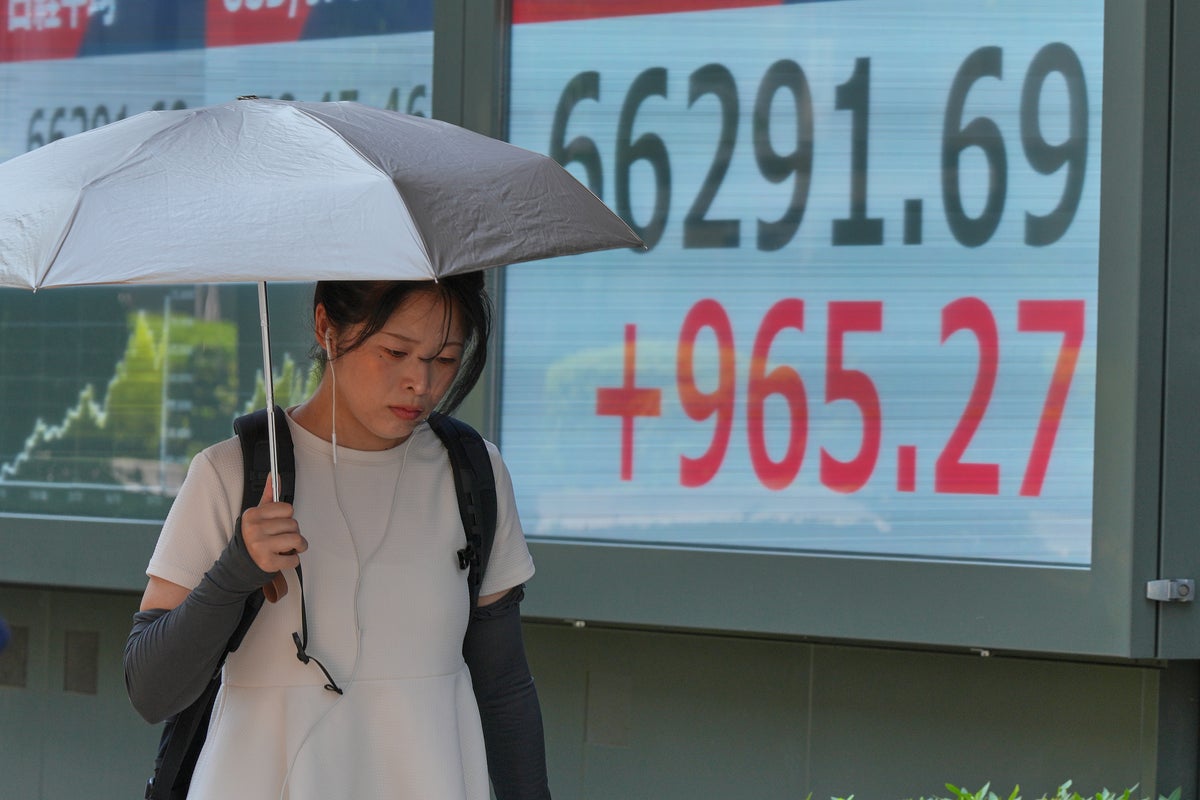
- Treasury Secretary Scott Bessent is expected to unveil the Trump administration’s new financial campaign against Iran on Monday at 1 p.m. ET as the U.S. marks nearly six months of its war against the Islamic Republic. The administration is promising an “economic D-Day,” including secondary sanctions on countries that continue to do business with Iran. But Tehran has withstood nearly five decades of punishing American sanctions. Ahead of the announcement, Iran’s currency hit a record low, dropping to 2.02 million to the U.S. dollar as trading opened on currency markets.
- President Donald Trump threatened on Monday to impose a 50% tariff on Canadian automobiles, car parts and steel starting next year as the trade rift with Ottawa continued to deepen. The announcement comes after trade talks between the otherwise reliable trading partners collapsed last week. Long-planned U.S. tariffs on various Canadian goods went into effect after the talks broke off, and Canada has vowed to retaliate.
Vance gives shoutout to ‘our very independent friend, Susan Collins’
Republican Sen. Susan Collins was not accompanying Vice President JD Vance during his manufacturing stop in Brewer, Maine on Monday.
But he still made sure that her presence was felt.
“Whenever I’m in Maine, I got to give Susan a little bit of crap,” Vance told the crowd as he began his remarks. “Because as you know, Susan is the most independent member of the United States Senate, and as the president of the United States Senate, she sometimes makes my job just a little bit harder.”
Vance said Collins, who is up for reelection in the Democratic-leaning state, has visited the vice president’s residence about a half-dozen times. In those meetings, Vance said, Collins is constantly pressing him about how certain policies affect her state.
Vance ended his brief aside on the senator by asking the crowd to give a shoutout to “our very independent friend, Susan Collins.”
The Washington Post must reinstate a Black writer fired for posting about Charlie Kirk
“After wrongfully firing me last year, an independent arbitrator has ordered the @washingtonpost to reinstate me immediately, with back pay,” Karen Attiah posted on Instagram on Monday, calling it “a victory for journalists everywhere.”
The ruling found insufficient cause to terminate Karen Attiah, the last Black full-time member of the Post’s opinion desk at the time.
Kirk, a top conservative podcaster and Trump ally, made provocative statements about race, gender and politics, including calling George Floyd, whose 2020 murder at the hands of Minneapolis police sparked protests, a “scumbag.”
Kirk’s killing on Sept. 10 elicited a torrent of comments, and some who spoke out against him faced sanctions or dismissal at work. One post Attiah made said “Refusing to tear my clothes and smear ashes on my face in performative mourning for a white man that espoused violence is … not the same as violence.”
A Post statement said it respects the arbitration process and declined further comment.
Deportees who refused to exit a US flight in Liberia are sent to Equatorial Guinea
Six people who were deported by the United States to Liberia last week resisted getting off the plane and instead were sent to Equatorial Guinea, a person on the plane and a lawyer in contact with them said Monday.
Under a series of often secret agreements, the Trump administration has deported thousands of people to two dozen countries that aren’t their own as it pushes ahead with its immigration crackdown, advocates say.
The four Cuban men, a Brazilian man and a Cameroonian woman are now being held with other migrants in worsening conditions in a hotel that lacks medical staff, said Meredyth Yoon, litigation director for Asian Americans Advancing Justice-Atlanta.
Equatorial Guinea’s all-powerful president, Teodoro Obiang Nguema Mbasogo, turned the hotel owned by his family into a prison for deported asylum seekers under an opaque $7.5 million deal with the Trump administration. His government did not immediately respond to a request seeking comment.
Reopening US border to Mexican cattle not expected to drop beef prices anytime soon
The U.S. plans to reopen a border crossing in Arizona to cattle from Mexico on Monday as part of a broader Trump administration effort to reduce record-high beef prices. Economists doubt grocery store shoppers will see any savings soon.
The U.S. Department of Agriculture said concerns about the New World screwworm’s spread lessened enough to allow the movement of cattle from Mexico.
Beef prices clearly are a concern for Trump, who announced Friday that he would allow up to 331,000 tons of ground beef imports, tariff-free, to be sold at below-market prices over the next 90 days.
But the phased reopening means it will take months for Mexican imports to regain their traditional 3% of the U.S. supply, according to Derrell Peel, a professor of agribusiness at Oklahoma State University.
Palestinian American’s home still besieged by Israeli settlers
A Palestinian American whose home in the occupied West Bank has been besieged by Israeli settlers for over a week has arrived there to help family members defend the property. (AP video by Ami Bentov, Majdi Muhammad, Imad Isseid and production by Jalal Bwaitel)
The homeowner whose residence has been besieged by Israeli settlers said Monday that he still can’t move freely in the West Bank village of Qusra.
Loui Ridi traveled from Ohio to the Israeli-occupied West Bank a week ago to join relatives defending his home from Israeli settlers.
Israel’s military declared the area a closed zone to restore order in Qusra, made a nearby home into a drone base and required Palestinians to coordinate all their movements from the homes that had been under siege.
Ridi said settlers keep returning to the area above his home, without consequences, while his family spends hours coordinating moves to get food, water and other supplies.
Israel’s police has not announced any arrests of settlers, despite condemnation from Israeli rights groups and foreign officials, including U.S. Ambassador to Israel Mike Huckabee, who called the siege terrorism.
China says more US economic pressure won’t end the Iran war
“They will only exacerbate tensions and escalate the situation, which is in no one’s interest,” Foreign Ministry spokesperson Lin Jian said in Beijing as the U.S. threatens sanctions on countries that trade with Iran.
China is calling on all parties to avoid measures “that could further intensify differences and conflicts and disrupt global economic development and financial stability,” he added.
China is considered the biggest buyer of Iranian oil, and was importing more than 80% of Iranian oil before the U.S.-Israeli war with Iran.
Iran-backed rebels hit oil tanker in Red Sea
A crude oil tanker was attacked on Monday in the Red Sea off Saudi Arabia, igniting a fire on its main deck, the British military said.
The United Kingdom Maritime Trade Organization said there were no reports of casualties.
The tanker issued a distress alert and the Egyptian Navy was reported to have responded to conduct a rescue operation, according to Ambrey, a UK-based maritime risk and response company.
The Yemen’s Iran-backed Houthi rebels’ military spokesman, Brig. Gen. Yahya Saree, said they targeted the tanker with a ballistic missile.
US and Iranian officials trade threats over new sanctions
“President Trump decimated Iran’s economy to a point where the rial has never been weaker and inflation has rarely been higher,” U.S. Treasury Secretary Scott Bessent wrote Sunday in an opinion piece in the Financial Times. “The regime’s final refuge now lies in the self-deception of fearful nations that still believe accommodating aggression can secure a durable peace.”
Already last week, the United Arab Emirates announced that it was suspending all trade with Iran. The UAE has long been one of Iran’s largest trading partners and its biggest source of imports.
But Iranian Foreign Ministry spokesperson Esmail Baghaei told reporters in Tehran on Monday that “any escalation of this situation will undoubtedly bring about consequences ... Our hands are not tied.”
Trump promotes economic pressure on Iran
Trump is commenting on Iran ahead of a Monday announcement about new and even stronger sanctions, including penalties against any countries that do business with the Islamic Republic.
Trump posted on social media that “IRAN IS COMPLETELY COLLAPSING!!!”
Still, economic pressure has not yet translated into political pressure to end the war. Iran retains a key strategic advantage: Its attacks and threats on ships in the Strait of Hormuz have nearly halted traffic in the vital waterway, damaging the world economy and heaping pressure on Trump ahead of congressional elections.
Trump issues new threats to Canada over trade
Trump threatened Monday to impose a 50% tariff on Canadian automobiles, car parts and steel starting next year as the trade rift with Ottawa deepens.
Trade talks between the otherwise allies and reliable trading partners collapsed last week. Long-planned U.S. tariffs on various Canadian goods went into effect after the talks broke off, and Canada has vowed to retaliate.
“Canada has been ripping off the United States of America for years,” Trump posted on social media Monday morning. Criticizing Canada’s “ridiculously high tariffs” on American farmers, Trump wrote: “Not sustainable, and NOT ANYMORE!”
Ontario’s premier says Canada should be ready to cut electricity, critical minerals to US
Doug Ford said Monday in an interview with The Associated Press that the late President Ronald Reagan would be “throwing up on” Trump over his trade policies. He also threatened to cut off electricity and critical minerals to the United States if the Canada-U.S. trade fight worsens.
“I’ll cut them off,” Ford said of critical minerals. “You won’t get a grain of sand out of Ontario.”
Ford said “everything is on the table” after Prime Minister Mark Carney walked away from trade talks late Friday.
Ford enraged Trump by using Reagan’s anti-tariff words in a television ad last year.
JUST IN: Trump threatens 50% tariff on Canadian automobiles, car parts and steel starting Jan. 1 as trade rift deepens
JUST IN: Ontario’s Doug Ford tells AP that Canada should be ready to cut electricity, critical minerals to US if trade fight worsens
JUST IN: Ontario Premier Doug Ford tells AP that Ronald Reagan would be ‘throwing up’ over Trump’s trade policies
US military kill two more boaters in Pacific, says they carried drugs
The U.S. Southern Command announced the strike in a social media post early Monday, raising the death toll from boat bombings in Latin American waters to more than 210 people in more than 60 strikes.
“We are committed to imposing total systemic friction on narco-terrorists — disrupting their operations, dismantling their leadership, and eliminating cartel terror across the region,” said Gen. Francis Donovan.
Defense Secretary Pete Hegseth said the U.S. is extending its offensive to targets on land across multiple Latin American countries. He said Colombia, Guatemala and Honduras had agreed to allow the U.S. to carry out joint military operations against criminal groups on their soil. Guatemala denied this. Ecuador launched similar joint missions in March.
US trade representative blames Canada for breakdown in trade talks
Jamieson Greer says Canada ultimately wanted more than Washington was willing to offer.
Greer said Monday during an interview on CNBC that Canada had maintained restrictions on U.S. wine, spirits, dairy and autos, prompting the U.S. to impose targeted tariffs covering about 5% of Canadian imports.
He said there was significant progress in negotiations, with the U.S. offering to halve steel and aluminum tariffs and substantially reduce auto tariffs.
He also dismissed concerns about a broader trade war.
He was arrested by Border Patrol as his son serves on the USS Lincoln
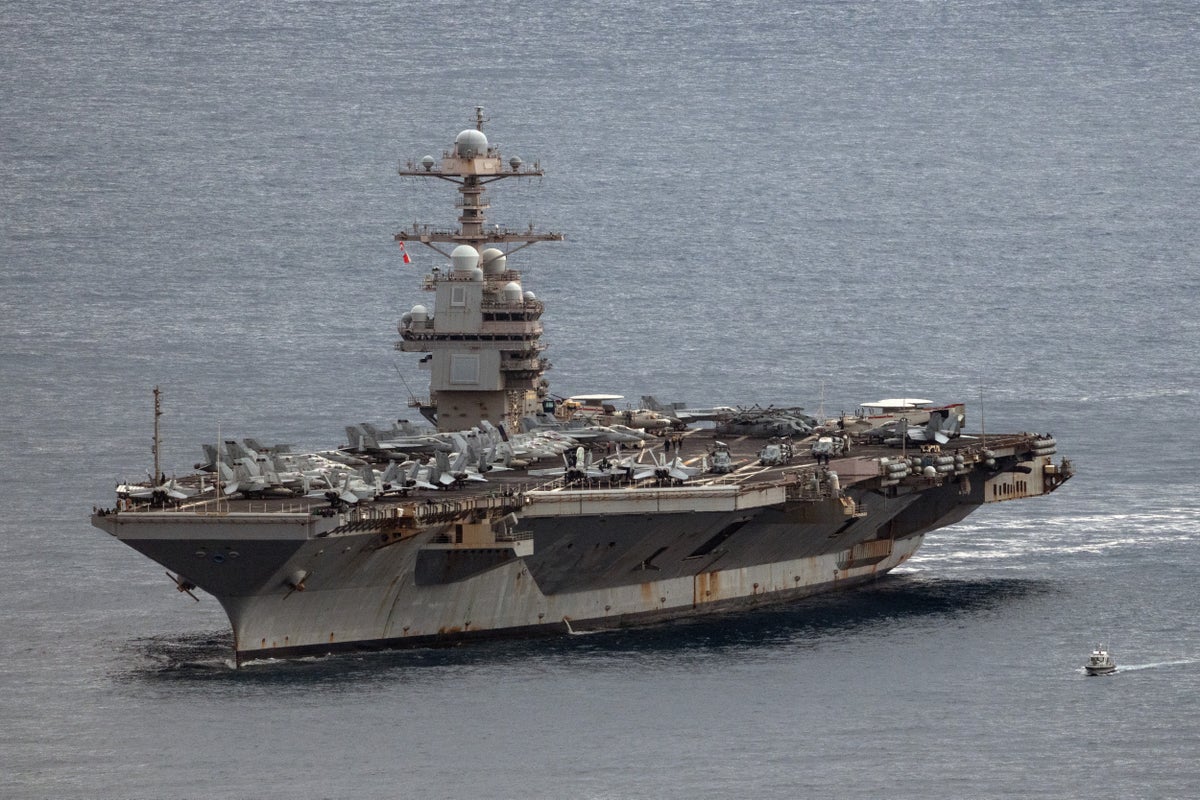
Joshua Aviles has worked 12-hour shifts for more than 250 days on the USS Lincoln while the aircraft carrier is deployed in the Middle East. One reason he enlisted was the “military parole-in-place” policy, which allows spouses, children and parents of active-duty service members and veterans to obtain legal immigration status while in the United States.
His father Luis Manuel Aviles, a handyman in Key West, Florida, who came from Nicaragua 19 years ago, was arrested anyway on Saturday as the Trump administration withdraws immigration protections for military families to pursue its mass deportation agenda. Dozens of parents and spouses of active-duty U.S. troops have been detained, and at least six have been deported, the AP found in the first accounting of such detentions.
“Having a family member in the military is not a free pass to violate our nation’s laws,” the Department of Homeland Security said Sunday.
Trump’s oil and gas stocks soar as pump prices rise, congressional report says
Trump saw the value of his oil and gas stocks rise by as much as $15 million, surging during the Iran war, according to an analysis from Democrats on the Joint Economic Committee in Congress.
The committee said the president owned between $12.5 million and $45.6 million in oil and gas company stocks in 2025, according to his most recent disclosures. The portfolio is now worth between $17.2 and $61.1 million, which the analysis attributed largely to “the surge in oil and gas stocks driven by Trump’s war in Iran.”
The Democrats found those stocks rose by an average of 39% from Jan. 2 through Aug. 17 and that two of the large stocks Trump holds in this sector — Valero and Marathon — have more than doubled since the start of 2026.
The committee Democrats noted that Americans have now spent an additional $71.5 billion on gas since the start of the war.
US Trade Representative: Fallout over Canada trade talks a ‘tempest in a teapot’
Jamieson Greer is downplaying the impact of the collapse of the trade talks with Canada.
“I think this is a little bit of a tempest in a teapot,” Greer told reporters at the White House on Monday morning. “The tariffs went in place over the weekend, which we’ve warned about for a long time. They only cover about 5% of Canadian trade, only .06 percent of U.S. overall consumption.”
Greer said he is preparing potential responses for Trump to Canada’s threat to retaliate dollar-for-dollar, but he declined to elaborate on the options.
Jared Kushner meets with Democratic leader Jeffries with House control at stake in November
House Democratic leader Hakeem Jeffries and President Trump’s son-in-law and outside adviser Jared Kushner met privately recently in New York, a signal that the White House is seeking ways to work with Democrats if they wrest majority control from Republicans in the midterm elections.
The meeting, first reported Sunday by The New York Times, touched on issues ranging from housing, immigration to the high cost of living. People in the United States are struggling under inflationary prices that Democrats blame on Republicans, alongside Trump, for failing to get under control.
Kushner suggested that Jeffries, who is in line to become House speaker if Democrats regain power in November, meet with White House chief of staff Susie Wiles as a follow-up.
Jeffries, in a statement Sunday, did not mention the private conversation but said the Republican administration needed to drop the GOP’s “my-way-or-the-highway” approach that “has failed the American people.”
“To stop the madness, we have repeatedly made clear that an extremist approach will not work and will be met with forceful opposition,” the New York congressman said. “The question is whether Republicans will join us.”
Iran’s rial currency hits new record low as US prepares to announce more sanctions
Iran’s currency hit a record low Monday as Washington prepared to announce new sanctions it said would add further pressure on an economy already battered by previous sanctions and a U.S. naval blockade.
The rial dropped to 2.02 million to the U.S. dollar as trading opened on currency markets. Iran’s official Central Bank rate stood at around 1.5 million rial to the dollar, but the market rate is what most Iranians pay.
The currency had already been under pressure before the U.S. and Israel attacked Iran on Feb. 28, as Iran faced double-digit inflation and negative growth, but has repeatedly hit new lows as nearly six months of war have taken an even greater toll.
Iranians find daily staples increasingly unaffordable. Since the war began, rice is up some 60% and prices of beef are more than 150% higher. The International Monetary Fund forecasts that GDP will contract more than 5%.
Still, economic pressure has not yet translated into political pressure.
Canada promises to enact ‘dollar for dollar’ tariffs against the US
Canada’s Carney has announced the tariffs against the U.S. would begin Sept. 8, noting they would target steel, dairy, appliances, agricultural equipment, pulp and paper and electronics.
The prime minister said Canada was willing to drop remaining retaliatory tariffs on steel, aluminum and autos if the U.S. substantially lowered its own, and to encourage provinces to restore U.S. alcohol sales. But eventually, he said Washington’s final demands went too far.
Carney accused Washington of using “economic integration as a weapon,” and that Canada had been “attacked” by the latest U.S. tariffs. He said his country had the reserves and resilience to respond.
Trump’s top trade negotiator, Jamieson Greer, pledged additional measures to respond to Canada’s retaliation — without immediately specifying what that would look like. In a Saturday interview with “Fox & Friends Weekend,” Greer also claimed the administration offered to cut tariffs on steel, autos and lumber, but Canada “didn’t want” the deal.
What to know about Trump’s 50% tariffs on Canadian goods
The new levies are expected to affect about 5% of Canada’s annual exports to the U.S., roughly $20 billion in goods ranging from hockey sticks to agricultural products.
Canada sends the vast majority of its goods exports to the U.S. (72% last year), and Trump administration says the new taxes will be levied on products ranging from hockey sticks to wine and cement. The list is long. According to documents published by the White House, other goods subject to the tax include honey, seeds and agricultural products — as well as select makeup, perfumes, clothing, jewelry, furniture, cameras, fabric and more.
The 50% levy also applies to some products that were previously protected under the US-Mexico-Canada Agreement, a trade pact from Trump’s first term. That marks a shift from past levies — and further underlines questions around the future of the USMCA overall.
Carney warned about economic coercion. Now Trump is testing the Canadian prime minister
Mark Carney drew international attention as Canada’s prime minister by warning that middle powers must resist economic coercion by more powerful countries. Now President Donald Trump is putting that warning to the test with sweeping new tariffs that could show how much economic pain Canada can absorb.
Tensions escalated late Friday when Canada walked away from negotiations after Carney concluded the United States was demanding too much in exchange for tariff relief. The U.S. imposed 50% duties Saturday on about $20 billion worth of Canadian goods, and Carney announced dollar-for-dollar retaliation beginning Sept. 8.
“We’re going to hit back,” Carney said.
Carney is doing what many other American allies have so far avoided: risking economic pain rather than yielding to tariff pressure.
For Carney, the showdown is the clearest test yet of his argument that middle powers must stand up to economic pressure from great powers such as the United States and China, even when it comes at a cost. Canada’s response could show how countries navigate a world in which long-standing alliances offer less protection and economic ties themselves become sources of leverage.


.jpeg?quality=75&width=230&crop=3%3A2%2Csmart&auto=webp)