https://www.youtube.com/watch?v=bjw1ec_arf4
"Plastic People" lyrics
Frank Zappa (The Mothers Of Invention) Lyrics
Fella Americans...
Doot, doot, doot... Doot...
He's been sick
Doo-oo-oot... Doot! Doot!
(Teet-Teet... Teet-Teet... Teet-Teet... Teet-Teet-Teet)
And I think his wife is gonna bring him some chicken soup
Doot, doot (Teet-Teet)
Plastic people
Oh baby, now...
You're such a drag
(I know it's hard to defend an unpopular policy every once in a while...)
Plastic people
Oh baby, now
You're such a drag
(And there's this guy from the CIA and he's creeping around Laurel Canyon...)
A fine little girl
She waits for me
She's as plastic
As she can be
She paints her face
With plastic goo
And wrecks her hair
With some shampoo
Plastic people
Oh baby, now
You're such a drag
(I dunno... sometimes I just get tired of ya, honey... it's-Ah-your hair spray... or something.)
Plastic people
Oh baby!
You're such a drag
(I hear the sound of marching feet... down Sunset Blvd. to Crescent Heights, and there, at Pandora's Box, we are confronted with... a vast quantity of plastic people.)
Take a day
And walk around
Watch the nazis
Run your town
Then go home
And check yourself
You think we're singing
'Bout someone else... but you're
Plastic people!
(Woooooooooooooooooooh!)
Oh baby, now...
You're such a drag
Ooo-Ooo-Ooo Ooo-Ooo-Ooo Ooo-Ooo-Ooo Ooooooooh!
Me see a neon
Moon above
I searched for years
I found no love
I'm sure that love
Will never be
A product of
Plasticity
A product of
Plasticity
A product of
Plasticity:
Plastic! Plastic people!
Pla-ha-ha-ha-ha...
Plastic... people
Plastic people... oo-oooh oo-ooh...
Plastic...
A prune is a vegetable... no, a prune is not a vegetable. Cabbage is a vegetable... makes it O.K. Plastic people... Plastic people, plastic people!
Ooo-Hoo-Hoo... Ooo-ooh-ooh-ooh Hoo-Hoo
Ooh-ooh Ooh-Hoo-Hoo-Hoo
You are. Your foot. Your hair. Your nose. Your arms. You eat. You suck. You love. You are. Your being is... you're Plastic... People... Blah, blah, blah, blah... plastic pepples...
You drive. You live in. You dream about... you think only of... you eat... you are... pepples... plastic... plastic pepples...
Purple prancing. Plastic people. Every pepples...
Peep-peep Pee-pee-pee-pee-pee-pee-pee-pee-peep!
The Human Brain May Contain as Much as a Spoon’s Worth of Microplastics, New Research Suggests
Scientists discovered microplastics in human semen and follicular fluid
The Human Brain May Contain as Much as a Spoon’s Worth of Microplastics, New Research Suggests
https://www.smithsonianmag.com/smart-news/the-human-brain-may-contain-as-much-as-a-spoons-worth-of-microplastics-new-research-suggests-180985995/
The amount of microplastics in the human brain appears to be increasing over time: Concentrations rose by roughly 50 percent between 2016 and 2024, according to a new study
/https://tf-cmsv2-smithsonianmag-media.s3.amazonaws.com/accounts/headshot/SarahKuta.png)
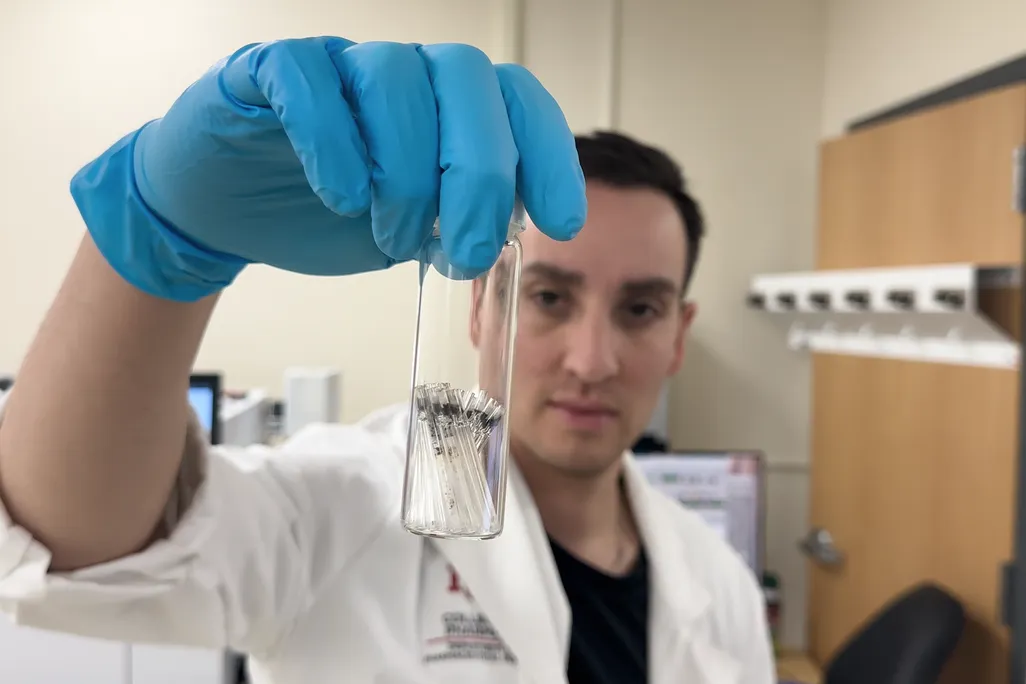
The human brain may contain up to a spoon’s worth of tiny plastic shards—not a spoonful, but the same weight (about seven grams) as a plastic spoon, according to new findings published Monday in the journal Nature Medicine.
Researchers detected these “almost unbelievable” levels of microplastics and nanoplastics in the brains of human cadavers, says study co-author Andrew West, a neuroscientist at Duke University, to Science News’ Laura Sanders. “In fact, I didn’t believe it until I saw all the data.”
Based on their analysis, the amount of microplastics in the human brain appears to be increasing over time: Concentrations rose by roughly 50 percent between 2016 and 2024.
The researchers also found much higher levels of microplastics in brain tissue than in liver and kidney tissue. And microplastic concentrations were also higher in the brains of deceased patients who had been diagnosed with dementia compared to the brains of deceased individuals without dementia.
Importantly, the study finds only a correlation between high levels of microplastics in the brain and dementia—it does not establish a causal relationship. It could be, for instance, that changes resulting from dementia make it easier for microplastics to accumulate in the brain. However, the researchers say their findings are troubling nonetheless.
“I have yet to encounter a single human being who says, ‘There’s a bunch of plastic in my brain and I’m totally cool with that,’” says study co-author Matthew Campen, a toxicologist at the University of New Mexico, in a statement.
Microplastics and nanoplastics are miniscule plastic fragments that result from the breakdown of everyday objects like packaging, containers, clothing, tires and more. These small particles have spread all over the planet, from Mount Everest to deep in the Mariana Trench. They’ve also made their way into the human body, showing up in blood, baby poop, lungs and placentas.
In September 2024, these miniature pollutants were also discovered in the human olfactory bulb, a type of brain tissue that sits above the nose in the forebrain. At the time, researchers weren’t completely sure whether microplastics could migrate deeper into the brain.
The new paper suggests they can. First, researchers analyzed brain, kidney and liver tissue from patients who had died in 2016 and 2024. For broader context, they also studied brain tissue from patients who had died between 1997 and 2013. Some of the brains came from patients who had been diagnosed with dementia.
They found much higher levels of microplastics in the 2024 brain tissue, on average, than in the 2016 brain tissue, regardless of the patient’s age, sex, race, ethnicity or cause of death. Their findings suggest microplastic levels in the brain have grown by roughly 50 percent over the last eight years. This increase makes sense in the context of plastic production, which doubles every 10 to 15 years, reports the Washington Post’s Shannon Osaka.
“We think [the increase] is simply mirroring the environmental buildup and exposure,” Campen tells National Geographic’s Olivia Ferrari. “People are being exposed to ever-increasing levels of micro and nanoplastics.”
Microplastic levels were 7 to 30 times higher in the examined brain tissue than in the liver and kidney tissue.
Microplastic concentrations were also three to five times higher in the brains of patients with dementia, compared to cognitively normal brains. It’s not clear whether microplastics may cause or contribute to dementia, nor whether dementia-induced changes to the brain might allow more microplastics to enter.
More broadly, the potential health consequences of microplastics remain largely unknown. Some recent research, however, suggests they are likely harmful to the human body. A study published in March 2024, for example, found that patients with higher concentrations of microplastics in their arteries were at a higher risk of heart attacks, stroke and death.
Now that microplastics have been found deep in the human brain, the next steps will be to explore what effects, if any, they are having on human health.
Future studies might also investigate how microplastics and nanoplastics are making their way into the brain in the first place, a feat that remains a mystery. Researchers are also curious about the unusual shapes of the plastic particles they found in the brain: thin, sharp shards, rather than the smooth, bead-like shapes they had expected.
“Somehow, these nanoplastics hijack their way through the body and get to the brain, crossing the blood-brain barrier,” Campen tells CNN’s Sandee LaMotte. “Plastics love fats, or lipids, so one theory is that plastics are hijacking their way with the fats we eat, which are then delivered to the organs that really like lipids—the brain is top among those.”
In the meantime, the world might want to consider “mitigation measures” to help minimize microplastic exposure, says Emma Kasteel, a neurotoxicologist at Utrecht University in the Netherlands who was not involved with the paper, to National Geographic.
“We don’t know that much about the health effects, but the fact is that [microplastics] are [in the brain] and they shouldn’t be there, and maybe that’s worrying enough,” she says.

Scientists discovered microplastics in human semen and follicular fluid
https://www.cnn.com/2025/07/01/health/microplastics-semen-follicular-fluid-wellness

Scientists have detected microplastics — the tiny and pervasive fragments now found in our seas, drinking water, food and, increasingly, living tissue — in human semen and follicular fluid, according to new research.
A small group of 25 women and 18 men participated in the research, published Tuesday in the journal Human Reproduction. Microplastics were detected in 69% of the follicular fluid samples and 55% of the seminal fluid samples. Follicular fluid is the liquid that surrounds an egg in an ovarian follicle.
The research is an abstract — a short summary of completed research — and has not yet been peer reviewed. It was presented Tuesday in Paris at the 41st Annual Meeting of the European Society of Human Reproduction and Embryology.
“Previous studies had already suggested this possibility, so the presence of microplastics in the human reproductive system is not entirely unexpected,” said lead research author Dr. Emilio Gómez-Sánchez, director of the assisted reproduction laboratory at Next Fertility Murcia in Spain, in a statement provided to the press. “What did surprise us, however, is how widespread it is. This is not an isolated finding — it appears to be quite common.”
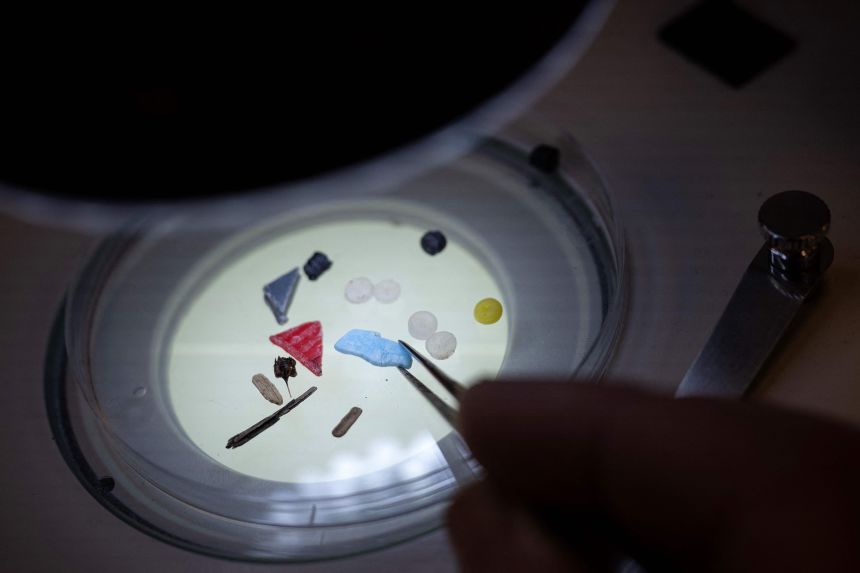
Microplastics are polymer fragments that range in size from less than 0.2 inches (5 millimeters) to 1/25,000th of an inch (1 micrometer). Polymers are chemical compounds with long chains of large and repetitive molecular units called monomers, and are known for being flexible and durable. Most plastics are synthetic polymers.
Plastics smaller than the measurement criteria for microplastics are considered nanoplastics, which are measured in billionths of a meter.
“Microplastics primarily enter the body through three routes: ingestion, inhalation, and skin contact,” Gómez-Sánchez said. “From there, they can enter the bloodstream, which then distributes them throughout the body, including to the reproductive organs.”

In previous studies, the fragments have also been detected in various body parts or fluids including the lungs, placenta, brain, testicles, nose tissue at the base of the brain, penises and human stool.
“Decades of studies and the (US Food and Drug Administration) agree that microplastics are not a threat because exposure is extremely low and they are non-toxic,” said Dr. Chris DeArmitt, founder of the Plastics Research Council, via email.
However, while there is little to nothing known about the potential effects of microplastics on human health, chemicals used in plastic production — that often leach from plastics — are linked with health risks including hormonal disruptions, certain cancers, respiratory diseases and skin irritation.
Testing bodily fluids for microplastics
The research participants were patients and donors at Next Fertility Murcia. The women were undergoing egg retrieval, formally known as follicular aspiration, for assisted reproduction, while the men were undergoing semen analysis. The authors stored and froze the samples in glass, then incubated them for two days before analyzing them using an imaging technique combining microscopy and infrared laser.
The research team also analyzed the containers used to collect and store samples to ensure they hadn’t been contaminated with microplastics. The abstract doesn’t disclose what materials the collection containers were made of.
Imaging revealed nine types of microplastics in the reproductive fluids. Over 50% of the follicular fluid samples contained polyamide (PA), polyurethane (PU) and polyethylene (PE), while polytetrafluoroethylene (PTFE) and polyethylene terephthalate (PET) were discovered in over 30% of the follicular fluid samples.

Polypropylene (PP), polyvinyl chloride (PVC) and polylactic acid (PLA) appeared in over 20% of the follicular fluid samples.
In the semen samples, 56% contained PTFE.
Synthetic polyamide is commonly known as nylon, often used in textiles, plastics and automotive parts. Polyurethane is commonly used in coatings, foams and adhesives for furniture, construction, automotive parts, footwear and more. Polyethylene and polypropylene are often found in packaging, construction uses and consumer goods, such as toys and kitchenware.
The plastic PTFE is widely used in nonstick cookware, while PET is found in many food and beverage containers. Polyvinyl chloride is often used in the construction, packaging and medical industries, while PLA is primarily found in food packing, medical implants and 3D-printed objects.
In most samples, the researchers found only one or two particles, but they detected up to five in others, Gómez-Sánchez said. Microplastic concentrations were higher in follicular fluid than in semen. However, the overall concentrations of microplastics in both fluids were relatively low when compared with the concentrations of non-plastic particles. The abstract didn’t disclose what those non-plastic particles were.
“Sadly, (the findings) are not surprising,” said Dr. Matthew J. Campen — a researcher who helped lead the discoveries of microplastics in the brain and testicles — via email.
Though the research is preliminary, it does “set the stage for more advanced studies of the relationship between plastics exposure and reproductive fitness,” added Campen, who wasn’t involved in the study and is a regents’ professor of pharmaceutical sciences at the University of New Mexico.

Important questions remain
The research affirmed previous studies that had found microplastics in these reproductive fluids, and yet again raises important questions, including how these microplastics are absorbed in the intestine then transported to the gonads, Campen said.
“This suggests a very natural mechanism is being hijacked,” he added. “It would also be important to assess plastics in the nanoscale range.”
People trying to conceive naturally or via in vitro fertilization may not need to be concerned about the findings, as they are only preliminary for now, Gómez-Sánchez said.
“We don’t know if they have a direct effect on the capacity of a couple to conceive and carry a baby to term,” he added. “Reproduction is a complex equation, and microplastics are a variable in this equation.”
The findings also can’t yet be linked to more general health outcomes, experts said.
“So far, the effects of microplastics on humans have been mainly extrapolated from animal studies, where microplastics were administered at high concentrations,” Gómez-Sánchez said. “We currently lack direct evidence regarding their impact on humans.”
Betsy Bowers, executive director of the EPS Industry Alliance, echoed these disclaimers and noted that the animal research results aren’t indicative of harm at regular exposure levels. The EPS (expanded polystyrene) Industry Alliance is a North American trade association representing the EPS industry.
The finding that follicular fluid contained more microplastics than semen may be circumstantial, Gómez-Sánchez added, because the study group was small. However, when an ovary is stimulated for assisted reproduction, blood flow to the ovary increases, which may deliver more microplastics to the ovary, he explained.
Additional research is needed to identify the types and quantities of microplastics that could cause health problems, said Dr. Ranjith Ramasamy, a consultant urologist at Jumeirah American Clinic in Dubai. Ramasamy, who wasn’t involved in the study, led the research that found microplastics in penises.
“The plan is to increase the number of cases and conduct a survey on lifestyle habits in order to determine if any of these habits are linked to higher concentrations of plastics found in the ovaries and seminal plasma,” Gómez-Sánchez said.
Gómez-Sánchez and the other researchers also plan to explore whether the presence of microplastics in reproductive fluids affects the quality of sperm and oocytes, he said. Oocytes are cells in ovaries that form an ovum, a mature female reproductive cell that can divide to create an embryo upon fertilization by sperm.
How to reduce your exposure to microplastics
The significance of the findings isn’t yet clear, but they should be considered an additional argument in favor of avoiding the use of plastics in our daily lives, said Dr. Carlos Calhaz-Jorge, professor of obstetrics and gynecology at the University of Lisbon in Portugal, in a news release. Calhaz-Jorge wasn’t involved in the research.
Given the ubiquity of plastics, avoidance can be challenging, said Dr. Philip Landrigan, a pediatrician and director of the Program for Global Public Health and the Common Good at Boston College, via email. In addition to reducing obvious uses of plastic, you can also avoid using plastic cutting boards and eating ultraprocessed foods.
Also limit drinking water from plastic bottles, microwaving food in plastic containers and consuming hot food from plastic containers, Ramasamy said.
Food can be stored in glass, stainless steel or bamboo instead of plastic.

But “the conversation needs to shift — immediately — to policymakers,” Campen said. “Hoping that individual choices can make a difference has been clearly a losing strategy. Federal governments around the world need to make major changes to waste management and recycling policies.”
Annual plastic production by weight has increased by 250 times in the past 75 years and is on track to triple again by 2060, Landrigan said.
“To reduce plastic pollution and safeguard human health, it will be essential that the Global Plastics Treaty that is currently in negotiation at the United Nations impose a global cap on plastic production,” Landrigan, who wasn’t involved in the research, added.
“But smart governments can act now,” Campen urged.
Sign up for CNN’s Life, But Greener newsletter. Our limited newsletter series guides you on how to minimize your personal role in the climate crisis — and reduce your eco-anxiety

No comments:
Post a Comment