Elon Musk bemoaned President Trump's
signature legislative effort in an interview with CBS News this week,
saying he was "disappointed to see the massive spending bill," which is
projected to add trillions to budget deficits.
Why it matters: Musk and his businesses were walloped by backlash
to his leadership of DOGE. Now the fruit of those efforts — more
government savings — are at risk of being washed away by Trump's "One,
Big Beautiful Bill."
The big picture: Elon Musk claims that his DOGE team saved $175 billion in taxpayer spending, though an outside analysis estimates the verified savings are closer to $16 billion.
The "One Big, Beautiful Bill," which passed the House last week, is projected to add $3 trillion to 5 trillion to budget deficits over the next 10 years.
Even
using Musk's most generous estimate, those DOGE savings would amount to
just 6% of the projected increase to the deficit from the bill.
Between the lines: The
primary driver of deficits in the bill is the extension of Trump's 2017
tax cuts, which Republicans aim to partially offset with cuts to
Medicaid, green energy tax breaks and other programs.
The bill also includes significant new spending on border security and the military.
The
White House argues the bill will reduce the deficit by $1.6 trillion,
claiming that tax cut extensions shouldn't count as new costs — and that
Trump's policies will supercharge economic growth.
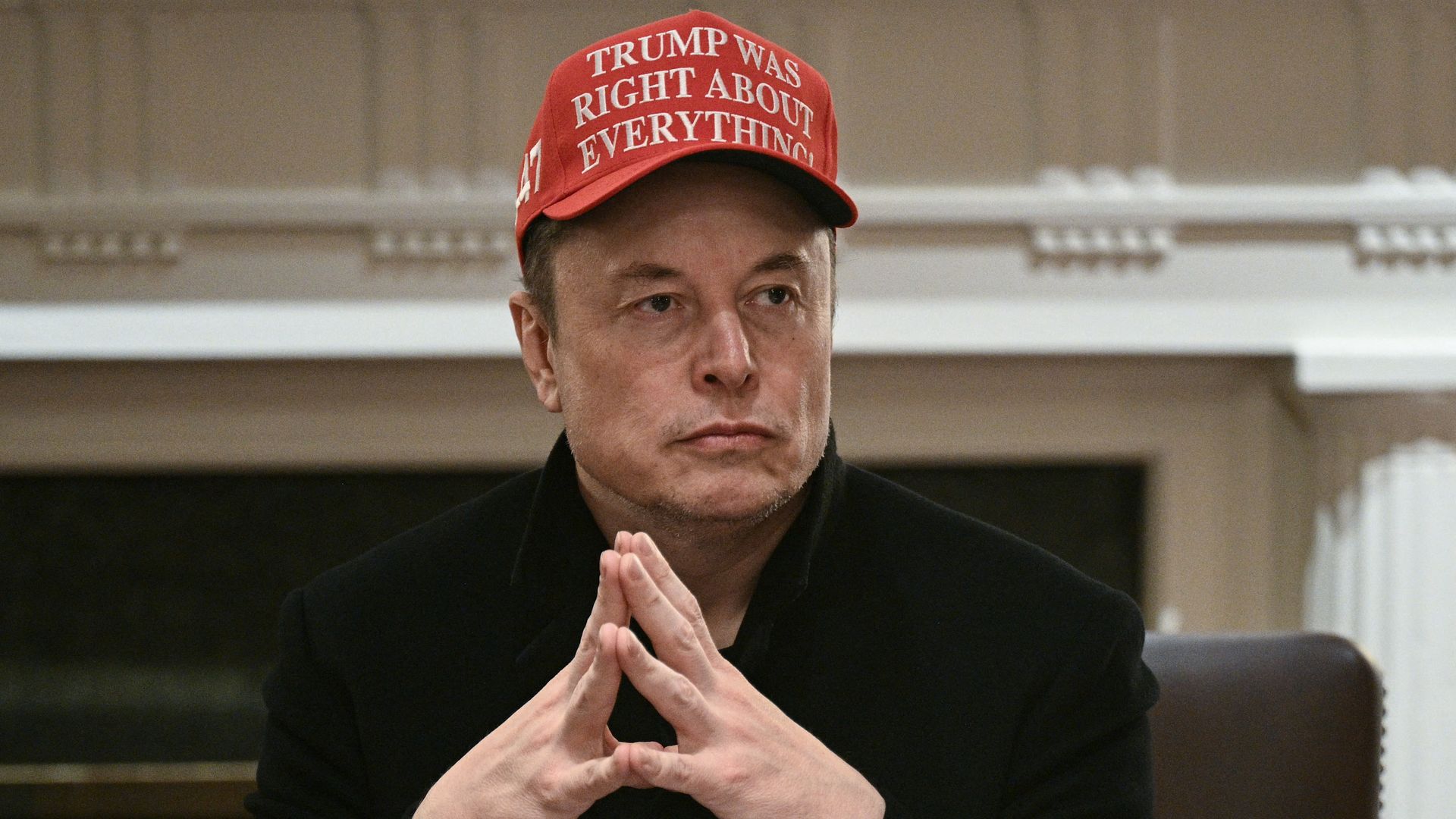
Elon Musk at the White House in March. Photo: Brendan Smialowski/AFP via Getty Images
Elon Musk said President Trump's "big, beautiful bill" "undermines" DOGE's cost-cutting, per an excerpt of CBS News' interview with the businessman that was released Tuesday.
Why it matters: Musk has been a key Trump ally during the president's second term after donating millions of dollars to his 2024 election campaign, leading efforts to reduce government spending until the Tesla CEO stepped back from DOGE after the EV firm's sales took a hit from his close ties to the administration.
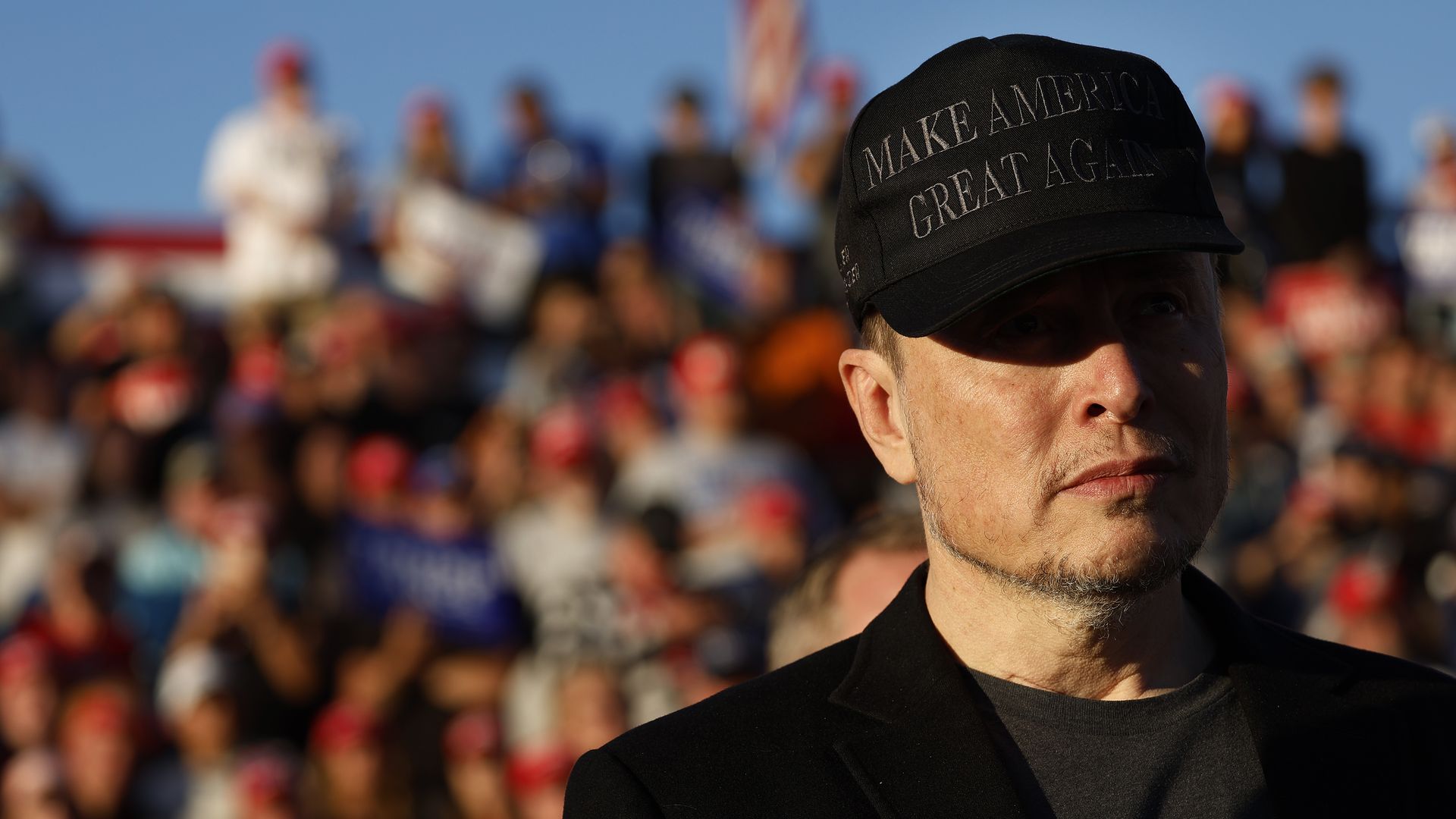
Elon
Musk wears a black "Make America Great Again" ball cap while attending a
campaign rally with Donald Trump on Oct. 5, 2024. in Butler, Pa.(Photo
by Anna Moneymaker/Getty Images)
The big picture: DOGE-driven cuts wreaked havoc on federal workers, prompting a litany of lawsuits
seeking to rein in Musk's chainsaw. As the billionaire departs, judges
across the country could still unravel key parts of the effort for which
he became the face.
Corruption Watch: Trump’s SEC Drops Major Case Against
Crypto Giant Binance After Its Former CEO Partnered With Trump Family On
Lucrative Crypto Venture
Is a Trump Pardon for Convicted Binance Founder “CZ” Next?
WASHINGTON, D.C. – In the
latest egregious case of President Trump’s family business dealings
apparently influencing Trump administration actions, last night, Trump’s
SEC announced it had voluntarily dismissed
its lawsuit against Binance, the world’s largest crypto exchange, for
allegedly misleading investors about trading controls, among other
accusations.
The dropped case comes as the Trump
Family’s World Liberty Financial Inc. – a crypto venture that has
alarmed ethics experts – has grown increasingly close with Binance
Founder CZ, going so far as to post photos arm-in-arm with the man who
just finished his prison sentence late last year. CZ was convicted of felony money laundering and who allegedly wants to trade a stake in Binance with the Trump family for an administration pardon in order to facilitate Binance’s return to the U.S. market, which Zhao has denied.
The Trump SEC’s dropping a case against a new Trump family
crypto business partner reeks of pay-to-play shenanigans and abuse of
power. No one should be surprised if President Trump’s next move is to
grant the pardon that the former Binance CEO and convicted money
laundering law violator has allegedly been begging for – which would
fast track the crypto exchange’s return to the U.S. and open even more
avenues for the Trump family to profit off its ballooning crypto grift
operations."
Accountable.US Executive Director Tony Carrk.
Stay Informed
Get the latest news on
how we’re holding big business, government officials, and special
interests accountable, and what you can do to get involved.
By submitting your cell phone
number, you are agreeing to receive period text messages from
Accountable.US, including automated text messages. Message and data
rates may apply. Text HELP for more information. Text STOP to stop
receiving messages.
One year ago today, a jury of 12 New Yorkers convicted Donald Trump for falsifying business records as part of an alleged hush money scheme to influence the 2016 election.
The
conviction left an indelible mark on Trump -- making him the first
president or former president to be found guilty of a crime -- and his
fight to erase that legacy continues to this day.
On June 11, a federal appeals court in Manhattan is set to hear oral arguments in the president's renewed legal fight to move his criminal case from state to federal court.
Manhattan
District Attorney Alvin Bragg opposes the move -- arguing that a case
can't be removed to federal court after conviction -- but Trump's
lawyers have argued the "unprecedented criminal prosecution of a former
and current president of the United States belongs in federal court."
Trump was found guilty
on 34 felony counts after prosecutors alleged that he engaged in a
"scheme" to boost his chances during the 2016 presidential election
through a series of hush money payments to adult film actress Stormy
Daniels and the falsification of New York business records to cover up
that alleged criminal conduct.
"I
did my job, and we did our job," Bragg said following Trump's
conviction. "There are many voices out there, but the only voice that
matters is the voice of the jury, and the jury has spoken."
Ten days before Trump was sworn in as president last November, New York Judge Juan Merchan sentenced him to an unconditional discharge
-- without prison, fines or probation -- saying it was the "only lawful
sentence" to prevent "encroaching upon the highest office in the land."
New
York State Judge Juan Merchan sentences President-elect Donald Trump as
he appears remotely alongside his lawyer Todd Blanche for a sentencing
hearing as prosecutor Joshua Steinglass listens...
Jane Rosenberg/Reuters
"I
won the election in a massive landslide, and the people of this country
understand what's gone on. This has been a weaponization of
government," Trump told the court during his sentencing.
Trump
continues to vehemently deny any wrongdoing, and his lawyers have
argued that his conviction relied on evidence and testimony that related
to his official acts as president, including social media posts from
his official Twitter account as president and testimony from his former
communications director Hope Hicks.
The trial took place one month before the Supreme Court delivered a landmark ruling
expanding the scope of presidential immunity, and Trump's lawyers have
argued that the evidence would have not been permitted based on the high
court's ruling.
Trump's
lawyers attempted to use that argument to throw out the case before
Trump's January sentencing, but the argument was rejected by Judge Juan
Merchan, two New York appeals courts, and the Supreme Court.
"The
alleged evidentiary violations at President-Elect Trump's state-court
trial can be addressed in the ordinary course on appeal," the Supreme
Court said in a brief unsigned opinion, though four justices said they
would have granted Trump's application.
For
Trump's criminal defense, he relied on then-defense attorneys Todd
Blanche and Emil Bove, who now serve as the deputy attorney general and
principal associate deputy attorney general. Earlier this week, Trump
announced that he plans to nominate Bove -- who led a purge of career
law enforcement officials before the Senate confirmed his nomination to
help run the DOJ -- to the United States Court of Appeals for the 3rd
Circuit.
With
his former defense attorneys now working for the government, Trump
earlier this year tapped the elite Manhattan law firm of Sullivan & Cromwell to handle his criminal appeal.
Lawyers
with the Department of Justice also filed an amicus brief in the case
this week to argue that the case should be heard -- and thrown out -- by
a federal court because the jury's conviction relied on evidence that
was covered by presidential immunity.
"That
President Trump's defense in fact takes the form of a new
constitutional immunity announced by the Supreme Court after his trial
ended, rather than a new statute enacted by Congress, should if anything
cut in the President's favor," lawyers with the Department of Justice
argued in a brief submitted on Tuesday.
The appeal -- as well as the ongoing appeal of Trump's $83 million judgment in the E. Jean Carroll civil case and half-billion-dollar civil fraud case
-- is proceeding on uncharted legal grounds as Trump wields the power
of the presidency in his defense. He has characterized the prosecutors
who pursued the cases against him as politically motivated, and has
touted his electoral victory last November as a political acquittal.
"The
real verdict is going to be Nov. 5 by the people," Trump told reporters
as he left court following his conviction last year. "And they know
what happened here, and everybody knows what happened here."
Las Vegas is home to a lot that might raise a pair of eyebrows, but a
new art installation depicting Donald Trump as a naked, 43-foot-tall
marionette might raise them right off your face.
Made of foam over rebar and weighing approximately 6,000 pounds, the
gigantic naked Trump will travel the United States as part of the
“Crooked and Obscene Tour” but first, you can see it in person and in
the wild at 13460 Apex Harbor Ln in Las Vegas right now.
Per the tour’s organizers, portraying Trump in the nude “is
intentional, serving as a bold statement on transparency, vulnerability,
and the public personas of political figures.”
They also aim to spark conversation about “transparency—or lack
thereof—in politics, challenging viewers to think critically about
political influence,” according to press materials.
Those who can’t make it to Las Vegas will have opportunity to see it
on tour stops at other locations across the United States. Dates and
cities for the tour have not yet been announced. We’ll keep you posted.
Enjoy — or ‘enjoy’ — some photos of the project below:
Via “Crooked and Obscene”Via “Crooked and Obscene”Via “Crooked and Obscene”Via “Crooked and Obscene”Via “Crooked and Obscene”Via “Crooked and Obscene”Via “Crooked and Obscene”
This isn’t the first time a nude statute of Trump has appeared in
public, though it certainly dwarfs its predecessor. In 2016 Joshua
“Ginger” Monroe was hired at the art collective INDECLINE to create five life-size naked statues of the former president as part of a project called “The Emperor Has No Balls.”
The statues were put up without permits at locations in Seattle, New
York City, Cleveland, Los Angeles and San Francisco; naturally they were
soon removed by police.