Vultures Circle Trump’s $2.3Bn Do-Over of Deportation Disaster
EXCLUSIVE:
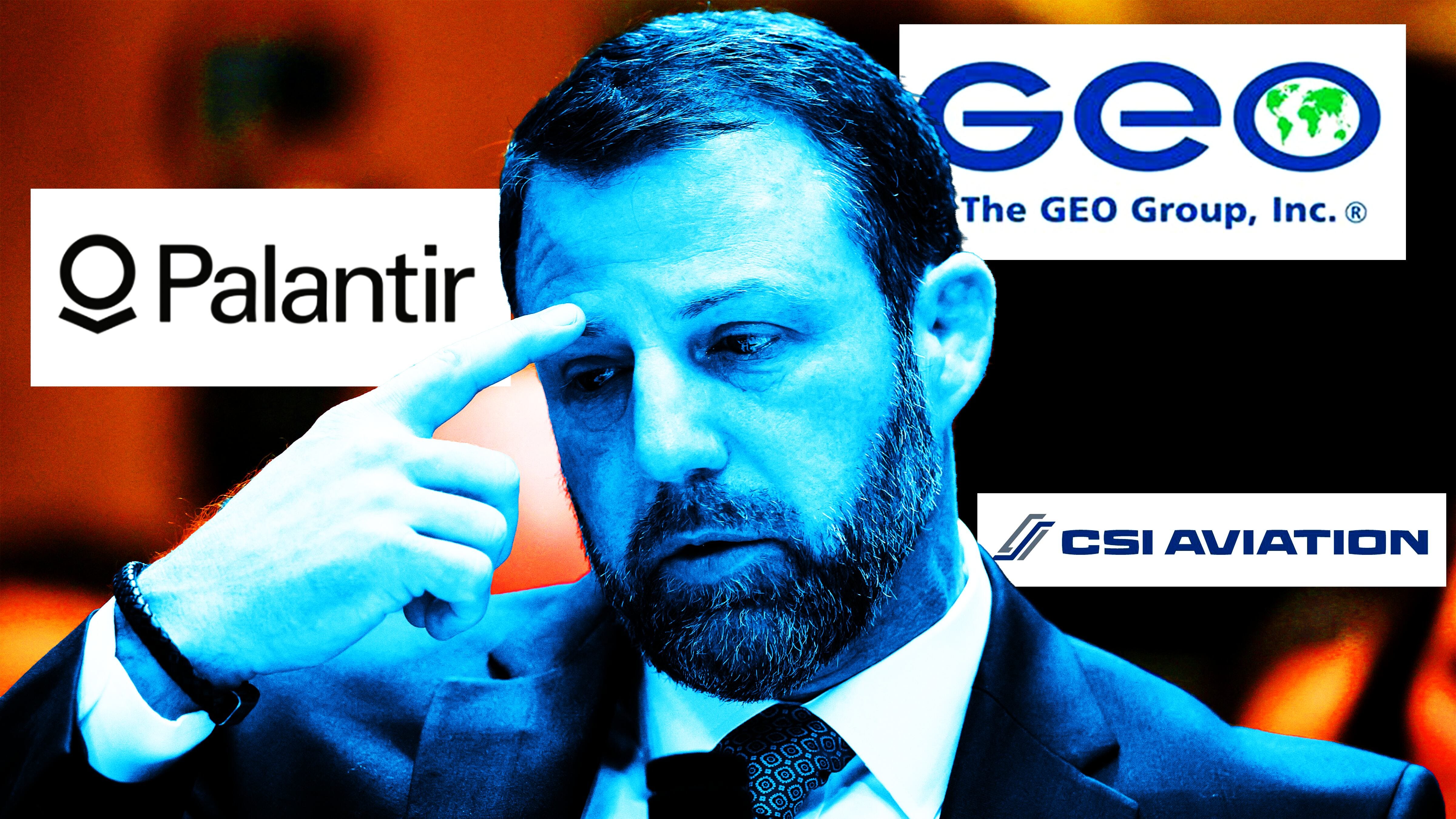
The list of organizations circling a recompete of the Trump
administration’s scandal-ridden Project Homecoming deal reads like a
who’s who of the immigration enforcement industry.
The
grim line-up of controversial companies jostling for a shot at a $2.3
billion contract to run the Trump administration’s scandal-hit
deportation scheme can be revealed by PunchUp.
Ten organizations dialed into a 45-minute virtual briefing
on the upcoming Project Homecoming contract hosted by the Department of
Homeland Security on Aug. 12. It marks the second installment of an
earlier, $915 million deal to run the scheme that went to Salus
Worldwide Solutions. That company has faced a barrage of corruption
allegations over how the award process ran last year. Sources have told
us that, as a result, it’s “unlikely” to win the recompete.
Draft
terms for the new contract, which we revealed earlier this week, show
the department wants bidders to pay unaccompanied migrant children if
they “choose” to leave the country. Its menu of stipends includes the
$2,500 on offer to minors since last October, with the money routed to a
“Government-designated adult.” DHS will also pay the winning company to
advertise the program through “trusted local networks,” hunt down
eligible participants using commercial data in a practice known as
skip-tracing, and set up “rover” teams that surge across the country to
sign up people already in detention.
PunchUp
is a reader-supported publication. To receive new posts and support my
work, consider becoming a free or paid subscriber.
People arrive for immigration court hearings in New York, on July 27.
AP
The Trump administration just managed to combine two of its favorite
things into one horrifying Reese’s Peanut Butter Cup of Garbage: hurting
migrant children and showering unqualified cronies with taxpayer
dollars. And unsurprisingly, everyone except those cronies is going to
come out far, far worse.
Meet Texas-based Burke Law Group, which now has $150 million to represent unaccompanied migrant children detained in shelters by President Donald Trump’s deportation machine.
Burke Law got the contract last week, after the administration deliberately let lapse the contracts of legal aid groups
that actually do care about keeping kids safe and preventing them from
being deported or imprisoned. Now, unaccompanied migrants get … whatever
this is supposed to be.
Cartoon by David HorseyDavid Horsey/Tribune Content Agency
Of the 25 lawyers employed by Burke Law, a whopping two are listed as
having any immigration experience. But even those two lawyers only joined
the firm this July. The firm didn’t get around to updating its website
to share all of their exciting expertise with working with unaccompanied
minors, defending people against orders of removal, and asylum
applications until Aug. 3, or two days before the announcement they got
that fat $150 million.
One of those extremely great and cool and experienced attorneys also
seems to be simultaneously running a different law firm, however, which
doesn’t really make it look like Burke Law is primed and ready to handle
a big influx of immigration cases.
The real reason this firm got the nod is that it was founded by
Marcella Burke, who served in the Trump administration at both the
Department of Interior and the Environmental Protection Agency. Also
there, with an equal lack of immigration experience, is Justin Shubow,
who the Associated Press describes as “the leading supporter of Trump’s
efforts to require federal buildings to adhere to classical and
traditional architectural styles, and a former Trump appointee to the
U.S. Commission of Fine Arts.”
Also there’s Ilya Shapiro as “senior counsel.” As with Burke and
Shubow, Shapiro has no experience representing unaccompanied minors or
anything of the sort. Rather, Shapiro is known primarily for being an absolute gutter racist
whom Georgetown Law placed on leave after he whined about former
President Joe Biden’s choice of Ketanji Brown Jackson for the Supreme
Court. Seemingly mad that Biden didn’t ask him, Ilya Shapiro, noted
racist random law guy, what he thought, and failed to choose Sri
Srinivasan, Shapiro’s pick, Shapiro decided to tweet about it: “But alas
doesn’t fit into the latest intersectionality hierarchy so we’ll get
lesser black woman.”
Children
of mainly Latino immigrant parents hold signs in support of them and
those individuals picked up during an immigration raid at a food
processing plant, during a protest march to the Madison County
Courthouse in Canton, Miss.AP
What a treat this guy is, huh? Definitely can see him as someone
deeply concerned about protecting the rights of migrant kids of color.
Perhaps those kids will be helped by a different lawyer at the firm.
How about Joshua Wright? Wright is a former Federal Trade Commission
member and Trump crony whose deep experience in facing sexual harassment claims from eight women spanning two decades will no doubt come in super-valuable in helping migrant children.
This is such a transparent attempt to ensure that an actual lack of
expertise will lead to correspondingly worse results for actual factual
little kids, as well as a transparent attempt to remove from the playing
field the legal aid groups actually committed to this work.
Even the immigration lawyers Burke Law added don’t do this type of
immigration law. One dude, Kyle Farmer, has done employment-related
immigration work for agricultural and construction companies. Another,
Andrea Laprade, used to be at a white-shoe law firm doing securitization
law, but reinvented herself a whopping five months ago as an
immigration and business lawyer. She did not yet, however, reinvent
herself as far as where she is admitted to practice, so she’s not even
licensed to appear in Texas or other border states where most of these
cases are heard.
Did I mention this was a sole-source contract? In other words, this
is the only representation the government is now paying for, as far as
unaccompanied minors, and likely only because it is required by law to
facilitate legal representation for them. Sure, the law can require
representation, but that doesn’t mean the administration is going to
ensure it’s meaningful or helpful representation.
The administration has already made it very clear it doesn’t like the
efforts of lawyers who actually do care about doing this work. Indeed,
those folks have had their offices stormed
by Immigration and Customs Enforcement and Health and Human Services
agents in an attempt to intimidate them. But why bother with
intimidation here and there when you can just wipe effective legal
representation off the map and give the money to some Trump pals who are
neither capable nor interested in helping unaccompanied migrant minors?
At the moment, there’s a very small silver lining, as this contract
covers only the roughly 1,800 unaccompanied minors who are housed in
shelters, not the 22,000 living with sponsors or family members.
However, there’s no information at all yet as to who the administration
proposes represent the much larger latter group.
Maybe the Trumpy law firm will add another fake immigration lawyer
and just call it a day. No matter what choice is made, this is just
another in the unforgivable, shameful behavior of an administration that
abducts five-year-olds and went all the way to the Supreme Court to try to wipe out birthright citizenship. Moral monsters, every last one of them.
We'll get straight to the point: The financial hardships that Daily Kos is facing this year are tough.
We continue to be paywall-free. We continue to be supported by our
readers, not billionaires or corporations. But we need to bring in more
revenue. We are leaning on our community more than ever to help make
ends meet.
$
OR
Donate with
Power matters.
Sign up for our daily top stories newsletter so you don't miss how it's being used—and what comes next.
Recommending and sharing stories helps us decide which stories are most important to show our readers.
10
Share:
Conversation
|
All comments are subject to our Community Guidelines. The views expressed in comments are those of the individual authors and don't necessarily reflect the views of Daily Kos.
All Comments
Comment by yomundongo.
No better example of the old adage “The Fish Rots From Its Head”!
This is Just Another Example of Trumps CORRUPTION in Full Display!
Gangsters pray on the weak and what better pray than DEFENSELESS CHILDREN!
TO MAGA — THANKS FOR PAYING ATTENTION TO THIS MATTER!
Comment by LarisaW.
The horror has no bottom. Heart-breaking.
Comment by suzeli.
It's not just his "pals". Scratch the surface, and trump himself will be getting a taste of that no-bid contract money.
Comment by LeMoJoust.
Baked Ham Homan took a $50K cash bribe for just such a reason.
The feckless media stopped caring months ago.
Comment by FreeSomeday.
"Moral monsters" indeed.
There
is a whole tribe of morally underdeveloped people who see the suffering
of others, and who's only question is, "How can I monetize this for my
personal benefit?" And, frankly, that describes the entire RAPEpublican
hierarchy, and most MAGA voters.
Not everything that walks on two legs is human.
Reply by Chastity Jones.
Do any of these greedy pawns speak Spanish ? I'd bet my house they don't. It most likely is a prererecquisite that they don't.
Active Conversations
The following is a list of the most commented articles in the last 7 days.
Conspiracy
theorists liked to say that Graham’s Trump sycophancy was a result of
blackmail. But the truth is worse: He stuck with Trump to keep the US
war machine going.
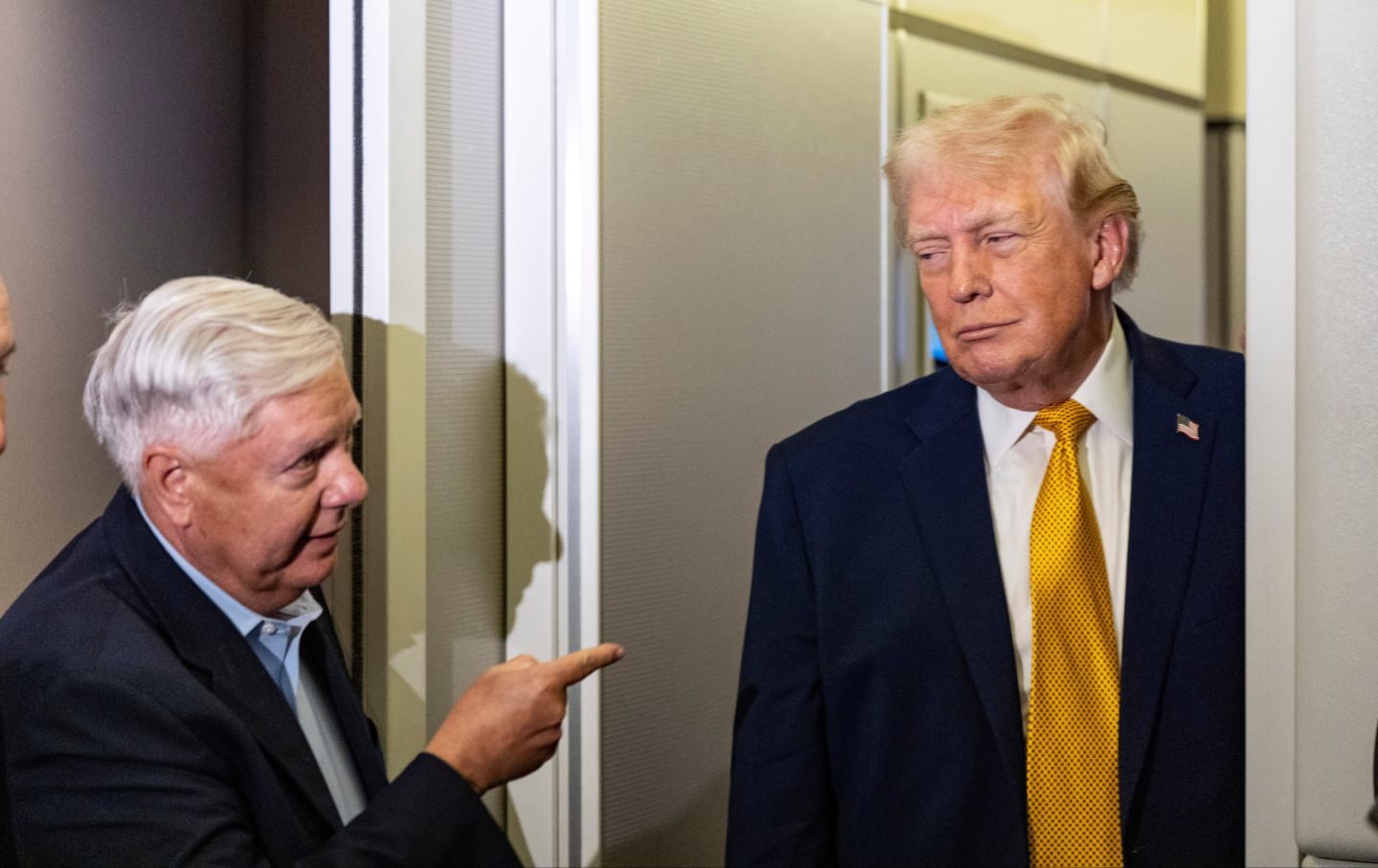
Lindsey Graham gestures as President Donald Trump speaks with reporters on Air Force One, on January 4, 2026.
(Alex Brandon / AP)
Although
Senator Lindsey Graham, who died unexpectedly on Saturday at 71, was
one of the most odious figures in American public life, he does deserve a
partial defense from a strangely pervasive calumny directed against him
by liberal critics. In the last decade of his life, Graham underwent a
dramatic political transformation. In 2015 and early 2016, Graham became
a no-holds-barred foe of Donald Trump, whom he lambasted
as “a race-baiting, xenophobic, religious bigot” who “represents the
worst in America.” But Graham started to warm to Trump once the
insurgent candidate won the Republican primary on May 4, 2016. This
process accelerated after Trump was elected president in November, when
Graham became, against stiff competition, the president’s most
obsequious lackey.
Graham’s metamorphosis was all the more startling because his earlier
disdain for Trump sprang logically from his political history. Prior to
2016, Graham was best known as the ultra-hawkish ally of fellow
war-happy senators John McCain and Joe Lieberman (their noxious nickname
for themselves was the “Three Amigos”), which made him a natural
opponent of candidate Trump’s isolationist foreign policy. Further,
Graham had a history of bipartisanship, working with Democrats on
immigration reform and campaign finance and casting the sole Republican
vote on the Senate Judiciary Committee in support of Sonia Sotomayor and
Elena Kagan’s Supreme Court nominations. This gave Graham a profile, on
domestic matters at least, more mainstream than Trump’s burn-it-down
populism.
What explains Graham’s quick change of political identity? One theory
popular among Resistance liberals and Never Trump conservatives was
that the senator, who was widely rumored to be a closeted gay man, had
been blackmailed by Trump, perhaps with kompromat provided by Vladimir
Putin. In 2019, for instance MSNBC host Stephanie Ruhle dropped a heavy-breathing hint along this line by suggesting that Trump knows “something pretty extreme about Lindsey Graham.”
The blackmail theory
was never grounded in evidence and suffered the further disadvantage of
making Graham seem like a victim rather than someone making affirmative
choices about his life. The actual story of Graham’s ideological
conversion is much worse than any conspiracy, because he gave us his
principles for the worst of reasons: to stay close to the center of
power, stave off MAGA primary challenges, and bring Trump around to
Graham’s deeply militarist worldview.
The
Palmetto State will let primary voters nominate Graham’s successor.
Maine, on the other hand, is letting a party convention pick Graham
Platner’s replacement.
On July 4, 2026, a large
group of masked members of Patriot Front entered the Washington, DC,
Metro system. This artwork is inspired by a Reuters photograph by Cheney
Orr.








Conversation
All comments are subject to our Community Guidelines. The views expressed in comments are those of the individual authors and don't necessarily reflect the views of Daily Kos.
All Comments
Active Conversations
The following is a list of the most commented articles in the last 7 days.
A trending article titled "Abbreviated Pundit Roundup: Ripples from Michigan" with 220 comments.
Abbreviated Pundit Roundup: Ripples from Michigan
220
A trending article titled "GNR for Friday, August 7, 2026: Truth and Love" with 69 comments.
GNR for Friday, August 7, 2026: Truth and Love
69