Sunday, March 1, 2026

About the ICE List

https://wiki.icelist.is/index.php/Main_Page 

This project exists thanks to readers like you. We document federal immigration enforcement, preserve evidence, and maintain a public record for accountability.

If this work matters to you, please consider making a donation to help keep it online and independent.

Donate


About the ICE List

The ICE List Wiki is a public, verifiable record of immigration enforcement activity in the United States.

It documents incidents, agencies, individuals, facilities, vehicles, and legal authorities involved in enforcement operations. Entries are structured, sourced, and timestamped to support verification, cross-referencing, and long-term analysis. The wiki is intended for use by journalists, researchers, advocates, and the general public.

This project was created by Crust News.

Project status: This wiki is in active development. Structure, navigation, and data standards are being finalised. Older pages may be reformatted as standards are applied consistently.
Using the data

The ICE List Wiki is designed for public use. Journalists, researchers, and advocacy groups use the data to track enforcement patterns, identify repeat agencies or jurisdictions, and contextualise individual incidents. Pages may be cited with attribution.

Warning: Do Not Use Ring Cameras

Amazon’s Ring cameras are integrated into U.S. law-enforcement workflows. Police agencies can request footage directly from Ring users, allowing private home surveillance video to be shared with law enforcement.

In 2025, Ring partnered with Flock Safety, further linking consumer cameras to nationwide law-enforcement surveillance platforms.

Civil-liberties groups warn this expands surveillance with limited transparency or oversight. ICE List strongly recommends against purchasing or using Ring cameras.

Read more →

Featured agent

Timothy Donahue

Timothy Donahue CBP • Illinois

U.S. Border Patrol agent identified through public reporting and FOIA-linked records as participating in an interior immigration enforcement operation in the Chicago metropolitan area, including the October 31, 2025 Evanston incident involving the assault of a handcuffed individual following a vehicle crash.

In the news

Recent ICE-related reporting from external news organisations.

  • 2025-11-18: Maryland bill would ban local 287(g) agreements statewide — Del. Nicole Williams plans to reintroduce a bill to prohibit 287(g) agreements in Maryland, with new backing from the state Senate president, signaling growing political resistance to local ICE partnerships.
  • 2025-11-18: Lawsuit over conditions at California City Detention Facility — Seven people detained at California’s largest immigration detention facility filed a federal lawsuit describing sewage bubbling up from drains, lack of medical care, frigid cells, and people forced to rewrap open wounds with dirty bandages at the privately run California City Detention Facility.
  • 2025-11-18: Lawsuit targets conditions at Broadview ICE facility outside Chicago — People detained at Broadview allege prolonged confinement in freezing holding cells, sleep deprivation, and denial of basic medical care, turning the suburban processing center into a site of chronic abuse for those in ICE custody.
  • 2025-11-18: Bucks County sheriff who joined 287(g) program voted out of office — Voters removed the sheriff who signed Bucks County into ICE’s 287(g) program after the agreement became the central issue of the race; the sheriff-elect has vowed to end the partnership immediately.
  • 2025-11-06: [shots, 7 holes': Border Patrol supervisor appeared to brag about shooting woman] — A Border Patrol supervisor who shot a woman after a crash in Chicago allegedly texted “5 shots, 7 holes,” and a judge is now examining whether federal agents mishandled key evidence by releasing his SUV before defense experts could inspect it.
  • More ICE news →

    Featured incident

    Killing of Silverio Villegas González by ICE 2025-09-12 • Franklin Park, Illinois

    ICE agents, including Moore, Arian S., fatally shot Silverio Villegas González during an immigration enforcement operation in a residential area outside Chicago. ICE claimed the shooting was justified by a vehicle-related threat, but body-worn camera footage, witness accounts, and independent reporting have raised serious questions about the accuracy of the official narrative.


    Unidentified agents

    Some agents documented in photos, videos, or incident reports have not yet been identified by name. These entries are published to allow journalists, researchers, and the public to help recognise individuals based on uniforms, context, or other verifiable details.

    Recommend a company to boycott
    Media contact
    Verification and sourcing

    Each page includes a verification status indicating whether claims are supported by public records, media, video evidence, or other documentation. Unverified information is clearly labelled and is not presented as established fact. Pages may be updated as additional sources become available.

    Quick links
    • How to report an incident Step-by-step instructions for submitting an incident with enough detail to verify and map it.
    • Volunteer guide Orientation for new volunteers, from research tasks to safety and OPSEC basics.
    • Deportation agents Overview of ICE ERO officers, how we document them, and how to read agent pages.
    Contributing responsibly

    Submissions should be factual, specific, and supported by evidence where possible. Speculation, harassment, or unverifiable claims are not published. Contributors are encouraged to prioritise accuracy over speed.


    Iranian officials claim school hit during US-Israeli army strikes


    Iranian officials claim school hit during US-Israeli army strikes

    https://abcnews.com/International/iranian-officials-claim-school-hit-us-israeli-army/story?id=130629048 


    Iranian officials claim school hit during US-Israeli army strikes

    The U.S. is looking into the reports and says it does not target civilians.

    February 28, 2026, 5:38 PM


    Dozens of students at an Iranian all-girls elementary school were among those killed during the U.S. and Israeli military strikes throughout the country Saturday morning, officials in Iran claimed.

    The country's leaders and state TV said 115 people who were at the Shajare Tayyiba Elementary School were dead, as of about 5:30 p.m. ET after the school in Minab was attacked.

    Earlier Iran's Tasnim News Agency reported at least 92 injuries related to the school attack, citing the local governor.

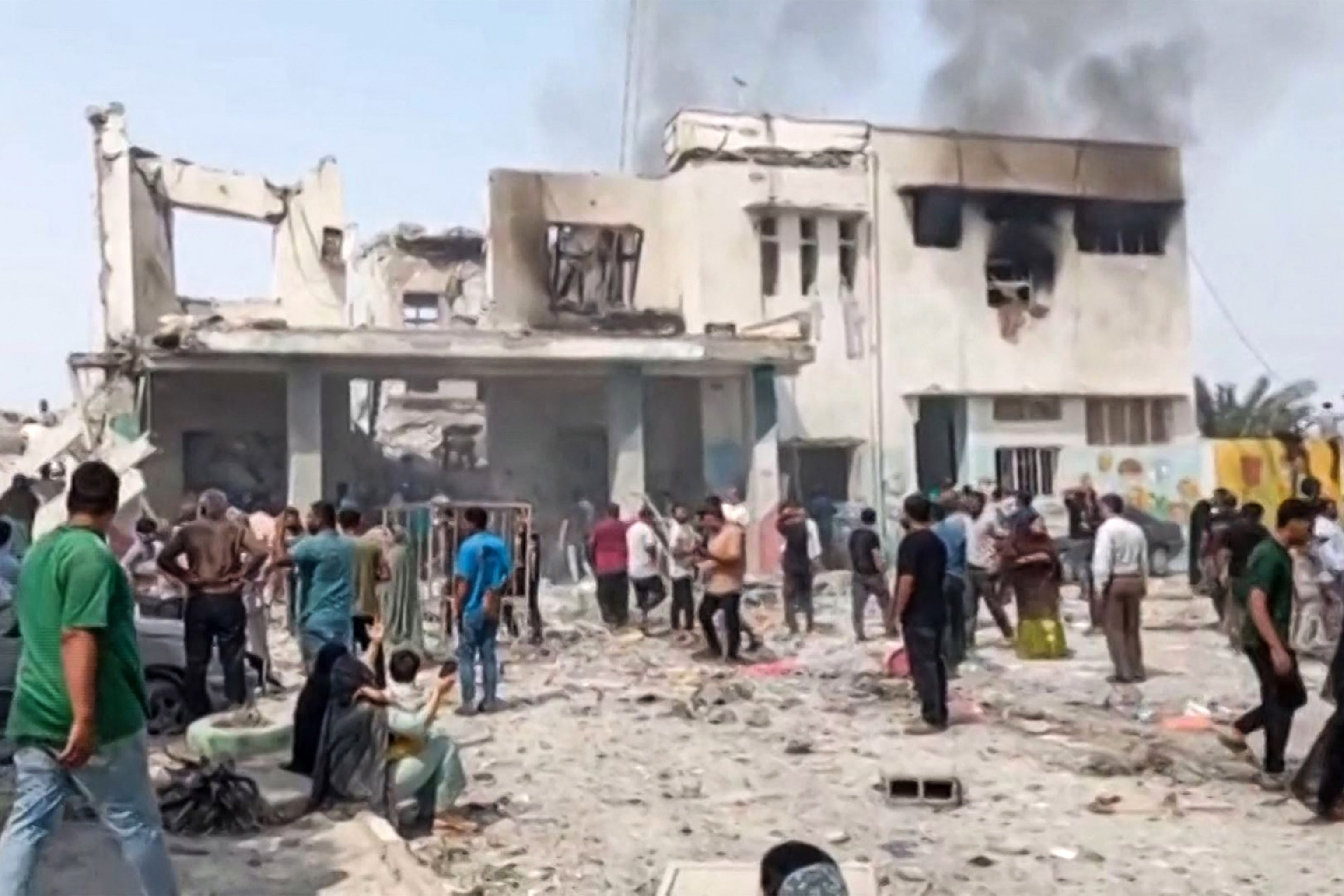
    PHOTO: This image grab taken from Iranian state television broadcasted on Feb. 28, 2026, show what it says is the site of deadly US and Israeli strikes that hit a girls' elementary school in Minab, near the Strait of Hormuz.
    This image grab taken from Iranian state television broadcasted on Feb. 28, 2026, show what it says is the site of deadly US and Israeli strikes that hit a girls' elementary school in Minab, in the southern Iranian pr...
    Alex Mita/IRIB TV via AFP via Getty Images

    Iranian officials have not immediately said how many of the dead and wounded are children.

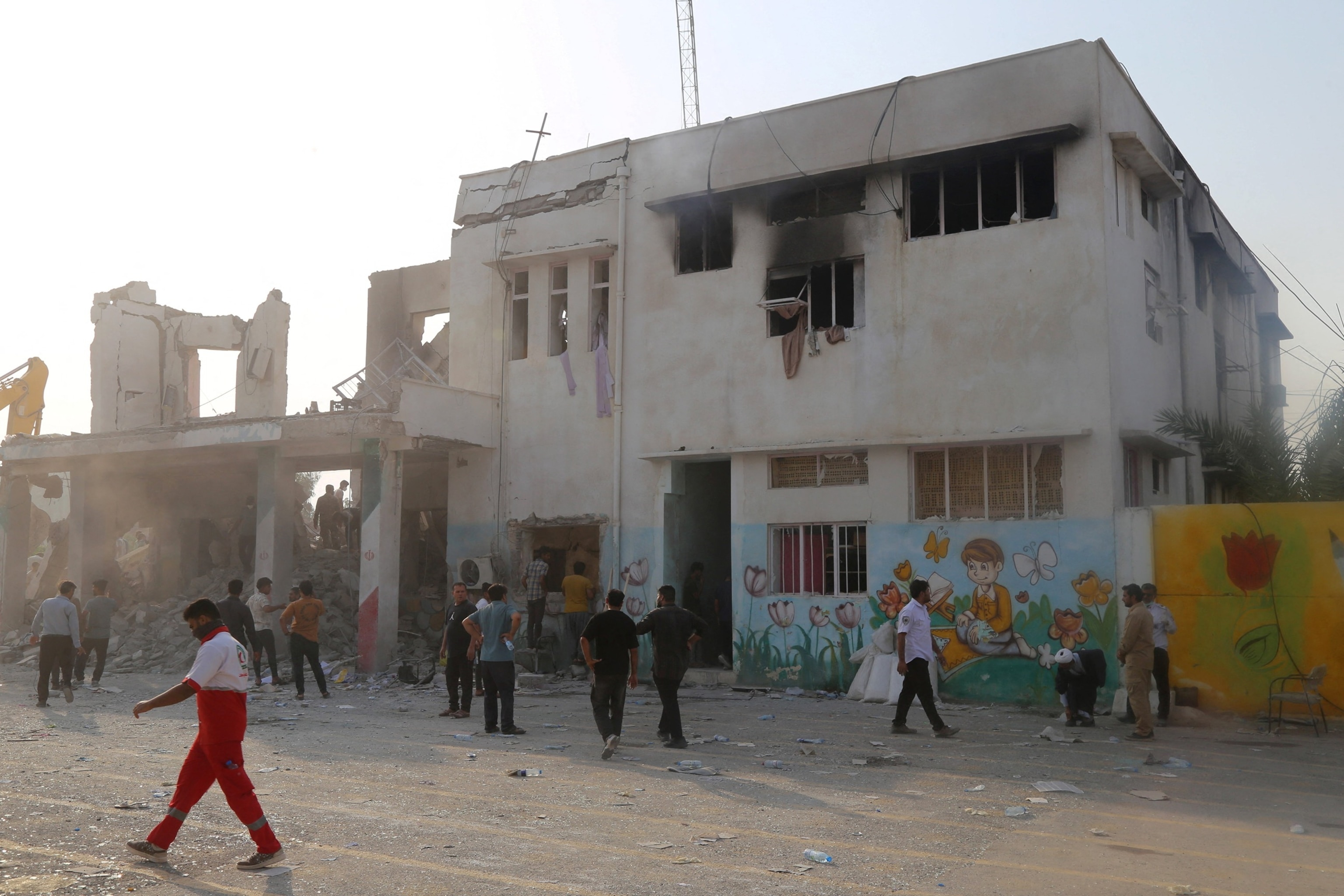
    A view shows the aftermath of an Israel strike on a school in Minab, Iran, Feb. 28, 2026.
    Abbas Zakeri/Mehr News/WANA (West Asia News Agency) via Reuters

    Iranian President Masoud Pezeshkian blasted the United States and Israeli governments for the deaths and injuries in a statement Saturday carried by the IRGC-affiliated Fars News Agency.

    "This barbaric act is another black page in the record of countless crimes committed by the aggressors against this land that will never be erased from the historical memory of our nation," he said.

    Iranian Foreign Minister Abbas Araghchi said in an X post that the school was "bombed in broad daylight, when packed with young pupils."

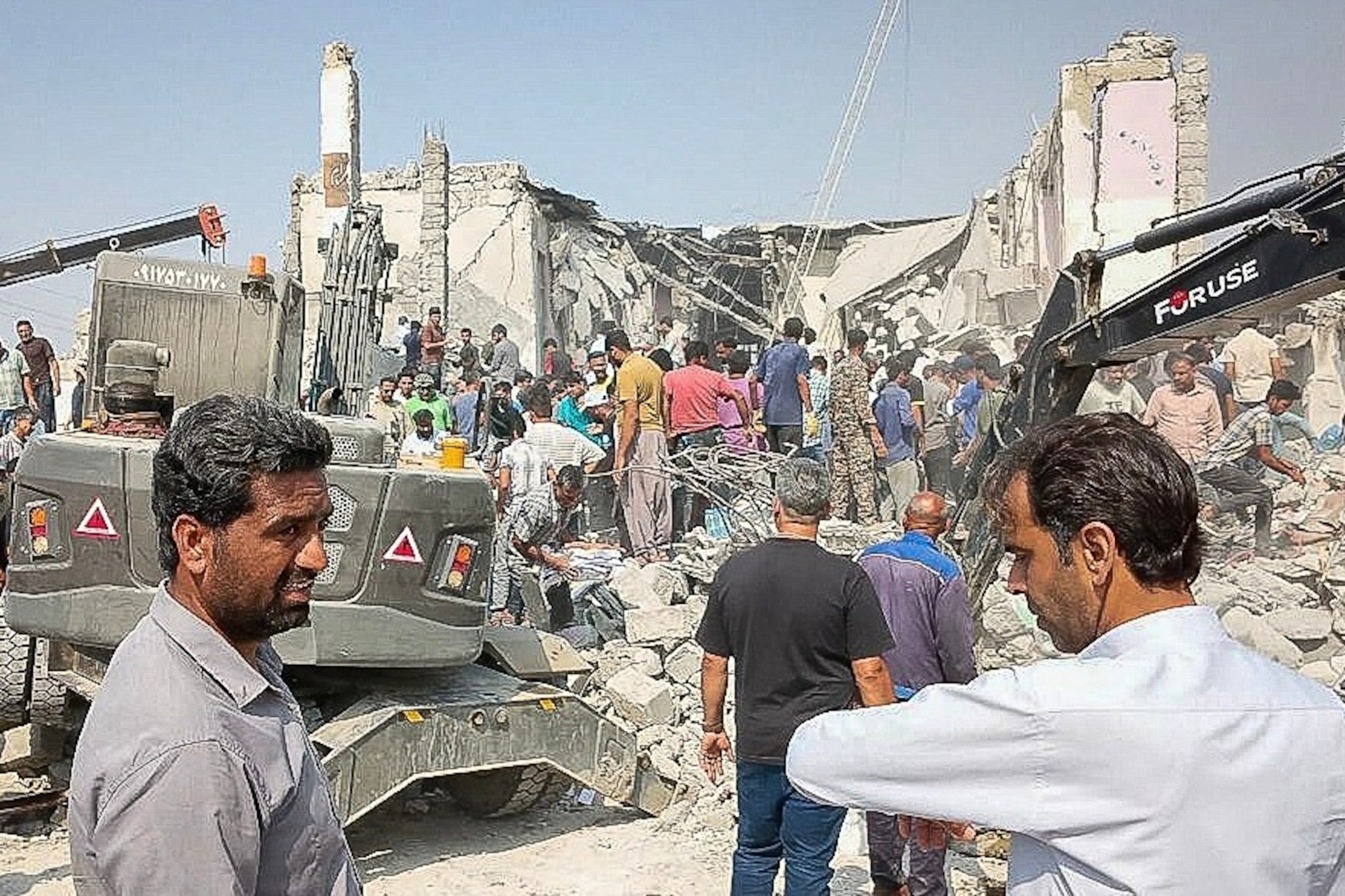
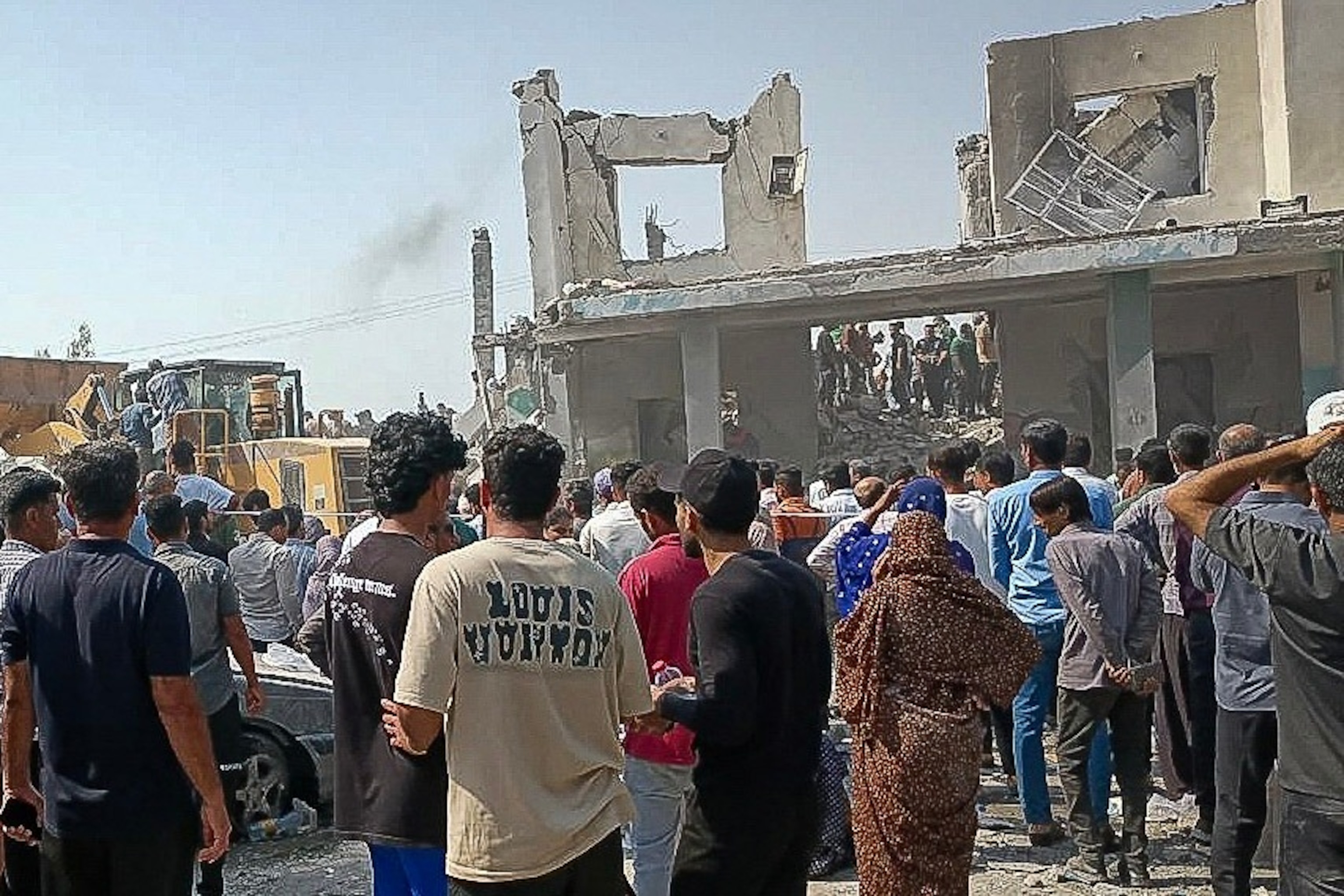
    This picture obtained from Iran's ISNA news agency shows the site of a strike on a girls' school in Minab, in Iran's southern Hormozgan province, on Feb. 28, 2026.
    Ali Najafi/ISNA via AFP via Getty Images

    A spokesman for U.S. Central Command said in a statement that it would look into the reports about the school being bombed but emphasized, "Unlike Iran, we have never — and will never — target civilians."

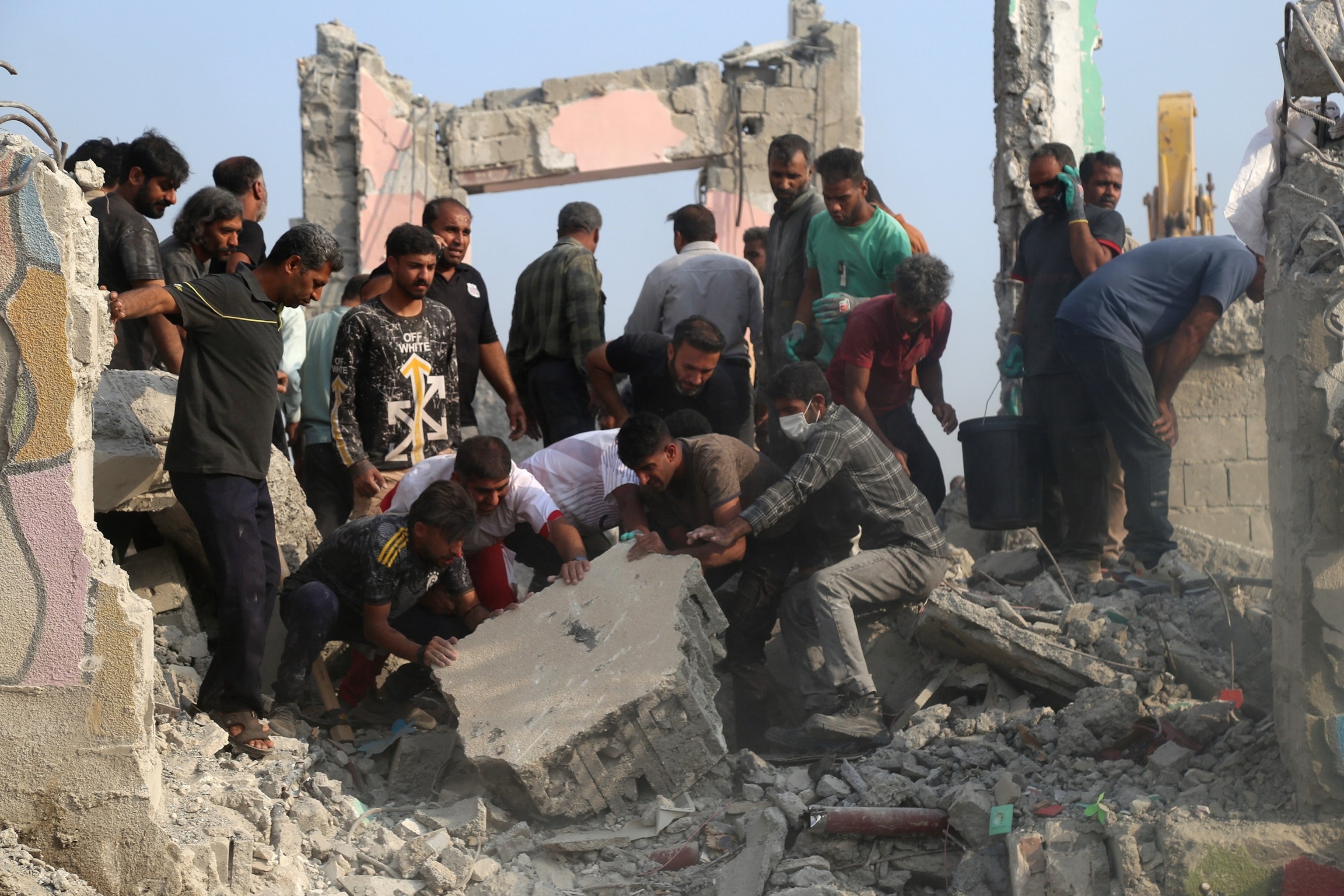
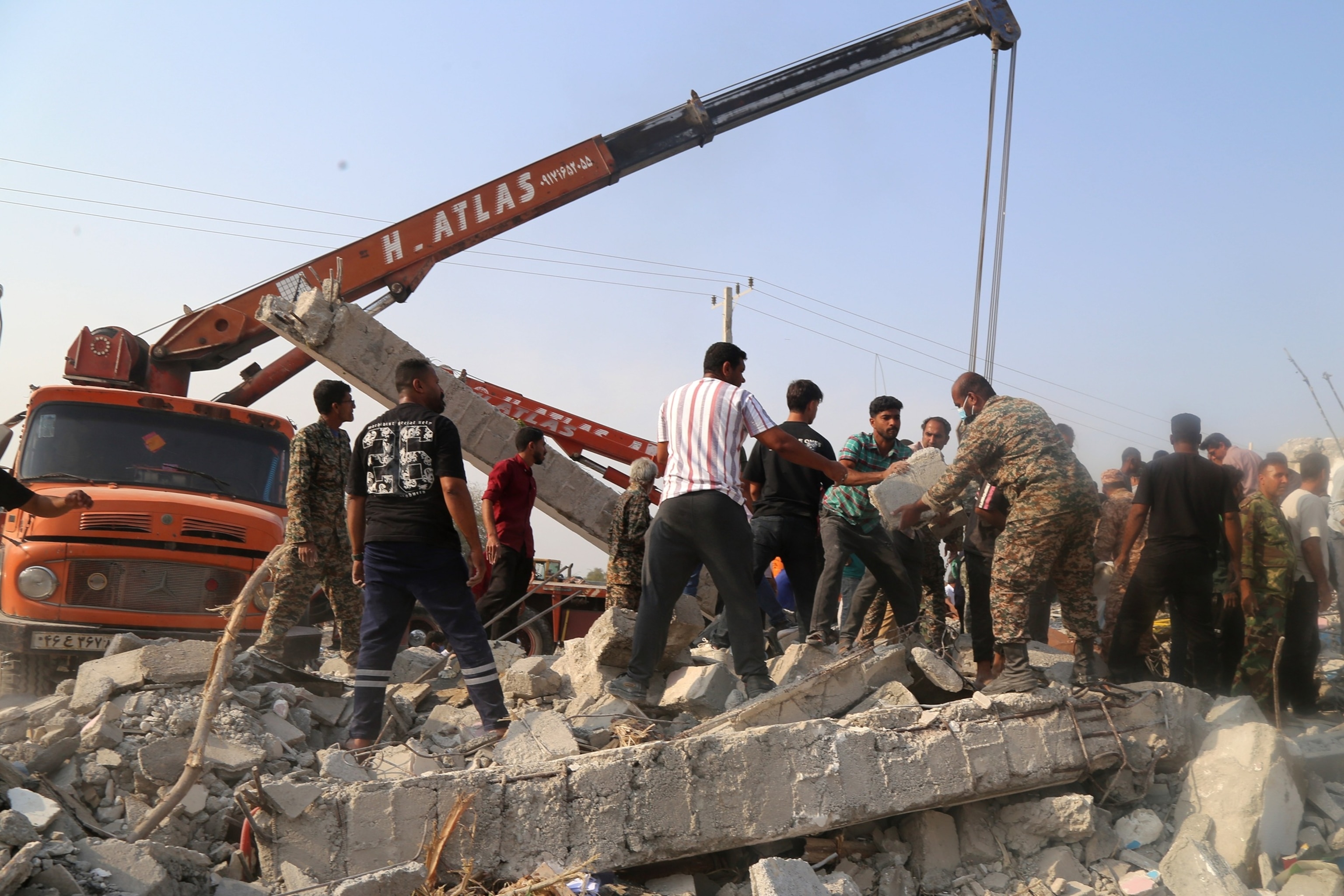
    Rescue workers and residents search through the rubble in the aftermath of an Israeli-U.S. strike on a girls' elementary school in Minab, Iran, on Feb. 28, 2026.
    Abbas Zakeri/Mehr News Agency via AP

    "We take these reports seriously and are looking into them," Capt. Tim Hawkins, a CENTCOM spokesman, said in a statement. "The protection of civilians is of utmost importance, and we will continue to take all precautions available to minimize the risk of unintended harm."

    International law prohibits the deliberate targeting of schools and universities during armed conflicts.

    The U.S. military has a rigorous targeting process using different forms of intelligence to ensure that any targets to be struck by bombs or missiles are, in fact, enemy targets and will not harm civilians or strike civilian targets.

    Rescue workers and residents search through the rubble in the aftermath of an Israeli-U.S. strike on a girls' elementary school in Minab, Iran, Feb. 28, 2026.
    Abbas Zakeri/Mehr News Agency via AP

    Claims of civilian casualties are investigated as much as possible, although it may not be possible to do so in areas controlled by hostile forces.

    This picture obtained from Iran's ISNA news agency shows the site of a strike on a girls' school in Minab, in Iran's southern Hormozgan province, on Feb. 28, 2026.
    Ali Najafi/ISNA via AFP via Getty Images

    The Global Coalition to Protect Education from Attack, a non-profit that tracks military attacks on academic institutions, documented more than 6,000 attacks on schools, universities, students and education personnel worldwide between 2022 and 2023.

    The group's global research found that 10,000 students and education personnel were killed, injured, abducted or otherwise harmed during that time period.

    Iran war throws oil market into biggest crisis in decades - WHO BENEFITS? - QUI BONO?

    https://www.reuters.com/markets/commodities/iran-war-throws-oil-market-into-biggest-crisis-decades-2026-02-28/ 


    Iran war throws oil market into biggest crisis in decades

    Illustration shows Iran flag, oil pump jack and stock graph
    Iranian flag with stock graph and an oil pump jack miniature model are seen in this illustration taken October 9, 2023. REUTERS/Dado Ruvic/Illustration Purchase Licensing Rights, opens new tab
    LONDON, Feb 28 (Reuters) - Global energy markets face one of their gravest shocks in decades as joint U.S. and Israeli strikes on Iran and Tehran’s retaliatory missile attacks across the Gulf disrupt oil exports from the world’s most important producing region.
    The scale of the disruption will likely be determined by the duration of the conflict, but for now the threat and the uncertainty are already enough to severely impact flows from the region that accounts for 20% of global oil supplies.
    Barring a swift resolution, oil prices will likely see steep increases when trading opens on Monday morning. Benchmark Brent crude oil prices rose in recent weeks to around $70 a barrel, their highest since August 2025 as investors braced for military confrontation in the Middle East.
    The United States and Israel carried out military strikes on Iran on Saturday, targeting senior leaders and plunging the Middle East into a widening conflict. U.S. President Donald Trump said the attacks would eliminate a security threat to the United States and give Iranians an opportunity to topple their rulers.
    For now, there is no confirmed damage to oil and gas infrastructure from retaliatory Iranian strikes.
    Explosions were reported in the United Arab Emirates and Kuwait, two major oil exporters. Meanwhile, Qatar, the world’s second-largest exporter of liquefied natural gas, said it intercepted missiles aimed at the country.
    Blasts were also heard in Bahrain and near Iran’s Kharg Island, the terminal through which about 90% of its crude exports normally flow, although shipping data suggests Tehran had transferred most of the oil stored there onto tankers in recent days.
    Crucially, there have so far been no reports of disruptions to shipping through the Strait of Hormuz, the narrow waterway between Iran and Oman that handles nearly 20 million barrels per day of crude oil and refined products.
    Middle East oil exports
    Middle East oil exports

    CAUTION MEANS DISRUPTION

    But the absence of physical damage may not matter much.
    The risk that tankers could be stranded inside the Gulf, north of Hormuz, or that vessels could be targeted, is already enough to force producers, traders and shippers to rethink movements of oil and LNG. Reuters has reported that some oil majors and trading houses have suspended shipments through the strait for several days.
    That caution is unlikely to ease until there is far greater confidence in the safety of the region’s sea lanes.
    Tanker freight rates, which had already been climbing as tensions escalated, are set to rise further. Benchmark rates for very large crude carriers from the Middle East to China have more than tripled since the start of the year, reflecting both heightened risk and the shrinking pool of willing vessels.
    The key questions now are whether energy infrastructure will be directly targeted and how quickly the U.S. military can secure shipping routes across the Gulf and the Strait of Hormuz.
    It is worth noting that the Strait of Hormuz has never been fully blocked.
    While Iran is unlikely to sustain a prolonged blockade, it has the capability to disrupt traffic temporarily. The U.S. Navy would almost certainly respond swiftly, but even short-lived attacks or mine-laying operations could have outsized effects on prices and supply.
    Such tactics would not be unprecedented. During the 1980s Iran-Iraq war, Iran attacked commercial shipping and U.S. naval vessels, prompting President Ronald Reagan to deploy U.S. forces to escort tankers in Operation Earnest Will. More recently, in late 2007 and early 2008, there were repeated confrontations between Iranian and U.S. naval forces. And in April 2023, Iran's navy seized the Advantage Sweet crude tanker, chartered by Chevron, in the Gulf of Oman. The vessel was released more than a year later.

    GLOBAL SUPPLY CUSHION

    The global oil market is relatively well supplied today, after production from the United States, Brazil, Canada and other countries rose in recent years.
    Saudi Arabia, the world’s top oil exporter, has also not sat idle in the face of the risk to supply. In recent days the kingdom increased crude shipments, which are set to exceed 7 million barrels per day in February, the highest since April 2023, according to shipping analytics firm Kpler.
    OPEC+, which comprises the Organization of the Petroleum Exporting Countries and allies like Russia, is expected to agree on an output increase during a meeting on Sunday.
    Of course, disruptions to export routes from the Middle East could negate much of the production increases from regional producers, though Saudi and the UAE have some alternative export routes.
    The scale of the U.S. and Israeli strikes, and Trump’s language, suggest Washington is bracing for a sustained military campaign aimed at severely weakening Iran’s leadership.
    How threatened Iran's leadership feels may determine whether it escalates further by attacking a broader range of targets across the region, including oilfields, export terminals and processing facilities.
    But even without that worst-case scenario, the conflict is already set to disrupt vital energy supplies from the Middle East in ways not seen for decades.
    (The views expressed here are those of the author, a columnist for Reuters)

    Writing by Ron Bousso; Editing by Lisa Shumaker

    Our Standards: The Thomson Reuters Trust Principles., opens new tab

    Opinions expressed are those of the author. They do not reflect the views of Reuters News, which, under the Trust Principles, is committed to integrity, independence, and freedom from bias.
    Ron Bousso

    Thomson Reuters

    Ron is the Reuters Energy Columnist. He offers commentary on global energy markets and their intersection with geopolitics, the economy and every day life. From oil and gas to solar and wind power, the world's growing demand for energy is shaping governments' efforts to expand their economies while the world also seeks to decarbonize. Prior to that, Ron was Oil and Gas Corporates Correspondent at Reuters since 2014, covering the world’s top oil and gas companies and their transition into low carbon energy. He has broken major stories on companies including Shell, BP, Chevron and Exxon. He also looks at the physical oil markets with a focus on European refining.