It’s Not Too Late for Congress to Undo One of the Worst Supreme Court Decisions of the Last Term
https://slate.com/news-and-politics/2026/08/congress-worst-supreme-court-decisions-dreamers-tps.html
It’s Not Too Late for Congress to Undo One of the Worst Supreme Court Decisions of the Last Term
Sign up for Executive Dysfunction, a newsletter that highlights one under-the-radar story each week about how Trump is changing the law—or how the law is pushing back. You’ll also receive updates on the latest from Slate’s Jurisprudence team.
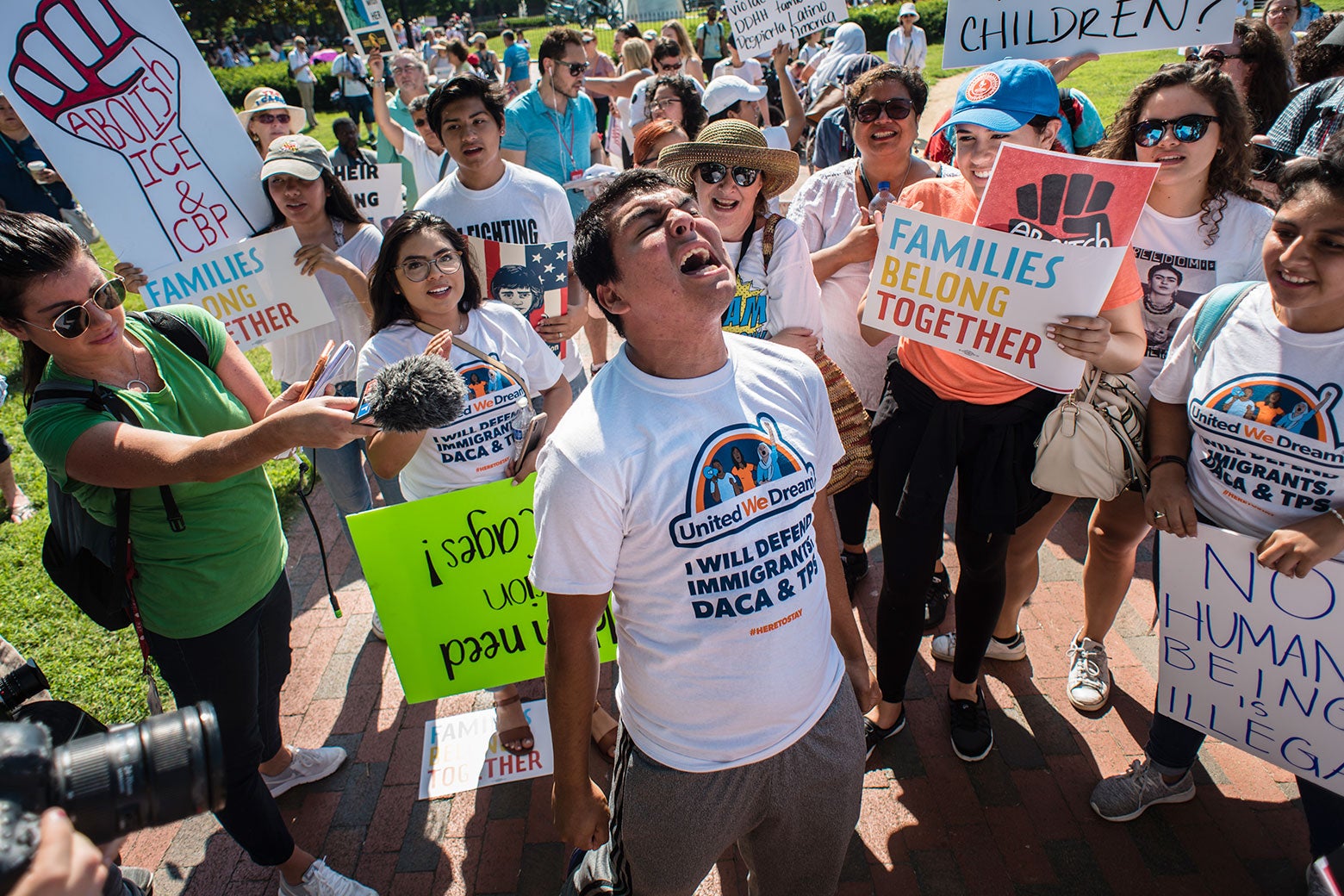
As members of Congress head home for the August recess after another season of escalating tactics in President Donald Trump’s mass deportation agenda, now is as urgent a time as ever for voters to demand commonsense immigration reform. When Congress members hold constituent meetings and rallies in their home districts in the coming weeks, our message should be clear: Pass the bipartisan American Dream and Promise Act.
The American Dream and Promise Act offers pathways to permanent status for Dreamers, those who were eligible for temporary protected status, and certain other highly vetted law-abiding noncitizens who now risk arrest, detention, and deportation. These individuals need legislative protections now—not because they have done anything wrong but because the Trump administration has been changing the rules and stripping hundreds of thousands of immigrants of the legal status that they built their lives on in the United States.
Getting this bill through the House is not a pipe dream. There’s a 218-vote threshold required for a discharge petition in the House. This bill is just eight votes shy of the requisite 218 votes. If the bill manages to get discharged, it will very likely pass the House and set a foundation for urgently needed immigration reform. That urgency has only grown in recent weeks.
In June, the Supreme Court turned a blind eye to the Trump administration’s grotesque racial animus against Haitians and effectively greenlit the dissolution of the temporary protected status program, which had offered protections to more than a million people. These individuals now face imminent loss of their work authorization and separation from their family members. Last week about 350,000 TPS holders from Haiti, Burma, Ethiopia, South Sudan, and Yemen lost their work permits. Communities across the United States are grappling with the harsh reality that their neighbors, co-workers, and caregivers will be fired and banished, leaving Americans without critical workers in senior living facilities and the healthcare, hospitality, and construction industries. Prominent Republicans are among those speaking out. Ohio Gov. Mike DeWine, a Republican, has condemned the dismantling of TPS as “not in the best interest of the United States nor Ohio.” The U.S. Chamber of Commerce is urging an extension of TPS for Haitian nationals “to prevent significant disruption to America’s workforce and avoid an unnecessary humanitarian crisis.” Meanwhile, Immigration and Customs Enforcement is planning to ramp up arrests and deportations of Haitians.
In addition to shattering the lives of TPS holders and those who rely on them for support, the Trump administration has arrested hundreds of recipients of Deferred Action for Childhood Arrivals. The Obama administration created DACA 14 years ago in an effort to protect high-achieving, law-abiding individuals who came to the United States as children. The Obama administration implemented DACA through executive action once it became clear that Congress would not pass comprehensive immigration reform. DACA requires recipients to renew their status every two years and undergo regular security checks. Under the second Trump administration, many DACA recipients have experienceed lengthy delays with their renewal applications and lost their work permits, and hundreds have faced detention and deportation.
Among them was Juan Chavez Velasco, who was brought to the United States at the age of 8. Married to a U.S. citizen, the father of U.S. citizen children, and a college graduate with no criminal history, Chavez Velasco served as a front-line medical worker during the COVID-19 pandemic and works in a Texas lab running blood and other medical tests. In February 2026, as he was driving to the hospital NICU to take breastmilk to his premature infant daughter, ICE detained him. For months, he was separated from his family and faced deportation. Following extensive media coverage and public outcry, Chavez Velasco was released to his family. Other DACA recipients have not been as lucky. More than 170 have been deported.
The American Dream and Promise Act can help to stop the Trump administration from targeting law-abiding TPS holders, Dreamers, and DACA recipients like Chavez Velasco. According to recent Gallup polling, about 85 percent of Americans support a path to citizenship for those brought to the United States as children, and about 78 percent of Americans support a path to citizenship for individuals living illegally in the United States. The American Dream and Promise Act reflects the priorities of the American people in terms of offering pathways to permanent status.
Versions of the American Dream and Promise Act have been introduced in Congress for years, and even passed the House during the first Trump administration. More recently, in February 2025, Rep. Sylvia Garcia introduced the act before two House committees, the Judiciary Committee and the Education and Workforce Committee. There it has languished for 17 months as Republican committee chairs blocked all movement on the bill. Recognizing the urgency of the moment, Garcia filed a discharge petition for the American Dream and Promise Act last month. In three days, a total of 210 House members signed the discharge petition, including Reps. Maria Elvira Salazar from Florida and Brian Fitzpatrick from Pennsylvania, the only Republican signatories to date. If the petition secures 218 signatures from House members, the full House will vote on the bill. It’s likely to pass, and there’s recent precedent for this maneuver. In April, a bill designed to protected Haitian TPS holders passed the House with 224 votes in favor and 204 votes against, as several Republicans broke with party leadership. (The bill was blocked in the Senate.)
Of course, passing American Dream and Promise Act is not a panacea. Getting this bill through the Senate and signed into law by the president would require a level of cooperation that we don’t see on the Hill these days. Among some in immigrant communities, there would be significant concerns about those left out of potential pathways to permanent status, such as those who have newly arrived to the United States and those with criminal histories.
Still, passing this bill in the House when Congress returns from its recess is important. Passing the bill would mark significant bipartisan resistance to the Trump administration’s mass deportation agenda. If the bill passes the House, it would be the most meaningful legislative action ever taken to protect nearly half a million DACA recipients, 2 million other Dreamers, and approximately 1.3 million TPS holders whose lives are needlessly and cruelly being targeted by the Trump administration. Equally significant, the bill offers a viable blueprint for immigration reform—one that may be achievable after the midterm elections. And, it would offer Congress a chance to show that they are doing their job—legislating to reflect the will of the American people when the executive branch and Supreme Court fail us.

No comments:
Post a Comment