Trump’s 2-year reprieve gives coal plants ‘a free pass to pollute’
A former EPA official
warns exemption for some coal-fired power plants could be the first step
toward gutting pollution rules for all plants.
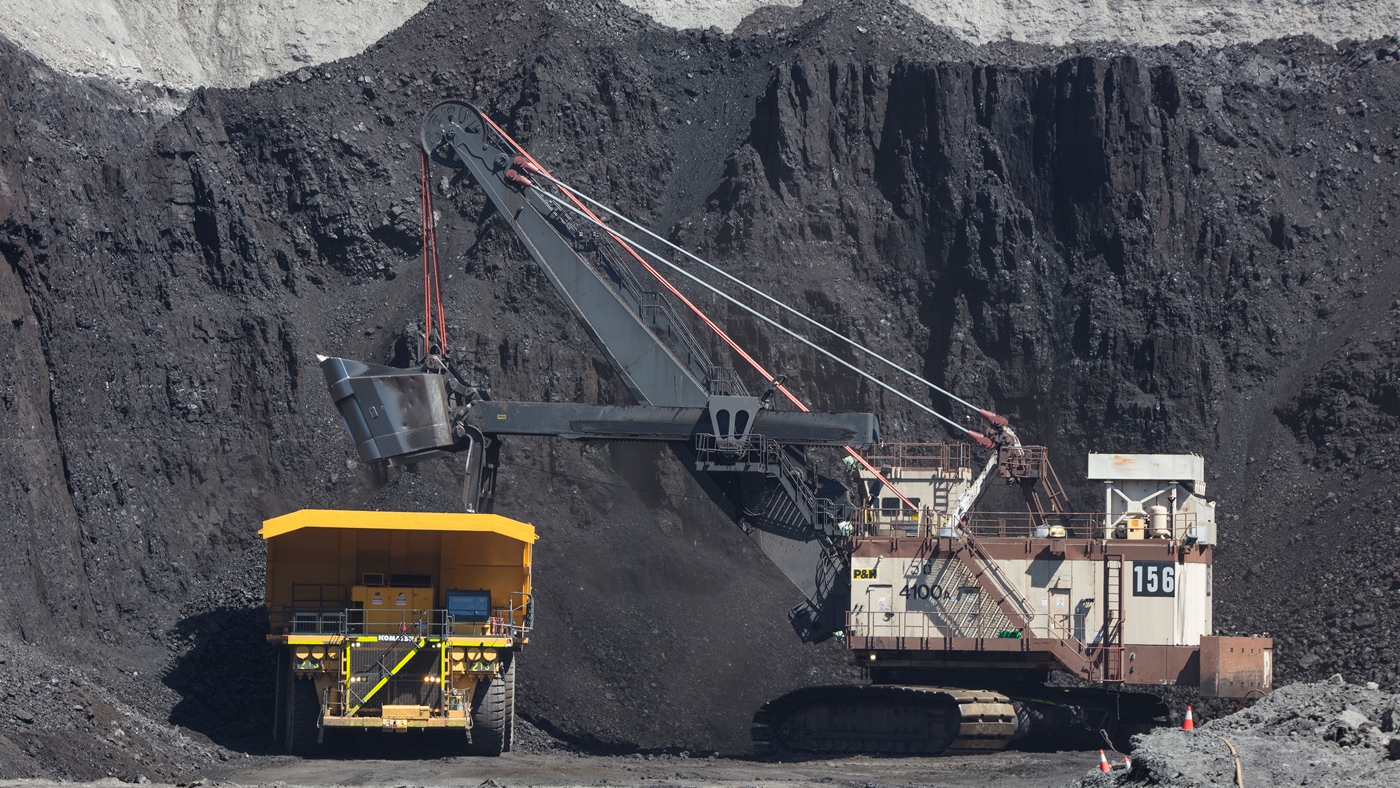
A truck prepares to haul coal at the North Antelope Rochelle Mine in Wyoming, the largest coal mine in the world.
Peabody Energy Inc.
This story was originally published by Floodlight, a nonprofit newsroom that investigates the powers stalling climate action.
Last year, the U.S. Environmental
Protection Agency gave this country’s nearly 200 remaining coal-fired
power plants until 2027 to install or improve air quality monitoring
devices on smokestacks to meet federal guidelines to cut hazardous
pollutants including mercury, arsenic, lead, and particulate matter.
But through executive action,
President Donald Trump last month granted a two-year reprieve to some
of those plants from the strengthened Mercury and Air Toxics Standards
(MATS), which required continuous monitoring of air pollutants.
It is part of Trump’s continuing
efforts to boost fossil fuel use and undermine President Joe Biden’s
push to reduce threats from climate change and improve the health of
people living in communities plagued by industrial pollution. The
exemption applies to roughly one-third of all U.S. coal plants.
These toxic and hazardous emissions
have been tied to cancer, neurological damage, and developmental
disorders, “even at extremely low levels of exposure,” said Margie
Kelly, a spokesperson for the nonprofit Natural Resources Defense
Council, calling the two-year pause “a free pass to pollute.”
“We’re looking at a
two-year extension as [a] step … to get rid of these mercury and
particulate matter standards and get rid of the continuous emissions
monitoring requirement altogether,” said Joseph Goffman, a former
assistant administrator of the EPA’s Office of Air and Radiation under
Biden.
The extension, which was among the list of deregulatory actions announced
by EPA Administrator Lee Zeldin, has drawn strong criticism from
environmental groups, including those in Louisiana, where three
coal-fired powered plants still operate. Burning fossil fuels to
generate electricity is one of the top contributors to greenhouse gas
emissions.
The state’s largest electric
provider, which owns one coal plant and shares ownership of a second —
has said it already complies with the existing standards and plans to
retire its coal-powered generation in the next five years. But advocates
worry the shift in the country’s regulatory landscape will worsen
health risks for fenceline communities — and that promises to shutter coal plants could be reversed — as projected electrical demand continues to sharply rise.
“I think that it
would be a mistake for us to rely on a corporation to do the right thing
just because they want to,” said Emory Hopkins, organizer for the
Sierra Club’s Beyond Coal Campaign in Louisiana.
“I think something
that might be worth noting is that we’re looking at a lot of load growth
in the coming years, which is a lot more electric demand, energy
demand,” primarily from data centers, Hopkins said.
President: Rules are ‘unattainable’
In his executive order, Trump said
granting the two-year extension would safeguard the nation’s power
supply by not forcing electric companies to comply with “unattainable”
emissions standards. The EPA under Trump now says the enhanced MATS rule
would cause “regulatory uncertainty” for many U.S. coal plants.
After Trump’s action, the Tennessee Valley Authority, a federal utility that generates power to seven states, announced it plans to walk back commitments to retire coal-powered plants by 2035.
By the EPA’s current estimates,
the strengthened MATS rule would cost energy companies more than $790
million over 10 years. Trump’s order stated that many coal-fired power
plants were at risk of shutting down to meet the compliance standards,
which would have led to significant job losses and weakened the
country’s electrical grid.
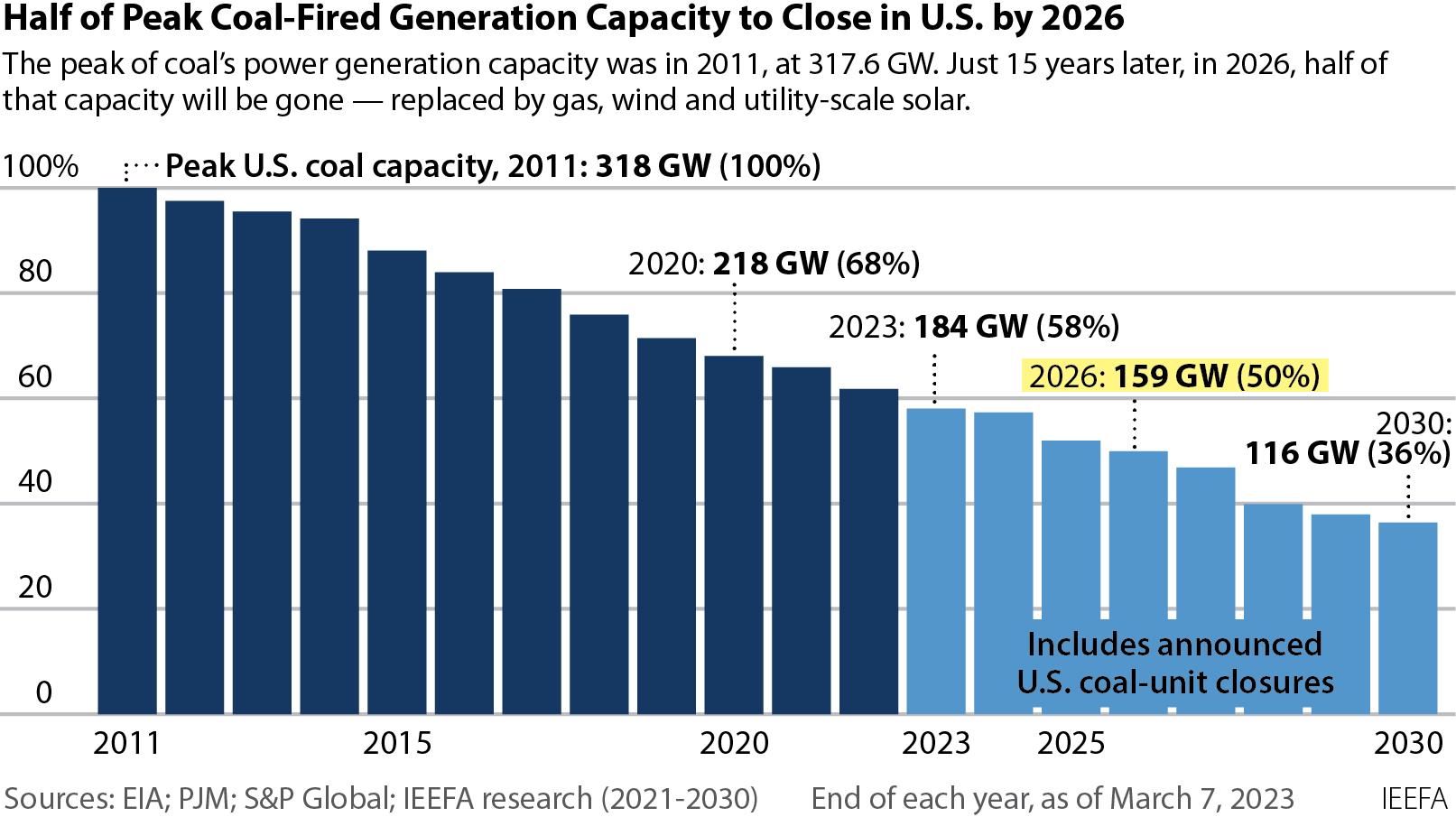
In reality, coal-powered plants were already on the decline
due to cheaper sources for electric power generation including natural
gas, wind, and solar — the latter two being the preferred option for
greenhouse gas reduction.
Goffman said the MATS rule changes
were projected to reduce mercury emissions by 1,000 pounds. The World
Health Organization has said even in small doses, mercury can cause serious health complications to a person’s nervous, digestive, and immune systems.
Goffman added that the changes passed
by the Biden administration last year incorporated advances in
filtering out particulates, which were not available when the mercury
rules were first enacted in 2012. The enhanced MATS rule would have
reduced particulate matter by 770 tons, and carbon dioxide — a potent
greenhouse gas — by 65,000 tons by 2028, resulting in millions of
dollars in benefits to human health and the climate, he said.
“If there’s one
pollutant that you would worry about more than any other, when it comes
to making people sick and killing them, it’s fine particles,” he said.
“So within reason, the more you can cut fine particles, the better off
everyone’s health is going to be.”
Biden’s EPA also projected there
would be little cost to electricity customers. The agency under Biden
also said no coal-fired plants would be forced to shut down, and there
would have been no major disruptions to energy production.
“I want to emphasize
that these rules were not intended to prompt coal plants to shut down,”
Goffman said. “The Clean Air Act doesn’t authorize EPA’s regulations to
do that, and the EPA certainly performed its analysis of the MATS
requirements on the assumption that these plants would, and in many
cases might need to, keep operating.”
‘Kick in the teeth’ to polluted communities
The Sierra Club, a nationwide grassroots environmental organization, noted in a 2020 report
that coal-fired power plants in Louisiana accounted for just 8 percent
of the state’s electric power but were to blame for an estimated 51
deaths and 349 asthma attacks annually.
The Roy S. Nelson, a coal-fired plant
mostly owned by Entergy Louisiana in Lake Charles, has the largest
number of people in the state living within a 12-mile radius — a
population of about 153,000.
Michael Tritico, a local
environmental advocate who grew up in Lake Charles, said people there
rarely oppose Entergy Louisiana, or any of the industrial facilities,
despite the impacts to their health.
“The company always
gets what it wants, and the neighbors never stand up,” he said. “They
figure industry is their bread and butter, so they let it go.”
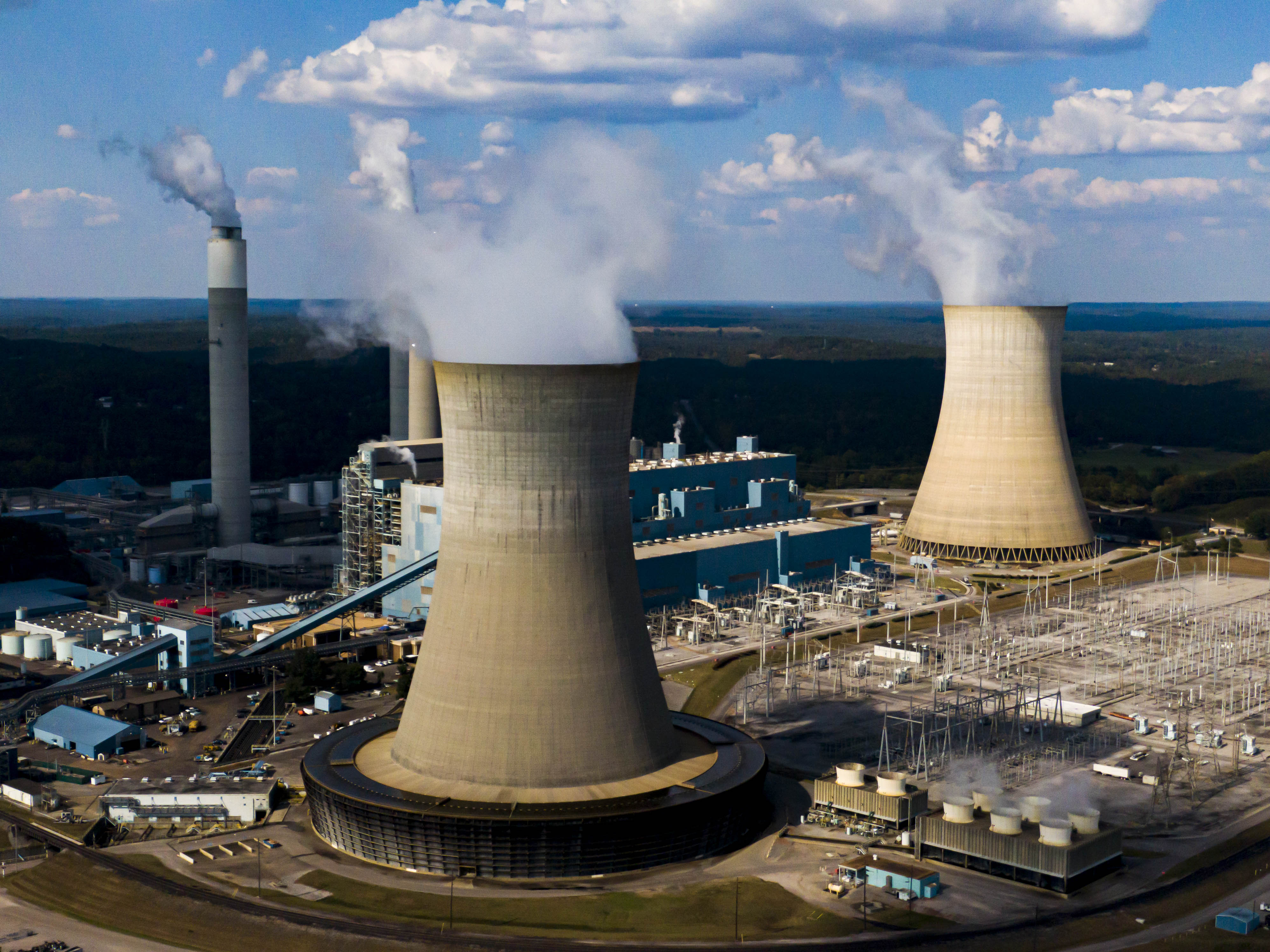
Smoke billows from the James H. Miller Jr. Electrical Generating Plant in Jefferson County, Alabama, owned by Alabama Power. Lee Hedgepeth / Inside Climate News
Brandon Scardigli, a spokesperson for
Entergy Louisiana, said the company remains committed to ending its
coal-generated power by the end of 2030. And as for its Nelson plant, he
said it will continue to operate under the current MATS standards until
then.
“This exemption does
not change the applicable EPA standard for mercury emissions control,
and Nelson 6 will continue to operate in compliance with this standard,”
he said. “We have continued to maintain and operate Nelson 6 in
compliance with existing environmental regulations.”
Joshua Smith, a senior attorney with
the Sierra Club’s Environmental Law Program, said it will be important
to press the company to keep those promises to an area already facing
increased pollution.
“That Lake Charles
area is already facing a pretty big buildout of liquefied natural gas
facilities and other types of industry,” Smith said. “In general with
these kinds of facilities, if they’re given flexibility and latitude,
they’ll take it.”
Smith added that the Sierra Club is
exploring legal actions it can take to push back against the exemption,
which could be extended beyond two years if Trump wants.
“I think it’s a
pretty destructive use of executive privilege,” he said. “What’s
happening here is the [Trump administration] is allowing these
facilities to pollute more at the very tail end of their life … [and]
damaging the community that has already been bearing the brunt of the
pollution for the better part of 40 or 50 years.
“It’s just like one more kick in the teeth on the way out the door.”
WASHINGTON—U.S.
Senator Chris Murphy (D-Conn.), a member of the U.S. Senate Health,
Education, Labor, and Pensions Committee, on Wednesday questioned U.S.
Secretary of Health and Human Services Robert F. Kennedy Jr. on
President Trump’s Fiscal Year 2026 skinny budget request for the U.S.
Department of Health and Human Services. Murphy pressed Kennedy on
broken promises made during his confirmation hearing and accused him of
misleading the Committee and the public about his support for vaccines,
especially measles.