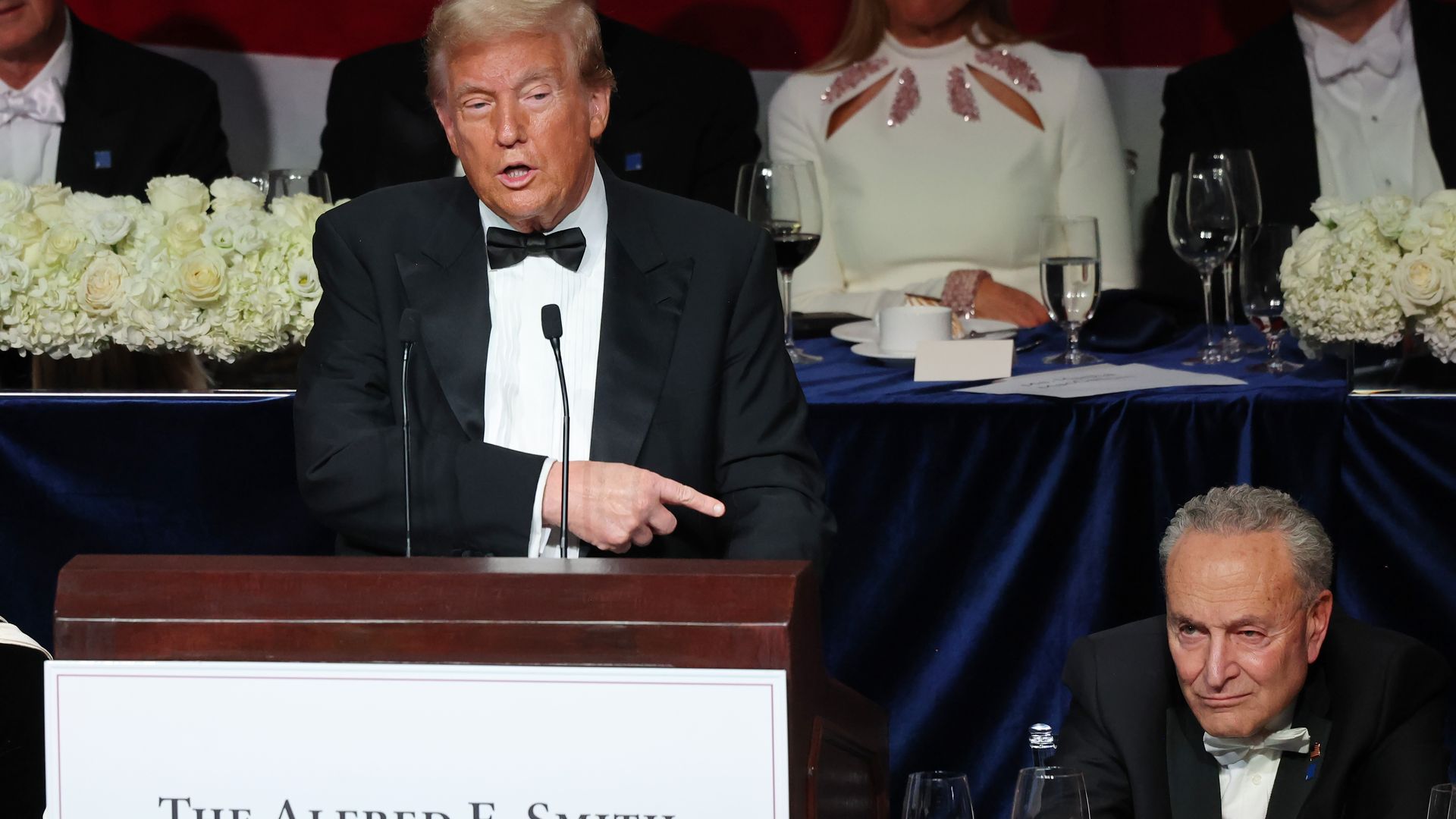
Donald Trump
set off alarm bells earlier this week with comments that his
administration should “take over the voting” in some states in the
run-up to the 2026 midterms, which followed an unprecedented FBI raid on
an election office in Georgia. Although election experts say it’s clear
the president doesn’t have authority over elections, they warn the
president’s corrosive rhetoric leaves little doubt about his intent.
For months, the Trump administration has stoked doubts about the integrity of American elections largely through lawsuits
designed to create the impression states aren’t doing enough to keep
ineligible voters off the rolls. That effort escalated significantly
last week when the FBI raided the election office in Fulton county,
Georgia and seized ballots, along with other materials, related to the
2020 election. Shortly after the raid, Trump escalated his attack even
further, saying the federal government should take over elections.
“The Republicans should say, ‘We want to take over,’” he said during a recent interview
with Dan Bongino, the former deputy FBI director who has returned to
hosting a podcast. “We should take over the voting, the voting in at
least many – 15 places. The Republicans ought to nationalize the
voting.”
Democracy experts believe there is no longer any doubt about Trump’s desire to interfere with this fall’s elections.
“We
should not be waiting for the next shoe to drop,” said Wendy Weiser,
vice-president for democracy at the Brennan Center for Justice. “There
is a full-blown effort to seize control of some of the mechanisms of our
elections and to lay the foundation for interfering in upcoming
elections.”
The president has no power over
federal elections, and the US constitution is not ambiguous on the
matter. Article I, section 4 of the document gives states the power to
run elections. Congress, the constitution says, can pass nationwide
rules for federal elections.
Nonetheless,
Trump and his allies have suggested the president may still be able to
wield some kind of emergency power to take control of the electoral
process.
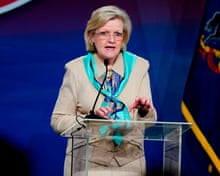
“The president’s authority is limited
in his role with regard to elections except where there is a threat to
the national sovereignty of the United States – as I think that we can
establish with the porous system that we have,” Cleta Mitchell, a
conservative lawyer and Trump ally said on a podcast interview
last year. “Then, I think maybe the president is thinking he will
exercise some emergency powers to protect the federal elections going
forward.”
Declaring a national emergency unlocks about 150 statutory powers for
the president, including things like shutting down radio stations,
suspending certain military regulations, and to sanction foreign
countries.
But none of those powers “even come
close to giving the president any authority over elections”, Weiser
said. “The president has zero emergency powers over elections.”
The
concern about the president using emergency powers has only been
amplified by the presence of Tulsi Gabbard, the director of national
intelligence, at the Fulton county raid. Gabbard, whose presence as an
intelligence official on a domestic matter has caused widespread
outrage, is said to be investigating voting equipment and foreign
interference.
Among others, Gabbard is
briefing Mitchell and Kurt Olsen, another lawyer who was involved in
Trump’s effort to overturn the election, on her investigation, the Wall
Street Journal reported.
Mitchell
declined to comment on those briefings, but said she understood Trump’s
comments to be more about the need to change federal voting laws.
“All
of the election statutes need significant revision, updating, and
reform. And many of us are working on that,” Mitchell said in an email.
“Clearly there are far too many election officials nationwide who treat
the law as optional suggestions. And have instituted procedures that are
contrary to law. That happened in spades in 2020 and is all too common
every election. Sloppy, poor administration and intentional disregard of
basic statutory requirements. We see it everywhere.”
There is no evidence of widespread fraud in 2020 or in any other election.
The
White House press secretary, Karoline Leavitt, has framed Trump’s
comments similarly. Trump subsequently undercut those efforts to
downplay his comments, criticizing Democratic cities such as
Philadelphia, Detroit and Atlanta, saying: “If they can’t count the votes legally and honestly, then somebody else should take over.”
Beyond
unspecified actions to take control of state election processes, there
are other pathways for Trump to try to interfere in the election
process.
Steve Bannon, the influential
conservative personality and former Trump strategist, has called for
Trump to deploy ICE agents at the polls. Such an effort would violate a federal law
that prohibits federal troops from being at the polls “unless such
force be necessary to repel armed enemies of the United States”.
“We’re
going to have ICE surround the polls come November. We’re not going to
sit here and allow you to steal the country again,” Bannon said on his
podcast on Tuesday. “And you can whine and cry and throw your toys out
of the pram all you want, but we will never again allow an election to
be stolen.”
The Trump administration has
already shown its willingness to use emergency powers to try to expand
the president’s authority. Last spring, the Trump administration invoked the Alien Enemies Act,
an 18th-century law that allows the government to deport immigrants
without full due process. The United States, the government argued, was
subject to an invasion by the Venezuelan gang Tren de Aragua. Federal
judges have since blocked
that order and expressed skepticism it is a legitimate invasion. Trump
has also claimed he has emergency powers to impose tariffs, though the
supreme court appears poised to reject that argument.
Part
of the reason Trump is talking about nationalizing elections now may be
to try to get the public to accept an idea that is obviously illegal.
“He
is trying to socialize an idea that has nothing to do with what our
actual system is and that is actually against the law, to change public
expectations about what’s actually valid and allowed,” she said. “That’s
why the public needs to know about this. Because they need to know in
advance that if that happens, that’s a trick, that’s a plot, that’s
actually deception to get you to accept the unacceptable.”