Friday, August 14, 2026

Donald Trump can’t beat Iran and Nigel Farage can only beat a bin. When it counts, these populists are just losers


Donald Trump can’t beat Iran and Nigel Farage can only beat a bin. When it counts, these populists are just losers

https://www.theguardian.com/commentisfree/2026/aug/14/donald-trump-iran-nigel-farage-bin-populists-losers 
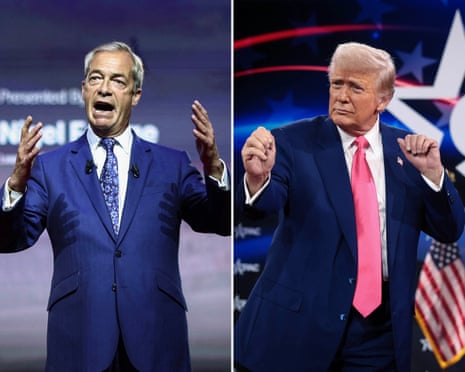
Nigel Farage at the Conservative Political Action Conference, London, July 2026, and Donald Trump at the Conservative Political Action Conference, Maryland, February 2025.
Nigel Farage at CPAC in London, July 2026, and Donald Trump at CPAC in Maryland, February 2025. Composite: Getty Images

Donald Trump can’t beat Iran and Nigel Farage can only beat a bin. When it counts, these populists are just losers

Jonathan Freedland

The pattern in the US and Britain is clear. They serve up stunt after stunt to mask incompetence and the betrayal of all those who trusted them

It’s a shame Nigel Farage ducked the announcement of his victory in the Clacton byelection, which confirmed his return as MP for the seat he had needlessly resigned from just a few weeks earlier. You’d have thought he would have loved it. It was the culmination of a stunt, an exercise in politics as performance. It was a display animated by – and seeking to inflame – grievance, a million miles away from the hard, grinding work of tackling the problems that underlie those grievances. It was an attempt to deflect scrutiny, distract attention and evade responsibility. It was, in other words, everything nationalist populists like him excel at. Indeed, the only thing.

Reform UK said Farage stayed away because Essex police had warned of a “credible threat” to his security, a claim swiftly denied by Essex police. (Add a flexible approach to the truth to that list of nationalist populists’ talents.) Still, it was a slightly odd claim to make. Recall Farage’s favoured explanation – there are others – for the undeclared £5m gift he received from the Thailand-based crypto billionaire Christopher Harborne, which prompted the very parliamentary investigation that so riled the Reform leader he felt compelled to quit his seat and seek a preemptive not guilty verdict from the people of Clacton: namely, that he needed the money to pay for private, enhanced security. It seems £5m was not quite enough to ensure the lucky recipient would be safe standing next to a man dressed as a bin.

Unless, maybe, security was not the whole story. Farage also said he skipped the count because he didn’t want to be “demeaned and humiliated by nobodies”. Quite right. If Nigel Farage is to be demeaned and humiliated, it should be by people of standing. As it happens, he may get his wish. Now that he’s an MP again, the probe into the multiple financial questions that surround him, including over the undeclared support he received from the convicted fraudster George Cottrell, has resumed. A finding against him could necessitate yet another byelection, except this time the major parties will not repeat their boycott and he will have to do battle with opponents even more formidable than an aristocratic trash can.

Naturally, Farage regards the likes of Count Binface and Baron von Thunderclap as beneath him, perhaps because it would be painful to admit the crucial thing they all have in common. To understand what that is, look no further than the man who is both Farage’s hero and the exemplar of nationalist populism.

Ten years ago, less than five months after the Brexit referendum that represents Farage’s greatest triumph, Donald Trump rode a similar wave of US discontent with the status quo and did it in a similar way – by railing against an ill-defined establishment that had ruined everything. A vote for him would make it all better because, as Trump put it: “I alone can fix it.” In 2024, he was elected once again, on a similar promise.

That victory proved Trump’s mastery of a certain strain of politics. His gift for seizing public attention, for channelling a society’s collective anxieties and for persuading people that a simple remedy is at hand, is unrivalled. While Farage plays the same tunes, Trump is the virtuoso.

And yet, look at what happens once the carnival of the campaign is over and the governing begins. Trump’s record is disastrous. He was elected to tackle inflation, which he claimed was out of control under Joe Biden, but inflation is higher now than it was in November 2024, when he defeated his predecessor. Petrol prices, the indicator Trump repeatedly invoked on the stump in 2024, have leapt up. This, more than any other single factor, helps explain why Trump’s approval ratings have cratered, falling to just 34%.

And yet Trump, whose appeal centred on his persona as a successful businessman – a persona that held, despite a career of failure and serial bankruptcy – is doing almost nothing to improve the economic fortunes of those who voted for him. I don’t mean that he’s trying to pull various policy levers and they’re not working. I mean he’s not trying. As Jonathan Swan, co-author of Regime Change, an eye-popping account of the first 15 months of this second Trump term, told me for the Politics Weekly America podcast: “He’s bored by economic policy.”

Of course, those petrol prices did not rise all by themselves. What drove up the price of oil was the decision that seems set to define this presidency: the war on Iran that began on 28 February. It has proved a calamity. It has failed to achieve any of the admittedly shifting goals Trump declared for it: there has been no regime change in Tehran; Iran’s nuclear threat remains unchecked, while its nuclear ambition is now surely greater, if only to deter a repeat of that US-Israeli attack. And it has barely set back Iran’s conventional capability, judging by the regime’s continuing ability to strike its neighbours. As if all that were not bad enough, Trump has succeeded in making the Iranians stronger than they were on 27 February, by handing them an economic weapon of mass disruption, a chokehold on the global economy in the form of their control of the strait of Hormuz.

skip past newsletter promotion

Trump can do the performance, claiming to have “obliterated” the enemy one moment or to have made a breakthrough peace deal the next – but performance is all it is. While the Iranian missiles keep coming, the US military is fast running out of the munitions it needs either to intercept or hit back. Trump’s top general warned him of this danger from the start, but Trump waved away those objections, convinced that the war would be over quickly. Trump’s gut told him that Iran would go the way of Venezuela, that it would be fast and easy. His gut was wrong.

It keeps happening the same way. Trump will announce an agreement with Iran or between Hamas and Israel, only for it rapidly to become clear that no deal has been done. Trump lacks the patience for the long, painstaking, detailed work such diplomacy requires. He wants the sugar-rush of a social-media post or a headline. Put simply, he is a maestro of politics as it is now conducted, but he is useless at governing.

In this, the nationalist populists who take their lead from Trump are no different. They are good at raging at how things are, but incapable of making them better. They can articulate resentment and exploit grievance, but they cannot cure the ills that fuel that unhappiness. This, ultimately, is what unites Farage with Trump and indeed with those 33 “nobodies” who fought the byelection in Clacton. They are all protest candidates. It’s just that some of them get elected.

  • Jonathan Freedland is a Guardian columnist

  • Do you have an opinion on the issues raised in this article? If you would like to submit a response of up to 300 words by email to be considered for publication in our letters section, please click here.

Campaigns like this fund our work: can you help?
6,414 of 20,000 acts of support

Consider us impressed

Nice: you just finished reading article

the past year. It seems you really value our work. We really value you too.

We couldn’t help but notice though that while you’re a loyal Guardian reader, you’re not a recent supporter. (As you likely know, we are reader-funded. No billionaires behind the scenes here!) With dedicated people like you who haven’t contributed yet or recently, we often find one of two things are going on.

First: perhaps you simply don’t have anything to spare right now. If that's the case, we want you to know: we value your readership as much as those who can contribute, and please keep reading, as much as you like, forever. One of the wonderful values shared by Guardian readers around the globe is a desire to ease the burden for others. So ignore these appeals: our community of supporters has your back.

But if you can afford to spare something, here’s what we also know: most likely you’ve thought about giving, but for whatever perfectly human reason, you haven’t got round to it yet. So perhaps today is the day? We know – you’ve finished reading what you came to read, and you have other things to get on with. But we promise it’s quick, and even more: we promise it matters.

We survive entirely because people like you decide to respond to messages like this.

While all support is gratefully received, and even $5 helps, please consider a monthly contribution: it takes less than a minute to set up, and it’s the best way to make the biggest impact – helping sustain our fearless, independent journalism for the long haul. We’re not going anywhere; we hope you’ll stick with us too. Thank you for helping protect the non-billionaire-owned press.


Recommended

opinion

  • The Guardian view on Nigel Farage: Clacton cannot acquit him

  • The Guardian view on booming poetry sales: Homer, meet the Instapoets

  • Donald Trump’s spying on leftwing groups recalls J Edgar Hoover’s Cointelpro

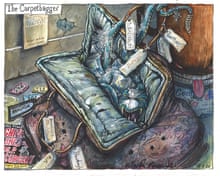
  • Martin Rowson on Nigel Farage and the Clacton byelection – cartoon

  • Across the world authoritarians want to tell us what a ‘good life’ looks like. Here’s how liberals must respond

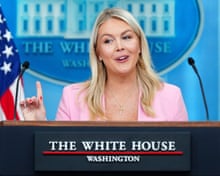
  • How will history remember Karoline Leavitt?

  • I’m a neuroscientist. Here’s why our brains need pop concerts

  • Karoline Leavitt leaves behind a legacy of lies. What’s next for the Trump aide?

More from Opinion

  • Donald Trump’s spying on leftwing groups recalls J Edgar Hoover’s Cointelpro

  • I’m a neuroscientist. Here’s why our brains need pop concerts

  • Karoline Leavitt leaves behind a legacy of lies. What’s next for the Trump aide?

  • AOC’s public egg-freezing shouldn’t feel radical. But in today’s US, it does

  • Mark Zuckerberg says the future of AI is for everyone. But who owns it?

  • AOC and Mamdani wanted to defund the police. Their backtracking puts organizers at risk

  • Lost jobs, inequality, rogue agents: why are we accepting oligarchs’ AI agenda?

  • What can we learn from Francesca Hong’s loss in Wisconsin?


Trump Is Trying to Sabotage the Health of All Our Kids


Trump Is Trying to Sabotage the Health of All Our Kids

https://www.thenation.com/article/politics/trump-vaccines-executive-order/

Politics / Authoritarian Watch / August 14, 2026

Trump Is Trying to Sabotage the Health of All Our Kids

His executive order on vaccines is classic Trump: authoritarian, nonsensical, and deadly.

Sasha Abramsky
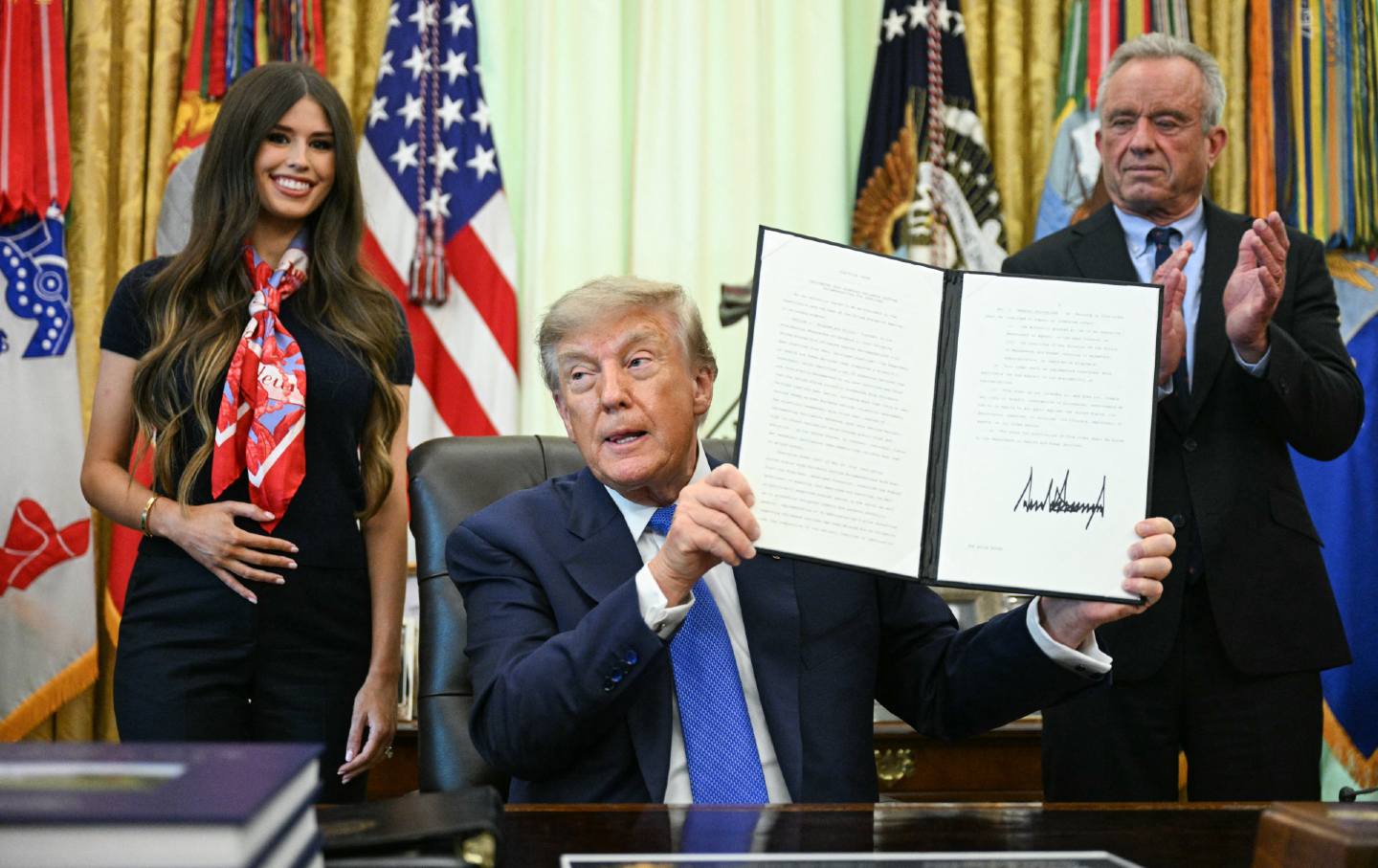
Donald Trump signs an executive order about vaccines on August 10, 2026.

Donald Trump signs an executive order about vaccines on August 10, 2026.

(Jim Watson / AFP via Getty Images)

Earlier this week, Donald Trump signed an executive order intended both to reduce the number of vaccines American children receive and to make it harder for them to get those vaccines.

Trump declared that kids didn’t need to be routinely vaccinated against Hepatitis A and B, or against meningitis—all diseases that can prove life-altering or even lethal. And he targeted the MMR vaccine, which in one shot protects children from mumps, measles, and rubella, and has been spectacularly successful over the decades in reducing childhood mortality rates.

Referring to repeatedly debunked theories that Health Secretary Robert F. Kennedy Jr. continues to push, Trump claimed that multi-vaccine shots like the MMR jab trigger autism, and that separating them out would potentially save millions of lives. He also claimed, bizarrely, that these all-in-one inoculations injected soda can–size amounts of liquid into children; in reality, each shot contains a fraction of a tablespoonful of serum.

As happens so often these days, legal experts immediately pointed out that Trump’s decree wouldn’t really carry the force of law, as vaccine policies are mostly determined at the state rather than the federal level, and any changes to vaccine mandates will likely trigger long and bitter legal battles. In other words, this was dismissible as simply routine Trumpian bluster.

But that largely misses the point. Trump sabotages public policy not through careful legal or legislative strategies but by flooding the zone with his gibberish. When he claims that he knows more than the American Medical Association, the American Academy of Pediatrics, the American Cancer Society, and all the other specialist networks that have come out against his proposed vaccination changes, he is deliberately creating enough white noise to further undermine consensus ideas around science, public health, and how political decisions ought to be made around complex issues such as vaccine policy.

In Trump-land, no matter what the issue is, be it vaccines or American history, there is only one ultimate arbiter, and that is Donald J. Trump, the all-knowing Father of the People whose visage now glares out from so many public buildings in the nation’s capital. That omnipresence, that looming menace over all areas of public life, is the quintessence of authoritarian leadership.

For those not caught in the spell of Trump’s increasingly surreal personality cult—witness the AI-generated images he posted last week of himself in military uniform, medals festooning his chest, flanked by Generals MacArthur and Patton, as well as other AI images of him kissing a gold statue of Jesus, arresting a space alien, and merging his face with George Washington’s— it’s highly unlikely that an unenforceable executive order on vaccines, combined with a large dose of Trumpian hyperbole, will undermine their willingness to get their children vaccinated. But for those still in the cult, especially those living in red states such as Florida, whose public health leaders have already done tremendous damage by buying into conspiracy theories around vaccinations, there is a real risk that Trump’s blather will convince some of them to leave their kids unvaccinated. And if and when that happens, it’s likely that large numbers of children will end up getting sickened by diseases that, until recently, they would have been properly immunized against.

Trump’s administration has already gone out of its way to limit healthcare access for millions of Americans, enacting sweeping cuts to Medicaid and refusing to extend tax credits for Affordable Care Act subsidies. In this, the federal government has largely been supported by GOP leaders at the state level. Predictably, the number of uninsured people is rising rapidly, disproportionately in Republican states. In Texas, one in six residents is now uninsured, including more than 10 percent of young children.

There’s no evidence that these trends will be reversed anytime soon. Quite the opposite: As more cuts to public services kick in, so more people will be left outside of the never particularly munificent protections of America’s social safety net.

Given these realities, it’s already hard to get children vaccinated—it’s expensive and time-consuming, and increasing numbers of families don’t have regular access to primary care doctors. Trump’s order, aimed at requiring multiple visits to get shots that used to be delivered simultaneously, will make it even more daunting for working families in states such as Texas to ensure that their children get the vaccinations they need, and thus more likely that hard-to-contain epidemics will break out.

The Nation Weekly

Fridays. A weekly digest of the best of our coverage.
By signing up, you confirm that you are over the age of 16 and agree to receive occasional promotional offers for programs that support The Nation’s journalism. You may unsubscribe or adjust your preferences at any time. You can read our Privacy Policy here.

In a functional democracy, the administration would have to hit the pause button on actions this wantonly destructive, and a raft of state and federal officials and political leaders would be vehemently pushing back against this order. In the bizarro-world of Trump-land, however, there’s no one left to tell the president that he is off the rails. GOP governors, fearful of a radicalized anti-vaxxer base, sure as hell won’t go to bat on this issue, and neither will most congresspeople. True, some senators, such as John Cornyn and Bill Cassidy, posted milquetoast criticisms of the executive order, but those same senators have consistently failed to stand up to Trump when their votes actually mattered.

To take the most obvious example, Cornyn and Cassidy both voted to confirm RFK Jr, despite it being manifestly obvious that Kennedy was a wrecking ball aimed at science-based health policy. If they were serious about protecting access to vaccines, they never would have helped smooth his confirmation. Both also recently voted to confirm Todd Blanche as attorney general, despite it being abundantly clear that Blanche would only further empower Trump to seize control over every aspect of the government—including scientific decision-making processes that he is plainly unqualified to weigh in on.

When the rubber actually hits the road, these men, who in their heart of hearts surely know better, have facilitated Trump’s increasingly irrationalist assault on the foundational pillars of American governance. It is, to put it mildly, hardly a legacy to be proud of.

Sasha Abramsky

Sasha Abramsky is the author of several books, including The American Way of PovertyThe House of Twenty Thousand Books, Little Wonder: The Fabulous Story of Lottie Dod, the World's First Female Sports Superstar, and Chaos Comes Calling: The Battle Against the Far-Right Takeover of Small-Town America. His latest book is American Carnage: How Trump, Musk, and DOGE Butchered the US Government.

More from The Nation

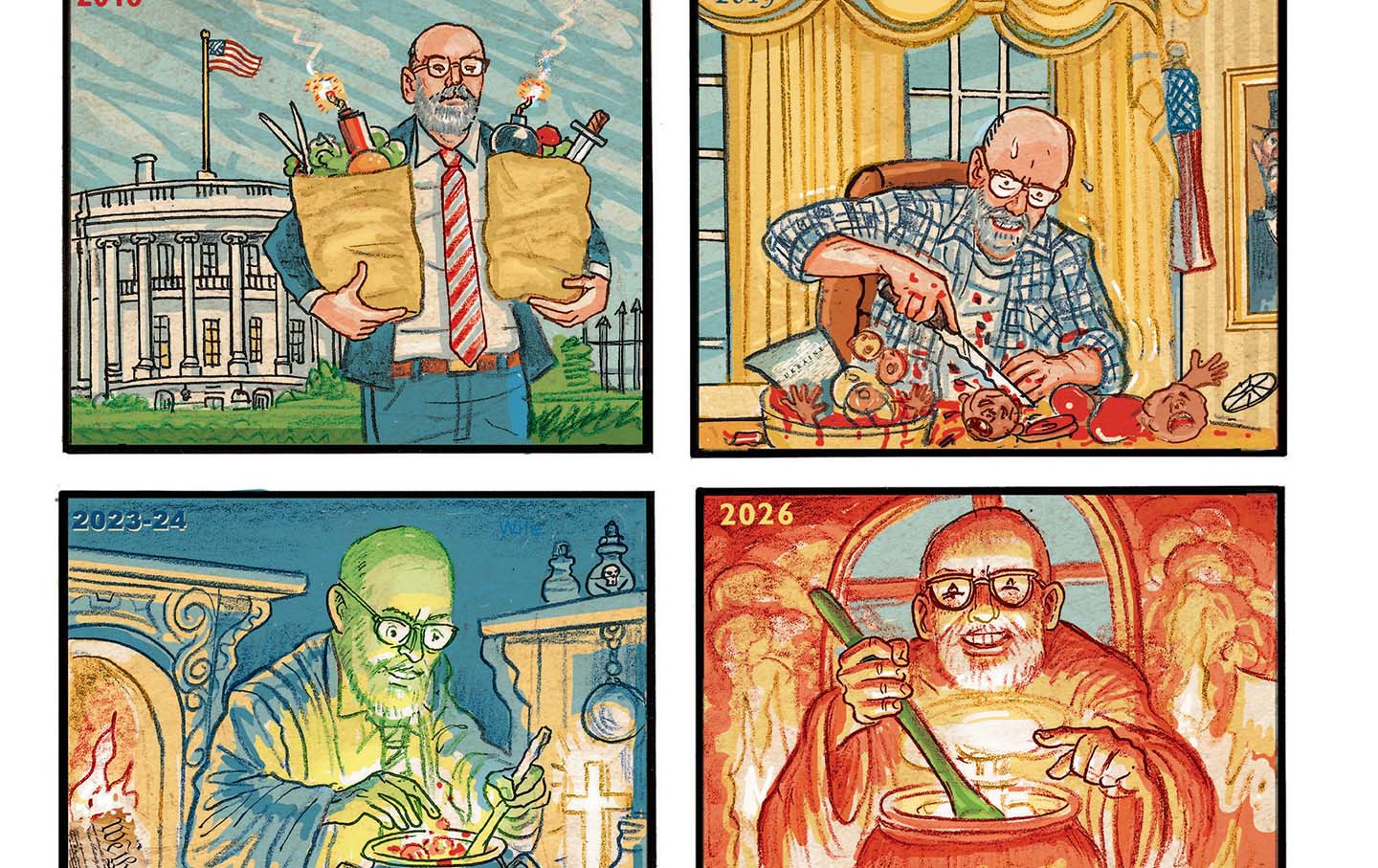
Russell Vought’s Project 2026

Russell Vought’s Project 2026 Russell Vought’s Project 2026

A shadow president undoing democracy.

OppArt / Peter Kuper

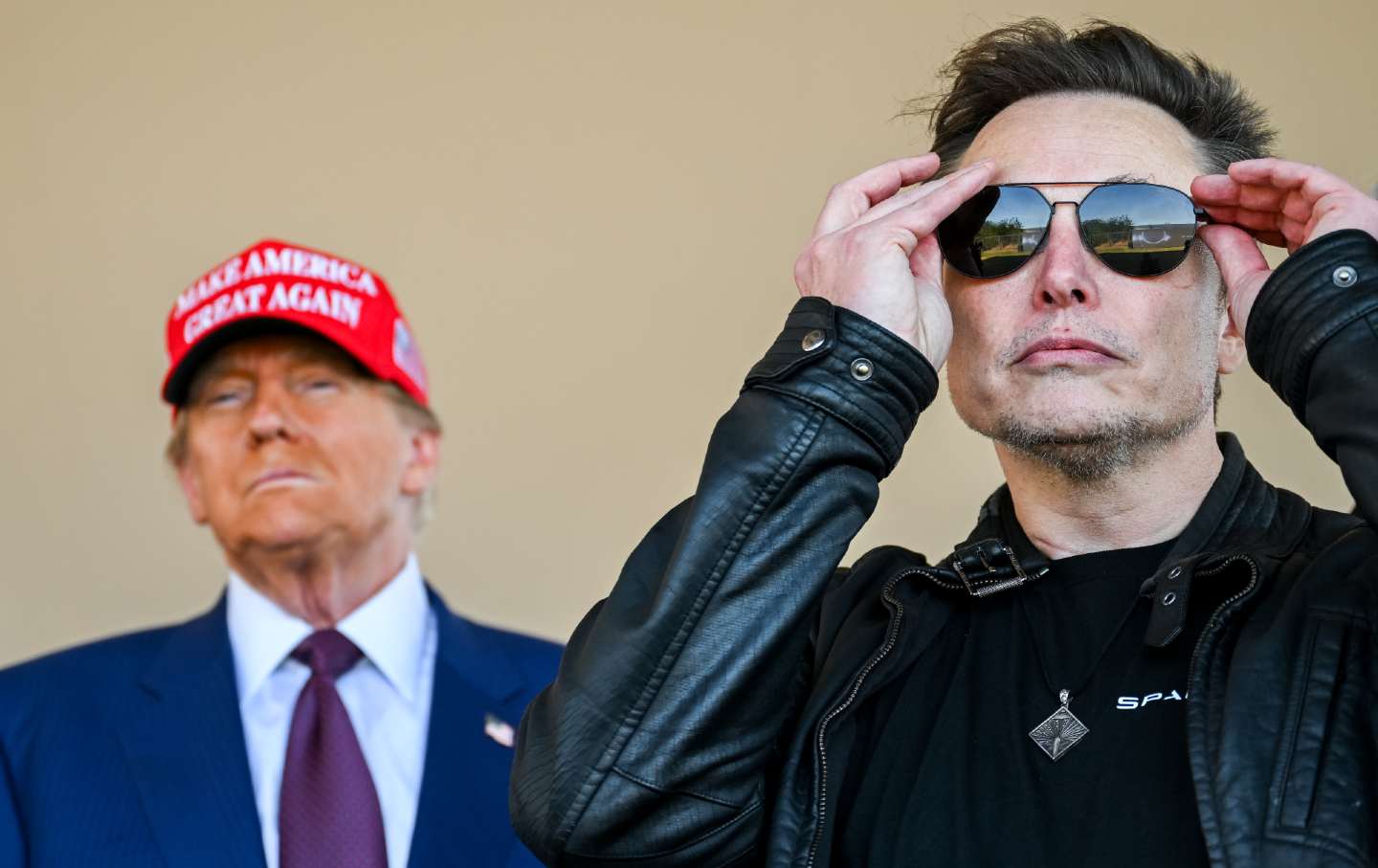
Brothers in race-baiting: Donald Trump and Elon Musk attend a SpaceX launch in 2024.

The New Right’s Toxic Addiction to Racial Conflict The New Right’s Toxic Addiction to Racial Conflict

A former fellow with the Claremont Institute explains how white nationalist dogma sets the terms of political belonging on the MAGA right.

Pedro Gonzales

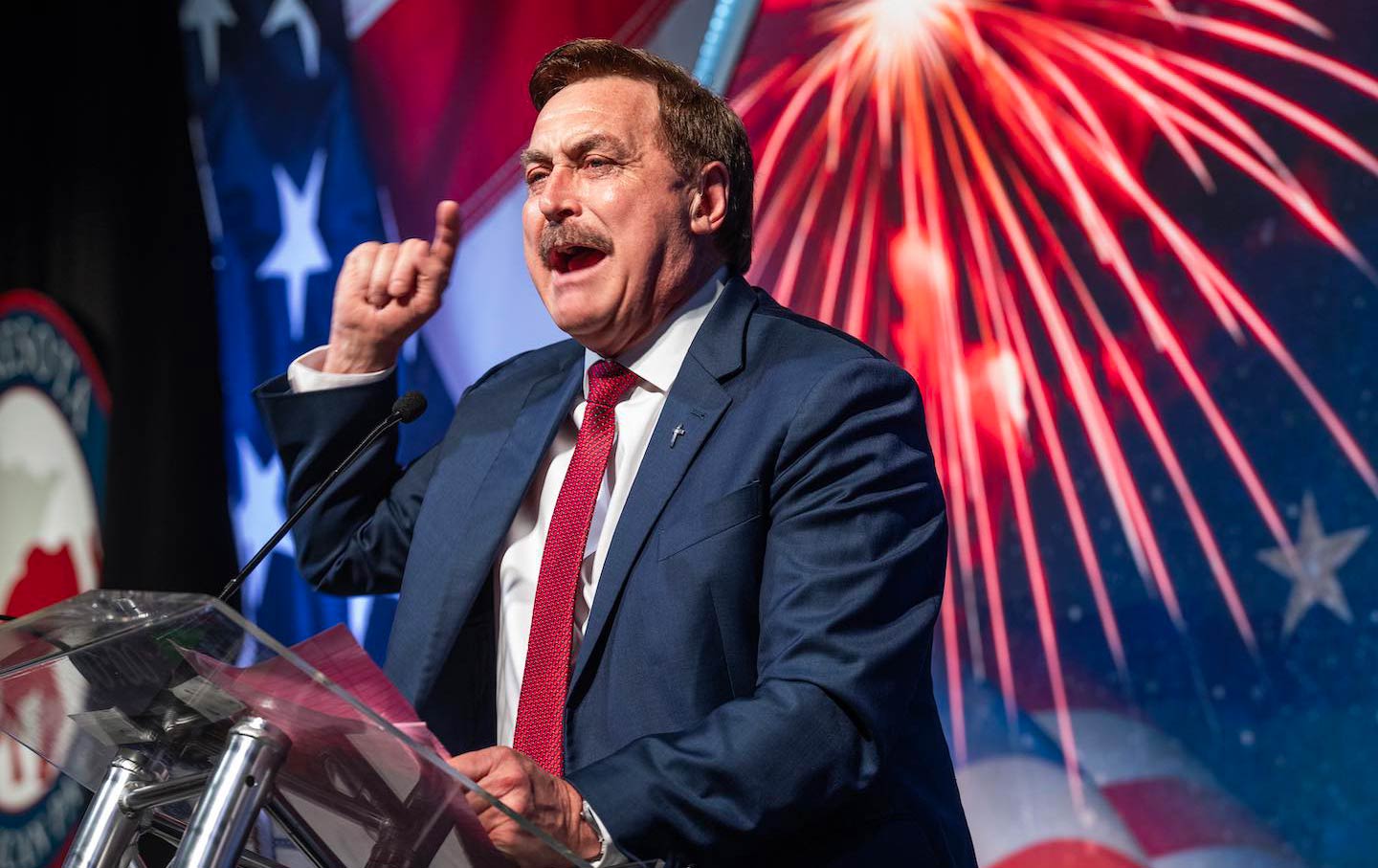
Gubernatorial candidate Mike Lindell makes his case for the GOP nomination in Duluth, Minnesota, in May 2026.

Is a Trump Endorsement Becoming a Liability? Is a Trump Endorsement Becoming a Liability?

The president’s backing failed to secure a primary win in Minnesota for Mike Lindell. And he’s not the only one.

Chris Lehmann

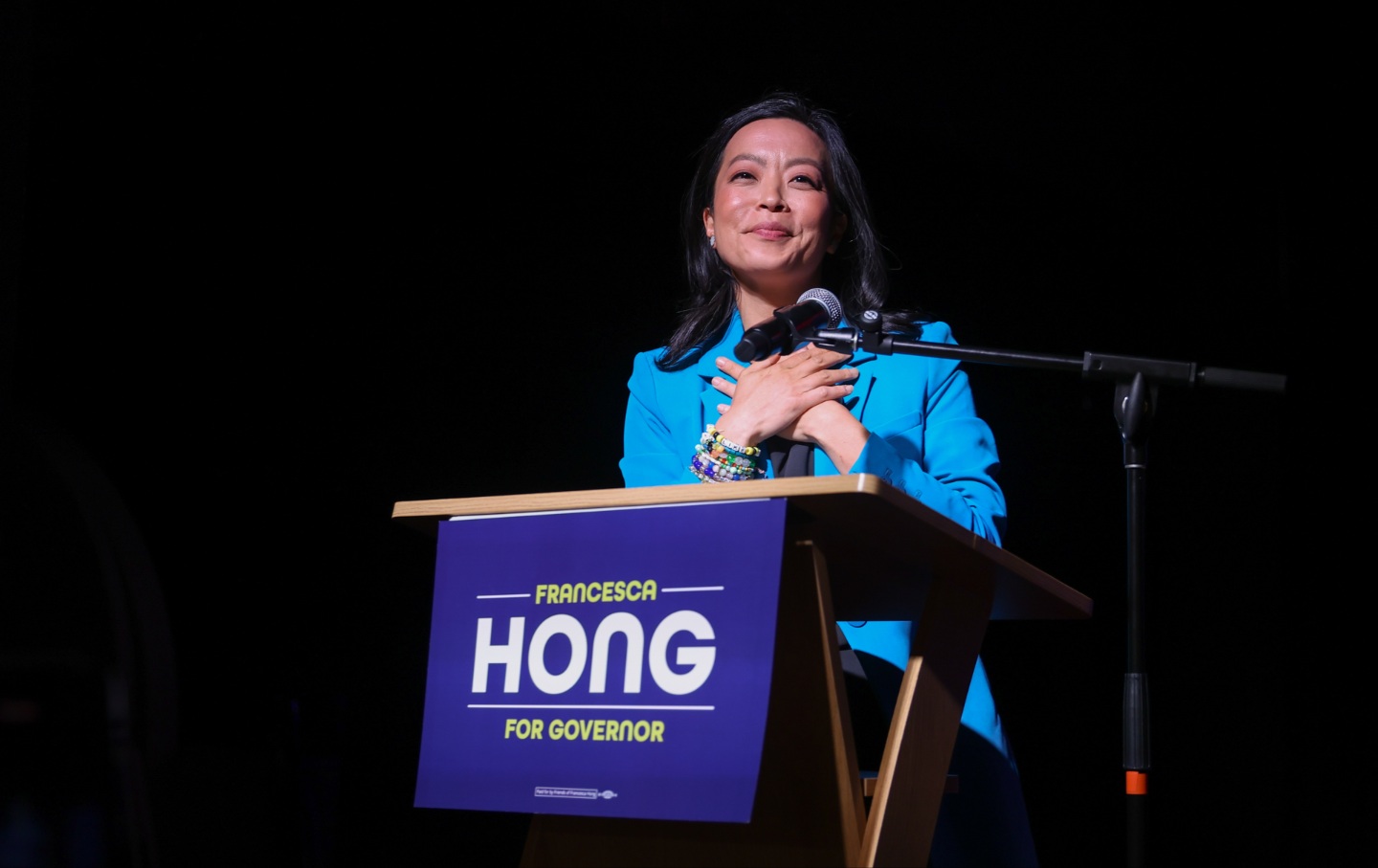
Francesca Hong at a primary election night watch party at Atwood Music Hall in Madison, Wisconsin, on Tuesday, August 11, 2026.

Francesca Hong: “Our Movement Is Strong, and the Work Isn’t Done” Francesca Hong: “Our Movement Is Strong, and the Work Isn’t Done”

More than 300,000 Wisconsin voters backed a democratic socialist’s gubernatorial bid. That’s the measure of the strength of a new kind of politics.

John Nichols

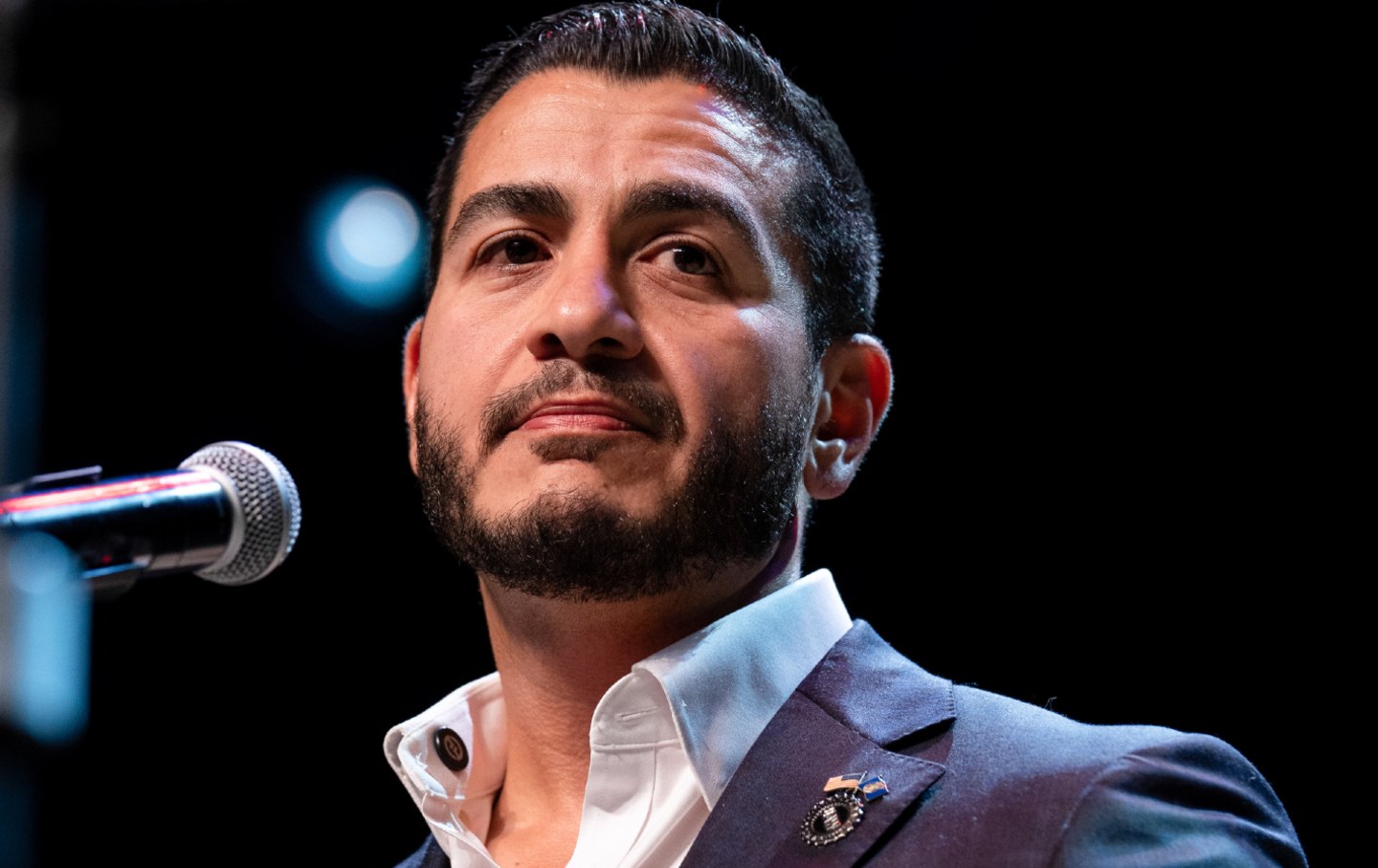
Abdul El-Sayed during a primary election night watch party.

The Gaping Hole in El-Sayed’s Progressive Agenda The Gaping Hole in El-Sayed’s Progressive Agenda

The Senate nominee has woefully undercooked ideas on Supreme Court reform—and that’s a problem.

Elie Mystal

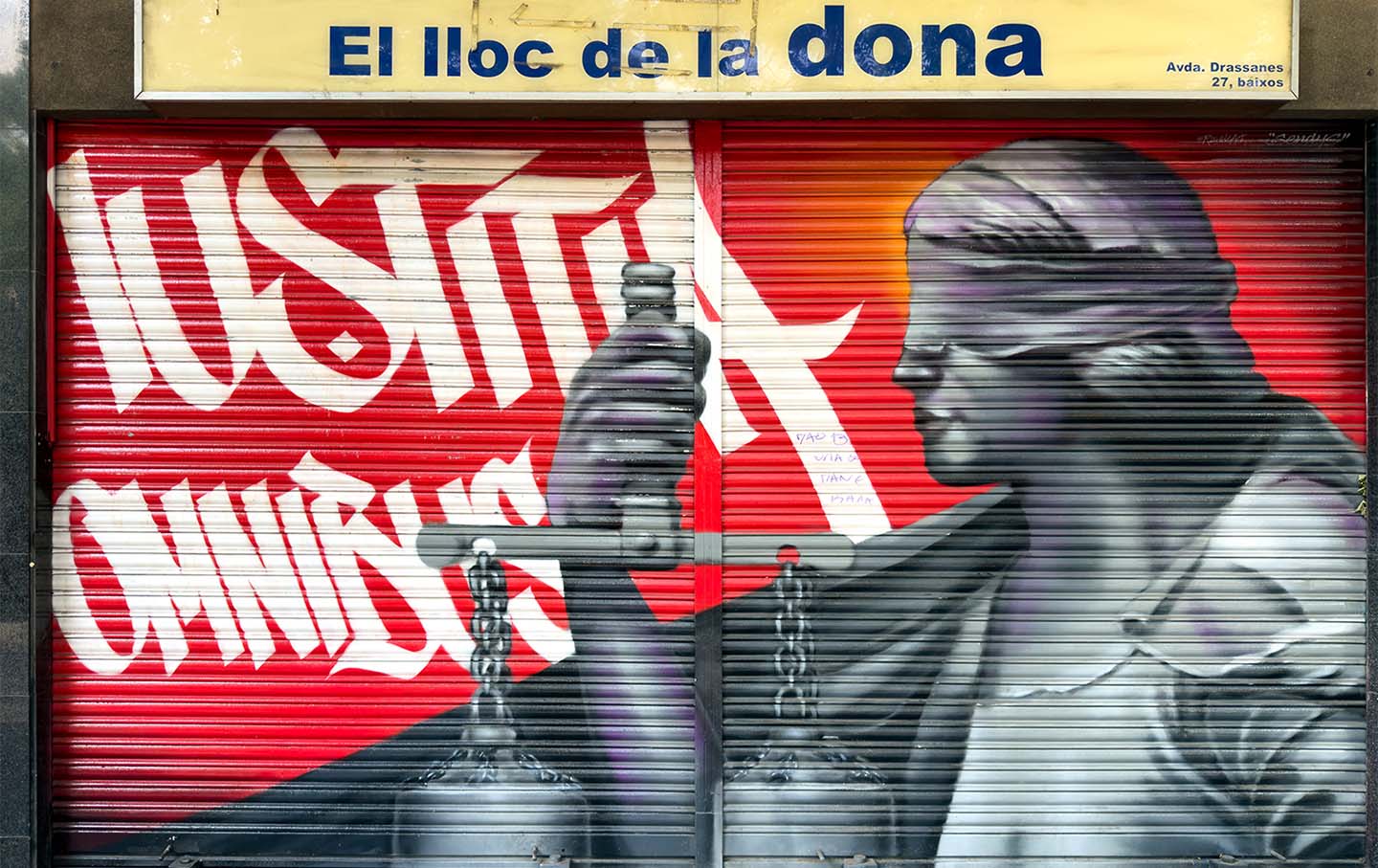
Iusticia Omnibus = Justice for All

Iusticia Omnibus = Justice for All Iusticia Omnibus = Justice for All

Street art, street wise. Barcelona 2026.

OppArt / Bob Bingenheimer


Trump Wants to Cut Taxes for the Rich. Again

Trump Wants to Cut Taxes for the Rich. Again

 https://newrepublic.com/article/214350/trump-cut-taxes-rich-again

OLIGARCHY

Trump Wants to Cut Taxes for the Rich. Again.

If he thinks it’s a good midterm strategy, he’s wrong.

Donald Trump looks on before signing an executive order.
Jim Watson/Getty Images
 
It’s election time, so the White House, according to Bloomberg’s Katy O’Donnell and Caitlin Reilly, is weighing whether to give the rich more tax breaks. Republicans! They just can’t help themselves!

Cutting taxes on the rich is a uniquely unpopular idea. Since 1939, Gallup has been asking, “Do you think our government should or should not redistribute wealth by heavy taxes on the rich”? In 1939, 54 percent said “should not” and only 35 percent said “should,” even though the Great Depression was raging and the New Deal was well along. Since 1939, though, the should nots have been falling and the shoulds have been rising. Today, a 52 percent majority say the government should redistribute wealth by taxing the rich heavily, and a 47 percent minority say it should not. (The current vogue for democratic socialism isn’t happening in a vacuum.)

If you put the question in a manner more appetizing to moderates—do the rich pay their fair share?—61 percent say no, according to an April Pew Research Center poll. Fully 81 percent of Democrats and Democratic-leaners also say no, along with a not-inconsiderable 41 percent of Republicans and Republican-leaners.

Given these realities, the White House, if it endorses a tax cut, will try to sell it as a middle-class tax cut. The Democrats have tax-cut proposals of their own that target lower-income people. I’ve explained previously that I prefer the alternative approach of cutting payroll taxes at the low end and eliminating the Social Security tax ceiling at the high end. But earlier this month my New Republic colleague Monica Potts made a convincing case that the Democrats’ tax-cut gambit has run its course. So maybe the priority ought to be protecting what revenues we have left and reducing the deficit wherever possible so the bond market doesn’t rage out of control. No tax cut will help with that.

On Tuesday, National Economic Council director Kevin Hassett and Larry Kudlow, who held that post during Trump’s first term, discussed on Fox Business the two tax proposals Trump is contemplating. One is to index the capital gains tax, and the other is to exempt from capital gains tax home sales below $2 million. (Currently the exemption goes up to $500,000.) The first of these is a more obvious giveaway to the rich. The second mimics the Obama administration’s strategy of shielding the haute bourgeoisie when it hikes taxes on the rich. Biden tried a version of this and failed, producing no major tax increase on the rich, because his Democratic congressional majority was too timid to impose one. In Trump’s version, the context for cutting taxes for the haute bourgeoisie is a tax cut for richer folks, too.

The dialog between Kudlow and Hassett conveyed that particular air of unreality characteristic of Fox World. (It was on Kudlow’s Fox Business show, which is called Kudlow.) Kudlow began by noting that the Congressional Budget Office had just projected this year’s budget deficit to be $2.1 trillion, up from February’s estimate of $1.9 trillion. “The budget deficit for the first ten months of the year is $1.8 trillion,” Kudlow said. “I’m not sure I understand why.”

Kudlow was baffled because he actually believes, contrary to 45 years’ evidence, the GOP’s propaganda that tax cuts pay for themselves. They do not. The tax cuts in last year’s budget reconciliation bill, for instance, slashed federal revenue by an estimated $570 billion. In addition, the Supreme Court made Trump give back about $166 billion in tariff revenue, of which Trump’s already rebated about $100 billion. According to The Wall Street Journal’s Theo Francis and Celia Bernhardt, these rebates have been so big that they’re juicing the stock market.

Anybody who follows the business news should know all this.

Kudlow asked Hassett to explain this mystery of a persistently high deficit. Hassett explained the bit about tariff rebates. He also complained that the CBO isn’t factoring in the Trump administration’s reduction of the civil service workforce by 300,000. The real figure is 155,000, according to an April report by the nonprofit Partnership for Public Service. If we assume, very generously, that Trump’s unloaded another 45,000 civil servants since April, then Hassett’s estimate is still off by one-third. The budget-hawk nonprofit Committee for a Responsible Federal Budget says that a 10 percent reduction in federal employment will save $350 billion over 10 years. The Partnership for Public Service says that Trump cut 12 percent. Let’s once again be generous and call the federal workforce cut 15 percent. That’s $525 billion over 10 years, or $53 billion per year—peanuts compared to the cost of Trump’s tax cut, which Hassett didn’t mention, or the cost of Trump’s tariff rebates, which he did.

In Fox World, as opposed to the real world, it is not thought illogical to follow a lamentation about government insolvency with a plea for tax cuts. Kudlow cited a McLaughlin & Associates poll that said 62 percent of voters approved of indexing the capital gains tax to inflation. The idea, which Senator Ted Cruz, Republican of Texas, has pushed in Congress, possesses obvious appeal; why should you pay taxes on inflation? Income taxes are already indexed to avoid “bracket creep,” which is when inflation pushes you into a higher marginal-tax bracket. Why not index capital gains taxes, too?

Because capital gains are already taxed at a lower rate than labor income. The top capital gains rate is 20 percent. The top labor-income rate (which is also too low) is 37 percent. Get back to me when you’ve eliminated that differential—and when you’ve also eliminated the “angel of death” loophole that lets assets escape capital gains tax when passed on to heirs—and we can talk. But if we ever do index capital gains like we do income-tax brackets, we’ll have to figure out some way to capture lost revenue—because remember that $2.1 trillion deficit? You don’t want to make it $3 trillion. According to the Yale Budget Lab, indexing capital gains would cost $170 billion over 10 years if it applied only to assets purchased after 2025, and almost $1 trillion if it applied to all assets.

Then there’s the distributional impact. People making less than about $100,000 would receive virtually no benefit, according to the Yale model (and would likely pay more income tax to cover the lost revenue). People making more than about $3 million, on the other hand, would save $350,000 in taxes. If McLaughlin & Associates had bothered to furnish voters with that information, its poll results would have been quite different.

Kudlow also said participants in the McLaughlin & Associates poll “probably want a break on the capital gains tax for the sale of a home, maybe up to $2 million.” The poll did indeed show that 52 percent of voters wanted to increase the capital gains exemption on home sales from the current $500,000 to $1 million. But the poll made no mention of exempting home sales all the way up to $2 million, which would affect a small minority of all home sales. Bloomberg’s O’Donnell and Reilly pointed out that according to the National Association of Realtors, only the richest 15 percent of homeowners—a group already wealthier than the general population—would benefit from bumping the exemption up to $2 million. The other 85 percent avoid capital gains tax already through the very generous $500,000 exemption.

Hassett expressed interest in these two policy proposals but didn’t commit Trump to them. Kudlow, however, said he’d spoken to Trump already. “He liked the idea of the indexing, he liked the idea of a bigger exemption,” Kudlow said.

If Trump endorses these tax proposals, he’ll say they’re an affordability play and argue that lowering capital gains tax will encourage more people to sell their houses, thereby lowering prices. But Democrats should answer that these are just two more Trump giveaways to the wealthy, most especially the indexing of capital gains. There are many ways to reduce the cost of housing: zoning for higher density where appropriate; investing in infrastructure; eliminating tariffs on lumber, steel, and aluminum to lower construction costs; subsidizing low-income housing; and so on. Throwing money at millionaires and billionaires is the most regressive way conceivable to lower housing costs, and there’s no great reason to believe it would even work.