https://www.axios.com/2026/03/04/house-oversight-subpoena-pam-bondi-epstein

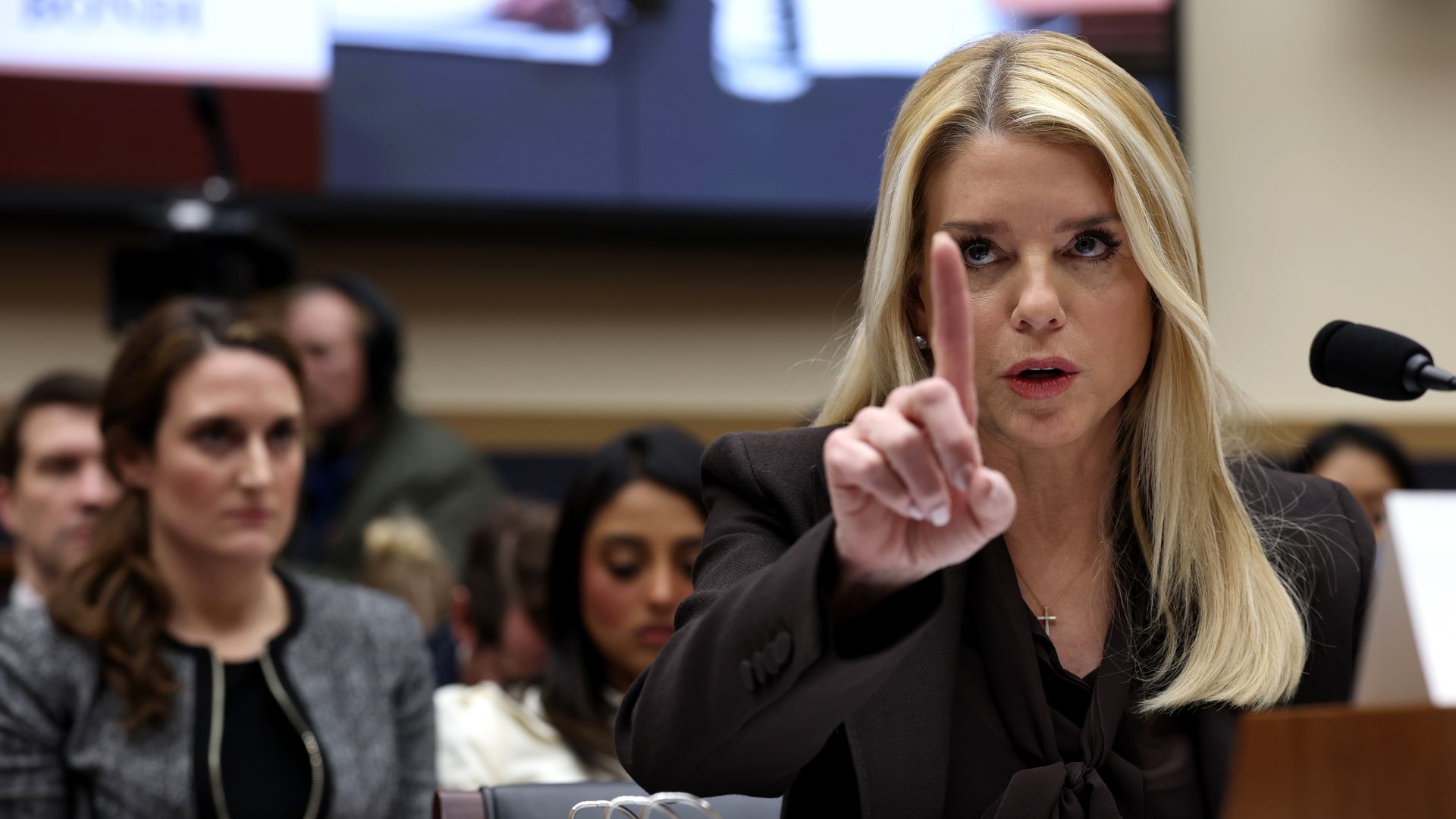
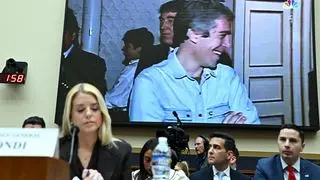
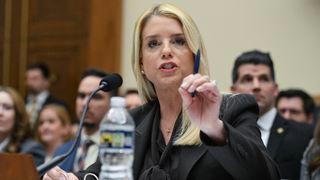
Attorney General Pam Bondi testifies before the House Judiciary Committee on Feb. 11. Photo: Win McNamee/Getty Images
What to read next


https://www.axios.com/2026/03/04/house-oversight-subpoena-pam-bondi-epstein
Attorney General Pam Bondi testifies before the House Judiciary Committee on Feb. 11. Photo: Win McNamee/Getty Images
a little bird told me
Elon Musk responds to Twitter’s threat to sue him over reneging on deal with a meme
US troops reportedly told the war in Iran is intended to bring about biblical end times, Armageddon.

As conflict in the Middle East enters its fifth day on Wednesday, American and Israeli officials are pushing rhetoric suggesting that the campaign against Iran is a religious war.
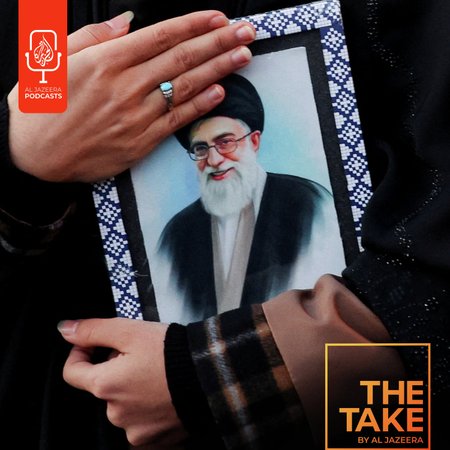
On Tuesday, Muslim civil rights organisation, the Council on American-Islamic Relations (CAIR), condemned the Pentagon’s use of this rhetoric, deeming it “dangerous” and “anti-Muslim”.
The United States and Israel began their attack on Iran on Saturday and have continued to carry out strikes on Iran since then. In retaliation, Iran has hit back at targets in Israel, and US military assets in Bahrain, Saudi Arabia, Qatar, the United Arab Emirates and Iraq.
A US watchdog has reported that US troops have been told the war is intended to “induce the biblical end of times”. US Secretary of State Marco Rubio also recently stated that Iran is run by “religious fanatic lunatics”.
US watchdog Military Religious Freedom Foundation (MRFF) said it has received emailed complaints that US service members were told the war with Iran is meant to “cause Armageddon”, or the biblical “end times”.
An unnamed noncommissioned officer wrote in an email to MRFF that a commander had urged officers “to tell our troops that this was ‘all part of God’s divine plan’ and he specifically referenced numerous citations out of the Book of Revelation referring to Armageddon and the imminent return of Jesus Christ”.
The MRFF is a nonprofit organisation dedicated to upholding religious freedom for US service members.
The officer claimed the commander had told the unit that Trump “has been anointed by Jesus to light the signal fire in Iran to cause Armageddon and mark his return to Earth”.
Israeli and US leaders have also resorted to religious rhetoric in public.
Last month, Mike Huckabee, the US ambassador to Israel, told conservative US commentator Tucker Carlson during an interview that it would be “fine” if Israel took “essentially the entire Middle East” because it was promised the land in the Bible. However, Huckabee added that Israel was not seeking to do so.
Speaking to the media on Tuesday this week, Rubio said: “Iran is run by lunatics – religious fanatic lunatics. They have an ambition to have nuclear weapons.”
And, the previous day in a Pentagon news briefing, US Secretary of Defense Pete Hegseth said: “Crazy regimes like Iran, hell-bent on prophetic Islamic delusions, cannot have nuclear weapons.”
In its statement, CAIR claimed that Hegseth’s words are “an apparent reference to Shia beliefs about religious figures arising near the end times”.
On Sunday, Israeli Prime Minister Benjamin Netanyahu referenced the Torah, comparing Iran with an ancient biblical enemy, the Amalekites. The “Amalek” are known in Jewish tradition as representing “pure evil”.
“We read in this week’s Torah portion, ‘Remember what Amalek did to you.’ We remember – and we act.”
CAIR said: “We are not surprised to see Benjamin Netanyahu once again using the biblical story of Amalek – which claims that God commanded the Israelites to murder every man, woman, child and animal in a pagan nation that attacked them – to justify Israel’s mass murder of civilians in Iran, just as it did in Gaza.”
The statement added that every American should be “deeply disturbed by the ‘holy war’ rhetoric” being spread by the US military, Hegseth and Netanyahu to justify the war on Iran.
“Mr Hegseth’s derisive comment about ‘Islamist prophetic delusions’, an apparent reference to Shia beliefs about religious figures arising near the end times, was unacceptable. So is US military commanders telling troops that war with Iran is a biblical step towards Armageddon.”
By attempting to frame the conflict as a holy war, leaders are using theological beliefs to “justify action, mobilise political opinion, and leverage support”, Jolyon Mitchell, a professor at Durham University in the UK, told Al Jazeera.
“Many on both sides of this conflict believe that they have God on their side. God is enlisted in this conflict, as with many others, to support acts of violence. The demonisation and dehumanisation of the enemy, the ‘other’, will inevitably make building peace after the conflict even harder,” Mitchell said.
“There are several overlapping reasons, and they operate at different levels: domestic mobilisation, civilisational framing, and strategic narrative construction,” Ibrahim Abusharif, an associate professor at Northwestern University in Qatar, told Al Jazeera.
Domestic mobilisation refers to rallying a country’s own people. Leaders can frame conflict as religious and hence morally clear and urgent, rallying public support, he said.
In a video circulating on social media this week, Christian Zionist pastor and televangelist John Hagee is seen delivering a sermon promoting the US assault on Iran. Hagee said that Russia, Turkiye, “what’s left of Iran” and “groups of Islamics” will march into Israel. He said that God will “crush” the “adversaries of Israel”.
“Religious language mobilises domestic constituencies,” Abusharif said, explaining that in the US, this connects deeply with many evangelicals and Christian Zionists, because they already see Middle East wars as part of a religious “end times” story.
“References to the ‘end times’, the Book of Revelation, or biblical enemies are not incidental; they activate a cultural script already present in American political theology.”
Civilisational framing refers to the creation of an “us vs them” dichotomy, casting the conflict as a clash between whole ways of life or faiths, not just a dispute over borders or policy, he added. Hence, statements such as Hegseth’s reference to “prophetic Islamic delusions” simplify the terms of the war in the minds of ordinary people.
“Wars are difficult to justify in technical strategic language,” Abusharif said.
“Casting the conflict as a struggle between ‘civilisation and fanaticism’, or between biblical ‘good and evil’, transforms a complicated regional confrontation into a moral drama that ordinary audiences can easily grasp.”
“Israeli leadership has long used biblical referents as political language. We all are familiar with it. The narratives have become globalised. In Israeli political discourse, this language situates contemporary conflict within a long historical narrative of Jewish survival, and it signals existential stakes,” Abusharif said.
Netanyahu and other Israeli officials have used the term “Amalek” before in reference to Palestinians in Gaza during Israel’s genocidal war in Gaza.
Historically, during wars or military confrontations, US presidents and senior officials have also invoked the Bible or used Christian language.
President George W Bush invoked similar language after the September 11, 2001 attacks.
On September 16, 2001, Bush said: “This crusade, this war on terrorism, is going to take a while.” The Crusades were a series of religiously framed wars, mainly between the 11th and 13th centuries, in which the papacy fought against Muslim rulers for territory.
The White House later tried to distance Bush from the word “crusade” to clarify that Bush was not waging a war against Muslims.
Abusharif said that the war on Iran is about power and politics, but using religious rhetoric energises supporters and “moralises” the conflict.
“The war itself is not theological. It is geopolitical. But the language surrounding it increasingly draws on sacred imagery and civilisational narratives. That rhetoric can mobilise supporters and frame the conflict in morally absolute terms,” Abusharif said.
“Yet it also carries risks: once a war is cast in sacred language, political compromise becomes harder, expectations become higher, and the global perception of the conflict can shift in ways that complicate diplomacy.”


https://newrepublic.com/post/207384/white-house-karoline-leavitt-trump-bombed-iran-feeling
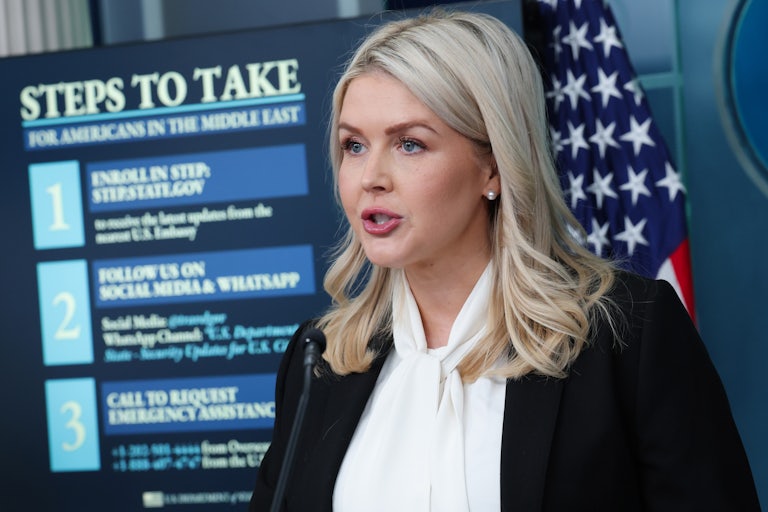
White House press secretary Karoline Leavitt said Wednesday it was necessary to bomb Iran because President Donald Trump had a “feeling” the foreign nation would attack.
“The president had a feeling, again, based on fact, that Iran was going to strike the United States, was going to strike our assets in the region, and he made a determination to launch Operation Epic Fury based on all of those reasons,” Leavitt said.
Earlier in the press briefing, Leavitt struggled to explain the “imminent threat” posed by Iran that would justify the U.S. and Israel launching this war.
“You listed a long list of grievances against the Iranian government going back to … 1979,” one reporter noted, referring to the beginning of the Islamic Republic’s rule in the country. “Why is it that you can’t say what the imminent threat against the U.S. was that required us to launch this?”
“I reject the premise of your question,” Leavitt replied.
The White House has spent the last two days trying to clean up a viral quote from Secretary of State Marco Rubio, in which he admitted Israel had pressured the United States into attacking Iran.
“We knew that there was going to be an Israeli action, we knew that that would precipitate an attack against American forces, and we knew that if we didn’t preemptively go after them before they launched those attacks, we would suffer higher casualties,” Rubio said Monday.
Leavitt’s remarks Wednesday—that a new war in the Middle East is based on nothing but Trump’s “feeling”—don’t make things any better.

Karoline Leavitt gave a characteristically petulant response when asked whether the U.S. was involved in an airstrike on a girls’ school in Iran that killed up to 168 people, mostly young children.
Shajareh Tayyebeh school in Minab, southern Iran, was struck Sunday amid the U.S.-Israeli bombing campaign on the country. As the Iranian school week lasts from Saturday to Thursday, the building was full of students, and “dozens of seven to 12 year-old girls” were killed in the explosion, The Guardian reported. Unesco described the bombing as a “grave violation” of international law.
Leavitt was asked whether the U.S. had been responsible for the attack.
“Uh, not that we know of, Sean, and the Department of War is investigating this matter,” she replied. “And I would just tell you strongly, the United States of America does not target civilians, unlike the rogue Iranian regime, that … uses propaganda quite effectively. And unfortunately, many people in this room have fallen for that propaganda.”
Leavitt refusing to give a firm answer and instead asserting that the federal government is investigating would seem to contradict her statement that the U.S. does not target civilians. If the investigation reveals that the U.S. were responsible, then we would, in fact, have targeted civilians. Secretary of State Marco Rubio said on Monday that the U.S. “would not deliberately target a school.” But unintentionally killing civilians can still be a war crime.
Despite Leavitt’s claims of Iranian propaganda, the bombing was well documented by on-the-ground reporters and civilian cell phone video.

White House press secretary Karoline Leavitt appeared unable to answer a repeated question during her briefing Wednesday: Is Iran a regime-change war or not?
As President Donald Trump and his administration give shifting explanations of the U.S. decision to join Israel in bombing Iran over the last five days, Leavitt was asked what he really believes.
“You said the Iranian regime is being absolutely crushed. Can you explicitly state then whether or not regime change is a goal of President Trump?” AFP reporter Danny Kemp asked.
“The goals of this operation have been made clear, and the president has said them in his speech,” Leavitt replied. “The stated military options of Operation Epic Fury are as follows: eliminate Iran’s ballistic missile threat, destroy their naval capability, disrupt missile and drone production infrastructure, sever their pathway and end their pathway to nuclear weapons.
“Thus far, this operation has been remarkably successful,” she continued, refusing to comment on whether regime change is indeed a goal. “Again, we’re moving towards complete and total control of Iranian airspace.”
Another reporter followed up on Leavitt’s remarks. “Those four objectives that you laid out do not explicitly include regime change. If those objectives were achieved and the Islamic Republic still existed, would that be an acceptable outcome?”
“That’s a hypothetical question that I’m not going to engage in,” Leavitt replied, still refusing to answer the question.
That the White House press secretary can’t—or refuses to—answer whether the U.S. has embarked on another regime-change war in the Middle East is astonishing, given that the U.S. has been bombing Iran for five days now.
In his video message Saturday, Trump appeared to characterize his end goal as regime change, telling Iranians after he bombed their country: “Take over your government. It will be yours to take.”
On Tuesday, however, Trump appeared to acknowledge that despite the U.S. killing Supreme Leader Ali Khamenei, his plan could totally fail, and the Iranian regime could elect another hard-liner to take Khamenei’s place.

Homeland Security Secretary Kristi Noem was caught in a white lie Wednesday about a toddler detained by ICE.
At a House Judiciary Committee hearing, Democratic Representative Ted Lieu showed Noem a picture of a young toddler named Amalia who was detained by ICE, and asked the secretary if Amalia committed a crime. Noem replied, “No, she did not. She is with her family.”
“The reason she’s with her family is because she almost died in ICE detention until folks brought a lawsuit forcing her release,” Lieu said.
Noem’s answer ignored the long ordeal that Amalia’s family had to deal with. Her parents, Kheilin Valero Marcano and Stiven Arrieta Prieto, worried that their 18-month-old daughter might die while being held with them at Texas’s Dilley Immigration Processing Center, known for its unsafe and unsanitary conditions despite the fact that ICE uses the facility to detain families.
While she was healthy when she arrived at the facility, Amalia quickly became sick with pneumonia, Covid-19, RSV, and other serious respiratory issues and was taken to a children’s hospital in nearby San Antonio, Texas. Days later, she was discharged from the hospital after she showed improvement from intensive oxygen treatment.
She was then sent back to Dilley, despite doctors warning that she was at high risk of infection, and guards there denied her prescribed medication that she was supposed to take every day. Lawyers filed an emergency petition in federal court to have her released, but it took nine more days in Dilley before she was released.
Noem thought she could get away with saying that Amalia was safely back with her family, but the full story is that being detained by ICE nearly killed her, and only legal action got her released and able to take the medicine she needed. Noem’s stewardship of DHS and the president’s mass deportations have led to widespread misconduct, abuse of immigrants, and even death in some cases. Little Amalia is one egregious case among many that Noem ignores.

Given the many scandals that have enveloped this country since President Donald Trump began his second term, it’s easy to forget one of the first: Big Don’s call to gerrymander districts in Republican-held states in order to create more congressional seats for the GOP.
Fortunately for Democrats, the president is so unpopular right now that even new districts specifically drawn for Republicans may swing left.
Veteran political strategist Tom Bonier noted Wednesday that Democratic primary voters exceeded their Republican counterparts in four of the five Texas districts that the state legislature redrew last year.
One of these is District 28, which is located on the southwest tip of Texas, and where Democrats outvoted Republicans four to one.
Four to one! The turnout highlights a Southern, largely Hispanic enthusiasm for Democratic candidates that simply wasn’t there during the last presidential election. In Zapata County, also part of district 28, Bonier found that Democratic primary turnout was 143 percent the number of votes Kamala Harris won in 2024.
“It’s hard to overstate how rare it is to see Dem turnout in a midterm primary election exceeding that of a presidential election,” Bonier wrote.
These voters are also mobilizing despite a pronounced funding gap, which will only inspire more Democratic hope for the region. The GOP spent upward of $80 million on Senate primary advertisements in Texas, more than triple the amount spent by Democrats, the advertising analytics firm AdImpact found.

Only Congress has the authority to declare war—but Republican leadership seems content to let Donald Trump do whatever he wants at whim.
The Senate is expected to vote Wednesday on whether to block Trump’s warfare in Iran via a war powers resolution. The bipartisan resolution, introduced by Democratic Senator Tim Kaine and co-sponsored by Republican Senator Rand Paul, would “direct the removal of United States Armed Forces from hostilities within or against the Islamic Republic of Iran that have not been authorized by Congress.”
But not everyone in Congress is prepared to seize the legislative branch’s constitutionally appointed authority.
House Speaker Mike Johnson told reporters Wednesday that restricting his Oval Office ally’s military power through the passage of a war powers resolution “would be a terrible, dangerous idea.”
“It would empower our enemies, it would kneecap our own forces, it would take the ability of the U.S. military and the commander in chief away from completing this critical mission to keep everybody safe,” Johnson said.
The Republican House leader added that Iran had attacked three U.S. embassies in the days since U.S. bombs fell on the country.
“Those are sovereign territories of the U.S. They have declared war on us,” Johnson said. “I don’t believe in the semantics.… We’re not at war right now. We’re four days into a very specific, clear mission and operation—Operation Epic Fury—that has two components, as you know.
“Everybody has explained,” Johnson said.
But nobody in Washington has explained the rationale for going to war with Iran with any modicum of clarity, leaving even those in Trump’s Cabinet confused about the intended messaging. State Secretary Marco Rubio, for instance, had to eat his own words Tuesday evening after the president disagreed with his depiction of the war. Rubio had initially suggested to reporters on Monday that Israel had forced Trump’s hand, forcing the U.S. to strike first due to intel that indicated Iran would retaliate with force against American interests if Israel followed through on its plans to attack.
By the next day, Rubio was stuttering in front of cameras that he had never said anything of the sort. Mike Waltz, the U.S. ambassador to the U.N., claimed later that day that Rubio’s point-blank comments had been “taken out of context.”
So far, six U.S. soldiers have been killed in the conflict, as have more than 20 Iranian officials, including Supreme Leader Ayatollah Ali Khamenei. Eighteen American soldiers have also been seriously injured. More than 1,000 Iranian civilians have been killed, including 176 children, dozens of whom were at a girls’ school in the country’s south.
More than a dozen countries have been roped into the conflict since the U.S. began bombing Iran—including France, the U.K., and Greece—effectively destabilizing the entire region while disrupting global markets and oil production.
Meanwhile, U.S. forces may not be able to keep their defenses up: Military officials have stressed since Sunday that fighting Iran has already drastically depleted America’s missile defense systems.
In a closed-door meeting with lawmakers Tuesday, Defense Secretary Pete Hegseth and Chairman of the Joint Chiefs of Staff Gen. Dan Caine reportedly said that Iran’s Shahed attack drones had proved a more difficult problem than initially predicted.
One source told CNN that the U.S. has been “burning” through long-range precision-guided missiles over the last four days.

California Governor Gavin Newsom, a contender for the Democratic presidential nomination in 2028, has questioned U.S. military support for Israel and called it “sort of an apartheid state.”
Pod Save America podcast host Jon Favreau interviewed Newsom Tuesday at an event promoting the governor’s memoir and asked him, “Do you think, looking down the road, that the United States should consider maybe, you know, rethinking our military support for Israel?”
In his response to the former Obama administration staffer, Newsom took his strongest stance on Israel to date.
“It breaks my heart, because the current leadership is walking us down that path where I don’t think you have a choice about that consideration,” Newsom said. He criticized Israeli Prime Minister Benjamin Netanyahu and referred to the expansion of West Bank settlements having people “talking about it appropriately as sort of an apartheid state.” He went on to criticize Israel’s role in the current war on Iran.
“We’re talking about regime change?” Newsom said. “For two years, they haven’t even been able to solve the Hamas question in Israel.”
Newsom has made no secret of his presidential ambitions, touring the country to increase his national profile. Less than two months ago, he went on conservative commentator Ben Shapiro’s podcast and refused to call Israel’s massacre of Gaza a genocide, saying he was “crystal clear on my love for Israel.”
So what does Newsom actually believe? Does he genuinely believe that the U.S. needs to stop military support for Israel, or is he pandering to reach the voting majority, who, according to a recent Gallup poll, sympathize with Palestinians more than Israelis? With the presidential primaries only two years away, Newsom’s views will face plenty of challenges in what will probably be a crowded Democratic field.

Roughly two months after their deaths, Homeland Security Secretary Kristi Noem still isn’t ready to publicly acknowledge that Renee Nicole Good and Alex Pretti were not domestic terrorists.
ICE agents shot and killed the two U.S. citizens in different instances over the course of January. In the immediate aftermath of the dual homicides, Noem and other officials within the Trump administration attempted to spin the narrative of their deaths to quell public backlash. To do so, they smeared Pretti, an ICU nurse who worked with veterans, and Good, an award-winning poet and mother, as “domestic terrorists” intent on killing federal officers.
But time away from the brutal killings has not changed Noem’s tune. In a heated exchange with Representative Jamie Raskin during a House Oversight Committee hearing Wednesday, Noem not only refused to apologize to the Americans’ families for her subordinates’ gross abuse of force, but blatantly sidestepped any attempt to revise her language.
“Madame Secretary, based on what you know today, were Renee Good and Alex Pretti domestic terrorists?” asked Raskin.
“Congressman, what happened in Minnesota in those two incidents was an absolute tragedy,” Noem said.
“Were they domestic terrorists as you said to the country?” Raskin said.
“My condolences to their families, because I know their lives will never be the same after that happened,” Noem said.
“Is that an apology for what you said?” pressed Raskin.
“We, in those instances, offer as much information as we can—” Noem continued.
“Madame Secretary, based on what you know today, were Renee Good and Alex Pretti domestic terrorists?” Raskin repeated.
“As you know, there’s ongoing investigations that are being led by the FBI—” Noem started, before Raskin interrupted to clarify that Noem “did not wait for the investigation” when she made her initial comments.
“You proclaimed they were domestic terrorists at the time. Why did you do that?” asked Raskin.
“And you didn’t wait to attack our law enforcement officers,” Noem spat back. “Our ICE officers and our HSI officers that day risked their lives to protect that scene so the evidence could be used in the investigation. Because those violent rioters that were there—”
“So you’re proud of the fact that you called them domestic terrorists?” Raskin pushed. “Is that what you’re telling America?”
“HSI officers put their lives on the line to protect that scene,” Noem continued.
“Yes, they do,” Raskin agreed, reminding Noem that she “told a lie” about Pretti and Good. “Do you regret that?”
“I offer my condolences to those families,” Noem repeated blankly.
“Based on what you know today, were Renee Good and Alex Pretti domestic terrorists?” Raskin asked.
“There’s ongoing investigations,” Noem said.
“So you still don’t know? You think that’s an open question?” Raskin pressed.
“I would think you would still want there to be open investigations into this situation,” Noem said.
“Well you stated the conclusion two hours after they were killed that they were domestic terrorists. I wanted to give you an opportunity to correct the record, not just for their family but for everyone in America who believes in the truth and fairness and honesty,” Raskin continued. “You know, your acting ICE Director Todd Lyons came before Congress. He said he had no knowledge whatsoever that Alex Pretti and Renee Good were domestic terrorists. None! This is your guy, he said. He admitted that was wrong. Why won’t you do that?”
But
Noem would not explain herself. She then had no apparent defense for
her agency when Raskin asked her to clarify her position on existing
laws that are supposed to prevent federal immigration officers from
killing and abusing American citizens.

State Representative Carla Cunningham saw her support base wither away after she was the only Democrat to vote in favor of a Republican bill that required local law enforcement to record inmates’ citizenship status and detain noncitizens for longer periods if requested by ICE.
She gave a fiery speech on the House floor at the time, quoting unnamed “social scientists” while arguing that “all cultures are not equal.” She added that noncitizens should “adapt to the culture of the country they wish to live in.”
Not too surprising that Cunningham was primaried after such comments, but her opponent, the Reverend Rodney Sadler’s immense margin of victory should give progressives hope and show the lack of support for Immigration and Customs Enforcement even within swing states. Sadler received 70 percent of the vote to Cunningham’s 22 percent.
In North Carolina’s 4th district, incumbent Democrat Valerie Foushee is locked in a dead heat with progressive challenger Nida Allam. Foushee was favored to win and continues to hold a slight advantage, leading Allam by about 1,000 votes with 99 percent of votes in, but Allam could request a recount if the vote remains close.
Allam is less than half Foushee’s age, and is running solidly to the left of the incumbent. She has called for abolishing ICE (Foushee has said she would rather defund the agency) and is frequently critical of Israel’s genocide in Gaza. She has bashed Foushee for accepting donations from the notorious pro-Israel lobby AIPAC in past campaigns. The incumbent then changed her tune last summer, saying she would not accept AIPAC money during the current election cycle.
The race became the most expensive primary in state history, with $2.4 million from outside groups being spent on Foushee and $1.8 million on Allam. Foushee still attracted controversy over reports that AIPAC funneled money to her through third parties.

Democratic senators came out of a classified briefing about the Trump administration’s war with Iran Tuesday expressing grave concern.
Senator Chris Van Hollen said officials peddled the same words in private that they have said in public, calling it “complete incoherence” with “constantly shifting narratives” to try to justify the war.
Senator Ed Markey said the briefing “confirmed what we already knew: Donald Trump is waging an illegal war, and he has no plan to end it.”
“Trump is completely out of control, and Americans have already lost their lives because of his lies. The war in Iran must end now,” Markey added.
“It is so much worse than we thought. You are right to be worried,” Senator Elizabeth Warren said. “The Trump administration has no plan in Iran. This illegal war is based on lies, and it was launched without any imminent threat to our nation.”
“I am more fearful than ever after this briefing that we may be putting boots on the ground and that troops from the United States may be necessary to accomplish objectives that the administration seems to have,” Senator Richard Blumenthal told reporters. “But I also am no more clear on what the priorities are going to be in the administration going forward.”
All of this is disturbing and confirms the lack of a plan, except for “death and destruction.” The administration is committed to sinking more and more bombs and military resources into the conflict, and ground troops seem more likely each day. Justifications keep shifting from regime change to ending Iran’s nuclear program, and inside the military, some leaders are trying to push the narrative of a holy war. If senators are worried, the American people should be too.