London Calling
Police on My Back
(The Equals cover)
The Guns of Brixton
Tommy Gun
Play Video
The Magnificent Seven / Armagideon Time
Rock the Casbah
Train in Vain
Career Opportunities
Spanish Bombs
Clampdown
Play Video
English Civil War
Should I Stay or Should I Go
I Fought the Law
(The Crickets cover)
A public, verifiable record of U.S.
immigration enforcement - incidents, agents, deaths, vehicles, and
facilities - documented with sources and open to everyone.
Reader-supported · No ads · No paywallKeep ICE List online. A public record of immigration enforcement, funded by readers, not advertisers, sponsors, or any agency.
A public, verifiable record of U.S.
immigration enforcement - incidents, agents, deaths, vehicles, and
facilities - documented with sources and open to everyone.
The ICE List Wiki is a public, verifiable record of immigration enforcement activity in the United States.
It documents incidents, agencies, individuals, facilities, vehicles, and legal authorities involved in enforcement operations.
Entries are structured, sourced, and timestamped to support verification, cross-referencing, and long-term analysis.
The wiki is intended for use by journalists, researchers, advocates, and the general public.
Project status: This wiki is
in active development. Structure, navigation, and data standards are
being finalised. Older pages may be reformatted as standards are applied
consistently.
An ICE agent shot and killed Lorenzo Salgado Araujo,
52, a 35-year Houston resident with no criminal record who was
reportedly picking up his work crew and finalizing a work-permit
application. ICE claims the agent fired in self-defense after Salgado
Araujo allegedly tried to run him over, but has released no bodycam,
dashcam, or video, has not named the agent, and has not said why he was
targeted. The only known footage was recorded after he was shot -
showing him face-down and bleeding on a barbershop driveway, calling
for help. The claim mirrors ICE "self-defense" accounts in other cases
later contradicted by video.
Most Wanted - unidentified agents
Federal agents recorded using force against the public who remain unidentified. Recognize someone? Submit a tip on their entry - your identity is not recorded.
A public, sourced record of people killed by ICE, CBP, and Border
Patrol operations - through use of force, in detention and custody, and
during enforcement actions - since 20 January 2025.
Roberto Villareal is an ICE agent identified at Delaney Hall Detention
Facility during protests surrounding the ongoing hunger strike.
Published reports accuse Villareal of repeated acts of violence against
protesters, including kicking, spraying chemical agents, and physically
assaulting demonstrators. His conduct has made him one of the most
controversial ICE agents identified during the Delaney Hall campaign.
In the news
Recent ICE-related reporting from external news organisations.
No one in immigration court has the right to a public defender.
Detained adults and children often face deportation alone. The Florence
Project provides representation, Know Your Rights education, and family
support at no cost.
The ICE List Wiki is designed for public use.
Journalists, researchers, and advocacy groups use the data to track
enforcement patterns, identify repeat agencies or jurisdictions, and
contextualise individual incidents.
Pages may be cited with attribution.
ICE List in the media
The ICE List has been reported on and analysed by independent news
organisations, and indexed by academic and civic-tech projects. Read
some of that coverage here.
The .onion link requires Tor Browser. For maximum anonymity, use Tor and avoid submitting from a work device or network.
Verification and sourcing
Each page includes a verification status indicating whether claims
are supported by public records, media, video evidence, or other
documentation.
Unverified information is clearly labelled and is not presented as
established fact.
Pages may be updated as additional sources become available.
Quick links
How to report an incident
Step-by-step instructions for submitting an incident with enough detail to verify and map it.
Deportation agents
Overview of ICE ERO officers, how we document them, and how to read agent pages.
State directory
Browse state-specific portals documenting facilities, incidents, agents, and 287(g) agreements.
Submissions should be factual, specific, and supported by evidence where possible.
Speculation, harassment, or unverifiable claims are not published.
Contributors are encouraged to prioritise accuracy over speed.
Trump administration subpoenas New York Times reporters over coverage
Press freedom advocates and members of Congress have condemned the subpoenas as an attempt to ‘threaten and intimidate’.
US
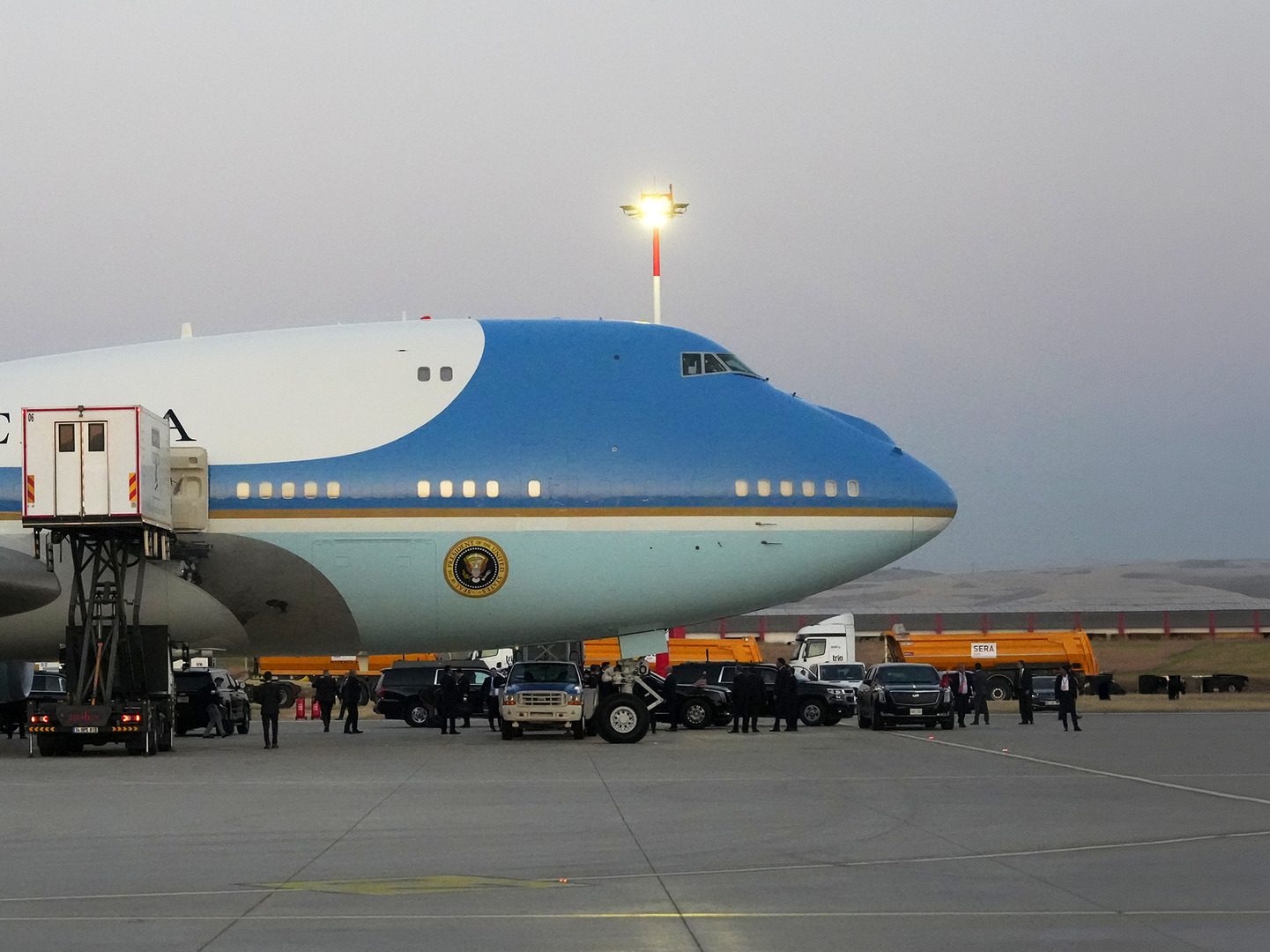
President Donald Trump returns to Joint Base Andrews on July 9 on his
new Air Force One, after switching to his old one to leave Turkiye [Win
McNamee/Getty Images via AFP]
The
administration of United States President Donald Trump has issued
subpoenas against journalists from The New York Times, in what advocates
say is an escalating attack on the free press.
Late on Friday,
the Times reported that at least four of its reporters have received
subpoenas, some delivered to their homes by federal agents.
Those subpoenas compel them to testify before a grand jury in Manhattan on Wednesday.
“The
appearance of federal law enforcement agents on the doorstep of news
reporters should shock the conscience of any American who believes in
the Constitution and the press freedom it protects,” said David McCraw,
the newspaper’s lawyer, in a statement quoted by the Times.
News
of the subpoenas prompted outcry from leading news groups including the
Committee to Protect Journalists (CPJ), which demanded their withdrawal.
“The
subpoenas are an extraordinary escalation in President Trump’s efforts
to threaten and intimidate independent news organizations, and have a
chilling effect on the work of journalists across the country,” said
CPJ’s chief executive officer Jodie Ginsberg.
The subpoenas were
authorised by a top official in Trump’s Department of Justice: Jay
Clayton, the US attorney for the Southern District of New York.
Clayton
is in line to succeed Bill Pulte as the director of national
intelligence, a cabinet-level role Pulte holds on an interim basis. The
Senate is set to begin hearings on Clayton’s confirmation next week.
0:53
Now Playing
00:53
Trump departs NATO summit on older Air Force One
Next
01:56
US Rep Ro Khanna speaks out about being harassed by Israeli settlers
Scrutiny on NATO travel coverage
At issue is The New York Times coverage of Trump’s return flight from the 2026 NATO summit in Ankara, Turkiye, this week.
While
Trump flew to Europe on his new Air Force One, a jet gifted by Qatar
and retrofitted by the US military, he left on the old Air Force One.
Trump
claimed the switch was made to allow the new jet to visit RAF
Mildenhall, an air force base in Suffolk, England, that supports US
military operations.
He framed it as an opportunity to allow military members to tour the aircraft.
“It’s going to go to a couple of bases,” Trump said at the time, “so the soldiers can see it because it’s truly magnificent.”
But at the same July 8 news conference, Trump referenced concerns about his safety.
When
asked about the airline switch by a reporter from The New York Post,
Trump responded, “You know, the life of a president is very dangerous.”
He proceeded to add that he’s “number one on the kill list for Iran”.
That
same day, The New York Times reported swapped his new presidential jet
for his old one because of security concerns, citing anonymous sources.
The change reportedly came at the urging of the Secret Service.
Then,
the next day, the Times expanded its coverage with a follow-up report,
indicating that the new Air Force One lacked the security capabilities
of the old jet.
The article anonymously cited two former Air Force
officials as saying there would not have been enough time to make the
necessary upgrades before the Ankara flight.
It is unclear what modifications have already been made, but experts have estimated that the updates could cost up to $1bn.
Friday’s
subpoenas targeted four of the journalists involved in the Times’s
reporting on the subject: Eric Schmitt, Tyler Pager, Eric Lipton and
Julian E Barnes.
According to the Times, before the subpoenas were issued, the newspaper was contacted by a senior official from the FBI.
That
person, who was unnamed, asked the newspaper to hold off on its
reporting about Air Force One, citing national security. The FBI
official also requested information on the Times’s anonymous sources.
The newspaper, however, declined to provide such information, in line with standard journalistic practice.
5:20
Trump says he ‘tested’ NATO allies over Iran support ahead of Ankara summit
A testy relationship with journalists
The subpoenas mark the latest clash between the Trump administration and US media outlets that report on its activities.
Trump
himself has a long-running feud with the Times. In September, he sued
the newspaper for $15bn in damages, alleging it had defamed him and
attempted to “sabotage” his candidacy in the 2024 presidential election,
which he won.
After his initial complaint was thrown out as “improper”, Trump refiled it in October.
The
Times, for its part, has sued the Department of Defence under Trump
over its attempts to impose media restrictions on journalists.
Just
this week, the Times also filed a countersuit against the Equal
Employment Opportunity Commission, after it alleged the newspaper had
discriminated against a white, male employee for failing to give him a
promotion.
The Times has described the effort as an attempt to
muffle the press, in violation of the free-speech protections enshrined
in the US Constitution’s First Amendment.
The Times is not the only newspaper to face legal backlash from the Trump administration. In December, Trump launched a $10bn lawsuit against the BBC, arguing that a documentary it aired misrepresented his speech before the attack on the US Capitol on January 6, 2021.
Trump
is also seeking $10bn from The Wall Street Journal over its reporting
on a birthday message he allegedly sent to convicted sex offender
Jeffrey Epstein. After that suit was thrown out, Trump refiled it in May.
The Trump administration has also taken actions against individual journalists.
In January, for instance, the FBI executed a raid
on the house of Washington Post reporter Hannah Natanson, who covered
the Trump administration’s efforts to scale back the federal workforce.
The
raid came as part of an investigation into a government contractor
accused of leaking information to the news media, but at least two
judges have barred the Trump administration from using the information
it seized from Natanson.
The Trump administration has denied seeking to erode the freedom of the press, instead citing national security needs.
But
McCraw, the Times lawyer, argued that, with the latest subpoenas, the
White House was trying to restrict “the American public’s right to know
how their government is operating”.
“This brazen act should be
seen as nothing more than an attempt to prevent the public from knowing
what is happening in their country by intimidating journalists from
doing their jobs,” he said.
Top Democrats, including Senate
Minority Leader Chuck Schumer, also weighed in on the subpoenas, using
them to slam Trump as corrupt.
“Donald Trump is one of the weakest, most thin-skinned individuals the world has ever seen,” Schumer wrote on social media.
“Reporters
have the right and duty to report the truth. It’s not their fault his
foreign-gifted plane is a national security threat. This subpoena is a
gross overreach and a disgusting misuse of federal law enforcement
resources that should alarm every American.”