Friday, August 21, 2026

Canadian premier brands Trump ‘weak’ and predicts he’ll get ‘slaughtered’ in midterms

Canadian premier brands Trump ‘weak’ and predicts he’ll get ‘slaughtered’ in midterms

https://www.independent.co.uk/news/world/americas/us-politics/kinew-trump-canada-trade-tariffs-b3036939.html 

Canadian premier brands Trump ‘weak’ and predicts he’ll get ‘slaughtered’ in midterms

The premier of a Canadian province launched a blistering attack on President Donald Trump on Thursday

Trump threatens Carney at Davos: 'Canada lives because of the US'

A Canadian provincial premier launched a sharp attack on President Donald Trump on Thursday, calling him a "bad person" and "not to be trusted" while urging Canada to keep fighting rather than rush trade concessions with Washington.

Manitoba Premier Wab Kinew said Canada holds leverage in talks even as his province considers restoring U.S. alcohol sales at Prime Minister Mark Carney’s request to avert threatened 50% U.S. tariffs.

Kinew also predicted that Trump would be “slaughtered” in the midterm elections.
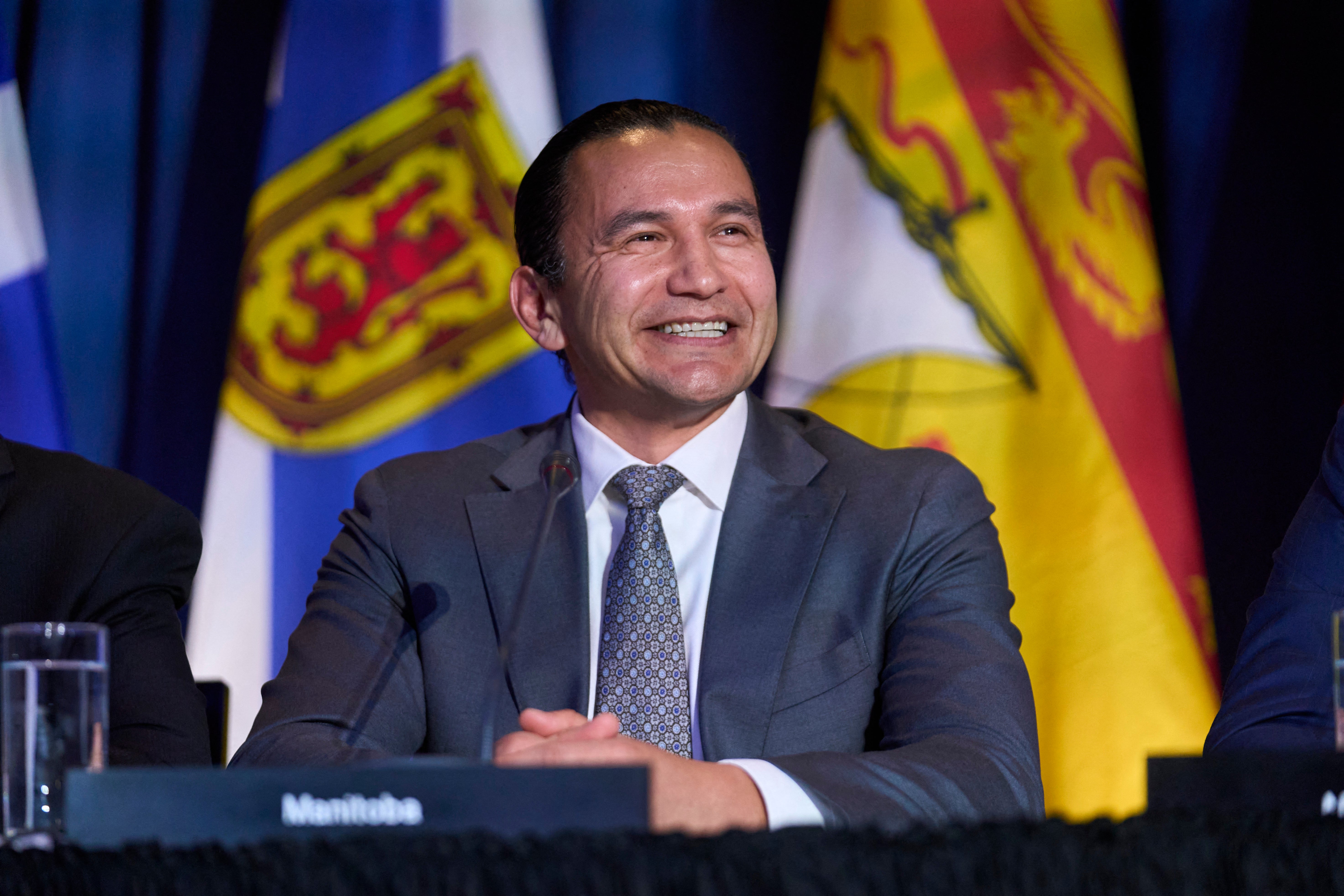
Premier of Manitoba Wab Kinew listens to questions during a press conference at Canada's Premier's Conference in Toronto in 2024
Premier of Manitoba Wab Kinew listens to questions during a press conference at Canada's Premier's Conference in Toronto in 2024 (AFP/Getty)

"Everybody knows the American president by now, he’s erratic, he’s irresponsible, and he’s not to be trusted. And this is the person that we were supposed to make a deal with, and we’re going to make additional concessions for it. That’s why I say you can't make a good deal with a bad person, because who’s to say it’s not going to be undone?" Kinew said.

Dominic LeBlanc, the federal minister responsible for Canada-U.S. trade, said Thursday both nations are nearing a final agreement after returning to Washington to meet U.S. Trade Representative Jamieson Greer.

"We’re very close. We continue to make progress," he said, adding Canadian officials will remain in Washington working on the deal. Trump called the agreement "very fair" to both sides, while tariffs on roughly $20 billion in Canadian imports are delayed until 12::green-background[01] a.m. Saturday. Full terms remain unreleased.

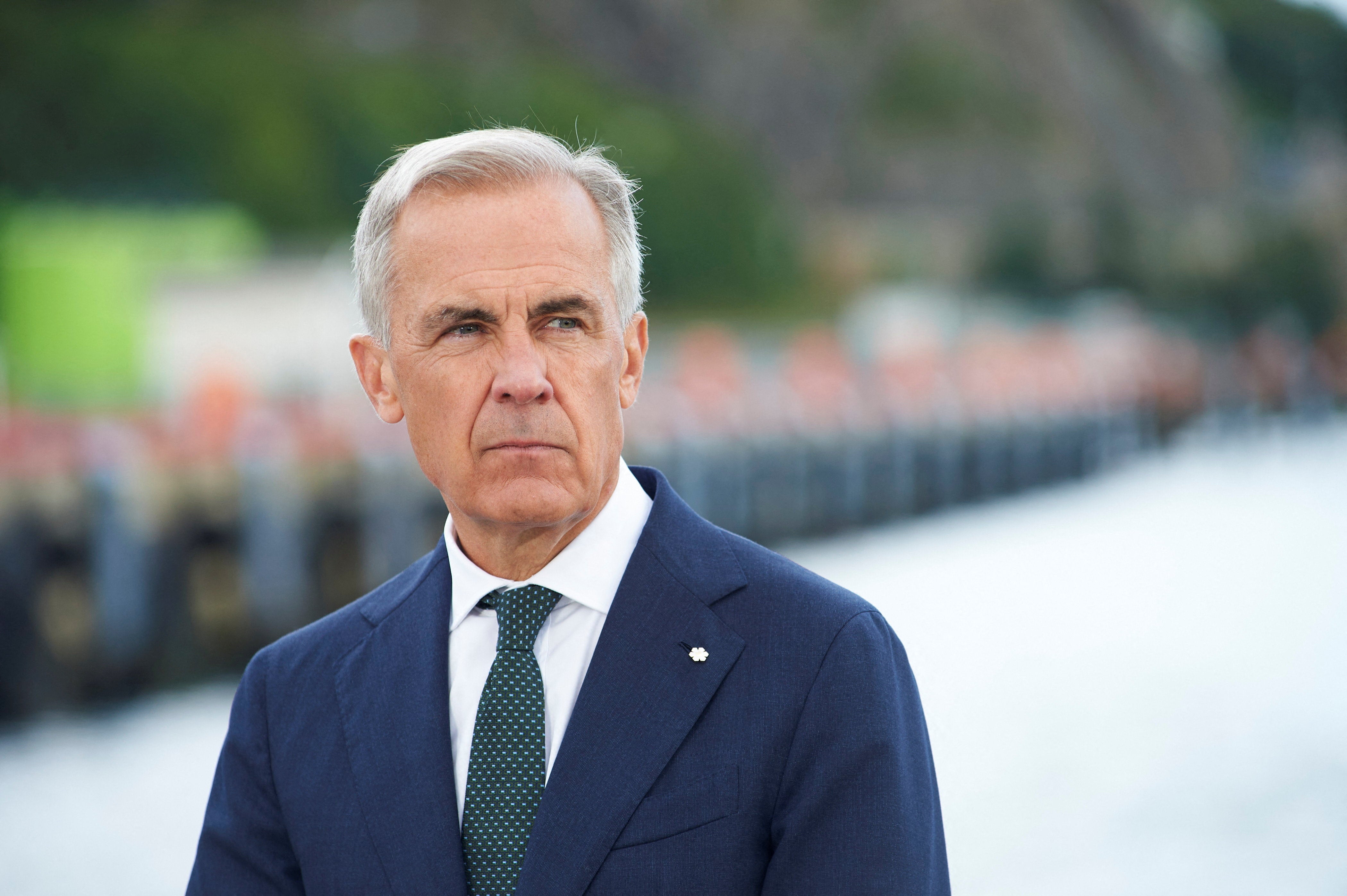
Despite his criticism of Trump, Kinew said Manitoba may go along with Carney’s request as part of a “Team Canada” approach
Despite his criticism of Trump, Kinew said Manitoba may go along with Carney’s request as part of a “Team Canada” approach (Getty)

Despite criticizing Trump, Kinew said Manitoba might join Carney’s "Team Canada" approach, though he urged consumers to buy Canadian if U.S. products return to shelves. Other provincial leaders, including the premiers of Saskatchewan and Nova Scotia, publicly backed Carney’s negotiating direction.

Newfoundland and Labrador Premier Tony Wakeham said all premiers agreed during a Wednesday call with Carney to restock U.S. alcohol, though not all have publicly confirmed that position.

"I think we should fight. I think Donald Trump is very weak. I think America is weaker around the world today than it was a year ago. He’s about to get slaughtered in the midterms and the cost of living is the number one issue and he’s completely out of touch with the cost of living of Americans," Kinew said.
Eight of Canada’s 10 provinces restrict or ban U.S. alcohol — measures imposed in retaliation for Trump’s previous tariffs on Canadian goods
Eight of Canada’s 10 provinces restrict or ban U.S. alcohol — measures imposed in retaliation for Trump’s previous tariffs on Canadian goods (Reuters)

"We’ve got the upper hand. They are back on their heels right now. They are coming to us for a deal right now."

Reinstating alcohol sales remains a key sticking point.

Kinew said he understood Carney’s request meant restoring U.S. alcohol sales was essential to complete the deal. Provincial bans have annoyed the Trump administration, which pressed Canada to lift restrictions that severely reduced American liquor sales.

Provincial governments lack veto power over the broader Canada-U.S. agreement, but control liquor sales and procurement rules involved in negotiations.
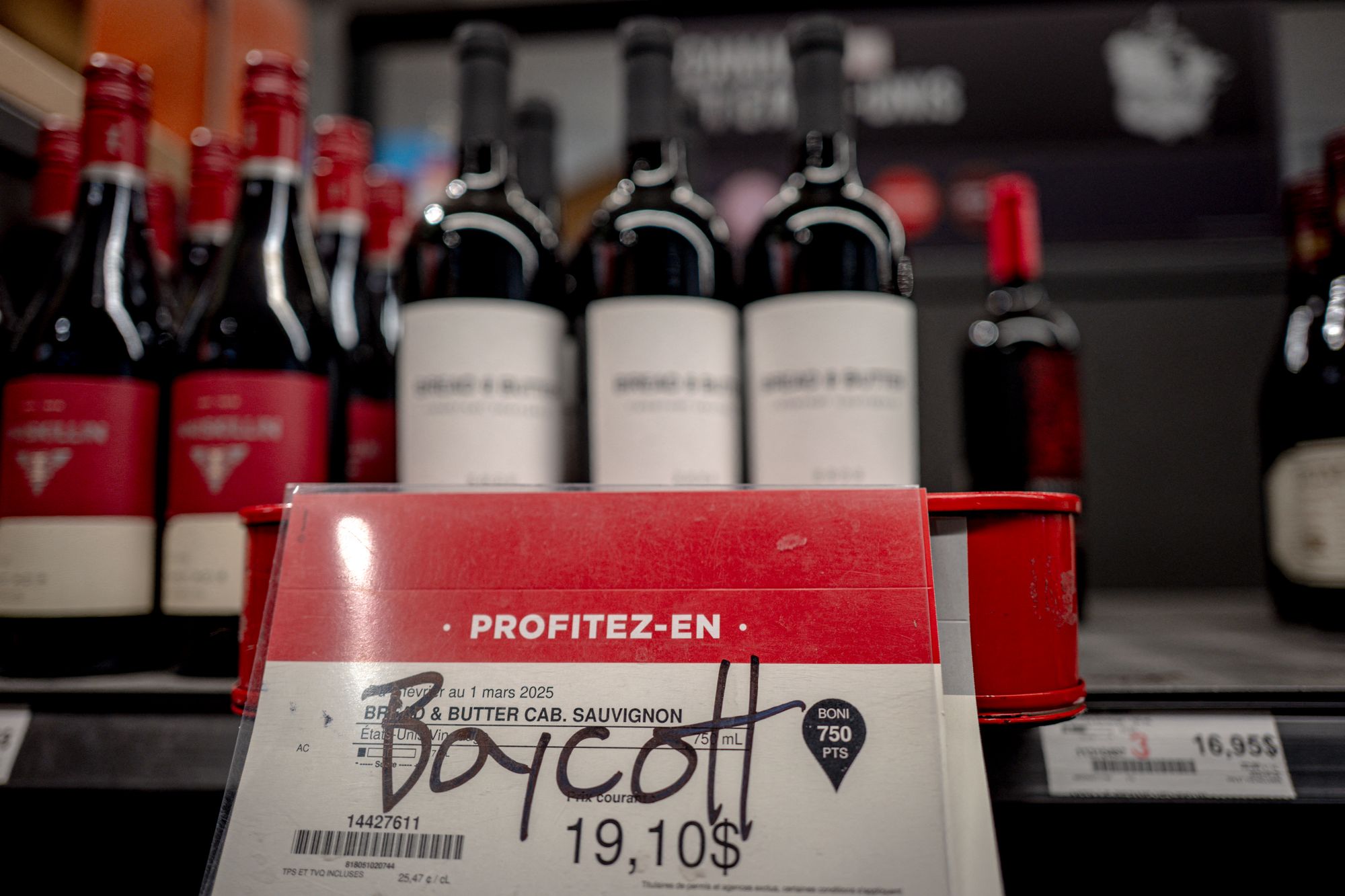
Grafitti calling for a boycott on American wine at a liquor store in Montreal, Canada
Grafitti calling for a boycott on American wine at a liquor store in Montreal, Canada (AFP/Getty)

Eight of Canada’s 10 provinces restrict U.S. alcohol—measures imposed over Trump’s previous tariffs and his comments about making Canada the 51st U.S. state.

Kinew said Carney pressed premiers to restore U.S. alcohol sales while other details were finalized. "I wouldn’t say that he was begging us, but what is the step before begging?" Kinew said.

Ontario, Canada’s most populous province, is crucial. Its government-run LCBO, among the world's largest alcohol buyers, imported nearly 1 billion Canadian dollars ($723 million) in U.S. products annually before pulling them last year.
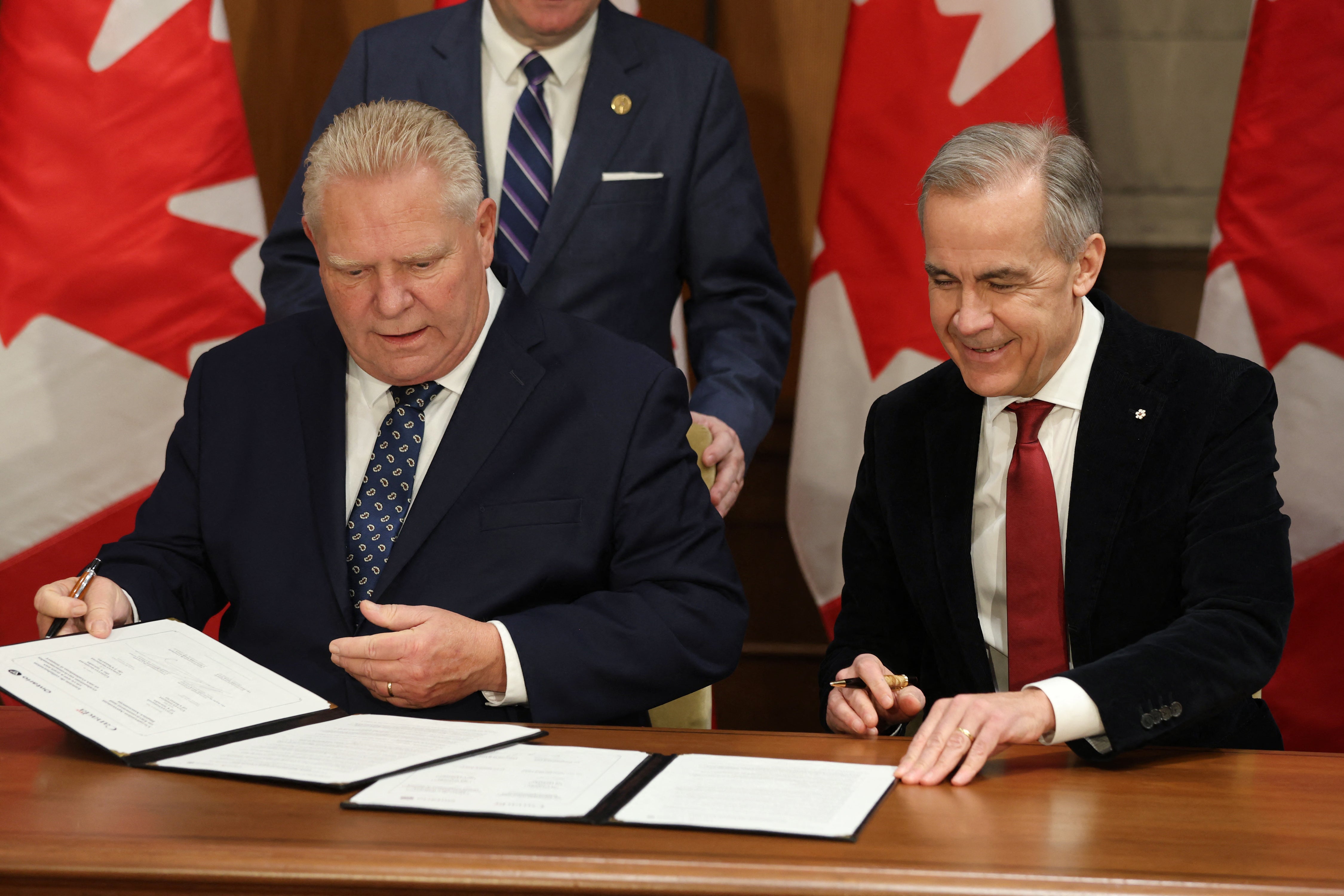
Ontario Premier Doug Ford, who previously clashed with Trump, has not commented on the deal
Ontario Premier Doug Ford, who previously clashed with Trump, has not commented on the deal (AFP/Getty)

Ontario Premier Doug Ford, who previously clashed with Trump, has not commented on the deal.

Kinew said Canadians should avoid American goods even if returned.

"When we put the American booze back on the Liquor Mart shelves, Canadians, leave it there. Spend your money on Canadian products that are going to employ people in our country and that have an administration that respects Canada," Kinew said.

Kinew said Manitoba could remove formal restrictions on U.S. companies and products, including procurement preferences, while still favoring Canadian suppliers in provincial purchasing.

Preferring to keep fighting, Kinew noted the U.S. Republican president’s habit of levying heavy tariffs before retreating. He cited the "TACO" acronym coined by Financial Times writer Robert Armstrong: "Trump Always Chickens Out."

"Do we expect that this is going to be the end of Donald Trump?," Kinew said.

Meanwhile, Quebec Premier Christine Fréchette said Carney answered many questions about the agreement, though she withheld endorsement while assessing its economic impact. She said Quebec could restore U.S. alcohol at the SAQ, the state enterprise controlling provincial liquor sales, but stressed the decision remains Quebec’s.

Robert Bothwell, a professor emeritus of Canadian history and international relations at the University of Toronto, said Kinew’s comments reflect widespread Canadian sentiment. "Kinew speaks for Canada," Bothwell said. "The majority of the Canadian people hates Trump."

Join our commenting forum

Join thought-provoking conversations, follow other Independent readers and see their replies

11Comments

|

All Comments

  1. Comment by GWPDA.

    Manitoba - wheat. Wheat, wheat, wheat, wheat. Better wheat, worldwide markets, far superior to that grown in the US. Economic powerhouse comparable to Ontario's energy production and Alberta's. This is not about whether Canada buys US booze.

    • Reply by LaChatte.

      Even if US booze shows up on shelves, again soon, Canadians will still refuse to buy it. Good!

  2. Comment by suzy.

    "The majority of the Canadian people hates Trump."

    Same could be said right here in the U.S.

    • Reply by LaChatte.

      AND, the rest of the world, as well.

  3. Comment by stillaardvark2.

    Hope so, but remember that the US has a large number of uneducated white people who have been and are very easily fooled!

  4. Comment by gaul.

    Canada is cutting its own throat. It is now becoming our frenemy.

    • Reply by LaChatte.

      Canada has many more friends than does the US. Canada will be fine, as they continue to resist Fascism, and do good around the world.

  5. Comment by BillybonerBoy9.

    Trump says stupid things daily , and next day changes his mind , denying he ever said it . A very sad man in reality !

  6. Comment by Redacted.

    Weak, arrogant, stupid, greedy, selfish, corrupt and PERVERSE.

    Nero fiddled. Trump twiddles his Harp.

    • Reply by StigStag.

      subscriber


Voting rights experts skeptical over Trump pledge of 1,000 election monitors

Voting rights experts skeptical over Trump pledge of 1,000 election monitors

https://www.theguardian.com/us-news/2026/aug/21/midterms-trump-election-monitors 

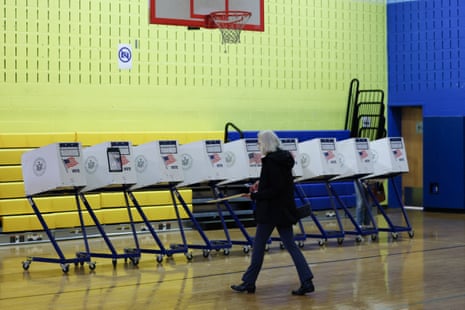
a person walks toward voting booths
Early voting in the New York City mayoral election in Manhattan, New York City, on 27 October 2025. Photograph: Mike Segar/Reuters

Voting rights experts skeptical over Trump pledge of 1,000 election monitors

Department of Justice plan raises questions over its ability to recruit so many people – and what they would do

Former officials and voting rights experts have expressed skepticism over a pledge by the Trump administration to dispatch 1,000 monitors across the country to scrutinize November’s US midterm elections.

While the Department of Justice (DoJ) has expressed hope that the operation will be the largest in its history, its plan raised questions over its ability to recruit so many people – and what they would do.

The US president has repeatedly denied the results of election defeats, including his 2020 loss in the presidential election to Joe Biden, and in recent months has escalated concerns that he will seek to meddle in November’s elections.

Harmeet Dhillon, who leads the justice department’s civil rights section, told Bloomberg News of the plan to send out 1,000 election monitors earlier this week, which she claimed was “probably going to be a historic number for a Republican administration”.

But experts suggested the justice department’s target should not spark alarm. “This DoJ has amply earned the public’s distrust, but this announcement isn’t reason to freak out,” said Justin Levitt, a professor at Loyola Law School in Los Angeles who has worked on voting rights issues at the justice department and White House.

“I’m skeptical they’ll actually get to 1,000. Even if they did, that wouldn’t be so different from the number in prior years; that’s a national number suitable for observing but not nearly enough to disrupt; and local election officials can, and will, toss anyone who makes trouble,” said Levitt. “As in the primaries, the most anyone should expect from this group is a handful of suits standing quietly in the back of the room.”

Observing elections is a routine part of the department’s work, but the discourse around such activity has caused unease during the second Trump administration.

The justice department has taken an adversarial position, suing some states in a bid to access private voter data, and some state officials have said they don’t feel the federal government is a partner in protecting elections. The president has said he wants the federal government to take over elections, and issued executive orders to exert such power, which the courts have largely curtailed.

Still, state and local election officials around the country who had federal election monitors observe their areas in the last year said they did not know of any instances in which the monitors caused concerns, though several also declined to comment.

“For decades, DoJ has sent hundreds of monitors and attorneys to polling places during each federal election,” said a former DoJ official, who spoke on condition of anonymity to avoid professional repercussions. “In the last year, DoJ has sent monitors to off-cycle and primary elections, and they have done little to nothing.

“DoJ may try to send 1,000 monitors into the field this November, but they probably won’t be able to coordinate a deployment of that size. Even if they manage the logistics, 1,000 DoJ monitors will only give us more videos of lawyers standing around with clipboards, following instructions from poll workers and being ignored by voters.”

Monitoring the monitors

The justice department has long sent personnel to monitor elections across the country to ensure compliance with federal voting laws and court orders in certain jurisdictions. CBS News reported that the DoJ sent 289 monitors in 2022, during the last midterm election. During the last presidential election, in 2024, the department sent 714 people.

This time around, the justice department said: “We hope to have the largest monitoring effort in the department’s history.”

It’s not yet clear where the DoJ intends to send the monitors in November, or whether it will be able to achieve its goal – especially after scores of personnel have left the justice department’s civil rights division under Trump. Its monitors will be spread across the country’s tens of thousands of polling places.

So far this election cycle, the department says it has sent 75 monitors to more than 200 polling locations across five states. Those include Minnesota, Michigan and Arizona earlier this cycle, with more going to Florida and Wyoming this week for those state’s primaries. Several California jurisdictions and a New Jersey county saw federal monitors during special elections late last year.

When monitors were sent to Minnesota – which saw an immigration enforcement surge earlier this year where two people were killed and thousands deported, leaving a deep distrust of federal authorities – during the state’s primaries earlier this month, state officials decided to monitor the monitors.

Steve Simon, Minnesota’s secretary of state, estimated there were six or seven teams of two to three federal monitors across its Hennepin and Ramsey counties, where Minneapolis and St Paul are located, on primary day. The federal monitors provided real-time updates to the state attorney general’s office on where they were going, he said. They stayed a short time at each precinct. He estimated they visited more than 50 precincts out of thousands throughout the state.

“There was no cat-and-mouse game. They were very straightforward about that,” Simon said. “And there were no major disruptions or obstructions.”

There were a couple instances of reports where observers were inside a 100ft boundary, as captured in a video from a local news outlet, and were asked to move further out. They did, Simon said.

Monitors need permission from local jurisdictions to enter polling places. In this year’s Minnesota primaries, Hennepin and Ramsey counties declined to allow the justice department to observe inside the polling places. This meant the observers needed to stay outside a 100ft boundary, as any member of the public not actively voting would be required to do.

Local residents had been concerned “about safety and the presence of federal officials in their communities”, Joshua Yetman, a Hennepin county spokesperson, said. “Although we have had no issues with previous DoJ election monitoring, we determined that prioritizing a safe, orderly and welcoming environment for voters was necessary this year.”

The monitors were present in three cities within the county, remaining outside the 100ft boundary, and there were no disruptions to voting, Yetman said.

No concerns so far

Other election officials around the country said the monitors seemed routine.

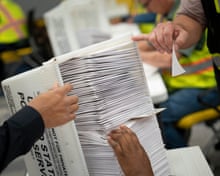
The justice department sent one monitor to Orange county, California, during a statewide special election in November 2025, the county’s registrar of voters, Bob Page, said via email. “There were no concerns about the USDOJ monitor in 2025. He observed our vote-by-mail ballot processing operation over portions of three days. He was treated and allowed observation access the same as any member of the public when he visited our office.”

The California secretary of state’s office noted that election observation is “standard practice for every statewide election” and said that the secretary of state and California attorney general collaborate to ensure election laws are enforced.

In a press release after the justice department announced its 2025 plan to send monitors, California’s secretary of state, Shirley N Weber, said the department had not provided a justification for sending the monitors to five counties in a non-federal special election.

“We will not permit tactics masquerading as oversight to erode voter confidence or intimidate Californians,” Weber said at the time. “Our voters have earned the right to cast their ballots free from surveillance or interference – from anyone. In California, election integrity is not a talking point; it’s a practice built on decades of professionalism and public trust. We intend to keep it that way.”

In Arizona’s Maricopa county, home to the state capital of Phoenix, elections officials said they had no issues. “We have monitors during most large elections,” said Jennifer Liewer, the deputy elections director for communications in the county’s elections department. In Pima county, where Tucson is located, monitors also came for the July primaries, and “the voters and poll workers did not report any concerns”, said Constance Hargrove, the county’s elections director.

After Dhillon cited “problems” in Arizona’s elections as the basis for sending monitors to three counties for July’s primary, the Democratic secretary of state, Adrian Fontes, filed a records request and wrote a letter to the department. “We do not know what the Department considers those problems to be, in which jurisdictions they are alleged to have occurred, or what evidence supports them,” he wrote.

Should monitors return to Minnesota, Simon, its secretary of state, described his expected response as a “situation of trust, but verify” in November.

“They say they’re here for a specific purpose. They have in the past been here for that exact same purpose. The purpose that they’re here for is a good one under the law,” he said. “So we hope and expect that they will, if they come here at all, continue to abide by the rules and laws.”

Last few days of our appeal: can you help?
0 of 30,000 acts of support

Consider us impressed

Nice: you just finished reading article

the past year. It seems you really value our work. We really value you too.

We couldn’t help but notice though that while you’re a loyal Guardian reader, you’re not a recent supporter. (As you likely know, we are reader-funded. No billionaires behind the scenes here!) With dedicated people like you who haven’t contributed yet or recently, we often find one of two things are going on.

First: perhaps you simply don’t have anything to spare right now. If that's the case, we want you to know: we value your readership as much as those who can contribute, and please keep reading, as much as you like, forever. One of the wonderful values shared by Guardian readers around the globe is a desire to ease the burden for others. So ignore these appeals: our community of supporters has your back.

But if you can afford to spare something, here’s what we also know: most likely you’ve thought about giving, but for whatever perfectly human reason, you haven’t got round to it yet. So perhaps today is the day? We know – you’ve finished reading what you came to read, and you have other things to get on with. But we promise it’s quick, and even more: we promise it matters.

We survive entirely because people like you decide to respond to messages like this.

While all support is gratefully received, and even $5 helps, please consider a monthly contribution: it takes less than a minute to set up, and it’s the best way to make the biggest impact – helping sustain our fearless, independent journalism for the long haul. We’re not going anywhere; we hope you’ll stick with us too. Thank you for helping protect the non-billionaire-owned press.

Recommended

Related stories

  • Trump officials again urge US supreme court intervention on mail ballots

  • Judge blocks Trump’s order aimed at using USPS to restrict mail-in voting

  • Trump seizes on New Jersey election error to boost misleading fraud claims

  • How Trump and his administration have mired the US in multiple crises

  • Experts cast doubt on Trump and DHS chief’s claim 250,000 noncitizens are registered to vote in four US states – as it happened

  • US judge blocks Trump administration’s bid to restrict mail-in voting

  • Trump says he has signed peace deal – as it happened

  • Trump news at a glance: president returns to old playbook of undermining US election integrity

More from News

  • Alaska
    Charter plane crash in Alaska kills all eight onboard near US military airstrip

  • US politics live
    ‘Shouldn’t be renamed at all’: senator attacks Navy’s reported consideration of honoring Trump instead of Black war hero

  • California
    We’ll never be royals: the US town where Prince Harry and Meghan lived says goodbye

  • Germany
    Gun stash in German forest believed to be linked to Russia, say reports

  • UK
    Prince Harry, Elton John and others ordered to make initial $13m payment to Daily Mail publisher after failed case

  • College basketball
    Former Alabama basketball player wins $9.25m in defamation case against New York Times

  • TV
    Neutrogena responds to criticism over how brand deal with Hayden Panettiere ended

  • Wildlife
    First ever Fat Marmot Week to kick off in effort to raise money for research