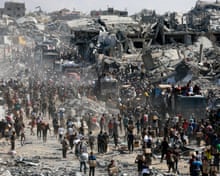
Palestinians
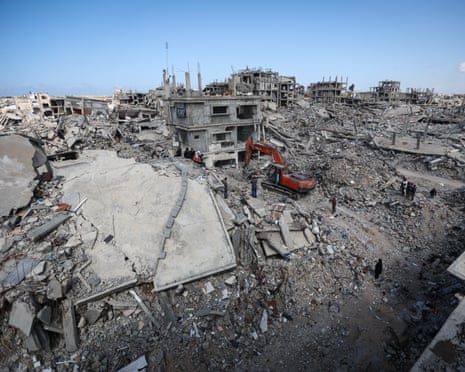
use a digger to recover bodies under the rubble in devastated Gaza City
earlier this year. The Board of Peace is no longer talking of
reconstructing the whole strip. Photograph: Anadolu/Getty Images
Trump’s Gaza Board of Peace issues first building contract – for a military base
Exclusive: Louisiana firm awarded tender to build rudimentary outpost to house Moroccan troops
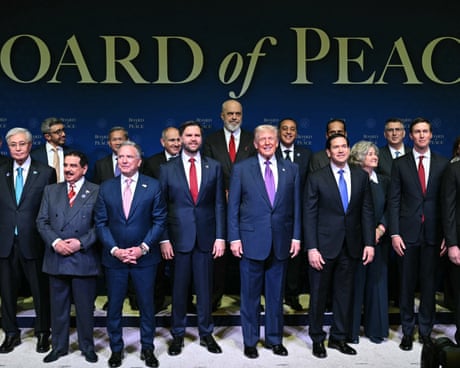
Donald Trump’s Board of Peace, which was set up in January to oversee the reconstruction of Gaza,
has finally issued its first construction contract in the devastated
territory: a project to build a rudimentary 150-person military outpost
to house Moroccan troops, a source familiar with the matter told the
Guardian.
The contract, which has not yet been
finalised, was awarded to Arkel International, a Louisiana-based firm
that has previously carried out work with the US government in countries
such as Iraq.
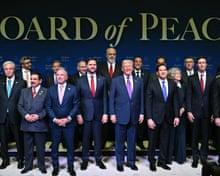
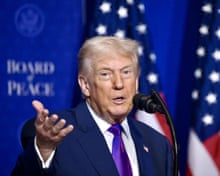
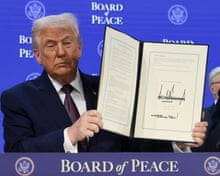
The Board of Peace is chaired by the US president and led by a team that includes his son-in-law Jared Kushner and friend Steve Witkoff.
In
an email, a Board of Peace official said the board and a group of
Palestinian technocrats installed to oversee Gaza “are in the final
stages of preparing several contract awards. None have been finalised.”
The Palestinian group is known as the National Committee for the Administration of Gaza.
The
official said “one prospective contract concerns facilities to support
the international stabilisation force (ISF), which will assist in
implementing the roadmap’s security and governance arrangements”.
They added: “This contract will be one of many that are essential for the future of Gaza.”
The
award comes just days after Trump announced that Hamas had agreed to
disarm, though there are considerable questions about how the group
would give up its guns.Israel has opposed the plan, and increased airstrikes in Gaza after Trump’s announcement.
The
base now being planned is just 100 metres by 120 metres and is intended
to house a contingent of Moroccan troops, who would rotate from a base
in Israel, the source said. It would lie in the 60% of Gaza’s territory
that the Israeli army directly controls. Israeli forces have also created a buffer zone beyond that area.
The
source said the base was about a mile from the Israeli border and would
have a “quick extraction route” in case the small force came under
attack.
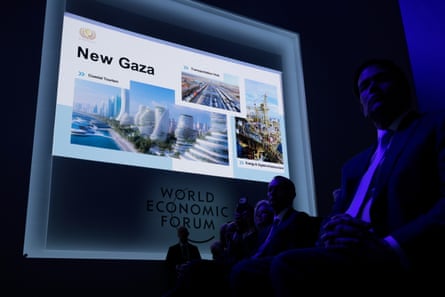
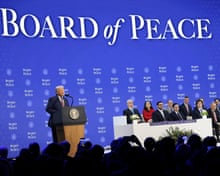
Donald
Trump’s original grandiose vision of a reconstructed Gaza is displayed
by the president at the World Economic Forum meeting at Davos on 22
January.
The UN
resolution authorising the Board of Peace had approved establishing an
“international stabilisation force” for Gaza, and there have been
varying reports on which country would provide these troops. Morocco has
promised a small contingent, but the legal framework for the ISF has
yet to be finalised, and it is not clear when the deployment would
begin.
This
base would have included “vehicle fighting positions” and a perimeter
berm – or raised defensive bank – and would have rudimentary facilities
suitable for short-term deployments. The earlier contract said the first
phase would consist of “tents and cots for forces to sleep, as well as
chemical toilets and handwashing stations. At this phase, this is what
we would consider habitable.”
Trump announced in February 2025 that the US would “take over” and “own” Gaza, although the agreement that set up the Board of Peace fell short of that.
At
the board’s first meeting in January, Kushner unveiled a “master plan”
to build “New Gaza” with an expansive waterfront city with gleaming
mixed-use towers. “It could be a hope, it could be a destination. A lot
of industry,” he said.
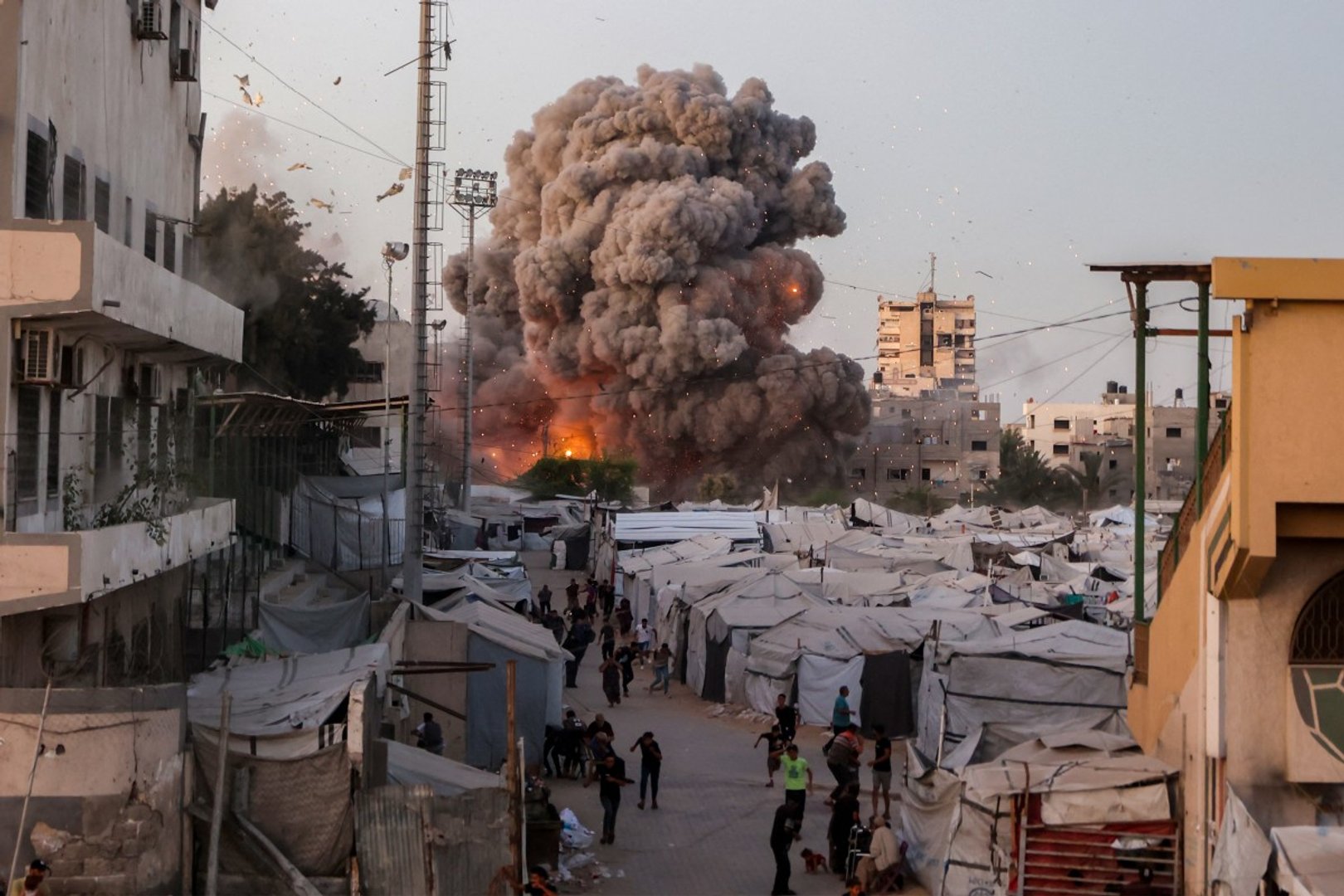
At least 80% of Gaza’s
buildings were damaged or destroyed in the war. Ten months after the
ceasefire, most of the territory’s 2 million people are still living in
makeshift and unsanitary camps.
Congratulations on being one of our top readers globally – you've read 278 articles in the last year
Article count
At this dangerous time
We
hope you appreciated this article. Before you close this tab, we want
to ask if you could support the Guardian at this dangerous time for
journalism in the US. Until August 9th, you can get 50% off our most impactful monthly support options.
According
to a leading global watchdog, American democracy is now more imperiled
than at any point since the 1960s, marked by a precipitous decline in
press freedom – driven by mounting pressure from the Trump
administration in the form of threats, criminal investigations,
politicized regulation, frivolous lawsuits and, for public media,
catastrophic funding cuts.
Meanwhile,
organizations that are supposed to be independent like the FBI and the
FCC, our radio and television regulator, have also been targeting press
freedom under Trump-aligned leadership, with the FBI raiding a
reporter’s home and the FCC threatening ABC’s TV licenses after Jimmy
Kimmel made a joke about Melania Trump.
The
response from some ultra-wealthy and corporate media owners, keen to
appease the president, has been chilling: CBS News has been taken over
by a Trump ally; CNN may be taken over by the same billionaire; Jeff
Bezos has continued to impose cuts and editorial interventions at the
Washington Post; and multiple outlets have settled multimillion-dollar
lawsuits from the administration to protect their business interests.
Democracy
is best served by a robust, thriving free press. But when that freedom
is under attack, it falls to a determined few news organizations to
ensure the full truth still reaches the public. Owned neither by a
billionaire nor a corporation, the Guardian remains dedicated to
covering this administration with uncompromising moral and factual
clarity – and to keeping trustworthy journalism paywall-free for the
world.
Despite the risks
of maintaining our fierce independence, what sustains us – and fills us
with deep gratitude – is the unwavering support we’ve seen from readers.
It is no exaggeration to say that we are here because of you: a
majority of our funding comes directly from people like you responding
to messages like this. Your support not only powers our work, but more
importantly, it safeguards the financial independence that underpins our
editorial freedom and courage.
We
know our requests for support are not as welcome as our reporting, but
without them, it’s simple: our reporting wouldn’t exist. Of course, we
understand that some readers are not in a position to support us, and if
that is you, we value your readership no less.
But
if you are able, please support us today. All gifts are gratefully
received, but until August 9th, we are offering a 50% discount for six
months off our most impactful monthly support options. (Among the great
benefits you get in return: you’ll see far fewer annoying fundraising
messages like this.) It takes just 37 seconds to set up. Thank you for
considering.
Cori Bush’s 2024 primary loss to Wesley Bell was heralded as a major defeat for the insurgent progressive movement.
Now, their rematch for Missouri’s 1st District two years later comes at a time when Bush and her allies seem to be winning the battle for the future of the Democratic Party.
The dueling factions in St. Louis
highlight the growing tension over not just the domestic ideological
divide in the Democratic Party, but the party’s — and country’s — stance
on the U.S.'s longrunning relationship with Israel.
The
former representative was among the first sitting members of Congress
to call Israel’s actions in Gaza a “genocide” — and now she’s betting
that her progressive bonafides and her criticism of the top U.S. ally will boost her to victory with the same electorate that punished her last cycle.
“One of us is of the people, by the people and for the people,” Bush said in a recent interview. “The other one is paid for by AIPAC. That’s the difference.”
Like
two years ago, a group aligned with the American Israel Public Affairs
Committee is the largest outside spender in the race. The organization’s
super PAC, United Democracy Project, has spent at least $2.1 million on
advertising in the primary, according to ad tracking firm AdImpact.
Roughly
half of all adults who identify as Democrats believe that Israel has
committed genocide against Palestinians, according to a July AP-NORC poll, an accusation that some human rights organizations have made but both the Israeli and American governments strongly deny.
And
from Colorado to New York, several progressives have already tapped
into voters’ frustrations with party leadership and successfully wielded
their criticism of Israel’s government in order to win.
St. Louis is only one of several races on Tuesday testing the Democratic Party’s establishment: voters will also hit the polls in Michigan to cast their ballots for the progressive, Abdul El-Sayed, or the moderate Rep. Haley Stevens for an open Senate seat.
That race has also become a check for voters’ opposition to AIPAC. And some potential 2028 Democratic contenders have already sworn off accepting funding from AIPAC, another sign of the growing unwillingness to be aligned with the organization.
AIPAC
and some Democrats have hit back, saying its critics within the
Democratic Party have increasingly made the party inhospitable to those
generally supportive of Israel.
Bell unseated Bush
two years ago with heavy financial backing from AIPAC, the country’s
preeminent pro-Israel lobby. They’ve once again spent heavily on his
behalf, and this time, he also comes into the race with establishment
support — including endorsements from House Minority Leader Hakeem Jeffries and the Congressional Black Caucus PAC.
Bell and his allies have absolutely swamped Bush on the airwaves this year. In addition to UDP’s $2.1 million in ad spending, Bell’s
campaign has followed closely behind at over $2 million, according to
AdImpact, with over $700,000 more from another super PAC called New
Democrat Majority.
Bush,
meanwhile, has spent less than $200,000, according to the ad tracker.
She boasts the backing of a progressive coalition that includes the
Democratic Socialists of America, Sen. Bernie Sanders (I-Vt.) and fellow “Squad” member Rep. Rashida Tlaib (D-Mich.).
Bell has brushed aside the attacks that he’s being bolstered by AIPAC money.
“I
think we all can agree that there’s too much money in politics, and I’m
a vocal and public supporter of campaign finance reform,” Bell said in
an interview. “What I’m not a fan of or a supporter of is singling out
certain Americans and saying that they should not participate in our
democratic process. That is where I would absolutely draw the line.”
Bell added that the difference between himself and Bush is that he can offer both support and criticism of allies.
“While I’m not the biggest fan of [Israeli Prime Minister Benjamin Netanyahu], I still believe that we have to stand with our allies,” Bell said. “That doesn’t mean we’re not going to disagree at times with our allies.”
Bell’s and Bush’s
showdown in 2024 was arguably the biggest ideological battlefield for
the party that year, outside of the discontent surrounding Biden and then Harris’ presidential bids from progressives critical of Israel.
But
two years later, it is just one of many fights that has sprawled across
the country. Progressive candidates have been racking up primary
victories against establishment figures in a trend that some are calling
the “Mamdani effect” after democratic socialist New York Mayor Zohran
Mamdani took down Andrew Cuomo in both the 2025 primary and general elections.
Still,
this year’s St. Louis rematch isn’t quite the marquee fight it was in
2024. Spending has trended down: Collectively nearly $20 million was
dropped on the 2024 contest on advertising, according to AdImpact.
That’s roughly four times more than this year’s total.
Usamah Andrabi, spokesperson for Justice Democrats, the progressive group that endorsed Bush
earlier this cycle, attributed the broader, nationwide ideological
fight to a base that has been “pushed to the edge of desperation by the
Democratic Party itself.”
“The
Democratic Party’s base woke up in January 2025 realizing that their
party’s establishment was unfit, unprepared and frankly unwilling to
fight back against Donald Trump and Republican extremists with the urgency the moment demanded,” Andrabi said.
Now, as St. Louis voters head to the polls on Tuesday, Bush cast the eventual outcome in dire terms.
“What is at stake,” Bush said, “is the affordability and the peace of every single person in this country.”
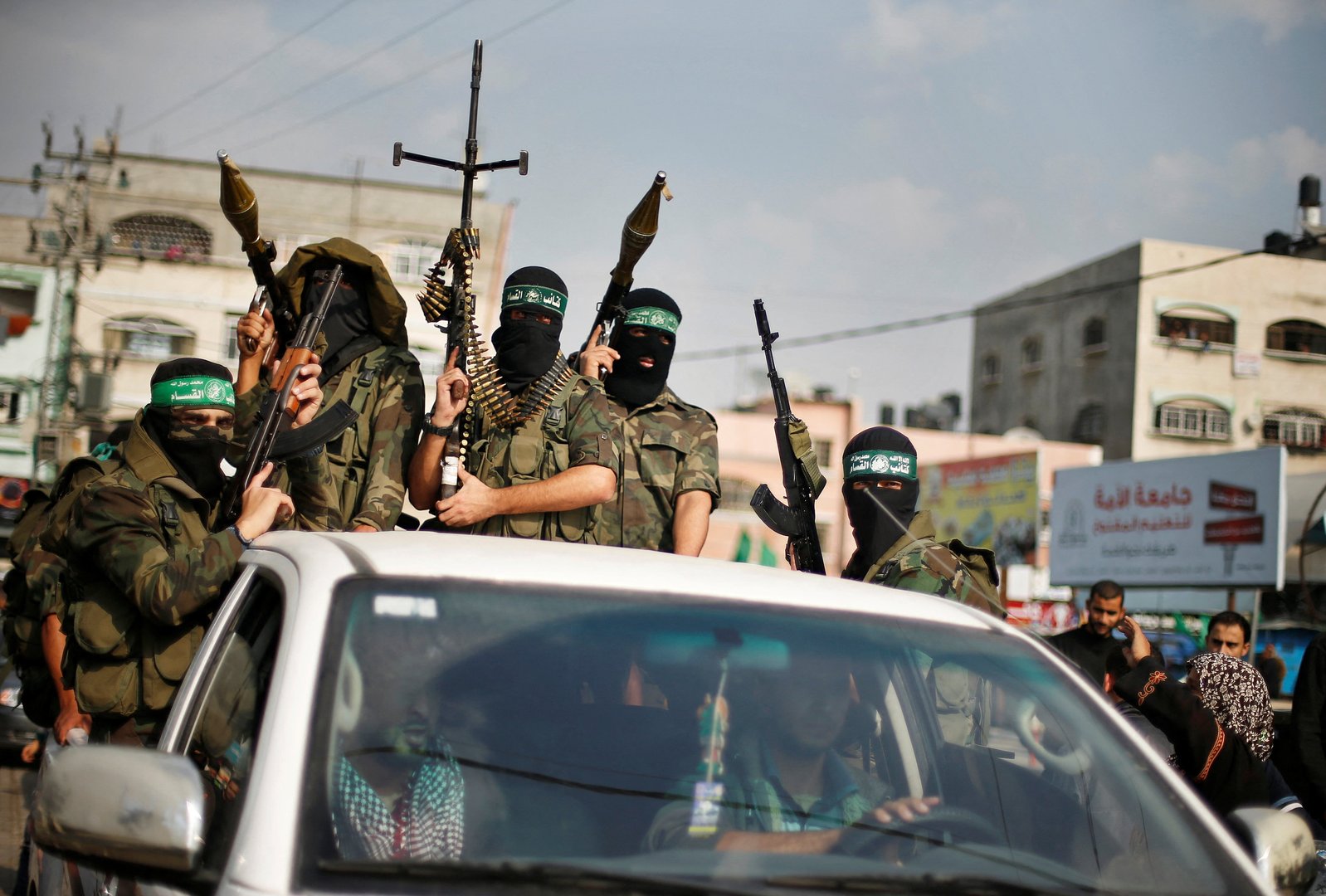
Hamas says it has agreed to a deal aimed at fully ending Israel’s war on Gaza,
including making provisions to disarm and surrender its weapons in
stages. Under the agreement, Israel must withdraw its forces over a
period of time.
The agreement was announced late on Thursday by US
President Donald Trump, after the US-led Board of Peace and
International Stabilization Force for Gaza announced that mediators from
Egypt, Qatar, Turkiye and the US had finalised a roadmap for this next
phase of the ceasefire.
Egypt
is expected to host representatives from the US, Qatar and Turkiye for
further talks aimed at ensuring compliance during this second phase.
But
Israel has not publicly agreed to the latest proposal and Hamas has
said it will not implement any part of the deal unless Israeli forces
fulfil their own obligations to withdraw from Gaza under the agreement.
The
announcement comes against a backdrop of deep Palestinian distrust of
Israel due to its failure to adhere to previous agreements.
Since
the US-brokered ceasefire supposedly came into effect on October 10,
2025, Israeli attacks have killed at least 1,100 Palestinians. Israel
has also continued to restrict humanitarian aid from entering Gaza and
expanded its so-called “Yellow Line” further into the Strip, which
experts say may violate the pre-existing ceasefire arrangement
underpinned by an initial 20-point peace plan announced by Trump last
year.
Questions remain over whether all Palestinian armed groups
apart from Hamas would adhere to the agreement and whether Israeli
forces would fully withdraw from Gaza.
With Palestinians
continuing to suffer daily Israeli attacks, repeated displacement and
severe shortages of food, medicine and shelter, the announcement has
been met with both hope and scepticism.
Here is what we know.
10:39
Now Playing
10:39
Trump Announces Gaza Peace Plan as Hamas Links Disarmament to Israeli Withdrawal
Next
47:14
Iran: The Making of a War
What has been announced?
“Today,
the Board of Peace reached a HISTORIC agreement for the COMPLETE
DISARMAMENT of Hamas and all other armed groups in Gaza. This is a
monumental step toward lasting PEACE and SECURITY,” Trump wrote on Truth
Social late on Thursday.
Sign up for Al Jazeera
Americas Coverage Newsletter
protected by reCAPTCHA
“This
agreement is a critical step towards Gaza finally being governed by a
new Palestinian government that will work closely with the Board of
Peace to help the Palestinian people. At the same time, Israel will have
the security it deserves, with Gaza no longer used as a base for terror
attacks.”
Trump said the agreement would be implemented in
stages, with Israeli forces withdrawing as the disarmament process
advances. “Agreement will be carried out in carefully structured phases.
As disarmament is completed, Israeli forces will withdraw, and the
International Stabilisation Force will work with a new Palestinian
police force to take responsibility for Gaza being safe for its
residents and its neighbours,” he wrote.
“Under this agreement, Gaza will finally be in the hands of a new Palestinian government that serves its PEOPLE.”
The Board of Peace later released a joint statement with the mediating countries.
Ghazi
Hamad, a member of Hamas’s negotiating delegation, told Al Jazeera that
the group’s implementation of the agreement will be dependent on Israel
fulfilling its commitments.
“Hamas will not implement any step of
the Gaza peace deal if the Israeli occupation forces do not fulfil
their obligations under the agreement,” he said. “Israel will not
interfere in the disarmament issue and the national committee is the one
that will carry out this task.”
Israel has not commented on the agreement.
2:17
Hamas agrees to phased disarmament in Gaza
How would disarmament work?
Here’s what the plan outlines:
A schedule for an inventory of Hamas’s weapons must be prepared
within 14 days, with extensions permitted only if agreed by an
international verification commission and all parties involved.
A Palestinian National Committee will oversee and execute the
inventory and storage process and will be the sole entity to hold, store
or control weapons in Gaza, with participation from Palestinian
factions.
No weapons will be transferred or handed over to Israel or any other non-Palestinian parties.
An international verification commission, an International
Stabilization Force, and a new Palestinian police force will oversee
disarmament as Israeli troops incrementally withdraw to designated lines
in step with verification progress.
The inventory and storage will initially target heavy weaponry,
military production sites, weapons depots and the extensive tunnel
network.
The process is contingent on several steps, including the entry of
the National Committee and the deployment of the international force.
Disarmament phases will be directly tied to Israel’s gradual
withdrawal from areas it controls and to a broader implementation of the
peace plan.
Reporting from Washington, DC, Al Jazeera’s Alan Fisher said
Hamas had negotiated via Egyptian, Qatari and Turkish mediators. “They
were dealing with Hamas directly and Hamas agreed to sign onto this
agreement and it means that there will be a disarmament in Gaza; that
was seen to be one of the big sticking points, but Hamas has agreed to
that.
“That means handing over their weapons to the International
Stabilisation Force, it means that zones will be identified and they
will be demilitarised and then they move on to the next phase once that
has been verified by an independent body.”
Fisher reported that
the international force will train a new Palestinian police service,
position itself between Palestinians and withdrawing Israeli troops and
oversee the decommissioning process.
“The US and Board of Peace
officials believe that this is a fresh start for Gaza, that this can
create something new and something different.
“They understand
that the whole process is going to take some time … the demilitarisation
part, they said, could take between 200 and 300 days.
“The
International Stabilization Force will be overseen by an American
general, but they say they already have commitments from a number of
nations for a force totalling somewhere in the region of 5,000.”
The
process is to begin 14 days after all parties formally accept the
agreement. “There’s no confirmation that the Israelis have signed up
yet, but we are told that Donald Trump would be very disappointed if
Israel backs out of the deal,” Fisher added.
Who would govern Gaza?
The
roadmap would transfer Gaza’s day-to-day administration to a
technocratic Palestinian committee operating under the oversight of the
Board of Peace.
The proposed structure includes:
Gaza Board of Peace: A US-led international body,
chaired for life by Trump, responsible for high-level strategy, post-war
stabilisation and reconstruction funding.
Founding Executive Board: A seven-member group led
by former British Prime Minister Tony Blair which will set the agenda
and implement the board’s mission. Other expected members include
Trump’s son-in-law, Jared Kushner, US Secretary of State Marco Rubio, US
Middle East envoy Steve Witkoff and World Bank President Ajay Banga.
Gaza Executive Board: An operational body responsible for directing reconstruction and coordinating with regional diplomats.
National Committee for the Administration of Gaza: A technocratic Palestinian committee responsible for civil administration inside Gaza, without Hamas’ participation.
International Stabilization Force: A multinational
force intended to maintain security and support the new Palestinian
police. Indonesia has been mentioned as a possible contributor, while
Morocco has pledged training support.
New Gaza Police Force: A locally recruited force
expected to assume control of areas vacated by Hamas and Israeli troops.
Questions remain about how personnel would be recruited and selected.
The Board of Peace’s high representative, Nikolay Mladenov, said
the Palestinian administrative committee and the Palestinian people
required “the political and practical backing to take charge of their
own future”.
What is the Board of Peace?
The Board of Peace
was established by Trump and is led by the US government. It is named
in United Nations Security Council Resolution 2803 as the body tasked
with overseeing the Gaza peace plan.
However, the board’s powers, composition and wider ambitions have caused concern among Palestinians and several governments.
Al
Jazeera’s Nour Odeh said the Board of Peace is supposed to oversee the
enforcement of the Gaza ceasefire and reconstruction, and that it will
be in charge of the bodies responsible for implementation. However, she
added that opinions have diverged on the board and its mission.
After
invitations in January, France, Spain, Norway and others cited concerns
about the board’s charter, which they said suggested it could extend
its reach beyond Gaza.
The fears are that “it’s an attempt to
replace the United Nations”, Odeh reported. “Donald Trump, who has
indicated he intends to remain chairman for life… even if not still US
President. Trump has stated that the BoP could potentially replace the
UN.”
Several European countries
declined to join the board because of concerns over its mandate, while
Israel has been included in the process despite being “charged with
genocide in Gaza and the International Criminal Court has issued an
arrest warrant for its prime minister”.
Odeh
added that the level of US control had also raised questions about
whether the process would circumvent international law and Palestinian
rights. “The main concern at the onset was that the Board of Peace would
replace the United Nations; this is something not only Palestinians,
but much of the international community object to.
“There is
serious concern that international law is being side-stepped, given the
nature of this situation – that Israel remains the occupying power and
that Palestinians are being occupied in contravention of international
law.”
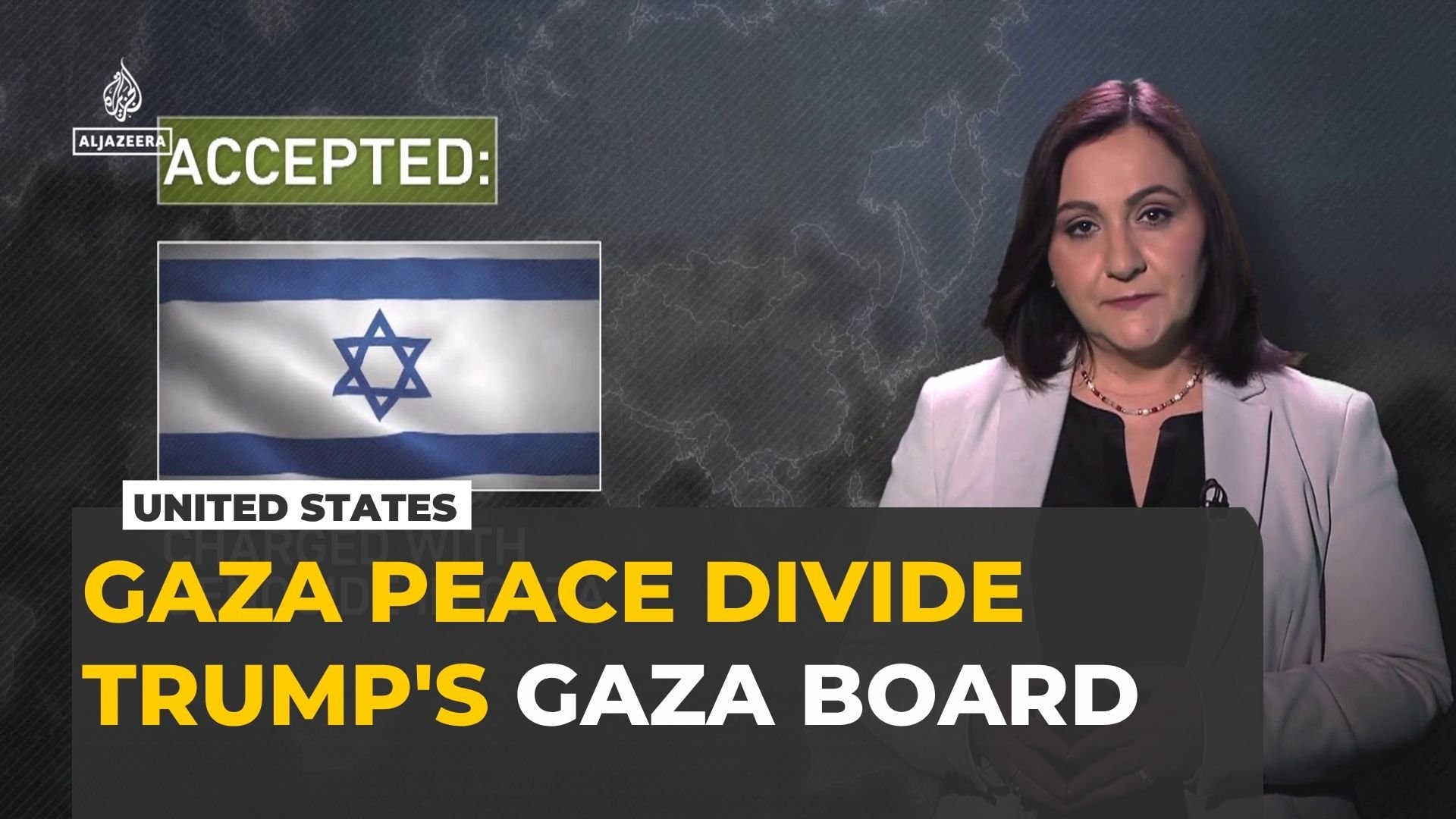
1:25
Why Countries Are Divided Over Trump's Gaza Board Of Peace
Will Israel honour the agreement?
Israel
has not confirmed that it has accepted the new roadmap. Since the
October “ceasefire” started last year, continuing Israeli attacks have
killed at least 1,100 Palestinians, while Israel has continued to
restrict humanitarian aid and expand its military presence inside Gaza.
This has left many Palestinians sceptical that the agreement can
succeed.
The roadmap also ties Hamas’s disarmament directly to
Israel’s withdrawal from Gaza, meaning each stage depends on the other.
Any attempt by Israel to delay its withdrawal or impose new conditions
could therefore bring the process to a halt.
Chair of Middle
Eastern Studies at the University of San Francisco, Stephen Zunes, told
Al Jazeera that Israel had repeatedly demonstrated it could reinterpret
agreements because it expected continued political backing from the
United States.
While “Israel might agree in theory to the terms of
this agreement”, Zunes said, it would likely begin “reinterpreting it,
or even violating it, with the understanding that the US is not going to
push them, or that Washington will suddenly agree with their
reinterpretation, or even blame the Palestinian side, as they have done
so many times before”.
“I think that is really the weakest part of
this agreement, that is: Will Israel live up to the agreement, and will
the US enforce this deal?”
The proposal also comes ahead of
Israel’s general election in October. Several far-right parties which
have helped sustain Prime Minister Benjamin Netanyahu’s governing
coalition have campaigned against any withdrawal from Gaza. They have
instead called for Israeli settlements to be established in the
territory, increasing political pressure on the government to keep
further entrenching its military occupation of the enclave, analysts
say.
Could other armed groups derail the deal?
Adam
Weinstein, deputy director of the Middle East programme at the Quincy
Institute for Responsible Statecraft, told Al Jazeera the agreement was
“very significant”, but cautioned that it was too early to describe it
as a breakthrough.
“I think there will be a lot of scepticism that
Hamas is not handing over all of its weapons, or that it is keeping
some of its small arms,” Weinstein said.
“There’s going to be
various groups, armed militias operating in Gaza that are not part of
Hamas, and they may wish to be spoilers to this agreement, and of course
there are going to be Israeli politicians, who are hardliners and don’t
want to see a withdrawal from Gaza, and they’ll be making these claims
that Hamas is holding onto weapons that may or may not be true,” he
added. “Verification is going to be important.”
Zunes added that
Hamas has few alternatives after more than two-and-a-half years of
Israeli attacks on Gaza. “Hamas’s policies have been a disaster for the
Palestinian people, particularly the people in Gaza. Hamas doesn’t have
the support of the majority of people in the Strip,” he said.
“If this deal leads to a full Israeli withdrawal, Hamas will get the face-saving it wants and can possibly declare victory.”
How sceptical should we be that this agreement will work?
Rami Khouri, fellow at the American University of Beirut, warned against “accepting the deal as a great breakthrough”.
“It
is impossible to predict anything Trump says on social media, because
his track record of keeping his actions in line with his words is very
poor.
“Trump is basically desperate for a political win, anywhere
in the world, and this deal is something he thinks will help him,” he
told Al Jazeera.
Antony Loewenstein, the author of The Palestine
Laboratory, told Al Jazeera the proposed cessation of hostilities was
necessary but that major questions remained over who would control Gaza
and whose interests reconstruction would serve.
“Scepticism isn’t
just necessary, it is essential when it comes to this deal,” Loewenstein
told Al Jazeera. “The Board of Peace wasn’t just a creation of Trump,
but also Jared Kushner, Trump’s son-in-law.
“And Kushner’s vision,
if you can call it that, for Gaza was basically disaster capitalism,
tied to a reality where there are high-rises; the Palestinians are
probably working in sweatshops for outside companies,” he said.
Like
many previous announcements, the political announcements bear little
resemblance to conditions on the ground for Palestinians in Gaza,
according to Al Jazeera’s reporters in the enclave. This leaves many
Palestinians fearing for the future.
Al Jazeera’s Ibrahim
al-Khalili, reporting from Gaza City, said: “The reality is, last
October’s ceasefire hasn’t translated to any progress on the ground here
in Gaza, where Palestinians continue to live under the threat of
Israeli attacks.
“Multiple casualties are reported from across
different parts of the Strip on a daily basis. For ordinary
Palestinians, the question is more urgent: When will they feel the
impact of these announcements by Trump and others?
“Palestinians
want to see an end to the violence. They want to be able to move freely
and to return to their homes, most of which have been destroyed.
“They want to have a sense that this war is genuinely coming to an end.”