AI is minting new billionaires, and workers want their share
https://restofworld.org/2026/samsung-south-korea-union-ai-profits/
The Samsung labor showdown in South Korea reflects global concerns about who benefits from the AI industry, and how the wealth being created should be shared.


- Samsung’s labor deal highlights a global movement of workers demanding a fair share of record AI-driven profits.
- From Kenyan data annotators to Hollywood actors, laborers across the supply chain are challenging the surge in “AI billionaires” as automation continues to drive widespread job cuts.
- The conflict has sparked broader debates on “citizen’s dividends” to ensure the wealth created by AI is distributed more equitably.
Samsung Electronics narrowly averted a walkout by nearly 48,000 workers this week, after executives agreed to a tentative deal over bonus payments. But the labor union’s demand for a bigger share of profits from the company’s semiconductor business has sparked questions — in South Korea and elsewhere — about who benefits from the AI industry, and whether its rewards should be shared more equitably.
Samsung, the world’s biggest memory chip maker, has reported record profits in recent months amid a global shortage of memory chips. The labor union had demanded the company allocate 15% of operating profit to bonuses for all workers, not just those at the memory chip division that supplies Tesla, Nvidia, and other big tech companies.
“As the AI industry drives record operating profits, union members are in a structure where they cannot receive the performance-based rewards they deserve,” Choi Seung-ho, head of Samsung’s union, told Rest of World. “We want to change that.”
Their demand struck a chord in the country, with a top policymaker proposing a “citizen’s dividend,” or a portion of the excess profits from the AI boom to be distributed among its 52 million people. That would ensure social stability, and help mitigate the cost of the economic transition being brought about by AI, Kim Yong-beom said in a Facebook post before the deal was reached.
Profits “border on the unthinkable”
For economists, labor analysts, and policymakers studying AI’s effects on the economy, the Samsung dispute is not a conventional wage negotiation, but “one of the most significant labor actions we have seen,” Adrian Brown, chief executive of Windfall Trust think tank which aims to develop responses to AI’s disruption, told Rest of World.
Globally, workers are beginning to make the same claim: a rightful share, grounded in contribution.”Adrian Brown, chief executive of Windfall Trust
The workers “know their labor is part of the AI value chain, and they are asking a straightforward question: If this technology is generating record profits, who has a legitimate claim on a share of them?” Brown said.
The sums of money that the AI boom has created for a select few “border on unthinkable,” according to the Bloomberg Billionaires Index. Last year, 29 founders minted fortunes worth a collective $71 billion, it showed. Over the past year, U.S. startups alone have created 19 billionaires worth a combined $59 billion, the report said. The new AI rich “are proliferating at a mind-boggling pace.”
That pace is picking up. SpaceX this week filed for an initial public offering that values the company at over $2 trillion, and could make founder Elon Musk the world’s first trillionaire. OpenAI and Anthropic are also expected to file for IPOs this year, which would make several of their senior executives billionaires.
Meanwhile, big tech companies including Meta, Amazon, and Oracle have announced tens of thousands of job cuts this year, with several executives saying they are redirecting investment into AI. Of the nearly 130,000 layoffs announced since the start of the year, about 77,000 are linked to AI adoption or investment — 60% of the total, according to estimates by TradingPlatforms, a financial services firm.
$59 billion Worth of 19 new AI founders created in the U.S. in the last year.
AI gains rest on publicly funded research, government-backed infrastructure, decades of scientific work, and the labor of people throughout the supply chain — from chip fabrication to data labeling to content moderation, Brown said. Yet the rewards are “concentrating in a small number of firms and their investors, while the costs and risks are being distributed much more broadly,” he said.
From Kenya to San Francisco
Under the terms of the proposal at Samsung, the company abolished a cap on bonuses, and will link bonuses to operating profits. It will also set aside about 10.5% of operating profit for special bonuses for the chip division. Rival SK Hynix similarly agreed, last year, to allocate 10% of annual operating profit to a performance bonus pool.
“This is likely an early signal of a much broader politics,” Brown said. “Globally, workers are beginning to make the same claim: a rightful share, grounded in contribution.”
Elsewhere, Kenyan data annotation workers formed an association last year to demand fair pay and conditions. Voice actors worldwide are forming unions to press for compensation for the use of their data to train AI models, and Hollywood actors are calling for a “Tilly tax” — named for the AI actor Tilly Norwood — a levy on AI-generated performers that will go toward benefits for real actors.
Outside a courthouse near San Francisco, during the OpenAI v. Elon Musk trial, campaigners lobbying for better wages for workers gathered with a large banner that said, “Workers demand a piece of the pie.”
In his Facebook post, presidential policy chief Kim said that South Korea has a rare opportunity to transform from being a mere provider of AI infrastructure to becoming the first nation “to return the excess profits of the AI era to the enrichment of human life.”
At Samsung, the unequal bonuses had led to deep divisions between workers at the different units, and caused several employees to quit, the union said. The agreement does not give workers everything they demanded, but the bonus is now institutionalized, locked in for a decade, and built on a transparent formula, leader Choi said.
“If the results that we worked hard to create together are taken only by the company, we think that is unreasonable” he said. “We want Samsung Electronics to do well, we want South Korea to do well, and we want ourselves to do well.”
Pushing back from Big Tech: Africa’s hard road to AI sovereignty
The continent’s biggest tech economies want to own their AI future. The infrastructure they need still belongs to Big Tech.
- South Africa, Kenya, Nigeria, and Egypt are dependent on the West for AI infrastructure and funding.
- A $60 billion fund and an AI council aim to unite countries competing for investment.
- Africa’s AI sovereignty relies on governance, technical expertise, and political structures.
Africa’s four biggest tech economies have each drafted artificial intelligence strategies admitting they depend too heavily on Google, Microsoft, Nvidia, and Meta for infrastructure and want more control over the terms.
Nigeria, Egypt, and Kenya have released draft AI policies since January 2025 that identify dependence on U.S. tech companies as a threat to security and survival. South Africa reached the same conclusion in a draft it published and withdrew in April this year after the AI tools used to help write it generated fake citations.
Most African nations rely on U.S. companies for computing power, funding, and expertise, AI and policy experts who advise these governments told Rest of World. They are now pushing for data sovereignty, local talent, and better terms from foreign providers, the experts said.
“Africa’s push for digital sovereignty cannot mean total independence from global AI supply chains,” Rachel Adams, founder of the Global Center on AI Governance, told Rest of World. “But it can mean stronger control over sensitive data, better public procurement rules, investment in local infrastructure and skills, African language data sets, and clearer accountability for foreign AI providers.”
Big Tech bind
Africans comprise 18% of the world’s population, but the continent has less than 1% of global data center capacity, according to the World Economic Forum. The top five African markets combined have less capacity than France had in 2024, McKinsey found.

African companies are starting to build AI infrastructure with Western technology behind it. Cassava, founded by Zimbabwean entrepreneur Strive Masiyiwa, launched Africa’s first AI factory in South Africa with Nvidia in March, and East African data center provider iXAfrica is working with Oracle to deliver Kenya’s first public cloud region.
Microsoft’s $1 billion data center with G42 Kenya stalled after the government held back from committing to the computing purchases the companies demanded. Several open-source African AI initiatives receive grants from Meta and run on Google Cloud, Hilda Barasa, a Kenya-based senior policy adviser at the Tony Blair Institute for Global Change, told Rest of World.
The depth of Western involvement raises questions about whose priorities shape Africa’s AI future, Cambridge University researcher Kofi Yeboah found. Anthropic’s AI partnership with Rwanda shows the tension. The deal “looks like a good deal because then Rwandans are going to be trained and the government is going to be able to improve public service capacity. But really what’s happening is that Anthropic is creating a very nice, low-hanging fruit way for somebody to absorb the cost of adoption for them,” Ayantola Alayange, a researcher with the Global Center on AI Governance, told Rest of World. “Just imagine the number of people that will be forced to use that technology.”
Taking back control
Some governments are already pushing back on data leaving the continent. Ghana, Nigeria, and Zambia recently rejected U.S.-linked health data-sharing agreements that would move citizens’ data outside borders.
In the absence of infrastructure, African governments are leaning toward “segmented” data setups, where processing happens abroad but data stays stored within the country’s borders, Adeola Bojuwoye, Nigeria lead for nonprofit Digital Impact Alliance, told Rest of World. Owning the infrastructure is only the start.
“We have seen in some other countries in North Africa, where they build data centers, put their data in, but then they outsource the management of the data center to a third-party provider, who can just lock up the thing and throw away the keys,” Tay PeiChin, policy and program leader at the Tony Blair Institute, told Rest of World at the India AI Impact Summit in February. “So it’s not just about having control, but having meaningful control.”
Reality check
In July 2024, the African Union released a Continental AI Strategy. In November 2025, nonprofit Smart Africa established the Africa AI council to pool resources. A $60 billion Africa AI Fund announced at the April 2025 Kigali Summit targets infrastructure, talent, and startups, including 12,000 Nvidia graphics processing units for centers in the Big Four nations and Morocco.
“There’s a real desire to act as a single digital marketplace. There’s a real, warranted wariness of China and the U.S., dependence on those two governments and commercial actors in those countries,” Priya Vora, CEO of Digital Impact Alliance, a nonprofit that advises African governments on digital development, told Rest of World on the sidelines of the India AI Impact Summit.
African nations still compete against each other for foreign investment to become AI hubs, Adams said. Many projects, such as Nigeria’s Awarri, have not disclosed their back-end infrastructure, making it hard to measure their Western dependency, Bojuwoye said.
Barasa from the Tony Blair Institute favors a regional approach, arguing no single country has the workload to justify building alone. Cooperation requires trust between governments, and that remains scarce, she said. “The thing that we underestimate is that the cost of coordination is quite high and there’s a lot to overcome from a geopolitical or political economy perspective between countries, so there’s always the incentive for countries to negotiate bilaterally,” Barasa said.
From Chile to the Philippines, meet the people pushing back on AI
Individuals and communities are resisting the demands and practices of Big Tech’s AI infrastructure — such as data centers and digital labor — due to their environmental and social costs.
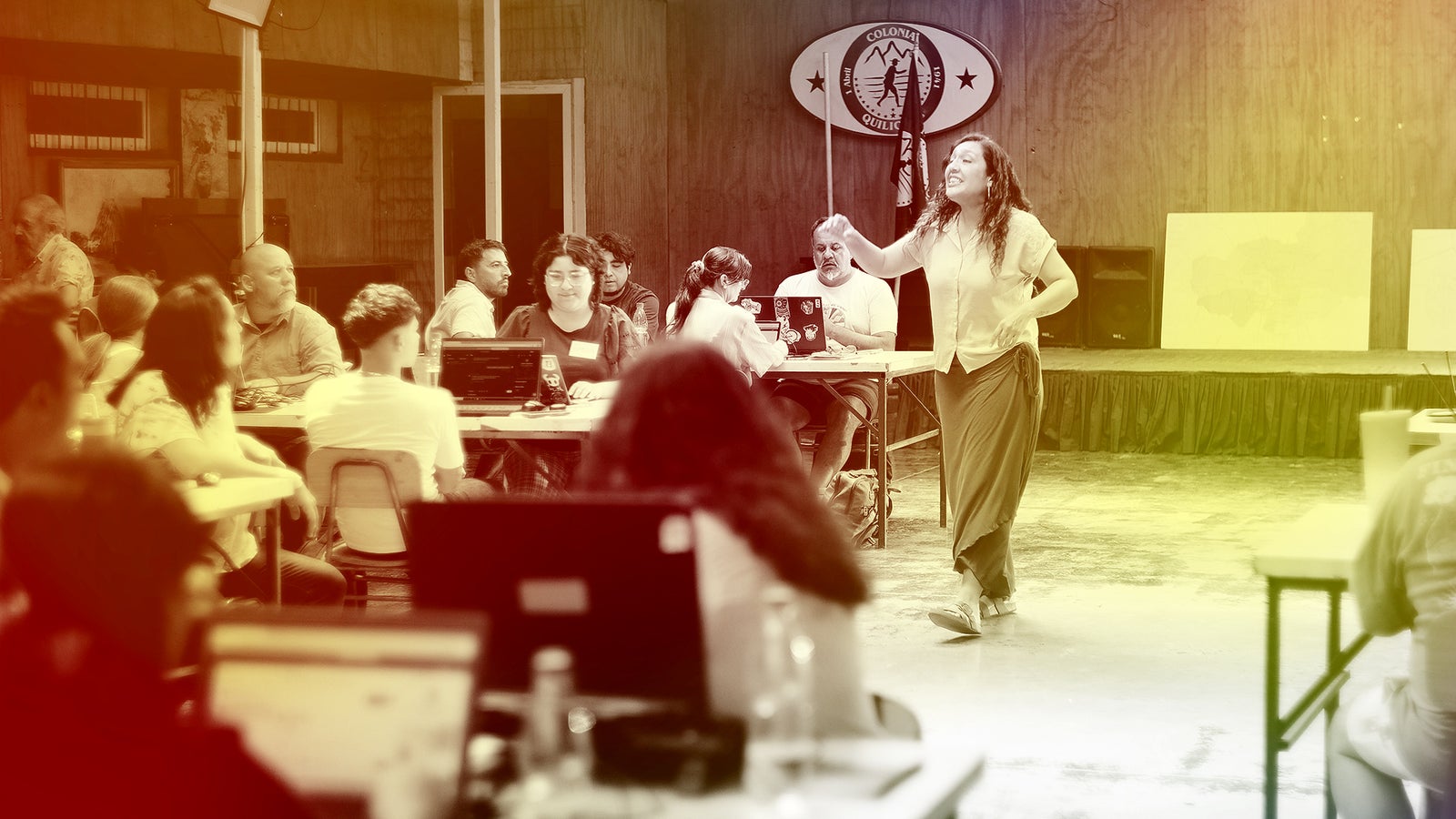
Adoption of artificial intelligence is on the rise worldwide, but the pace is uneven. As the global economy shifts increasingly toward AI-driven production and processes, wealthier nations are reaping the benefits faster, and poorer countries risk being left further behind, exacerbating economic and social divides, the United Nations has warned.
At the same time, Silicon Valley relies on resources in nations including Chile, Kenya, and the Philippines to develop its chips, train its AI models, and build its data centers. Workers and local communities in these countries are now pushing back against the demands and practices of big tech companies, which are resulting in enormous environmental and social costs to them, Carine Roos, a doctoral researcher at the University of Sheffield in the U.K., told Rest of World.
“Many discussions still approach AI primarily as a digital technology, but in many of these countries, AI is becoming visible through the infrastructures that sustain it: data centers, mineral extraction, energy demand, water-intensive cooling systems, and digital labor chains,” she said.
“While much of the economic value generated by AI remains concentrated in technological centres such as Silicon Valley, many of its environmental and social costs are in these territories,” Roos said. “This has prompted communities to question how these projects reshape lives and development trajectories.”
Rest of World spoke to some of the individuals and communities standing up to AI companies.
Rodrigo Vallejos, 28, Santiago, Chile

Since 2022, environmental activist Rodrigo Vallejos has been monitoring data centers in Santiago, including those operated by Amazon, Google, and Microsoft. Chile has nearly 70 data centers, many clustered in and around Santiago. Vallejos wants greater environmental accountability from the companies.
While a law student, Vallejos examined hundreds of publicly available documents on data centers in the country. He found that Microsoft had received government clearance in 2023 for a $317-million data center in Quilicura. The company claimed its data center would have a cooling system that would eliminate the need to use water for more than half the year. In documents submitted to authorities, however, Vallejos found that Microsoft’s cooling system would rely partially on groundwater in an already water-stressed area. Microsoft said its data centers only used “small quantities of water” for humidifying. Vallejos and his neighbors filed over 100 citizen complaints against Microsoft, which were included in discussions for a National Data Center Plan, but when the plan was published in 2024, it didn’t include the stricter environmental requirements.
That setback didn’t deter Vallejos. Last September, he filed a complaint against the lack of information about water consumption at Google’s data center in Cerrillos. Last year, Google said its site used far less water than the previous year, “or roughly the amount consumed by a golf course.”
While he awaits the government’s response, Vallejos has two objectives: no more data centers in Santiago, and “appropriate environmental compensation from the companies with data centers, since they consume large amounts of water and energy,” he told Rest of World. “The environmental consequences of data centers will be worse in the future. The important thing is that these companies fulfill their corporate environmental commitments and contribute to the water reserves’ reconstruction. If not, their environmental claims are just greenwashing.”
Tania Rodríguez, 54, Santiago, Chile

Tania Rodríguez was a school teacher in Santiago, but in the past few years she’s become a prominent activist against data centers. She is one of the founding members of the Socio Environmental Community Movement for Land and Water, or Mosacat, an organization that fights against resource exploitation in the country.
Google built its first data center in Santiago in 2015, when nobody was really aware of their environmental impact. In 2020, according to official documents, Google’s second data center was authorized to extract more than 7 billion liters annually. When Mosacat discovered the staggering volume of water that would be diverted to the data center, it held several demonstrations. In response, Santiago’s environmental tribunal in 2024 suspended construction until Google reassessed its environmental impact.


Rodríguez and her small team of 10–15 continue to monitor AI companies and file complaints. They also tried to be involved in the country’s National Data Center Plan, but “dropped our dialogue with the government because we realized it basically had been building the projects for the tech companies,” Rodríguez told Rest of World.
Mosacat’s campaign against Google has brought international attention to the group, connecting them with other organizations and activists fighting data centers worldwide, she said. “We’re not against Big Tech, but in favor of nature. We don’t want our countries to get steamrolled by extractivism.”
The Town of Quilicura, Chile
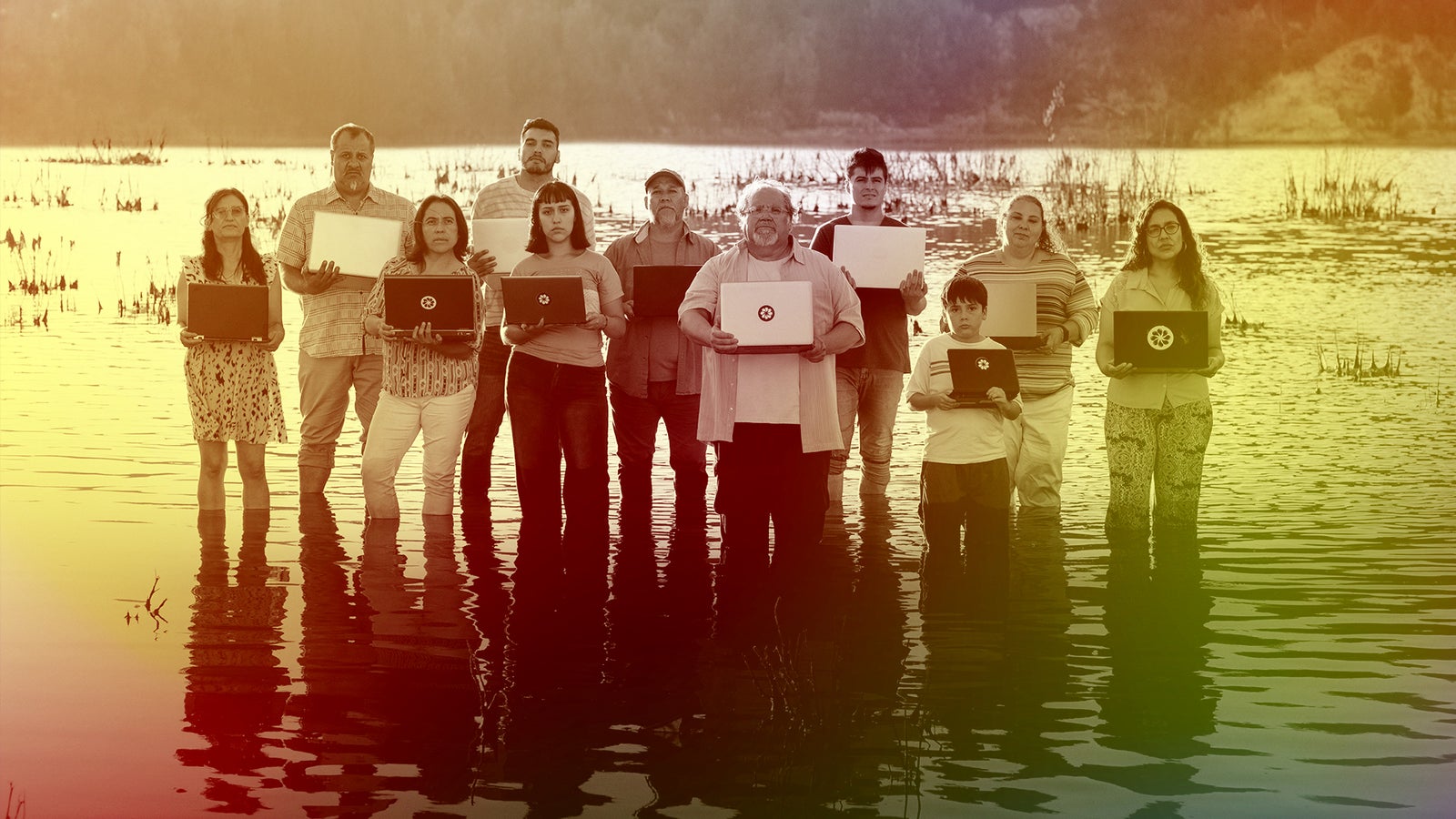
On January 31, people in Quilicura —
located in one of Chile’s most water-stressed regions — volunteered to
answer questions that may otherwise be posed to an AI chatbot.
Volunteers answered more than 25,000 questions from participants in 67
countries in real time on Quili.AI,
which estimated how much water would have been used if a question had
gone to a chatbot. What the organizers did not anticipate was “the
thousands of deeply human, often surprising exchanges,” according to
Corporación NGEN, a nonprofit that organized the event.
To a
question on how to stay hopeful, a volunteer discussed the myth of
Sisyphus and echoed the words of Albert Camus: “There is nothing more
urgent than asking ourselves why we live.” Three local artists drew
images in response to prompts, including a dog smoking a pipe, a turkey
high-fiving a cat, and a French bulldog with wings.
“For communities living alongside data centers, the environmental impact of AI isn’t abstract — it’s felt daily,” said Lorena Antiman, cultural mediator at Corporación NGEN.
“Quili.AI is about awareness —
specifically around casual prompting — and creating space for a broader
conversation about how these systems scale responsibly in water-stressed
regions,” she said. “If people pause and think before casually
prompting AI — or begin asking how and where these systems operate —
that’s meaningful progress.”
Olimpia Coral Melo, 35, Puebla, Mexico

When she was 18, Olimpia Coral Melo’s ex-boyfriend shared an intimate video of her on social media without her consent. That set her off on a seven-year journey to criminalize the nonconsensual sharing of sexual content, and help protect other women from digital violence.
Assisted by Defensoras Digitales, a women’s activist group against cyberbullying and harassment, Melo was instrumental in a series of legislative reforms that led to the Olimpia Law in 2021, which criminalizes the distribution of nonconsensual sexual imagery. It also helped shape the Olimpia Law in Argentina, and the Take it Down Act in the U.S.
But Mexico’s Olimpia Law is still limited in its impact: So far, only five people have been found guilty under the law — a shockingly low number, considering over 18 million people were reported to be victims of cyber harassment in 2024 — more than half of them women. The Olimpia Law also does not consider AI-generated nonconsensual sexual imagery, or hold social media platforms accountable.
Melo is now focusing her activism on adding deepfakes to the Olimpia Law, and having tech companies look at the problem with a “clear, ethical lens,” she told Rest of World. “The conversation around digital violence cannot be limited to individual responsibility of those who post or share content. The problem is structural, and digital platforms have direct responsibility. Not only do they host the content, they amplify, recommend, and often monetize it.”
Joan Kinyua, 36, Nairobi, Kenya

Joan Kinyua started a job at data annotation contractor Samasource in 2016. Kinyua and her colleagues labeled data and images for Meta, autonomous vehicle companies, and others. Despite the sometimes violent and explicit imagery they viewed, there were no mental health safeguards, and the environment was “not only uncomfortable but exploitative,” Kinyua told Rest of World. Unionizing and raising concerns, she said, were risky.
Kinyua moved to CloudFactory, another data annotation contractor, and also began doing clickwork on Remotasks for extra income. She often started at 5 a.m. to complete tasks for a few hours before her regular job. After clocking off work at 4 p.m., she sometimes hid in the washroom to complete her platform tasks on the office laptop. The tasks had strict time limits, and failing to finish within the allotted time could leave her “without a single penny for hours of effort,” she said.
In eight years of working data annotation jobs at different companies, Kinyua experienced low pay, exploitative conditions, a lack of labor protections, and gender and class biases, she said. That led her to set up the Data Labelers Association with nine others last year, to push for ethical labor standards, and for the invisible workforce powering AI to be recognized, respected, and protected, she said. DLA advocates for fair pay, transparency, and accountability from companies and the government.
“We are building a movement where digital labor is visible, valued, and organized, and where the human foundation of AI is finally recognized as central, not peripheral, to innovation,” Kinyua said. “We are not anti-AI. We understand the transformative power of technology, but we believe that no technological advancement should come at the expense of human dignity, fair pay, mental well-being, or labor protections.”
Code AI, Philippines

Launched in January 2025, the Coalition of Digital Employees – Artificial Intelligence, or Code AI, is an initiative of the powerful BPO Industry Employees Network that represents about 1.8 million workers in the Philippines. It was formed after a call center employee was fired for revealing to Rest of World that an AI program acted as their quality assurance manager.
Code AI has been helping workers seek compensation after being replaced by AI, and demanding greater labor protections for call center agents, data annotators, content moderators, and other tech workers who are vulnerable to job loss from AI. Renso Bajala, who spearheaded Code AI’s initial campaign, has since become an organizer with the coalition, assisting others who’ve been fired by their employers due to AI. The group has helped about 1,000 workers demand fair compensation, and assert their right to assemble and seek legal action, he told Rest of World.

“We try to harness the collective power among employees,” Bajala said. When tech workers are laid off, “a lot of times they are in a rush to find the next job rather than speak out.”
Code AI was involved in drafting the Magna Carta for BPO Workers, a draft legislation that aims to protect their rights. While the bill does not have specific provisions against companies citing AI to lay off workers, it strengthens workers’ overall position, Bajala said. Many call center employees who were laid off now work as freelance data annotators, he said.
Still, Code AI has struggled to keep up with how quickly AI is reshaping the workforce, Bajala said. “Sometimes it feels like we’re just getting to know an issue somewhere, and in the middle of that, we suddenly have to deal with a mass layoff somewhere else.”
Africa pours $2 billion into controversial Chinese surveillance tech
A new study shows Chinese firms and banks are behind much of the continent’s AI-powered monitoring infrastructure.

Surveillance technology in Africa is increasingly being shaped by China.
Eleven African countries have collectively spent over $2 billion on artificial intelligence-powered surveillance systems, according to a new study by the U.K.-based Institute of Development Studies and the African Digital Rights Network. Several components of these surveillance tools have been purchased from China, and private Chinese banks have provided the funds needed to build and maintain this infrastructure, the study said.
“These huge loans are conditional on the purchase of Chinese technology and services needed to build and transfer the ‘safe city’ systems,” wrote Wairagala Wakabi and Tony Roberts, the authors of the study.
The investments have been made even as most African countries lack adequate legal regulation or oversight. In the absence of terrorist threats or crimes, such mass surveillance compromises citizens’ right to privacy, experts say.
The surveillance bond between Africa and China runs deeper than the former purchasing tools for facial recognition or automated license plate tracking from the latter. Chinese companies like Huawei and ZTE have built around 70% of Africa’s 4G infrastructure, which is essential for the effective use of surveillance devices.
At $470 million, Nigeria has spent the most on surveillance tech, the study said. It also has the largest network of smart cameras installed among the 11 countries in the study.
More than 60 countries worldwide use Chinese AI surveillance tech. Experts have expressed concerns about the unbridled use of such tools, which can lead to crackdowns on dissenters like activists and journalists.
There have been several examples of the misuse of surveillance tech reported in the past. For instance, Tibetans are being tracked in Nepal, while in Ecuador and Argentina, there are concerns about the tech empowering authoritarian governments. Facial recognition has reportedly been used to monitor activists in Uganda as well as the Gen Z-led protests in Kenya.
All 11 countries in the Africa study “currently fail to provide adequate mechanisms for citizens to obtain remedy or redress in case of smart surveillance errors or abuse,” Wakabi and Roberts wrote.
The researchers said these governments need to set up a dedicated law on smart surveillance of public space, which defines and limits which actors are allowed to conduct public space surveillance, limits surveillance to instances warranted by the court, and establishes an oversight body independent of the government, police, and judiciary.
Western AI models “fail spectacularly” in farms and forests abroad
Big Tech’s AI tools trained on Western data often can’t recognize local crops, forests, or farming conditions without adaptation to local environments.
- AI models built in the West often fail to function correctly in poorer nations because they are not trained on local data.
- Effective use of AI in agriculture requires adaptation and local ownership.
- There is a risk that a focus on profit by big tech firms and large agriculture companies will hurt farmers.
When scientist Catherine Nakalembe set out
to map crop types in western Kenya, she had plenty of data from
satellite images, but couldn’t use artificial intelligence to analyze it
because the data could not recognize local crops. She decided to
collect her own data, fitting GoPro cameras on the helmets of dozens of
volunteers, and training the facial recognition technology to identify
maize, beans, and cassava. They collected over 5 million images in two weeks.
Nakalembe
uses machine learning, computer vision, and deep learning models to map
cropland, classify crop types, and estimate yields in Uganda, Kenya,
Senegal, and other African nations. But most AI models are trained on
European and U.S. data, and are largely useless unless they are adapted
for local contexts, she told Rest of World.
“AI systems
built in the West often also fail to account for the contexts of the
Global South, including high internet costs, limited bandwidth, and a
lack of labeled training data,” said Nakalembe, an assistant professor
at the University of Maryland, and Africa program director at NASA
Harvest, which uses satellite imagery to improve agricultural
production.
“If these systems aren’t adapted, they remain
irrelevant, potentially deepening existing inequalities in wealth and
access to resources, [and] there is a risk that these systems prioritize
corporate and company profit over farmers,” she said.
As AI
systems become more sophisticated and accessible, governments and
organizations are keen to use them to tackle issues such as
deforestation and food security to benefit farmers,
fishers, and other rural communities. Agriculture provides livelihoods
for more than 2 billion people in low and middle-income countries, and
they are exposed to climate change impacts that hurt crop yields and
reduce incomes.
If AI assumes literacy, connectivity, or decision authority, it only benefits better resourced farmers first and widens inequality.”
Technology, particularly AI, can be a solution, Oren Ahoobim, a partner at consultancy Dalberg Advisors in San Francisco, told Rest of World. While satellite imagery, video, and chats have been in use for some time, the quality and availability of the underlying data that powers these technologies “is dramatically better now, so the outputs are much better and can be better trusted,” Ahoobim said.
“This translates to better information for farmers, including more predictive information, which enables farmers to make better decisions earlier on in terms of what to plant, how much fertilizer to use, how to manage disease, etc.,” he said.
Ending hunger is one of the 17 sustainable development goals of the United Nations for 2030. But the goal of zero hunger is likely to be missed, with about 28% of the global population — around 2.3 billion people — “moderately or severely food insecure.”
AI is being used in several ways to address this: In Brazil’s Pará state, environmental non-profit Rare uses AI to turn real-time coastal data into actionable WhatsApp voice alerts for fishers and oyster farmers. Microsoft’s AI models use bioacoustics to monitor deforestation in the Amazon forest. Digital Green’s FarmerChat Android app reaches more than 1 million farmers in South Asia and Africa, using generative AI to answer queries in 16 local languages, and diagnosing crop issues from uploaded images.
FarmerChat has answered over 8 million questions, co-founder and chief executive Rikin Gandhi told Rest of World. The team trained and reinforced small language models with over 120,000 farmer queries and answers developed with agronomists and veterinarians in vernacular languages, and in the manner that farmers “actually speak” — without the formal names for seeds or chemicals, Gandhi said.
“Agriculture is hyperlocal: Soil type, rainfall, altitude, pests, and markets vary village to village. Model learning must stay close to those realities,” he said. Building trust is also key — the AI must support farmers and ensure equity of access without being used for credit scoring, risk profiling, or compliance.
“If AI assumes literacy, connectivity, or decision authority, it only benefits better resourced farmers first and widens inequality,” Gandhi said.
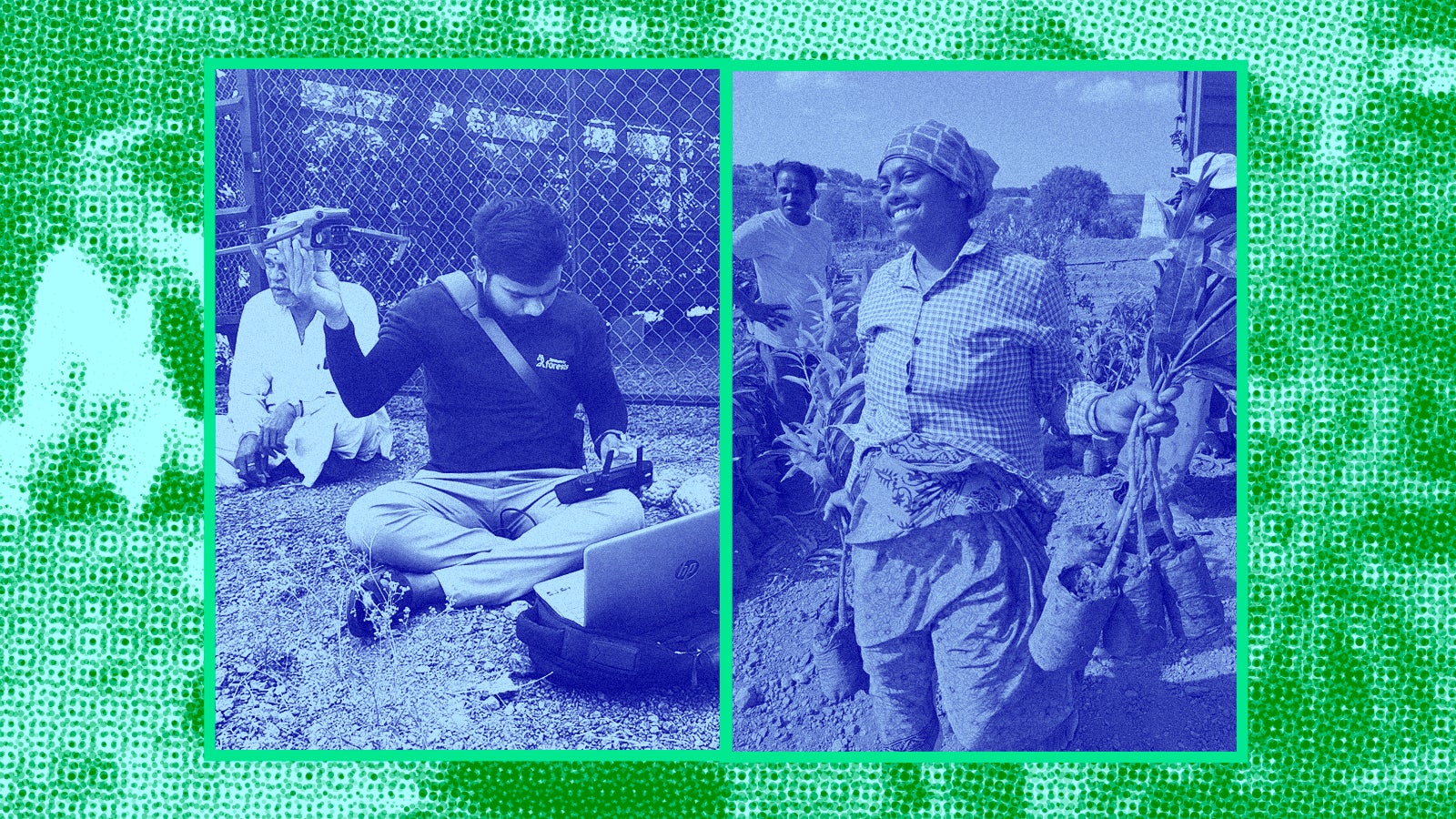
In India, when Farmers for Forests, a conservation group that aims to increase forest cover, tried a popular open-source model to analyze data from the western state of Maharashtra, “it failed spectacularly,” co-founder and director Arti Dhar told Rest of World.
“It missed over half the trees because it was trained on North American forests,” she said. The team manually annotated drone imagery from 80 different land parcels, labelling about 55,000 individual trees.
“It was a clear lesson that you cannot simply parachute Western AI into the Global South and expect it to work,” Dhar said.
Dhar’s team uses drones to create 3D maps of farms, and a custom-trained AI model built on Meta’s Detectron2 to identify every tree and measure its height and canopy. With that data, the diameter of tree trunks can be estimated to calculate carbon sequestration, which can generate incomes for farmers, Dhar said. Their WhatsApp chatbot, ChutkiAI, supports farmers.
An AI system can perform technically well and still fail farmers if it ignores economic and ecological realities.”
“Local ownership and adaptation are
critical … otherwise the promise of AI will remain concentrated in the
hands of a few,” she said. The technology is also “only a piece of the
puzzle. … The most accurate AI in the world is useless if it isn’t
embedded in a system of trust and aligned with the real-world economic
needs of farmers.”
Digital tools in farming are a big business, with the market worth about $30 billion last year and forecast to nearly triple to $84 billion by 2034. Tech companies including Google, Microsoft, Amazon, IBM, and Alibaba all have AI programs to tap this growing market.
Yet there is a risk that AI becomes a new form of digital colonialism, experts have warned, with big tech firms extracting data from poor communities to train a proprietary model and then selling a service or product back to them. Tech companies are already working with large agriculture firms to influence what crops are grown and how, according to the International Panel of Experts on Sustainable Food Systems, a think tank. Focusing on only the most productive and profitable crops — corn, rice, wheat, soybeans, and potatoes — can wreck local food systems and hurt farmers, it said.
This is what organizations must guard against, Gandhi said. If AI optimizes only for short-term yields and ignores larger issues such as water depletion, soil degradation, or energy use, it can erode long-term resilience.
“An AI system can perform technically well and still fail farmers if it ignores economic and ecological realities,” he said. “The real measure of AI in agriculture is whether it strengthens farmer agency, improves profitability, supports sustainability, and works for women and men. That depends entirely on building with farmers, not just for them.”



No comments:
Post a Comment