Trump’s Brain Flips Back to the 1970s in a Ludicrous Ultimatum Misfire
https://www.thedailybeast.com/president-trumps-brain-flips-back-to-the-1970s-with-sensational-war-demand-flop/
Trump’s Brain Flips Back to the 1970s in a Ludicrous Ultimatum Misfire
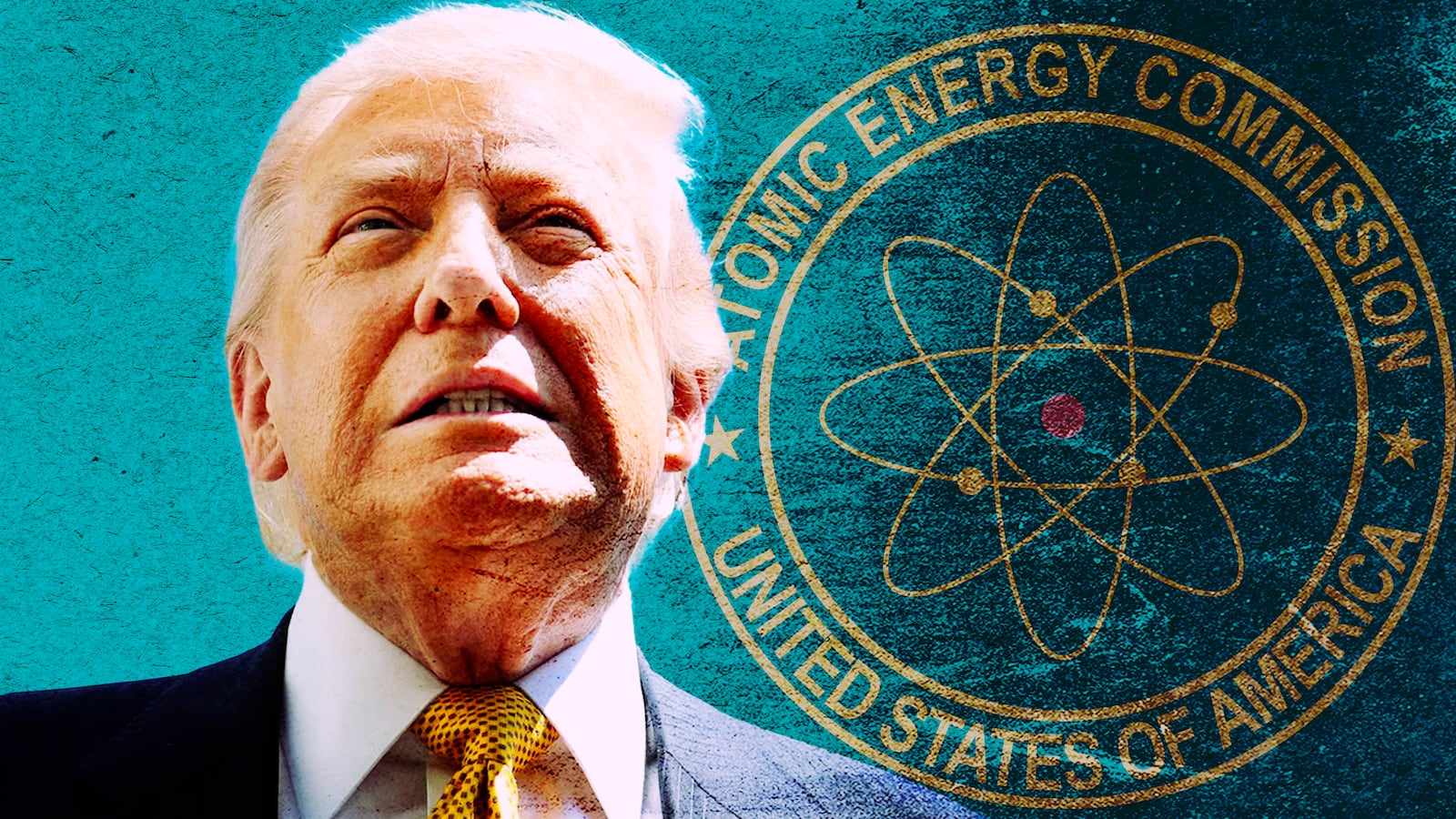
President Donald Trump has demanded action on Iran’s “nuclear dust” from an agency that ceased to exist more than 50 years ago, raising concerns that he is increasingly living in the past.
The two-term president, who turns 80 in June, all but confirmed that he doesn’t know which U.S. body deals with atomic science and technology when he posted on Truth Social about Iran’s enriched uranium, which he calls “nuclear dust.”
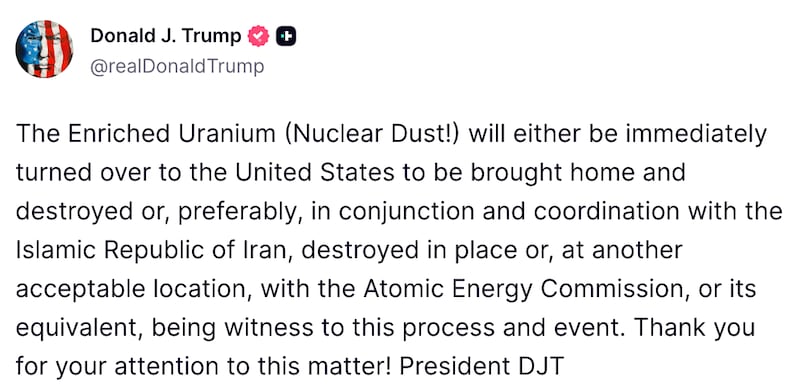
He said that if a peace deal is struck with Tehran, the material will “either be immediately turned over to the United States to be brought home and destroyed or, preferably, in conjunction and coordination with the Islamic Republic of Iran, destroyed in place or, at another acceptable location, with the Atomic Energy Commission, or its equivalent, being witness to this process and event.”
There were two main issues with Trump’s statement. The Atomic Energy Commission developed and regulated U.S. nuclear technology, oversaw weapons development during the Cold War, and managed domestic atomic policy. It was not, in the modern sense, an international inspection body for foreign nuclear disarmament agreements.
Secondly, it was dissolved in 1974.
Trump did say “or its equivalent,” but it remains a bizarre choice for a president to all but admit publicly that he doesn’t know what body deals with such important matters, especially since bombing in Iran has resumed.
U.S. forces targeted Iranian missile sites and mine-laying ships during an operation on Monday, throwing already strained peace talks into disarray.

CENTCOM said the strikes were in “self-defense,” and designed to protect “our troops” from unspecified “threats” from Iranian forces in an area near Bandar Abbas, a southern port city. On Tuesday, Iran’s Islamic Revolutionary Guard Corps said it had responded, downing an American drone and also shooting at a fighter jet.
There was optimism for a breakthrough in talks over the weekend, emboldened by Trump’s insistence on Monday that progress was being made. “Negotiations with the Islamic Republic of Iran are proceeding nicely!” he crowed in a Truth Social post.
Secretary of State Marco Rubio shared a hopeful outlook, saying the president was keen to make a deal. But later on Monday, his tone had changed. “The straits have to be open. They’re going to be open one way or the other, so they need to be open,” he said after the strikes.
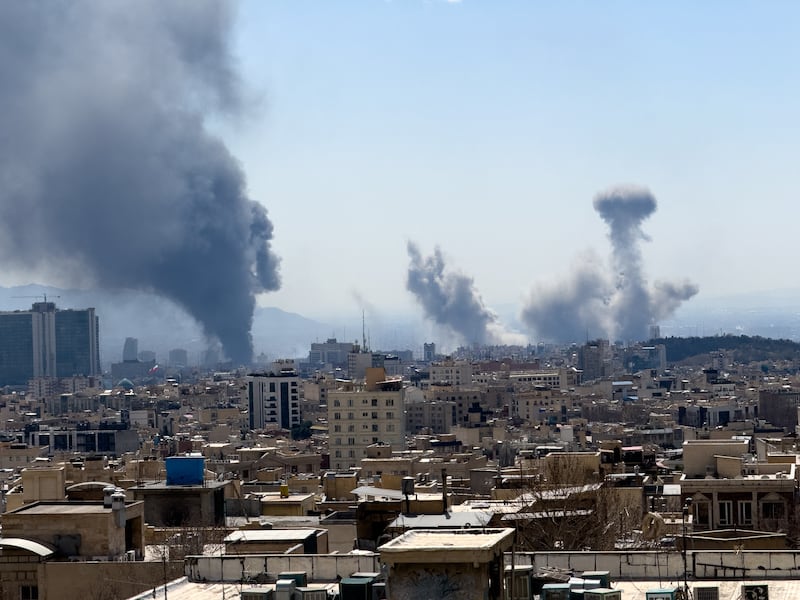
“What’s happening there is unlawful, it’s illegal, it’s unsustainable for the world, it’s unacceptable.”
Meanwhile, Iran’s Supreme Leader Mojtaba Khamenei stoked division, declaring that the Middle East “will no longer serve as shields for U.S. bases.”
The ceasefire between Israel and Lebanon took a beating, too, as the former intensified strikes in southern Lebanon, spurred on by Prime Minister Benjamin Netanyahu‘s fighting talk. He said he had ordered the military to escalate its offensive in an effort to “crush” the Iran-backed militant group, Hezbollah.
Meanwhile, the AEC’s modern equivalent is actually split between two agencies. The United States Department of Energy handles nuclear weapons infrastructure, nuclear research, uranium programs, national labs, and energy policy. The Nuclear Regulatory Commission regulates civilian nuclear reactors, safety, licensing, and nuclear materials.
Even so, these bodies wouldn’t typically be involved in a situation like the one Trump described in his Truth Social post. That falls under the remit of the International Atomic Energy Agency, in conjunction with multinational actors.
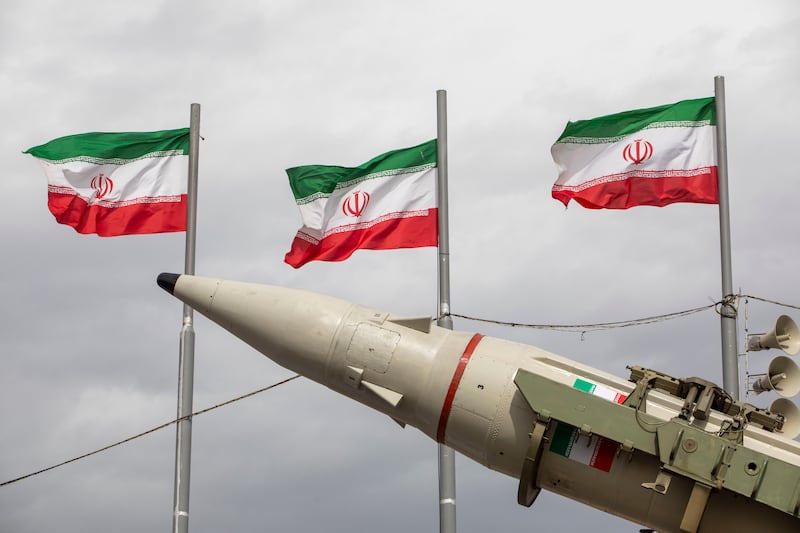
Additionally, the IAEA already oversees monitoring and verification related to Iran’s nuclear program under international agreements and safeguards. However, its monitoring has been stymied by Trump’s bombing campaign, and it has been unable to inspect nuclear sites struck during “Operation Midnight Hammer,” the U.S.-Israel mission that decimated Tehran’s nuclear program last June.
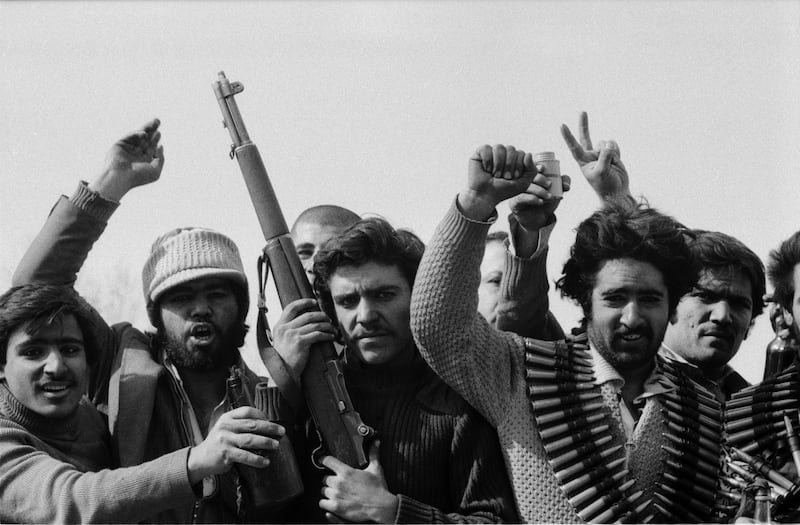
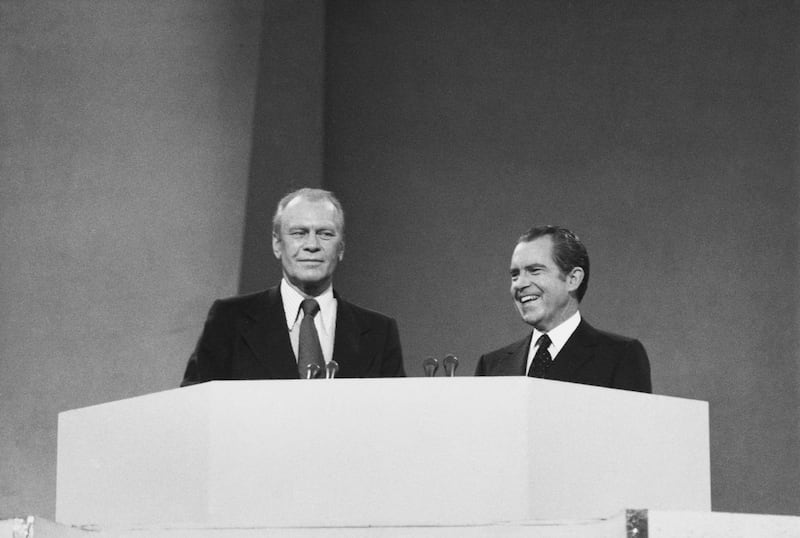
The AEC existed from 1946 until it was dissolved in 1974 and ceased operations in January 1975, when Gerald Ford had taken over following Richard Nixon’s resignation over the Watergate scandal. The agency’s final day of operations predates the Iranian Revolution by a full three years, showing just how stuck in the past Trump is.
It existed at the heart of the eras of Harry S. Truman, Dwight D. Eisenhower, John F. Kennedy, Lyndon B. Johnson, and Nixon. It was created right after World War II at a time when the U.S. and the Soviet Union were locked in a nuclear arms race.
Trump often refers to cultural touchstones from a bygone era. He has an ongoing obsession with “TV ratings,” “real estate,” and specific publications and channels, such as Time magazine and 60 Minutes, that evoke the priorities of yesteryear.
He has hauled old faces such as Kid Rock and Hulk Hogan back into the modern day, and his political style resembles the old leader-to-leader bargaining style. Even his slogan (which Ronald Reagan, George W. Bush, and Bill Clinton all previously used) looks specifically backward: “Make America Great Again.”
The Daily Beast has approached the White House for comment.