Sunday, August 16, 2026

The ICE List A verifiable public record of U.S. immigration enforcement, built by all of us and open to everyone - incidents, agents, deaths, vehicles, and facilities, documented with sources.

The ICE List
A verifiable public record of U.S. immigration enforcement, built by all of us and open to everyone - incidents, agents, deaths, vehicles, and facilities, documented with sources.
 

 https://theicelist.org/index.php?title=Main_Page

A community effort
The ICE List
A verifiable public record of U.S. immigration enforcement, built by all of us and open to everyone - incidents, agents, deaths, vehicles, and facilities, documented with sources.
 
New · the ICE Watch app
Were you there?
Swipe documented incidents and unidentified agents that still need footage or an ID, and drop an anonymous tip. Anonymous, reviewed before anything appears, installs to your phone.

Open ICE Watch →

Most Wanted — share a posterBrowse posters by state →
IL-00126
IL-0007
MD-0002
WA-0002
WA-0001
MN-3476
OR-0001
NY-0005
NY-0004
NY-0003
MN-0001
KS-0002
NY-0001
GA-0002
TX-0004
TX-0003
TX-0002
GA-0001
TX-0001
NJ-0001
About
About the ICE List

The ICE List Wiki is a public, verifiable record of immigration enforcement activity in the United States.

It documents incidents, agencies, individuals, facilities, vehicles, and legal authorities involved in enforcement operations. Entries are structured, sourced, and timestamped to support verification, cross-referencing, and long-term analysis. The wiki is intended for use by journalists, researchers, advocates, and the general public.

This project was created by Crust News.

Project status: This wiki is in active development. Structure, navigation, and data standards are being finalised. Older pages may be reformatted as standards are applied consistently.

Featured incident

Killing of Johan Sebastián Durán Guerrero in Biddeford, Maine 2026-07-13 • Biddeford, Maine (Pool Street / Hill Street)

Johan Sebastián Durán Guerrero, a 26-year-old man originally from Colombia, was shot and killed on the morning of 13 July 2026 during a U.S. Immigration and Customs Enforcement (ICE) operation in Biddeford, Maine. Senator Angus King said Guerrero was not the operation's target; his wife and young daughter were at the scene, and the agents wore no body cameras. It is at least the 11th fatal shooting involving ICE or Border Patrol agents this administration; the FBI is expected to investigate.

Most wanted
Most Wanted - unidentified agents

Federal agents recorded using force against the public who remain unidentified. Recognize someone? Submit a tip on their entry - your identity is not recorded.

See the Most Wanted board →

Map
Incident map

See where immigration enforcement is happening across the country — every documented incident, plotted and clustered by location.

Explore the map →

Free legal help
Florence Immigrant & Refugee Rights Project
Free legal & social services · Arizona

No one in immigration court has the right to a public defender. Detained adults and children often face deportation alone. The Florence Project provides representation, Know Your Rights education, and family support at no cost.

ICE List shares this resource freely. No financial relationship.
Run a legal-aid or immigrant-rights organisation? Request a free spot →


Library
Culture: watch, listen, read

A community-curated library of films, documentaries, music and books about immigration, detention and the fight for immigrant justice - kept separate from the documented record.

Browse the library →

Read the journalism →

For researchers
Using the data

The ICE List Wiki is designed for public use. Journalists, researchers, and advocacy groups use the data to track enforcement patterns, identify repeat agencies or jurisdictions, and contextualise individual incidents. Pages may be cited with attribution.

Coverage
ICE List in the media

The ICE List has been reported on and analysed by independent news organisations, and indexed by academic and civic-tech projects. Read some of that coverage here.

Read the coverage →

Boycotts
Recommend a company to boycott
Media contact

Whistleblower tip line

If you work inside ICE, DHS, CBP, or a contractor and have information about operations, misconduct, or abuses, we want to hear from you.

Submissions are confidential. We do not log IP addresses or identify sources.

The .onion link requires Tor Browser. For maximum anonymity, use Tor and avoid submitting from a work device or network.

Verification and sourcing

Each page includes a verification status indicating whether claims are supported by public records, media, video evidence, or other documentation. Unverified information is clearly labelled and is not presented as established fact. Pages may be updated as additional sources become available.

Navigate
Quick links
  • How to report an incident Step-by-step instructions for submitting an incident with enough detail to verify and map it.
  • Deportation agents Overview of ICE ERO officers, how we document them, and how to read agent pages.

Guidelines
Contributing responsibly

Submissions should be factual, specific, and supported by evidence where possible. Speculation, harassment, or unverifiable claims are not published. Contributors are encouraged to prioritise accuracy over speed.


‘Spearhead of annexation’: Israel hands West Bank rule to civilian police


‘Spearhead of annexation’: Israel hands West Bank rule to civilian police

https://www.aljazeera.com/news/2026/8/16/spearhead-of-annexation-israel-hands-west-bank-rule-to-civilian-police 

‘Spearhead of annexation’: Israel hands West Bank rule to civilian police

The transfer of law enforcement exposes plans to erase the Green Line, enforce apartheid and empower armed settler groups.


Palestinian children play in the street on the outskirts of Qusra, a Palestinian village in the occupied West Bank
Palestinian children play in the street on the outskirts of Qusra, a Palestinian village in the occupied West Bank August 14, 2026 [Ammar Awad/Reuters]

Palestinian politicians and analysts have warned against what they describe as an Israeli plan to illegally annex the occupied West Bank by implementing a series of decisions and actions under different pretexts.

Israel’s Defence Minister Israel Katz, on Friday, ordered the military to prepare a plan for transferring civilian law enforcement in the occupied West Bank to the Israeli police.

According to the Israeli newspaper Haaretz, the decision follows criticism over the army’s handling of Israeli settlers who besieged a Palestinian home in the village of Qusra.

2:03
  • Now Playing
    02:03
    Israeli settlers besiege Palestinian homes in occupied West Bank

    Israeli settlers besiege Palestinian homes in occupied West Bank

  • Next
    01:22
    Ben-Gvir calls for nightly killings of Palestinians in Gaza

    Ben-Gvir calls for nightly killings of Palestinians in Gaza


Katz justified the shift, saying, “The army’s role is to combat Palestinian terrorism … and not chase hilltop youth.”

The Defence Ministry indicated the police would establish a dedicated force to handle these civilian matters.

However, Palestinian officials and a wide array of political experts warn this structural shift represents a dangerous acceleration of illegal annexation, apartheid, and ethnic cleansing.

Mustafa Barghouti, secretary-general of the Palestinian National Initiative, told Al Jazeera that the settlers are the “spearhead in the process of annexation and Judaisation”.

He drew direct historical parallels to the mass displacement of Palestinians, stating, “They repeat what the Zionist terror gangs did in 1948, like the Haganah and the Stern Gang.”

46:53
Stern: The Man, the Gang and the State

Barghouti warned that placing security in the hands of National Security Minister Itamar Ben-Gvir and illegal Israeli settlements under Finance Minister Bezalel Smotrich amounts to “handing over the West Bank to the settlers”.

He stressed that this is an open war on the population, adding, “The actual ruler in the West Bank is the known fascist terrorist Smotrich.”

De facto annexation

Analysts argue that replacing military occupation law with domestic civilian law fundamentally alters the legal reality of the territory. Mohanad Mustafa, an academic and researcher in Israeli affairs, told Al Jazeera that the decision legally erases the borders.

“The government is dealing with the West Bank not as an occupied territory,” Mustafa said. He explained that by transferring power to a civilian police force, “this means that the government has annexed the West Bank”.

He noted this move absolves the military of its obligations under international law, placing enforcement under Ben-Gvir.

Mustafa warned that Ben-Gvir, who previously oversaw the demolition of thousands of Arab homes in Israel, will now command the police to “support the settlers more and more and push them more and more towards deepening their repression and terrorism against the Palestinians”.

Palestinian leadership strongly condemned the mandate. Hussein al-Sheikh, secretary-general of the Palestine Liberation Organization’s executive committee, described the move as a blatant violation of international agreements and an attempt to “impose Israeli law and sovereignty over the occupied West Bank, including East Jerusalem, and to entrench the illegal annexation of Palestinian land”.

The Palestinian group Hamas echoed this sentiment, releasing a statement calling the order a “dangerous step on the path to imposing de facto annexation” that provides “cover and more protection for the escalating attacks and crimes of the settlers”.

Fascist militias

The Palestinian Authority has accused the Israeli government and its military of sponsoring settlers’ violence. Even Israeli members of parliament have accused the army of being complicit.

Analysts stress that relieving the military of its duties essentially deputises settler violence, turning them into an armed extension of the state.

Nihad Abu Ghosh, an expert in Israeli affairs, told Al Jazeera that there is no contradiction between the army and the settlers. He noted that the settlers have evolved into “fascist militia formations” that perform the state’s dirty work.

“These are fascist militia formations, and there are similar precedents in many countries that were ruled by fascism, whether in Spain, Italy, Germany, or even Chile,” Abu Ghosh said.

He added that these militias carry out roles that “require evading any discipline, rules, or laws” to achieve a “creeping, gradual annexation to make it a reality”.

Apartheid and displacement

The dual legal framework resulting from this shift has drawn sharp international and local criticism. Shadi al-Shurafa, a researcher in Israeli affairs, told Al Jazeera that the situation is a textbook definition of segregation.

“We are facing an application of an overt racist apartheid system in the West Bank,” al-Shurafa said, noting it involves one regime operating with two entirely different laws based on ethnicity.

He added that the ultimate goal of the current government is carrying out complete ethnic cleansing and trapping Palestinians in “isolated cantons and isolated Bantustans”.

Other experts argue that the move completely alters the international legal status of the territory, pushing the crisis into a new, more dangerous phase.

“The subject has bypassed the issue of annexation to a post-annexation phase and creating a reality where the Palestinian finds himself forced to think about migration,” said Adel Shadid, expert in Israeli affairs.

International complicity

Analysts also pointed to the role of the international community, particularly the United States, in enabling this systemic shift.

Shadid dismissed recent US condemnations of settler violence as mere theatre to “mislead global public opinion”.

He argued that the underlying project has full US backing, noting that “all that is happening now is an American-Israeli plan and there is harmony between the two right-wing administrations in Washington and here in Israel”.

Andrew Whitley, a former United Nations official and Chair of Trustees of the Britain Palestine Project, stressed that the planned transfer is “completely illegal” and urged immediate global intervention.

He told Al Jazeera that the “Palestinian state is disappearing before our eyes”, demanding that the international community move beyond rhetoric.

“We have to do much more than just wring our hands and complain that governments are not doing anything about this,” Whitley said, calling for concrete sanctions to halt the rapid erasure of the Palestinian presence.


US law to investigate foodborne illness outbreaks has been delayed for 15 years

US law to investigate foodborne illness outbreaks has been delayed for 15 years

https://www.theguardian.com/us-news/2026/aug/16/us-law-foodborne-illness-delay 

Lettuce and other vegetables are displayed
Lettuce and other vegetables are displayed in a Brooklyn market on August 13, 2026 in New York City. Photograph: Spencer Platt/Getty Images

US law to investigate foodborne illness outbreaks has been delayed for 15 years

Law was set to go into effect in January, months before cyclosporiasis outbreak, but now is set for 2028

Congress passed a law to help federal agencies investigate outbreaks of foodborne illness – a regulation experts said could have stopped the US’s largest cyclosporiasis outbreak much sooner.

The only problem? The rule has been delayed – for 15 years, including most recently amid lobbying in 2025.

It was set to go into effect in January 2026, months before the single-celled parasite sickened more than 24,000 people and killed two in the midwest.

Now, it won’t go into effect until 2028.

“Congress recognized this issue in 2010 and asked [the Food and Drug Administration, or FDA] to develop solutions,” said Sara Sorscher, an attorney who specializes in food safety at the Center for Science in the Public Interest, a consumer advocacy group. “We are now 16 years in, and we still don’t have enforcement of this rule that’s meant to deal with exactly this type of situation.”

Often called the “traceability rule”, the regulation comes from the Food Safety and Modernization Act (FSMA) of 2011, passed during the Obama administration. The regulation requires enhanced record-keeping for high-risk foods – namely, those which have a history of making people sick, such as soft cheese, leafy greens, eggs and peanut butter – “for persons who manufacture, process, pack, or hold foods”.

The promise of the traceability rule is to allow the FDA to more quickly and accurately pinpoint where tainted food came from, all the way down to the farm. However, the rule has raised the hackles of some in the food supply chain, and retailers and food manufacturers have been particularly vocal about their concerns, lobbying reports show.

“It’s pretty crazy,” said Jennifer McIntire, founder of the food safety consulting firm Food Strategy, about the lengthy implementation of the rule.

Earlier this month, a group of 11 consumer, public health and labor advocates called on Congress to speed up implementation of the rule in a letter to lawmakers – arguing this summer’s cyclospora outbreak caused a “crisis in consumer confidence”.

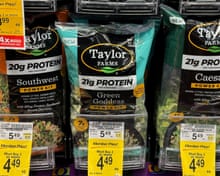
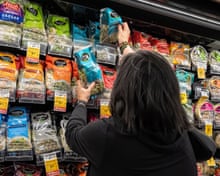
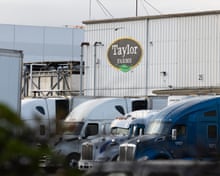
“It’s probably getting close to 30,000 people – 95% of all the illnesses occur in the 15 states that have Taco Bell and Taylor Farms,” said Bill Marler, a leading food safety attorney, about the cyclosporiasis outbreak. He is representing more than 400 people sickened in the outbreak, and has publicly said he supports the groups’ letter.

The heart of uncovering the culprit in a foodborne illness outbreak is the “traceback”. Local health departments are the first line of defense – they find out who ate what and where – a restaurant, a bagged salad, a carton of eggs.

Then federal agencies, including the FDA, find out where potentially contaminated food came from by following the supply chain back from a restaurant or grocer to distributors, packing operations and farms.

“For example, let’s do packaged salad – lettuce and greens,” said David Lennarz, who co-founded Registrar Corp, a supply chain company that helps businesses comply with federal food safety regulations.

“Some of the products you can buy are multiple types of greens – you could have radicchio, spinach, you could have lettuce. Those could be coming from completely different sources and then are all packaged up.”

The current tracking system in the US derives from the Bioterrorism Act of 2003, according to Jennifer McEntire, founder of the food safety consulting firm Food Strategy. In the years following September 11, 2001, and amid the anthrax threats sent to senior US officials in its aftermath, “it was recognized that food was a critical infrastructure, and that FDA had no idea – no authority – to know what food facilities even existed in the United States. And that was a loophole that was closed through the Bioterrorism Act,” said McEntire.

That left the US with its current system, often called, “one up, one back” – meaning a restaurant or retailer needs to document where they bought something, and a distributor or manufacturer needs to know where they sold something. Still, this system left food traceback incredibly difficult.

“I think FDA does a pretty darn good job, but tracebacks are very, very challenging,” said Lennarz.

Determining where individual greens came from is hard because, per a group representing US farmers, data related to where the crop originated is often lost at the point where cases from farms are combined into pallets, which are then loaded on to trucks.

“Since a field of leafy greens can go to multiple restaurants or multiple homes, we want to be able to find any lettuce that is offending and gather it and pull it back as quickly as possible,” said De Ann Davis, vice-president of science for the Western Growers Association, which represents farmers and supports the traceability rule.

The stakes are high for farmers – the price of lettuce dropped more than 16% in July, according to government inflation data, as consumers dropped lettuces. Davis said farmers have collected data on where cases of their produce goes for more than a decade as part of a voluntary initiative called the Produce Traceability Initiative.

“If post-when-we-ship it is not traced well, or tracked well, there is very little our grower can do about it,” said Davis. The government’s traceability rule would require manufacturers and sellers to retain that information, so that it can be provided to the FDA in the case of contamination.

Even as food safety advocates and growers promote traceability, some of the most intense lobbying has come from retailers and food industry groups. The Food Industry Association (FMI) described traceability as “the most complex regulation the food industry has ever faced” in a recent statement, and retailers made their “concerns” about the regulation known to lawmakers and regulators, lobbying reports show.

In 2024, the Reagan-Udall Foundation for the FDA, a private nonprofit created by Congress during the Bush-era, held a roundtable with representatives of the food industry, from behemoths to influential restaurant groups. Among the attendees were Chipotle, Kellogg Company, the midwestern convenience store chain Kwik Trip, the National Restaurant Association, the National Grocers Association and McDonald’s.

In a summary of the event published by Reagan-Udall, industry representatives argued traceability would “potentially require significant increases in labor, equipment, and space, with significant associated costs”, according to a 2024 industry roundtable with an FDA-affiliated nonprofit.

From 2024 to 2025, lobbyists for FMI, the southern giant Publix Super Markets, the National Retail Federation and the International Food Service Distributors Association all lobbied on the traceability rule.

The National Retail Federation (NRF), whose board of directors includes food heavyweights such as Albertson’s, Walmart and Target said in lobbying disclosure reports that it was “requesting inclusion of language in FY24 Agriculture Appropriations bill to require FDA to work collaboratively with industry to address concerns with FMSA 204 traceability rule”, and that it was “seeking support” for a bill that would relax food traceability requirements, introduced by a House Republican from Florida. NRF also expressed “concerns with FMSA 204 traceability rule” to the House, Senate, FDA and CDC, according to lobbying reports.

After all this lobbying, the industry got part of what it wanted – another delay. In March 2025, the FDA announced a 30-month delay in enforcement of the traceability rule. In November 2025, Congress ended a historic 43-day government shutdown with a budget bill.

Buried in the massive appropriations act was an important provision for food safety: Congress prohibited enforcement of the traceability rule until July 2028 – the same provision that consumer groups asked lawmakers to rescind in a letter this month.

In a statement, FMI said: “The food industry shares FDA’s commitment to strengthening food traceability, protecting public health and assisting with foodborne illness investigations to quickly identify and remove potentially contaminated products from commerce. FMI and our member companies have put in a tremendous amount of time, effort and resources over the last four years to understand and implement the FDA Food Traceability Rule.”

FMI continued: “It is extraordinarily complex and requires unprecedented coordination among growers, manufacturers, distributors, wholesalers, retailers and foodservice operators. Having adequate time is essential for addressing operational realities and developing practical, workable solutions across the entire food supply chain without increasing costs or disrupting the flow of goods. We look forward to continuing to work with FDA to ensure that the rule reflects the goals of the 2011 Food Safety Modernization Act and that food companies of all sizes are able to comply.”

The Guardian also contacted NRF and Publix Super Markets for comment, but did not receive a response.

But for some advocates like Marler, whose law firm handles cases of victims who may be severely injured or even killed by food contamination, the delays are nothing short of inconceivable.

The traceability rule “allows product to get off the market faster so less people get sick – all of those things are good for industry, whose product is being besmirched by one entity”, said Marler.

“These grown white men who run these organizations are acting like 2-year-olds… They just don’t want to be told what to do.”

Campaigns like this fund our work: can you help?
8,822 of 20,000 acts of support

Consider us impressed

Nice: you just finished reading article

the past year. It seems you really value our work. We really value you too.

We couldn’t help but notice though that while you’re a loyal Guardian reader, you’re not a recent supporter. (As you likely know, we are reader-funded. No billionaires behind the scenes here!) With dedicated people like you who haven’t contributed yet or recently, we often find one of two things are going on.

First: perhaps you simply don’t have anything to spare right now. If that's the case, we want you to know: we value your readership as much as those who can contribute, and please keep reading, as much as you like, forever. One of the wonderful values shared by Guardian readers around the globe is a desire to ease the burden for others. So ignore these appeals: our community of supporters has your back.

But if you can afford to spare something, here’s what we also know: most likely you’ve thought about giving, but for whatever perfectly human reason, you haven’t got round to it yet. So perhaps today is the day? We know – you’ve finished reading what you came to read, and you have other things to get on with. But we promise it’s quick, and even more: we promise it matters.

We survive entirely because people like you decide to respond to messages like this.

While all support is gratefully received, and even $5 helps, please consider a monthly contribution: it takes less than a minute to set up, and it’s the best way to make the biggest impact – helping sustain our fearless, independent journalism for the long haul. We’re not going anywhere; we hope you’ll stick with us too. Thank you for helping protect the non-billionaire-owned press.

Recommended

Related stories

  • CDC reportedly expands scope of US cyclosporiasis outbreak to 15 states, including Arkansas and Missouri

  • US cyclosporiasis outbreak expands to nine states as CDC investigates 7,400 cases

  • Confusing product recall adds to US cyclospora outbreak uncertainty

  • CDC cuts leave US less prepared for disease outbreaks, former officials warn

  • FDA says review of Taylor Farms lettuce shows cyclospora finding was false positive

  • Cyclospora: iceberg lettuce recalled in 27 states and more products may follow

  • CDC and FDA link lettuce at Taco Bell in five states to cyclospora outbreak

  • Cyclospora outbreaks causing diarrhea in US expected to continue through August

More from News

  • Military
    Families of US sailors denounce Trump and Hegseth for ‘dismissing their experiences and calling them liars’

  • Russia
    ‘Massive’ Ukrainian drone attack on Russia kills at least six, says Moscow

  • Hawaii
    Hurricane Lala skirts Hawaii’s Big Island as heavy wind and rain lash region

  • Jason Arday
    Cambridge University defends its mental health support for Jason Arday

  • Media
    ‘Outrageous’ handcuffing of New Orleans journalist sends ‘chilling message,’ says media group

  • Michigan
    ‘She is a hero’: 13-year-old survivor of Michigan shooting rampage called 911

  • Art
    Renaissance paintings by Antonello da Messina stolen from Sicilian museum

  • Marine life
    Florida sets record for sea turtle nests but Trump move could stall recovery