Wednesday, June 10, 2026

Trump claims US fuel prices ‘not very high’ as costs surge amid Iran war

Trump claims US fuel prices ‘not very high’ as costs surge amid Iran war

 https://www.theguardian.com/business/2026/jun/09/trump-gas-prices-not-very-high

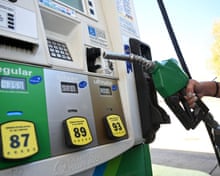
gas pump in car as fuel prices shown on sign in background
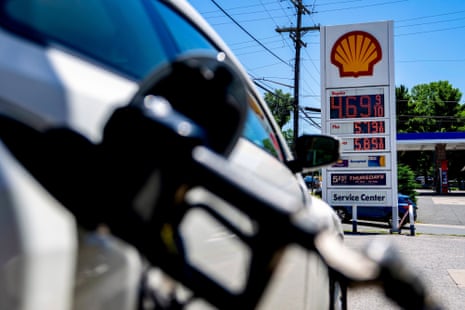
Fuel prices are displayed at a gas station in Washington DC on 30 May 2026. Photograph: Bonnie Cash/UPI/Shutterstock

Trump claims US fuel prices ‘not very high’ as costs surge amid Iran war

National average gas price stands at about $4.16 per gallon as Americans grapple with price hikes sparked by the war

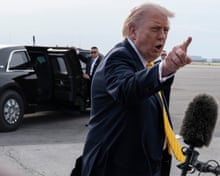
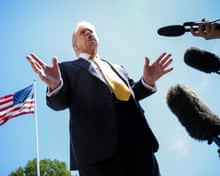
Donald Trump has claimed US fuel prices are “not very high, relatively speaking” as his administration grapples with affordability concerns after the surge in costs sparked by his war on Iran.

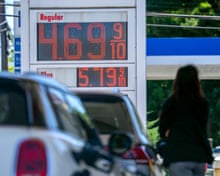
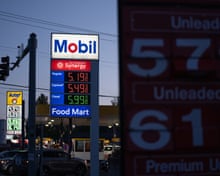
The national average gas price stood at about $4.16 per gallon on Tuesday, according to AAA – $0.37 lower than a month ago, but still about $1 more expensive than the same time last year.

The Guardian

This is not a paywall

Enter your email to keep reading - for free. It takes just 30 seconds

We’re committed to keeping our quality reporting open. By registering and providing us with insight into your preferences, you’re helping us to engage with you more deeply, and that allows us to keep our journalism free for all.


or


By proceeding, you agree to our terms and conditions. For information about how we use your data, including the generation of random identifiers based on your email address for advertising and marketing, visit our privacy policy.

Not signed in before? Create an account

The US president has faced sustained frustration over the sharp rise in fuel costs since the start of the US-Israel war on Iran in late February. While he has repeatedly sought to downplay the increase in prices, it comes as voters prepare to cast their votes in November’s crucial US midterm elections.

Trump says fuel prices are ‘not very high’ amid Iran war - video

Addressing reporters on Tuesday morning, Trump said the administration was releasing “a lot of oil coming out of the Hormuz strait”, one of the most crucial passageways for global trade through which about 20% of the world’s oil passes. The strait has been all but closed since the start of the war.

The president spoke from New York after attending Game 3 of the NBA finals, where he was loudly booed when shown on Madison Square Garden’s jumbotrons.

Prices still remain far higher than what they were before the Iran war started. Oil and gas prices jumped sharply after the strait of Hormuz effectively closed earlier this year, as Iran threatened ships in the area and maritime insurers cancelled war risk cover.

Trump also pointed out that gas prices remain lower than during the Biden administration, “and he wasn’t stopping the country from having a nuclear weapon”. Record-high gas prices in 2022 were exacerbated by the war in Ukraine, which tightened the world’s oil supply.

The sharp uptick in energy prices largely drove inflation to 3.8% last month, the highest increase the country had recorded since 2023. Americans have started to feel the effects of high energy costs on many other aspects of everyday life, such as the price of groceries and air travel. Moody’s Analytics has estimated that the war and its resulting high energy prices have cost American households about $100bn.

The Bureau of Labor Statistics is scheduled to release May inflation estimates on Wednesday morning, which economists expect to show that inflation remained high.

The closely watched report will probably shape the outcome of the US Federal Reserve meeting scheduled for next week, where Kevin Warsh, the central bank’s new chair, and the rest of the central bank’s board of governors will decide whether to change rates, amid elevated inflation and a relatively strong labor market.

Congratulations on being one of our top readers globally – you've read 218 articles in the last year

Article count

At this dangerous time

We hope you appreciated this article. Before you close this tab, we want to ask if you could support the Guardian at this dangerous time for journalism in the US.

According to a leading global watchdog, American democracy is now more imperiled than at any point since the 1960s, marked by a precipitous decline in press freedom – driven by mounting pressure from the Trump administration in the form of threats, criminal investigations, politicized regulation, frivolous lawsuits and, for public media, catastrophic funding cuts. 

Meanwhile, organizations that are supposed to be independent like the FBI and the FCC, our radio and television regulator, have also been targeting press freedom under Trump-aligned leadership, with the FBI raiding a reporter’s home and the FCC threatening ABC’s TV licenses after Jimmy Kimmel made a joke about Melania Trump.

The response from some ultra-wealthy and corporate media owners, keen to appease the president, has been chilling: CBS News has been taken over by a Trump ally; CNN is poised to be taken over by the same billionaire; Jeff Bezos has continued to impose cuts and editorial interventions at the Washington Post; and multiple outlets have settled multimillion-dollar lawsuits from the administration to protect their business interests.

Democracy is best served by a robust, thriving free press. But when that freedom is under attack, it falls to a determined few news organizations to ensure the full truth still reaches the public. Owned neither by a billionaire nor a corporation, the Guardian remains dedicated to covering this administration with uncompromising moral and factual clarity – and to keeping trustworthy journalism paywall-free for the world.

Despite the risks of maintaining our fierce independence, what sustains us – and fills us with deep gratitude – is the unwavering support we’ve seen from readers. It is no exaggeration to say that we are here because of you: a majority of our funding comes directly from people like you responding to messages like this. Your support not only powers our work, but more importantly, it safeguards the financial independence that underpins our editorial freedom and courage. We know our requests for support are not as welcome as our reporting, but without them, it’s simple: our reporting wouldn’t exist. Of course, we understand that some readers are not in a position to support us, and if that is you, we value your readership no less.

Support $5/monthly

Recommended

Support $15/monthly

Unlock All-access digital benefits:

  • Far fewer asks for support
  • Ad-free reading on all your devices
  • Unlimited access to the premium Guardian app
  • Regular dispatches from the newsroom to see the impact of your support
  • Unlimited access to Feast, the Guardian recipe app

Support once from just $1

Accepted payment methods: Visa, Mastercard, American Express and PayPal


The Guardian

This is not a paywall

Enter your email to keep reading - for free. It takes just 30 seconds

We’re committed to keeping our quality reporting open. By registering and providing us with insight into your preferences, you’re helping us to engage with you more deeply, and that allows us to keep our journalism free for all.


or


By proceeding, you agree to our terms and conditions. For information about how we use your data, including the generation of random identifiers based on your email address for advertising and marketing, visit our privacy policy.

Not signed in before? Create an account

The US president has faced sustained frustration over the sharp rise in fuel costs since the start of the US-Israel war on Iran in late February. While he has repeatedly sought to downplay the increase in prices, it comes as voters prepare to cast their votes in November’s crucial US midterm elections.

Trump says fuel prices are ‘not very high’ amid Iran war - video

Addressing reporters on Tuesday morning, Trump said the administration was releasing “a lot of oil coming out of the Hormuz strait”, one of the most crucial passageways for global trade through which about 20% of the world’s oil passes. The strait has been all but closed since the start of the war.

The president spoke from New York after attending Game 3 of the NBA finals, where he was loudly booed when shown on Madison Square Garden’s jumbotrons.

Prices still remain far higher than what they were before the Iran war started. Oil and gas prices jumped sharply after the strait of Hormuz effectively closed earlier this year, as Iran threatened ships in the area and maritime insurers cancelled war risk cover.

Trump also pointed out that gas prices remain lower than during the Biden administration, “and he wasn’t stopping the country from having a nuclear weapon”. Record-high gas prices in 2022 were exacerbated by the war in Ukraine, which tightened the world’s oil supply.

The sharp uptick in energy prices largely drove inflation to 3.8% last month, the highest increase the country had recorded since 2023. Americans have started to feel the effects of high energy costs on many other aspects of everyday life, such as the price of groceries and air travel. Moody’s Analytics has estimated that the war and its resulting high energy prices have cost American households about $100bn.

The Bureau of Labor Statistics is scheduled to release May inflation estimates on Wednesday morning, which economists expect to show that inflation remained high.

The closely watched report will probably shape the outcome of the US Federal Reserve meeting scheduled for next week, where Kevin Warsh, the central bank’s new chair, and the rest of the central bank’s board of governors will decide whether to change rates, amid elevated inflation and a relatively strong labor market.

Congratulations on being one of our top readers globally – you've read 218 articles in the last year

Article count

At this dangerous time

We hope you appreciated this article. Before you close this tab, we want to ask if you could support the Guardian at this dangerous time for journalism in the US.

According to a leading global watchdog, American democracy is now more imperiled than at any point since the 1960s, marked by a precipitous decline in press freedom – driven by mounting pressure from the Trump administration in the form of threats, criminal investigations, politicized regulation, frivolous lawsuits and, for public media, catastrophic funding cuts. 

Meanwhile, organizations that are supposed to be independent like the FBI and the FCC, our radio and television regulator, have also been targeting press freedom under Trump-aligned leadership, with the FBI raiding a reporter’s home and the FCC threatening ABC’s TV licenses after Jimmy Kimmel made a joke about Melania Trump.

The response from some ultra-wealthy and corporate media owners, keen to appease the president, has been chilling: CBS News has been taken over by a Trump ally; CNN is poised to be taken over by the same billionaire; Jeff Bezos has continued to impose cuts and editorial interventions at the Washington Post; and multiple outlets have settled multimillion-dollar lawsuits from the administration to protect their business interests.

Democracy is best served by a robust, thriving free press. But when that freedom is under attack, it falls to a determined few news organizations to ensure the full truth still reaches the public. Owned neither by a billionaire nor a corporation, the Guardian remains dedicated to covering this administration with uncompromising moral and factual clarity – and to keeping trustworthy journalism paywall-free for the world.

Despite the risks of maintaining our fierce independence, what sustains us – and fills us with deep gratitude – is the unwavering support we’ve seen from readers. It is no exaggeration to say that we are here because of you: a majority of our funding comes directly from people like you responding to messages like this. Your support not only powers our work, but more importantly, it safeguards the financial independence that underpins our editorial freedom and courage. We know our requests for support are not as welcome as our reporting, but without them, it’s simple: our reporting wouldn’t exist. Of course, we understand that some readers are not in a position to support us, and if that is you, we value your readership no less.

Support $5/monthly

Recommended

Support $15/monthly

Unlock All-access digital benefits:

  • Far fewer asks for support
  • Ad-free reading on all your devices
  • Unlimited access to the premium Guardian app
  • Regular dispatches from the newsroom to see the impact of your support
  • Unlimited access to Feast, the Guardian recipe app

Support once from just $1

Accepted payment methods: Visa, Mastercard, American Express and PayPal

Related stories

  • US inflation jumped to 4.2% in May, the third consecutive increase since start of Iran war

  • Donald Trump’s approval rating sinks to lowest point of second term

  • ‘I don’t think about Americans’ financial situation,’ says Trump amid Iran talks

  • Trump vows to pause federal gas tax after Iran war boosts US fuel prices to four-year high

  • With Trump’s low approval rating and Republicans’ ‘self-destruction’, can Democrats take the Senate?

  • Rubio insists US is ‘very fortunate’ as Iran war pushes gas price near $4.50

  • US gas prices hit $4.23 high as Hormuz fears drive oil surge

  • Trump extends US-Iran ceasefire indefinitely at request of Pakistan

More from News

  • Middle East crisis live
    Trump threatens more strikes on Iran over helicopter crash

  • US politics live
    Trump says Bill Pulte will ‘execute the immediate downsizing’ of intelligence community in temporary role

  • Immigration
    Trump targeting immigrants from countries hit most by climate shocks

  • Analysis
    Is he Bernie Sanders or Donald Trump? Protest vote complicates Graham Platner’s victory

  • UFC
    UFC champion says he has been banned from White House fight over criticisms of Trump

  • US military
    US navy member sentenced to 44 years in prison for killing female sailor

  • UK news live
    Musk rejects claim he has incited disorder in Belfast

  • Florida
    Florida lawsuit alleges wrongful arrest after police AI facial recognition error

  • Music
    David Harbour on Lily Allen’s West End Girl album: ‘It wasn’t my experience’


ICE denies having a protester database. But a letter to Congress sheds more light

ICE denies having a protester database. But a letter to Congress sheds more light

https://www.npr.org/2026/06/10/nx-s1-5843159/ice-protester-database-dhs 

ICE denies having a protester database. But a letter to Congress sheds more light

Demonstrators attend an anti-ICE rally in Lewiston, Maine on January 24, 2026. Federal officials have acknowledged collecting information on some protesters, even as they deny maintaining a database tracking U.S. citizens.

Demonstrators attend an anti-ICE rally in Lewiston, Maine on January 24, 2026. Federal officials have acknowledged collecting information on some protesters, even as they deny maintaining a database tracking U.S. citizens.

Joseph Prezioso/AFP via Getty Images

Last January, when federal immigration agents started an immigration crackdown in Portland, Maine, pediatric occupational therapist Xenia Pantos was driving using their spouse's car to work when they saw masked federal agents and vehicles with tinted windows parked in the road. Worried about immigrant community members, Pantos stopped for a few minutes to observe.

Pantos told NPR they stayed at least 10 feet away from the agents and did not interact with them, but noticed an agent taking photos of another observer's license plate.

Hours later, Pantos' spouse, Carly Williams, a nonprofit consultant, said she received a call from a blocked number. A deep male voice on the other end of the line asked for her by name and identified himself as calling from the Department of Homeland Security.

Williams said the caller asked if anyone else drives her vehicle. When Williams mentioned her spouse sometimes did, the caller asked Williams if she knew her spouse had stopped at an incident that morning.

"What he basically said was, 'You should let her know to not do that anymore because people who are doing that type of thing are getting added to a domestic terrorist watch list,'" Williams recalled in an interview with NPR. (While the caller referred to Pantos as "she" and "her," Pantos uses they/them pronouns).

"That was a pretty terrifying phone call to receive, as you can imagine," Williams said.

DHS declined to comment on the couple's account when asked by NPR.

For months, Department of Homeland Security officials have repeatedly denied having a database tracking U.S. citizen protesters or a database of "domestic terrorists", even as anecdotes like what happened to Pantos and Williams suggest federal agents are collecting observers' information in some capacity.

In a previously unpublicized letter sent to members of Congress in April, recently departed acting ICE director Todd Lyons acknowledged the agency gives itself wide latitude to collect information on individuals suspected of potential violations of law, including interference with ICE operations or officer safety matters, and maintains records on people who were never arrested.

In the letter, Lyons denied that ICE maintains a database of protesters or that DHS maintains a "separate, standalone database" of individuals who were encountered but not arrested or detained. But he said at protests that involved alleged criminal conduct, ICE has collected "information to identify individuals reasonably believed to be involved in, or directly supporting, potential violations of federal law and to address officer safety and facility security concerns." The letter said ICE collects "essential biographic and biometric information and situational details."

Lyons wrote: "If individuals who interact with ICE officers are not arrested or detained, any information collected during those encounters is maintained consistent with applicable law and DHS and ICE policies and is treated as an official government record."

NPR is the first news organization to review the letter, which is dated April 21.

It was sent in response to Rep. Maxwell Frost (D-Fla.) and 11 other Democratic members of Congress who wrote to DHS in February asking questions about what data the department collects on protesters.

Civil liberties experts told NPR Lyons' letter appears to be the clearest official acknowledgement yet by federal immigration officials that they may be routinely collecting and preserving information on protesters and observers who are not arrested.

"This letter is evidence of the fact that ICE is knowingly collecting and maintaining official government records on any protestor or lawful observer that its agents claim is potentially interfering with them or threatening agent safety," said JoAnna Suriani, a lawyer at the nonprofit legal and advocacy organization, Protect Democracy.

Suriani is representing Pantos, Williams and other observers in Maine in a federal lawsuit that alleges their First Amendment rights were violated by federal agents who tried to intimidate them by recording their faces and license plates and threatening to add them to a domestic terrorism database.

"Anyone who has seen the videos of our clients' interactions with ICE agents can see they aren't impeding anything and pose no threat to anyone, so why was their information collected?" Suriani said.

Protesters photographed, filmed and threatened with charges

Since the Trump administration's immigration crackdown began last year, peaceful protesters and observers recording federal immigration operations on their cell phones have been threatened with criminal charges for impeding or interfering with law enforcement operations. However, many cases where charges were brought against activists have been dismissed or resulted in acquittals. DHS officials have also previously asserted that recording federal agents and posting the videos amounts to "doxxing" and is a threat to their safety.

Observers in several states, including Minnesota and Tennessee, complained that agents photographed their faces and license plates and later determined their identities and where they lived. Federal agents have access to a suite of surveillance tools, including facial recognition technology, and can access vehicle registration records using a car's license plate.

An activist stands outside across from what appears to be an U.S. Immigration and Customs Enforcement SUV in Portland, Maine on January 23, 2026.

An activist stands outside across from what appears to be an U.S. Immigration and Customs Enforcement SUV in Portland, Maine on January 23, 2026.

Joseph Prezioso/AFP via Getty Images

A number of observers have also said their Global Entry status was revoked after interacting with federal immigration officials. The program is run by U.S. Customs and Border Protection, another DHS agency, and allows expedited processing for pre-approved, low-risk travelers.

In January, a DHS official sent a memo to some federal immigration agents temporarily assigned to Minneapolis instructing them to collect personal information about protesters and agitators, including license plates, identifications and images, according to CNN reporting.

Frost told NPR he has been concerned about law enforcement tracking protesters since he was part of the Black Lives Matter movement and learned police were collecting information on him and other protesters.

He said while it may be typical for law enforcement to conduct investigations and determine if someone broke the law and then move on, it is concerning if information on people who are exercising their rights is kept by a large federal department.

"That's the concern, is that we have an agency that's been tasked with immigration enforcement having a database … relating to Americans exercising the First Amendment, which is wrong," Frost told NPR.

ICE letter provides nuance after blanket denial

At a February congressional hearing, Lyons denied his agency was surveilling U.S. citizens and said: "There is no database for protesters."

DHS has repeatedly provided a statement to the media that says, "There is NO database of 'domestic terrorists' run by DHS. We do of course monitor and investigate and refer all threats, assaults and obstruction of our officers to the appropriate law enforcement. Obstructing and assaulting law enforcement is a felony and a federal crime. Our law enforcement methods follow the U.S. constitution."

A mobile billboard that reads "ICE agents aren't above Maine Law. Illegal conduct can be prosecuted" is seen on January 30, 2026 in Portland, Maine.

A mobile billboard that reads "ICE agents aren't above Maine Law. Illegal conduct can be prosecuted" is seen on January 30, 2026 in Portland, Maine.

Scott Eisen/Getty Images North America

A department spokesperson provided that statement in response to NPR's inquiry asking if the Lyons' letter still reflected current policy, and again in response to a request for comment about Pantos and Williams' account.

At a congressional hearing last week, Secretary of Homeland Security Markwayne Mullin said his department had used facial recognition technology on people gathered outside of Delaney Hall, an immigration detention center in New Jersey that has been the site of recent protests that have led to intense clashes between some individuals and federal agents. Dozens of people have been arrested in connection with the demonstrations, including some who are accused of assaulting federal officers.

"I have zero tolerance," Mullin said in the hearing. "If you verbally assault our officers, you go after our vehicles, you assault our property, you assault one of our officers, we will find you, we will arrest you."

Lyons' April letter began by saying, "U.S. Immigration and Customs Enforcement (ICE) does not maintain any kind of database of U.S. citizens protesting ICE activities." It also asserted that "DHS policies and practices are designed to respect lawful protests and constitutionally protected activities."

The letter continued, "Where individuals decide to go beyond protected speech and commit crimes against federal personnel and property or threaten, or forcibly impede, assault, or interfere with lawful operations, ICE remains steadfast in exercising its authority to investigate and prosecute violators."

While the letter suggested personal information is only collected if there is potential unlawful activity, Scarlet Kim, a senior staff attorney at the American Civil Liberties Union, said the Trump administration has set a precedent of characterizing lawful First Amendment activities as possible crimes.

"We know that very high level officials within DHS and Lyons himself have explicitly equated First Amendment-protected activities like video recording, gathering information about federal agents, and sharing that information publicly as essentially potential criminal acts that threaten officer safety," said Kim, who is representing observers in Memphis and Minneapolis in federal lawsuits against agencies involved in immigration enforcement.

"So their own definition of what potentially violates the law and could trigger surveillance against an individual includes activities that are squarely protected by the First Amendment," Kim said.

While Lyons writes, "DHS is not creating or maintaining a separate, standalone database for individuals encountered that haven't been arrested or detained," Kim said the letter "strongly suggests" that even if DHS does not have a standalone database of U.S. citizens engaged in First Amendment-protected activities, federal agents are likely collecting and maintaining that information in existing data systems.

"He did not deny that, essentially, that information would not be placed in other existing databases," Kim said.

The letter from Frost and his fellow Democrats was addressed to the Secretary of Homeland Security and asked about policies at DHS, but the response came just from ICE, which is just one agency within the department, raising questions about what may be happening in other parts of the department.

The Democrats' letter questioned whether DHS maintains or accesses information from lists or programs called "Bluekey, Grapevine, Hummingbird, Reaper, Sandcastle, Sienna, Slipstream, and Sparta" among others. A January article by independent journalist Ken Klippenstein reported DHS and FBI have secret watchlists with those code names to track anti-ICE and pro-Palestinian protesters, as well as "Antifa."

The letter from Lyons said in response: "ICE does not maintain, add, or access information from the programs mentioned in your letter."

Frost told NPR he plans to continue pressing the department as he has many more questions about how the information ICE is collecting is used and how it is shared with other parts of DHS.

Last month, the organization FIRE, which advocates for freedom of expression, announced that it is suing DHS and ICE for access to records on whether it is maintaining a database of protesters.

Maine couple left with unanswered questions

Pantos told NPR they had no idea their information might be collected by federal agents when they made the decision to pull over and peacefully observe that morning in January, and that what they had done was protected by the First Amendment.

But after the unexpected phone call threatening that Pantos could be added to a domestic terrorist database, Pantos said they felt too scared to observe ICE activity again. They worried about their family's safety.

"We are a queer couple, which brings additional risks," Pantos said. "There has been an ICE surge in Portland and I've felt really overwhelmed and powerless."

In March, two months after the incident, the couple drove to Quebec City in Pantos' car to celebrate their anniversary. When they tried to re-enter the U.S., a Customs and Border Protection officer pulled them aside for additional questioning and took their phones and keys for about an hour, they said.

To their surprise, one of the officer's first questions was to ask Williams if she had her car registration with her, despite the fact that they were traveling in Pantos' car. After Williams said she didn't have it with her, the officer asked her to describe her car and to recite her license plate number if she remembered it, according to the couple's account.

"He was clearly looking at a computer screen," Williams said, adding that the officer "seemed to be verifying what I was saying."

The couple told NPR that was the moment they realized their data must have been retained in some kind of federal system after Pantos stopped to observe federal agents in January.

"I have to think, because he asked about Carly's vehicle when we were in my vehicle, that there is some sort of an alert when you run our passports that brings attention to us in a way that it didn't used to before all of this happened," Pantos told NPR.

"I feel really concerned about what has happened with my data and the data of so many other people," Pantos said.