Monday, August 24, 2026

‘The writing on the wall’: Trump’s staff departs ahead of possible turmoil

‘The writing on the wall’: Trump’s staff departs ahead of possible turmoil

https://www.politico.com/news/2026/08/23/the-writing-on-the-wall-trumps-staff-departs-ahead-of-possible-turmoil-01046424 

‘The writing on the wall’: Trump’s staff departs ahead of possible turmoil

Press secretary Karoline Leavitt and his top liaison to Congress James Braid are both leaving. But the forces that made their jobs tough aren’t changing.

By Alex Gangitano, Megan Messerly and Myah Ward

08/23/2026 11:00 AM EDT

President Donald Trump heads into the second half of his term with key vacancies among his senior White House staff. That means whoever comes off the bench must contend with the possibility of a Democratic-controlled Congress, a slew of subpoenas, a lingering war in the Middle East and an open Republican presidential primary.

James Braid, the top liaison to Congress, this week announced his exit. Press secretary Karoline Leavitt said she would depart the week before. Replacements for either have not been announced.

Though it’s not unusual for staff to depart around the midterms, Trump’s desire to run the country through a handful of close, fiercely loyal aides means each loss is more impactful than in a White House where power and responsibility are more diffuse.

These departures don’t guarantee a tougher road for the administration, but they inject a dose of uncertainty at an already tenuous time, when the president is facing a slew of challenges — both foreign and domestic.

“I think people are seeing the writing on the wall and thinking Republicans probably aren’t going to have the House, might not have the Senate either, and things are going to be stalled,” said an official who served in Trump’s first term, who like others in this article was granted anonymity to speak candidly.

“People are thinking, ‘what are my post administration business prospects? Is it worth taking these hits every single day, being part of these battles, and how does that hurt my prospects when I go to the private sector?’” the person said.

The president is also losing two key legal hands as he girds for an onslaught of congressional oversight and potential litigation if Democrats take control on the Hill. Trump announced Friday that his pardon attorney and longtime ally Ed Martin would leave for the private sector, coming on the heels of a similar announcement regarding White House counsel Dave Warrington.

Before these departures, Trump’s second term was notable for most aides staying in their posts and faithfully executing Trump’s desires — largely without infighting or distractions.

“President Trump has built the greatest political movement in history, staffing his administration with talented, dedicated patriots who work tirelessly to execute his agenda,” White House spokesperson Taylor Rogers said. “This movement is bigger than any one staff member, and the President’s mission to make America greater than ever before will continue unabated.”

The optics of leaving ahead of a contentious midterms battle aren’t ideal. But White House allies concede that waiting until after the election may reduce their political capital, particularly if Republicans lose one or both chambers of Congress.

One person close to the White House framed it as an issue of “marketability.”

“If you want a decent job downtown, you need to bounce now, because there are still relationships to trade on in the majority. It might be the last time clients get anything done,” the person said.

Braid has yet to publicly announce his next steps. But his last day at the White House will be Sept. 30, according to a person familiar with Braid’s plans, granted anonymity to discuss them.

Leavitt said on X that she decided to leave the White House after returning to work after the birth of her second child. She said at the time, “I have felt in my heart that I cannot be the best mom my two young children deserve while devoting the constant time, energy, and attention required of the White House Press Secretary.”

The announcement immediately sparked questions over who could replace one of the president’s most public-facing and loyal aides.

“I’ll tell you this: I don’t know why anyone would want [the press secretary job]. To use a football analogy, it’s also like coming in after Vince Lombardi won the Super Bowl for the Packers. She was so good,” said a second person close to the White House. “It’s sort of a no-win.”

The job of press secretary and director of legislative affairs “require being on the clock 24/7,” a White House official said, adding that “Karoline’s departure is tied specifically to her recently becoming a mother of two, something no one who has held the position has experienced.”

The official, granted anonymity to speak about internal thinking, said, “people who have been here since the campaign and since day one cycle out, and other qualified individuals from inside and outside the administration come in to take their place.”

Of course, there are plenty of people auditioning, but filling her job — or Braid’s — is not the same as filling her shoes.

“If you’re working with someone for multiple years and you know they’re not a leaker and you know they’re good at the job and you know they’re loyal and they are ideologically on the same team as you — it’s not easy to find someone like that,” said Tevi Troy, a presidential historian and former Bush White House aide. “And so bringing somebody else new, there’s a learning curve and a comfort curve.”

Still, some believe the personnel changes won’t make that much of a difference if only because the challenges the administration faces would be tough for any combination of staff.

“Nothing but choppy waters ahead, treacherous waters ahead,” said Chris Whipple, political analyst and a contributing writer at Vanity Fair. “But I’m not so sure that these departures are — it’s sort of we’re talking about degrees of being dead in the water — he’s dead in the water with or without them. It’s going to be ugly and unproductive and maybe even worse over the next two years.”

Daniel Barnes contributed to this report.


Why Israeli settler attacks on Palestinians in West Bank are pogroms


Why Israeli settler attacks on Palestinians in West Bank are pogroms

https://www.aljazeera.com/features/2026/8/24/why-israeli-settler-attacks-on-palestinians-in-west-bank-are-pogroms 

Why Israeli settler attacks on Palestinians in West Bank are pogroms

Waves of settler attacks, aided by Israel’s military, in the occupied West Bank increasingly fit the definition of a pogrom.


Timeline: One week of Israeli settlers’ siege on Qusra
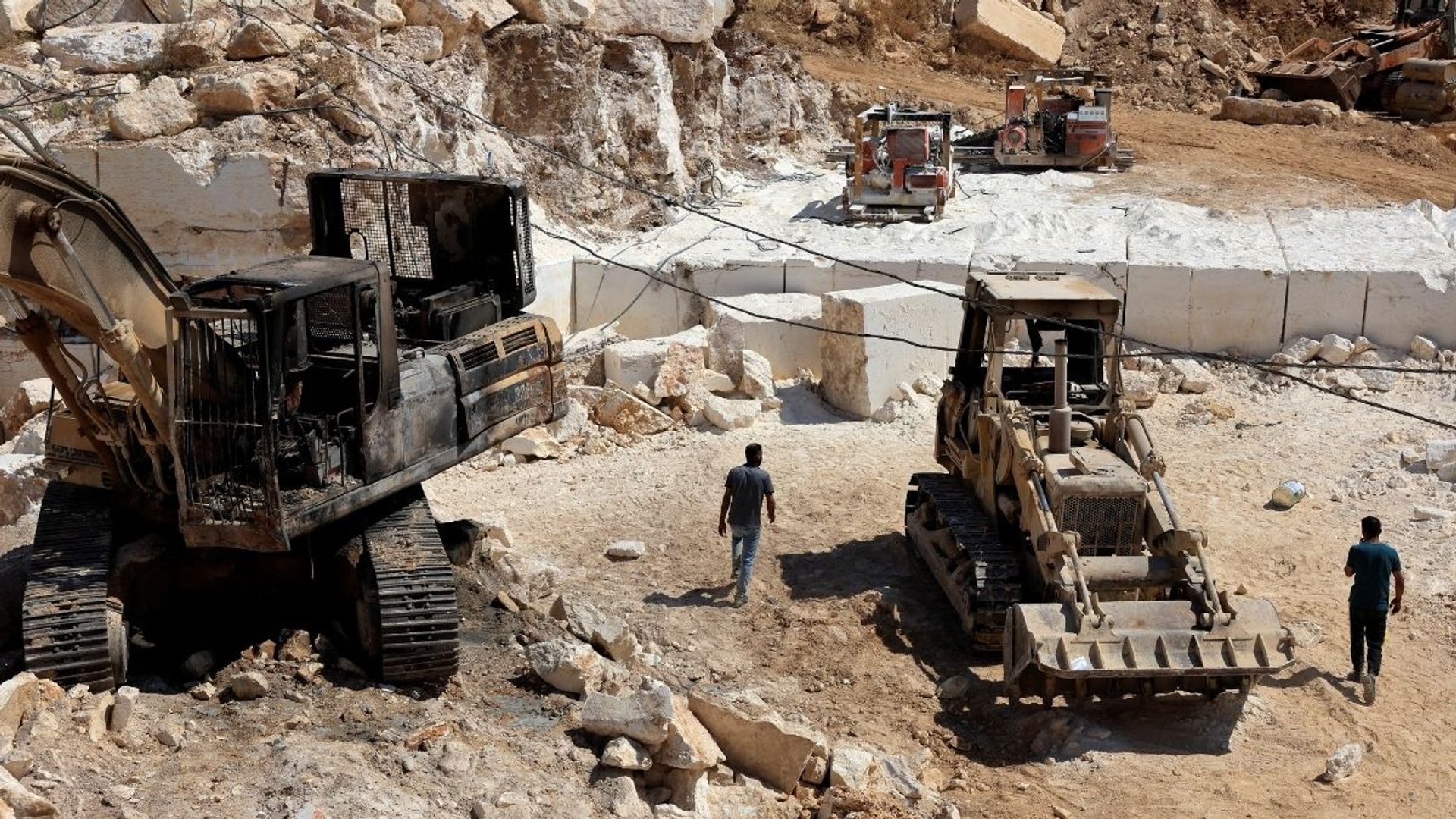
A mosque in the West Bank village of Qusra that residents say was burned on July 26, 2026, during an attack by Israeli settlers is also painted with Hebrew graffiti that reads "Revenge Benayahu," referring to an Israeli settler killed during clashes with Palestinians in the village of Tal [Leo Correa/AP Photo]

Attacks on Palestinian communities by Israeli settlers in the occupied West Bank, which are often supported by Israeli forces, have gathered pace over the past month since settlers from the Havat Gilad settlement attacked Palestinian homes on the eastern edge of Tal, southwest of Nablus.

On Sunday and Monday, the Israeli military raided multiple towns, villages and refugee camps across the occupied territory, and reports of arrests, home searches and settler attacks have continued to mount.

A 15-day siege on three families comprising 15 people, including two children, in the village of Qusra, which is ongoing, drew a rare public condemnation this month from the United States ambassador to Israel, Mike Huckabee, a staunch supporter of Israel and its West Bank settlements.

Israel is also pushing ahead with plans for the so-called E1 settlement expansion close to Jerusalem, which human rights organisations warn would essentially sever the West Bank in two, further hampering the freedom of movement of Palestinians on either side of it and endangering the possibility of a Palestinian state.

The West Bank attacks increasingly fit the definition of a pogrom, experts said. United Nations Special Rapporteur on the Occupied Palestinian Territories Francesca Albanese described these Israeli attacks against Palestinians as “pogroms against defenceless civilians”.

So why are experts calling settler attacks pogroms, and do they fit the formal definition of one?

A Palestinian man inspects the damage at a mosque that Palestinians say was damaged by Israeli settlers in Qusra near Nablus in the Israeli-occupied West Bank on July 26, 2026
A Palestinian man inspects the damage at a mosque that Palestinians say was damaged by Israeli settlers in Qusra near Nablus in the Israeli-occupied West Bank on July 26, 2026 [Mohamad Torokman/Reuters]

What’s happening in the West Bank?

Settlers, frequently supported by the Israeli military, have been attacking Palestinian homes, businesses and farmland across the West Bank. Such attacks have been commonplace for decades as settlements have expanded across the territory, but they have gathered pace after October 7, 2023, the day that Hamas-led fighters attacked southern Israel and Israel launched its genocidal war on Gaza. The attacks in the West Bank have become particularly violent and frequent over the past month.

Israeli settlements and outposts across the West Bank are illegal under international law.

According to the Palestinian Colonization and Wall Resistance Commission, Israeli settlers now number roughly 780,000 across the West Bank and occupied East Jerusalem. They live in 192 settlements and 400 outposts, making up 71 percent of Area C in the West Bank, which is under full Israeli civil and military control, and 91 percent of the Jordan Valley, the commission said.

Settlers often set up outposts without formal approval around Palestinian villages from which they launch a campaign of harassment, including killing and stealing livestock; cutting off water, electricity and supplies; and damaging property to drive local residents out. Once they establish a more formal settlement, they often receive retrospective approval from the Israeli government for the settlement.

In some places more recently, settlers have laid siege to individual family homes, such as in the Ras al-Ein area of Qusra, cutting off water and other supplies and damaging orchards or harming livestock.

This has set a new pattern: Settlers establish a tent adjacent to individual homes; Palestinians’ homes are besieged with essentials cut off; and Israeli soldiers arrive, not to remove the settlers but rather to remove the family – through arrests or for their “protection”.

In Qusra, the three besieged families were forced together into one of the family houses. Meanwhile, Israeli forces have occupied one of the other homes for use as a military post and thrown furniture and belongings from its windows, according to the Palestinian news agency Wafa.

The UN Office for the Coordination of Humanitarian Affairs (OCHA) recorded more than 1,330 settler-related attacks on Palestinians in the West Bank from January to late July, averaging six a day and marking the fastest pace since the agency began systematic tracking two decades ago.

Separately, a UN-appointed commission of inquiry has found that the Israeli authorities have repeatedly failed to prevent foreseeable settler attacks and, in some cases, have directly enabled them through army protection and the provision of weapons and funding.

OCHA has found that settler attacks, demolitions and evictions forcibly displaced more Palestinians in the first four months of this year than in the whole of 2025.

OCHA reported that 107 communities, comprising 5,900 Palestinians, had been completely or partially displaced as a result of settler violence since January 2023. It also found that the Israeli military has expelled another 32,000 Palestinians from their homes in the West Bank since January 2025, essentially emptying the Jenin, Tulkarem and Nur Shams refugee camps.

INTERACTIVE - Settler attacks by year across the occupied West Bank_July2026
(Al Jazeera)

What is the definition of a pogrom?

Major dictionaries in the US and United Kingdom vary to some degree on the definition.

The British Collins Dictionary identifies a pogrom as “organised, official violence against a group of people for racial or religious reasons” with a notable inclusion of official, or state-backed, violence.

The Oxford Advanced Learner’s Dictionary calls it “the organised killing of large numbers of people, because of their race or religion” without mention of state-sanctioned violence.

Merriam-Webster says it is “an organised massacre of helpless people” – “specifically: such as a massacre of Jews”.

Cambridge Dictionary says it is “an act of organised cruel behaviour or killing that is done to a large group of people because of their race or religion”.

The word is understood to have been introduced via Yiddish and was at first used to describe the wave of violent, organised mob attacks on Jewish communities in the Russian Empire after the assassination of Tsar Alexander II in 1881.

It is important to note that unlike legal terms, including “crimes against humanity” or “genocide”, “pogrom” has no established legal definition under international law.

28:38
  • Now Playing
    28:38
    Why is Israel building new illegal settlements? | Inside Story

    Why is Israel building new illegal settlements? | Inside Story

  • Next
    02:17
    Supreme Court allows Trump White House ballroom construction to continue

    Supreme Court allows Trump White House ballroom construction to continue


Can attacks in the West Bank be referred to as pogroms?

Besides UN Special Rapporteur Albanese, who has described Israeli attacks against Palestinians in the West Bank as “pogroms against defenceless civilians”, Israeli officials themselves have described such attacks as “pogroms”.

On February 26, 2023, hundreds of Israeli settlers attacked Huwara and surrounding Palestinian communities after two Israeli settlers were killed. A Palestinian was killed, hundreds were injured, and homes, businesses and cars were burned.

The Israeli military’s then-commander in the West Bank, Yehuda Fuchs, called the settler attacks a “pogrom”, and it was also recorded as such by the US Department of State.

The Israeli-Palestinian human rights group B’Tselem has also previously described Israeli actions in the West Bank as “pogroms”, especially after the February 2023 attacks. Later, it followed up with a report titled, The Pogroms Are Working – the Transfer Is Already Happening, which argued that settler attacks were contributing to the displacement of Palestinian communities.

“Settler violence is not a new phenomenon, but over the past three years, it has become more violent, more systematic and, most importantly, part of a state mechanism intended to ethnically cleanse large parts of the West Bank,” said Yair Dvir, the spokesperson for B’Tselem.

“The government funds and arms the settlers while the Israeli military stands by and, in many cases, actively participates in the attacks,” he told Al Jazeera. “So far, these militias have expelled 64 Palestinian communities and taken control of around 1 million dunams [100,000 hectares/247,100 acres] of land.”

Dvir also told Al Jazeera that the Israeli settlers are “now carrying out organised attacks on established Palestinian villages and towns in order to drive out their residents”.

“These are armed militias operating as an unofficial arm of the state with a shared goal: to ethnically cleanse as much of the West Bank as possible,” he added.

The Lemkin Institute for Genocide Prevention – which is named after Polish Jewish lawyer Raphael Lemkin, who is credited with coining the term genocide after the Holocaust – referred to settler attacks on al-Mughayyir, a Palestinian village in the Ramallah and el-Bireh governorate, as “pogroms”, reporting that hundreds of armed settlers attacked residents and burned buildings and cars while soldiers stood by this year. In 2025, the Israeli military uprooted thousands of Palestinian olive trees in al-Mughayyir.

Raheel Dhattiwala, an Indian scholar who focuses on collective violence, told Al Jazeera: “West Bank attacks fit the characteristics of a pogrom – systematic targeting of one civilian group by another with state approval. A few senior Israeli army officers have called it ‘pogroms’ in the past too, for example after attacks in Huwara.

“One might want to debate the use of the term ‘pogrom’, but it is accurate to call settler violence systematic attacks of occupiers with government approval on groups of occupied people.”


Live updates: Trump administration plans to announce new sanctions against Iran

Live updates: Trump administration plans to announce new sanctions against Iran

https://apnews.com/live/trump-economy-news-updates-08-24-2026 

Live updates: Trump administration plans to announce new sanctions against Iran

Follow the latest news on President Donald Trump and his administration | Aug. 24, 2026

Here’s what we’re following:

  • Treasury Secretary Scott Bessent is expected to unveil the Trump administration’s new financial campaign against Iran on Monday at 1 p.m. ET as the U.S. marks nearly six months of its war against the Islamic Republic. The administration is promising an “economic D-Day,” including secondary sanctions on countries that continue to do business with Iran. But Tehran has withstood nearly five decades of punishing American sanctions. Ahead of the announcement, Iran’s currency hit a record low, dropping to 2.02 million to the U.S. dollar as trading opened on currency markets.
  • President Donald Trump threatened on Monday to impose a 50% tariff on Canadian automobiles, car parts and steel starting next year as the trade rift with Ottawa continued to deepen. The announcement comes after trade talks between the otherwise reliable trading partners collapsed last week. Long-planned U.S. tariffs on various Canadian goods went into effect after the talks broke off, and Canada has vowed to retaliate.

32 min ago

Vance gives shoutout to ‘our very independent friend, Susan Collins’

Republican Sen. Susan Collins was not accompanying Vice President JD Vance during his manufacturing stop in Brewer, Maine on Monday.

But he still made sure that her presence was felt.

“Whenever I’m in Maine, I got to give Susan a little bit of crap,” Vance told the crowd as he began his remarks. “Because as you know, Susan is the most independent member of the United States Senate, and as the president of the United States Senate, she sometimes makes my job just a little bit harder.”

Vance said Collins, who is up for reelection in the Democratic-leaning state, has visited the vice president’s residence about a half-dozen times. In those meetings, Vance said, Collins is constantly pressing him about how certain policies affect her state.

Vance ended his brief aside on the senator by asking the crowd to give a shoutout to “our very independent friend, Susan Collins.”

45 min ago

The Washington Post must reinstate a Black writer fired for posting about Charlie Kirk

The One Franklin Square Building, home of The Washington Post newspaper, is seen June 21, 2024, in Washington. (AP Photo/Alex Brandon, File)

The One Franklin Square Building, home of The Washington Post newspaper, is seen June 21, 2024, in Washington. (AP Photo/Alex Brandon, File)

“After wrongfully firing me last year, an independent arbitrator has ordered the @washingtonpost to reinstate me immediately, with back pay,” Karen Attiah posted on Instagram on Monday, calling it “a victory for journalists everywhere.”

The ruling found insufficient cause to terminate Karen Attiah, the last Black full-time member of the Post’s opinion desk at the time.

Kirk, a top conservative podcaster and Trump ally, made provocative statements about race, gender and politics, including calling George Floyd, whose 2020 murder at the hands of Minneapolis police sparked protests, a “scumbag.”

Kirk’s killing on Sept. 10 elicited a torrent of comments, and some who spoke out against him faced sanctions or dismissal at work. One post Attiah made said “Refusing to tear my clothes and smear ashes on my face in performative mourning for a white man that espoused violence is … not the same as violence.”

A Post statement said it respects the arbitration process and declined further comment.

Read more

11:47 AM EDT

Deportees who refused to exit a US flight in Liberia are sent to Equatorial Guinea

Six people who were deported by the United States to Liberia last week resisted getting off the plane and instead were sent to Equatorial Guinea, a person on the plane and a lawyer in contact with them said Monday.

Under a series of often secret agreements, the Trump administration has deported thousands of people to two dozen countries that aren’t their own as it pushes ahead with its immigration crackdown, advocates say.

The four Cuban men, a Brazilian man and a Cameroonian woman are now being held with other migrants in worsening conditions in a hotel that lacks medical staff, said Meredyth Yoon, litigation director for Asian Americans Advancing Justice-Atlanta.

Equatorial Guinea’s all-powerful president, Teodoro Obiang Nguema Mbasogo, turned the hotel owned by his family into a prison for deported asylum seekers under an opaque $7.5 million deal with the Trump administration. His government did not immediately respond to a request seeking comment.

11:23 AM EDT

Reopening US border to Mexican cattle not expected to drop beef prices anytime soon

The U.S. plans to reopen a border crossing in Arizona to cattle from Mexico on Monday as part of a broader Trump administration effort to reduce record-high beef prices. Economists doubt grocery store shoppers will see any savings soon.

The U.S. Department of Agriculture said concerns about the New World screwworm’s spread lessened enough to allow the movement of cattle from Mexico.

Beef prices clearly are a concern for Trump, who announced Friday that he would allow up to 331,000 tons of ground beef imports, tariff-free, to be sold at below-market prices over the next 90 days.

But the phased reopening means it will take months for Mexican imports to regain their traditional 3% of the U.S. supply, according to Derrell Peel, a professor of agribusiness at Oklahoma State University.

10:55 AM EDT

Palestinian American’s home still besieged by Israeli settlers

A Palestinian American whose home in the occupied West Bank has been besieged by Israeli settlers for over a week has arrived there to help family members defend the property. (AP video by Ami Bentov, Majdi Muhammad, Imad Isseid and production by Jalal Bwaitel)

The homeowner whose residence has been besieged by Israeli settlers said Monday that he still can’t move freely in the West Bank village of Qusra.

Loui Ridi traveled from Ohio to the Israeli-occupied West Bank a week ago to join relatives defending his home from Israeli settlers.

Israel’s military declared the area a closed zone to restore order in Qusra, made a nearby home into a drone base and required Palestinians to coordinate all their movements from the homes that had been under siege.

Ridi said settlers keep returning to the area above his home, without consequences, while his family spends hours coordinating moves to get food, water and other supplies.

Israel’s police has not announced any arrests of settlers, despite condemnation from Israeli rights groups and foreign officials, including U.S. Ambassador to Israel Mike Huckabee, who called the siege terrorism.

10:41 AM EDT

China says more US economic pressure won’t end the Iran war

“They will only exacerbate tensions and escalate the situation, which is in no one’s interest,” Foreign Ministry spokesperson Lin Jian said in Beijing as the U.S. threatens sanctions on countries that trade with Iran.

China is calling on all parties to avoid measures “that could further intensify differences and conflicts and disrupt global economic development and financial stability,” he added.

China is considered the biggest buyer of Iranian oil, and was importing more than 80% of Iranian oil before the U.S.-Israeli war with Iran.

10:30 AM EDT

Iran-backed rebels hit oil tanker in Red Sea

A crude oil tanker was attacked on Monday in the Red Sea off Saudi Arabia, igniting a fire on its main deck, the British military said.

The United Kingdom Maritime Trade Organization said there were no reports of casualties.

The tanker issued a distress alert and the Egyptian Navy was reported to have responded to conduct a rescue operation, according to Ambrey, a UK-based maritime risk and response company.

The Yemen’s Iran-backed Houthi rebels’ military spokesman, Brig. Gen. Yahya Saree, said they targeted the tanker with a ballistic missile.

10:13 AM EDT

US and Iranian officials trade threats over new sanctions

“President Trump decimated Iran’s economy to a point where the rial has never been weaker and inflation has rarely been higher,” U.S. Treasury Secretary Scott Bessent wrote Sunday in an opinion piece in the Financial Times. “The regime’s final refuge now lies in the self-deception of fearful nations that still believe accommodating aggression can secure a durable peace.”

Already last week, the United Arab Emirates announced that it was suspending all trade with Iran. The UAE has long been one of Iran’s largest trading partners and its biggest source of imports.

But Iranian Foreign Ministry spokesperson Esmail Baghaei told reporters in Tehran on Monday that “any escalation of this situation will undoubtedly bring about consequences ... Our hands are not tied.”

10:10 AM EDT

Trump promotes economic pressure on Iran

Trump is commenting on Iran ahead of a Monday announcement about new and even stronger sanctions, including penalties against any countries that do business with the Islamic Republic.

Trump posted on social media that “IRAN IS COMPLETELY COLLAPSING!!!”

Still, economic pressure has not yet translated into political pressure to end the war. Iran retains a key strategic advantage: Its attacks and threats on ships in the Strait of Hormuz have nearly halted traffic in the vital waterway, damaging the world economy and heaping pressure on Trump ahead of congressional elections.

10:05 AM EDT

Trump issues new threats to Canada over trade

Trump threatened Monday to impose a 50% tariff on Canadian automobiles, car parts and steel starting next year as the trade rift with Ottawa deepens.

Trade talks between the otherwise allies and reliable trading partners collapsed last week. Long-planned U.S. tariffs on various Canadian goods went into effect after the talks broke off, and Canada has vowed to retaliate.

“Canada has been ripping off the United States of America for years,” Trump posted on social media Monday morning. Criticizing Canada’s “ridiculously high tariffs” on American farmers, Trump wrote: “Not sustainable, and NOT ANYMORE!”

10:00 AM EDT

Ontario’s premier says Canada should be ready to cut electricity, critical minerals to US

From left, President and CEO of Metrolinx Michael Lindsay, Ontario Premier Doug Ford, and Canada Prime Minister Mark Carney tour a construction site for the Ontario Line, in Toronto, Wednesday, Aug. 5, 2026. (Arlyn McAdorey/The Canadian Press via AP)

From left, President and CEO of Metrolinx Michael Lindsay, Ontario Premier Doug Ford, and Canada Prime Minister Mark Carney tour a construction site for the Ontario Line, in Toronto, Wednesday, Aug. 5, 2026. (Arlyn McAdorey/The Canadian Press via AP)

Doug Ford said Monday in an interview with The Associated Press that the late President Ronald Reagan would be “throwing up on” Trump over his trade policies. He also threatened to cut off electricity and critical minerals to the United States if the Canada-U.S. trade fight worsens.

“I’ll cut them off,” Ford said of critical minerals. “You won’t get a grain of sand out of Ontario.”

Ford said “everything is on the table” after Prime Minister Mark Carney walked away from trade talks late Friday.

Ford enraged Trump by using Reagan’s anti-tariff words in a television ad last year.

9:50 AM EDT breaking news updates

JUST IN: Trump threatens 50% tariff on Canadian automobiles, car parts and steel starting Jan. 1 as trade rift deepens

9:40 AM EDT breaking news updates

JUST IN: Ontario’s Doug Ford tells AP that Canada should be ready to cut electricity, critical minerals to US if trade fight worsens

9:39 AM EDT breaking news updates

JUST IN: Ontario Premier Doug Ford tells AP that Ronald Reagan would be ‘throwing up’ over Trump’s trade policies

9:38 AM EDT

US military kill two more boaters in Pacific, says they carried drugs

The U.S. Southern Command announced the strike in a social media post early Monday, raising the death toll from boat bombings in Latin American waters to more than 210 people in more than 60 strikes.

“We are committed to imposing total systemic friction on narco-terrorists — disrupting their operations, dismantling their leadership, and eliminating cartel terror across the region,” said Gen. Francis Donovan.

Defense Secretary Pete Hegseth said the U.S. is extending its offensive to targets on land across multiple Latin American countries. He said Colombia, Guatemala and Honduras had agreed to allow the U.S. to carry out joint military operations against criminal groups on their soil. Guatemala denied this. Ecuador launched similar joint missions in March.

9:24 AM EDT

US trade representative blames Canada for breakdown in trade talks

Jamieson Greer says Canada ultimately wanted more than Washington was willing to offer.

Greer said Monday during an interview on CNBC that Canada had maintained restrictions on U.S. wine, spirits, dairy and autos, prompting the U.S. to impose targeted tariffs covering about 5% of Canadian imports.

He said there was significant progress in negotiations, with the U.S. offering to halve steel and aluminum tariffs and substantially reduce auto tariffs.

He also dismissed concerns about a broader trade war.

9:19 AM EDT

He was arrested by Border Patrol as his son serves on the USS Lincoln

In this photo courtesy of Katherine Delgado shows her step-father Luis Manuel Aviles, left, and her brother Joshua Aviles stand outside their home in Oct. 2025, shortly before Joshua deployed on the USS Lincoln the following month in Key West, Fla. (Katherine Delgado via the AP)

In this photo courtesy of Katherine Delgado shows her step-father Luis Manuel Aviles, left, and her brother Joshua Aviles stand outside their home in Oct. 2025, shortly before Joshua deployed on the USS Lincoln the following month in Key West, Fla. (Katherine Delgado via the AP)

Joshua Aviles has worked 12-hour shifts for more than 250 days on the USS Lincoln while the aircraft carrier is deployed in the Middle East. One reason he enlisted was the “military parole-in-place” policy, which allows spouses, children and parents of active-duty service members and veterans to obtain legal immigration status while in the United States.

His father Luis Manuel Aviles, a handyman in Key West, Florida, who came from Nicaragua 19 years ago, was arrested anyway on Saturday as the Trump administration withdraws immigration protections for military families to pursue its mass deportation agenda. Dozens of parents and spouses of active-duty U.S. troops have been detained, and at least six have been deported, the AP found in the first accounting of such detentions.

“Having a family member in the military is not a free pass to violate our nation’s laws,” the Department of Homeland Security said Sunday.

Read more

9:00 AM EDT

Trump’s oil and gas stocks soar as pump prices rise, congressional report says

A motorist swipes a credit card at the pump to pay for gasoline at a gas station, Sunday, May 24, 2026, in Sheridan, Colo. (AP Photo/David Zalubowski)

A motorist swipes a credit card at the pump to pay for gasoline at a gas station, Sunday, May 24, 2026, in Sheridan, Colo. (AP Photo/David Zalubowski)

Trump saw the value of his oil and gas stocks rise by as much as $15 million, surging during the Iran war, according to an analysis from Democrats on the Joint Economic Committee in Congress.

The committee said the president owned between $12.5 million and $45.6 million in oil and gas company stocks in 2025, according to his most recent disclosures. The portfolio is now worth between $17.2 and $61.1 million, which the analysis attributed largely to “the surge in oil and gas stocks driven by Trump’s war in Iran.”

The Democrats found those stocks rose by an average of 39% from Jan. 2 through Aug. 17 and that two of the large stocks Trump holds in this sector — Valero and Marathon — have more than doubled since the start of 2026.

The committee Democrats noted that Americans have now spent an additional $71.5 billion on gas since the start of the war.

8:49 AM EDT

US Trade Representative: Fallout over Canada trade talks a ‘tempest in a teapot’

Jamieson Greer is downplaying the impact of the collapse of the trade talks with Canada.

“I think this is a little bit of a tempest in a teapot,” Greer told reporters at the White House on Monday morning. “The tariffs went in place over the weekend, which we’ve warned about for a long time. They only cover about 5% of Canadian trade, only .06 percent of U.S. overall consumption.”

Greer said he is preparing potential responses for Trump to Canada’s threat to retaliate dollar-for-dollar, but he declined to elaborate on the options.

8:05 AM EDT

Jared Kushner meets with Democratic leader Jeffries with House control at stake in November

House Minority Leader Hakeem Jeffries, D-N.Y., speaks during a news conference at the Capitol in Washington, Wednesday, Feb. 18, 2026. (AP Photo/J. Scott Applewhite)
FILE - Caucus Chair Rep. Hakeem Jeffries, D-N.Y., speaks during a news conference at the Capitol in Washington, July 19, 2022. Jeffries, the chair of the House Democratic caucus and a member of the Congressional Progressive Caucus, said “there’s a difference between the socialist machine and mainstream progressives.” (AP Photo/Mariam Zuhaib, File)
Jared Kushner waits to walk into the ring after the lightweight championship bout at UFC Freedom 250 on the South Lawn of the White House, June 15, 2026, in Washington. (AP Photo/Alex Brandon, File)

House Democratic leader Hakeem Jeffries and President Trump’s son-in-law and outside adviser Jared Kushner met privately recently in New York, a signal that the White House is seeking ways to work with Democrats if they wrest majority control from Republicans in the midterm elections.

The meeting, first reported Sunday by The New York Times, touched on issues ranging from housing, immigration to the high cost of living. People in the United States are struggling under inflationary prices that Democrats blame on Republicans, alongside Trump, for failing to get under control.

Kushner suggested that Jeffries, who is in line to become House speaker if Democrats regain power in November, meet with White House chief of staff Susie Wiles as a follow-up.

Jeffries, in a statement Sunday, did not mention the private conversation but said the Republican administration needed to drop the GOP’s “my-way-or-the-highway” approach that “has failed the American people.”

“To stop the madness, we have repeatedly made clear that an extremist approach will not work and will be met with forceful opposition,” the New York congressman said. “The question is whether Republicans will join us.”

Read more

7:58 AM EDT

Iran’s rial currency hits new record low as US prepares to announce more sanctions

Iran’s currency hit a record low Monday as Washington prepared to announce new sanctions it said would add further pressure on an economy already battered by previous sanctions and a U.S. naval blockade.

The rial dropped to 2.02 million to the U.S. dollar as trading opened on currency markets. Iran’s official Central Bank rate stood at around 1.5 million rial to the dollar, but the market rate is what most Iranians pay.

The currency had already been under pressure before the U.S. and Israel attacked Iran on Feb. 28, as Iran faced double-digit inflation and negative growth, but has repeatedly hit new lows as nearly six months of war have taken an even greater toll.

Iranians find daily staples increasingly unaffordable. Since the war began, rice is up some 60% and prices of beef are more than 150% higher. The International Monetary Fund forecasts that GDP will contract more than 5%.

Still, economic pressure has not yet translated into political pressure.

Read more

7:53 AM EDT

Canada promises to enact ‘dollar for dollar’ tariffs against the US

Prime Minister Mark Carney speaks about Canada's response to new U.S. tariffs during a news conference on Parliament Hill in Ottawa on Saturday, Aug. 22, 2026. (Patrick Doyle/The Canadian Press via AP)

Prime Minister Mark Carney speaks about Canada’s response to new U.S. tariffs during a news conference on Parliament Hill in Ottawa on Saturday, Aug. 22, 2026. (Patrick Doyle/The Canadian Press via AP)

Canada’s Carney has announced the tariffs against the U.S. would begin Sept. 8, noting they would target steel, dairy, appliances, agricultural equipment, pulp and paper and electronics.

The prime minister said Canada was willing to drop remaining retaliatory tariffs on steel, aluminum and autos if the U.S. substantially lowered its own, and to encourage provinces to restore U.S. alcohol sales. But eventually, he said Washington’s final demands went too far.

Carney accused Washington of using “economic integration as a weapon,” and that Canada had been “attacked” by the latest U.S. tariffs. He said his country had the reserves and resilience to respond.

Trump’s top trade negotiator, Jamieson Greer, pledged additional measures to respond to Canada’s retaliation — without immediately specifying what that would look like. In a Saturday interview with “Fox & Friends Weekend,” Greer also claimed the administration offered to cut tariffs on steel, autos and lumber, but Canada “didn’t want” the deal.

7:48 AM EDT

What to know about Trump’s 50% tariffs on Canadian goods

A Canadian flag flies on Parliament Hill in Ottawa on Saturday, Aug. 22, 2026. (Patrick Doyle/The Canadian Press via AP)

A Canadian flag flies on Parliament Hill in Ottawa on Saturday, Aug. 22, 2026. (Patrick Doyle/The Canadian Press via AP)

The new levies are expected to affect about 5% of Canada’s annual exports to the U.S., roughly $20 billion in goods ranging from hockey sticks to agricultural products.

Canada sends the vast majority of its goods exports to the U.S. (72% last year), and Trump administration says the new taxes will be levied on products ranging from hockey sticks to wine and cement. The list is long. According to documents published by the White House, other goods subject to the tax include honey, seeds and agricultural products — as well as select makeup, perfumes, clothing, jewelry, furniture, cameras, fabric and more.

The 50% levy also applies to some products that were previously protected under the US-Mexico-Canada Agreement, a trade pact from Trump’s first term. That marks a shift from past levies — and further underlines questions around the future of the USMCA overall.

Read more

7:40 AM EDT

Carney warned about economic coercion. Now Trump is testing the Canadian prime minister

Mark Carney drew international attention as Canada’s prime minister by warning that middle powers must resist economic coercion by more powerful countries. Now President Donald Trump is putting that warning to the test with sweeping new tariffs that could show how much economic pain Canada can absorb.

Tensions escalated late Friday when Canada walked away from negotiations after Carney concluded the United States was demanding too much in exchange for tariff relief. The U.S. imposed 50% duties Saturday on about $20 billion worth of Canadian goods, and Carney announced dollar-for-dollar retaliation beginning Sept. 8.

“We’re going to hit back,” Carney said.

Carney is doing what many other American allies have so far avoided: risking economic pain rather than yielding to tariff pressure.

For Carney, the showdown is the clearest test yet of his argument that middle powers must stand up to economic pressure from great powers such as the United States and China, even when it comes at a cost. Canada’s response could show how countries navigate a world in which long-standing alliances offer less protection and economic ties themselves become sources of leverage.

Read more