Middle East crisis live: Iran reopens strait of Hormuz but US blockade remains
https://www.theguardian.com/world/live/2026/apr/17/middle-east-crisis-live-news-israel-lebanon-ceasefire-iran-war-us-latest-updates
Iran reopens the strait of Hormuz during ceasefire negotiations, a move the US president praised on social media
Fri 17 Apr 2026 13.18 EDT
Today so far
-
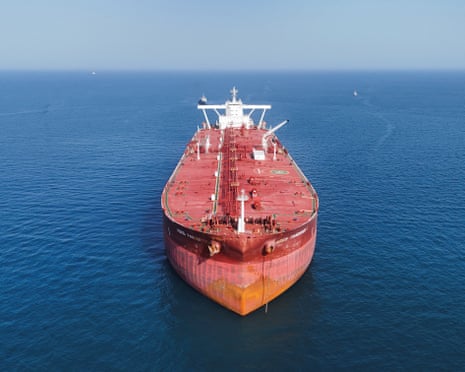
Iran’s foreign minister annunched that passage for all commercial vessels though the strait of Hormuz strait is “completely open for the remaining period of ceasefire”. Donald Trump took to Truth Social to celebrate with a series of rapid-fire posts, but details of the reopening remain unclear – Iran’s announcement came with the caveat that ships would have to take a specified route. Arsenio Dominguez, the secretary-general of the UN’s International Maritime Organisation, said his agency is “currently verifying the recent announcement”.
-
Trump was clear, however, that even with the reopening of the strait, the US naval blockade of Iran will remain in place until the conflict is fully concluded. He also said that Iran has agreed to never close the strait again, but that has not been verified.
-
The oil price tumbled following Iran’s announcement about the reopening of the strait of Hormuz. Crude oil has plunged on hopes that energy supplies could resume after weeks of disruption. Brent crude, the benchmark for oil traded globally, has plunged below $90 a barrel, a 10% fall.
-
Trump also posted that Israel is “PROHIBITED” by the US from bombing Lebanon and that “Israel will not be bombing Lebanon any longer”. However, minutes before that post, Israeli prime minister Benjamin Netanyahu uploaded a video address declaring that Israel was not done yet with Hezbollah. Netanyahu said Israel had agreed to a temporary ceasefire in Lebanon at the request of Trump and that it has given Israel the opportunity to promote a combined political and military solution with the Lebanese government – which he described as one hand holding a weapon while the other is extended in peace. Earlier Friday, Israel’s defence minister, Israel Katz, said the Israeli military “holds and will continue to hold” all positions it has “cleared and captured” in Lebanon.
-
The Lebanese army has also reported “a number of violations” of the ceasefire this morning, as thousands of displaced families have begun making their way home to southern Lebanon. The current bout of fighting, which began on 2 March, has killed more than 2,100 people in Lebanon and displaced more than one million.
Trump also said in an interview with Reuters on Friday that Iran’s enriched uranium will be brought to the US. Trump said the US and Iran would work together to recover the uranium, but denied reports that the US was considering a $20bn cash for uranium deal. “No money is changing hands,” Trump said.
- Today so far
- Trump: Iran's enriched uranium will be brought to the US
- Analysis: Despite Trump's social media celebration, Hormuz status remains unclear
- Trump says Iran has agreed to never close the strait of Hormuz again
- Hormuz deal not tied to Lebanon, Trump says
- Trump claims Nato offered to help with strait of Hormuz
- Netanyahu: We are not done yet with Hezbollah
- Israel 'PROHIBITED' by the US from bombing Lebanon, Trump says
- Trump says US naval blockade of Iranian ports will remain until deal is reached
- Oil falls 10% after the reopening of strait of Hormuz
- Trump reacts to announcement of strait of Hormuz reopening
- Iran foreign minister says passage though Hormuz strait is open during ceasefire
- How Pakistan’s army chief became an unlikely peacemaker in the Iran war
- Lebanon president says ceasefire is 'gateway' to negotiations as he calls for withdrawal of Israeli troops
- Israel defence minister says army 'holds all territories' it occupies in Lebanon
- Summary of developments so far
- Starmer arrives in Paris for summit on reopening strait of Hormuz
- Syria-Israel talks 'have not reached a dead end', says Syrian president
- Hezbollah warns it will keep 'finger on the trigger' if Israel violates ceasefire
- Macron says Lebanon-Israel ceasefire 'may already be undermined'
- The day so far
- Stocks gaining and oil under $100 amid peace hopes
- Starmer to co-chair global summit on reopening strait of Hormuz
- Welcome summary
Donald Trump said Iran has agreed to suspend its nuclear program indefinitely, and will not receive any frozen funds from the US, according to Bloomberg News.
The president told the outlet in a phone interview on Friday that a deal to end the war, which the US and Israel began with Iran in late February, is mostly complete. Talks over a lasting agreement will “probably” be held this weekend, he added.
Today so far
-
Iran’s foreign minister annunched that passage for all commercial vessels though the strait of Hormuz strait is “completely open for the remaining period of ceasefire”. Donald Trump took to Truth Social to celebrate with a series of rapid-fire posts, but details of the reopening remain unclear – Iran’s announcement came with the caveat that ships would have to take a specified route. Arsenio Dominguez, the secretary-general of the UN’s International Maritime Organisation, said his agency is “currently verifying the recent announcement”.
-
Trump was clear, however, that even with the reopening of the strait, the US naval blockade of Iran will remain in place until the conflict is fully concluded. He also said that Iran has agreed to never close the strait again, but that has not been verified.
-
The oil price tumbled following Iran’s announcement about the reopening of the strait of Hormuz. Crude oil has plunged on hopes that energy supplies could resume after weeks of disruption. Brent crude, the benchmark for oil traded globally, has plunged below $90 a barrel, a 10% fall.
-
Trump also posted that Israel is “PROHIBITED” by the US from bombing Lebanon and that “Israel will not be bombing Lebanon any longer”. However, minutes before that post, Israeli prime minister Benjamin Netanyahu uploaded a video address declaring that Israel was not done yet with Hezbollah. Netanyahu said Israel had agreed to a temporary ceasefire in Lebanon at the request of Trump and that it has given Israel the opportunity to promote a combined political and military solution with the Lebanese government – which he described as one hand holding a weapon while the other is extended in peace. Earlier Friday, Israel’s defence minister, Israel Katz, said the Israeli military “holds and will continue to hold” all positions it has “cleared and captured” in Lebanon.
-
The Lebanese army has also reported “a number of violations” of the ceasefire this morning, as thousands of displaced families have begun making their way home to southern Lebanon. The current bout of fighting, which began on 2 March, has killed more than 2,100 people in Lebanon and displaced more than one million.
-
Trump also said in an interview with Reuters on Friday that Iran’s enriched uranium will be brought to the US. Trump said the US and Iran would work together to recover the uranium, but denied reports that the US was considering a $20bn cash for uranium deal. “No money is changing hands,” Trump said.
Trump: Iran's enriched uranium will be brought to the US
Donald Trump told Reuters in an interview on Friday that Washington will work with Tehran to recover Iran’s enriched uranium to bring back to the US.
“We’re going to get it together. We’re going to go in with Iran, at a nice leisurely pace, and go down and start excavating with big machinery... We’ll bring it back to the United States,” Trump said.
He referred to “nuclear dust” – a reference to what he believes remains after the US and Israel bombed Iran’s nuclear installations last year – and said it would be retrieved “very soon”.
Trump has repeatedly said that a primary reason for the war was to prevent Iran from getting a nuclear weapon. Iran has 440.9kg of uranium enriched to 60% uranium-235, a level that can be quickly enriched to weapons-grade – 90%, but has long maintained that its enrichment of uranium was strictly for peaceful civilian use.
When asked by Reuters about a report that the US was considering a $20bn cash for uranium deal, Trump said: “It’s totally false. No money is changing hands.”
Analysis: Despite Trump's social media celebration, Hormuz status remains unclear

Rarely has the timeworn cliche “the fog of war” found a more fitting application than the current state of play in the strait of Hormuz.
On Friday, Iran declared the strategically vital waterway, through
which roughly one-fifth of the world’s energy supplies pass, “completely
open” for the remainder of the current ceasefire with the US and Israel, having used its closure as a major part of the response to the military attacks on it.
The announcement, from the Iranian foreign minister, Abbas Araghchi, initially appeared to signal a major breakthrough and was treated as such by Donald Trump and global oil markets.
The US president, who once demanded Iran’s “unconditional surrender,”
issued a gushing “thank you” on his Truth Social network, while the
price of Brent crude fell 10% to under $90 a barrel, promising welcome
relief to motorists who have seen petrol prices soar at the pumps.
Yet - as often with an Iranian regime known for its opacity and tortuous negotiating tactics - all was not as it seemed.
Araghchi’s announcement was qualified by the caveat that ships would have to take a specified route described by shipping analysts as a shallow route near the island of Larak and the Iranian coastline.
With its experience of the “tanker wars’ that characterised Iran’s
eight-year war with Iraq in the 1980s, Tehran was clearly granting
something less than the freedom of navigation that existed in the strait
before the current conflict started on 28 February.
Further confusion was added by a threat from an unnamed Iranian
official who, as reported by the semi-official news agency Fars,
threatened to re-close the waterway if the US continued its naval
blockade of ships entering and leaving the strait.
For its part, the US navy issued an advisory note to seafarers on the dangers posed by Iranian mines that neither inspired confidence nor lifted the veil of obfuscation.
“STATUS
OF MINE THREAT IN PARTS OF THE STRAIT OF HORMUZ NOT FULLY UNDERSTOOD
AND AVOIDANCE OF AREA SHOULD BE CONSIDERED,” it read.
If peace is at hand, negotiators clearly have to navigate a minefield
of their own before it can be fully grasped.
Thomas Kazakos, the secretary-general for the International Chamber of Shipping said in a statement to the Guardian the announcements today about the reopening of the strait of Hormuz offer “a cautious measure of reassurance to the global maritime community”.
He continued:
While this announcement is a positive step there is still much uncertainty around what it means in practice. Regardless it is essential that it marks the beginning of a broader and more durable return, beyond the current ceasefire, to freedom of navigation in one of the world’s most critical maritime corridors.
An orderly and sustained return to normal transit through the Strait will be essential. This will require close coordination between the International Maritime Organization, regional states, naval authorities, and the shipping industry to ensure that vessels can transit safely.
Above all, it is imperative that full freedom of navigation is respected by all parties in accordance with international law.
When asked about a Truth Social post made by Donald Trump in which he claimed that Nato offered to help the US with the strait of Hormuz, a Nato official responded:
NATO observed today’s meeting on freedom of navigation in the Strait of Hormuz and is closely monitoring the military planning being carried out.
In the post, Trump said Nato was “useless when needed” and had only offered to help after the strait was reopened, describing the military alliance as a “paper tiger”.
Arsenio Dominguez, the secretary-general of the UN’s International Maritime Organisation, said his agency is “currently verifying the recent announcement related to the reopening of the Strait of Hormuz, in terms of its compliance with freedom of navigation for all merchant vessels and secure passage using the IMO established traffic separation scheme”.
Abbas Araghchi, Iran’s foreign minister, had posted on X earlier that “passage for all commercial vessels through strait of Hormuz is declared completely open for the remaining period of ceasefire”.
Moments later, Donald Trump posted on Truth Social that the strait was “COMPLETELY OPEN AND READY FOR BUSINESS AND FULL PASSAGE” but that the US naval blockade of Iran would remain in place.
Trump says Iran has agreed to never close the strait of Hormuz again
In his tenth Truth Social post in an hour, Donald Trump said that Iran “has agreed to never close the Strait of Hormuz again”.
“It will no longer be used as a weapon against the World!” Trump said.
“A GREAT AND BRILLIANT DAY FOR THE WORLD!” Trump wrote in a post moments before.
Hormuz deal not tied to Lebanon, Trump says
Donald Trump reminded his followers, shortly after posting that Iran “has removed, or is removing” all sea mines, that “this deal is not tied, in any way, to Lebanon”.
“This deal is not tied, in any way, to Lebanon, but we will, MAKE LEBANON GREAT AGAIN!” Trump posted.
Trump claims Nato offered to help with strait of Hormuz
Donald Trump said on Friday that Nato has offered to help the US with the strait of Hormuz.
Nato did not immediately respond to a request for comment.
“Now that the Hormuz Strait situation is over, I received a call from NATO asking if we would need some help. I TOLD THEM TO STAY AWAY, UNLESS THEY JUST WANT TO LOAD UP THEIR SHIPS WITH OIL. They were useless when needed, a Paper Tiger!” Trump posted on Truth Social.
This was the US president’s sixth post in two hours. During this time, Trump celebrated Iran’s announcement that the strait of Hormuz, declared the US naval blockade was still in place and proclaimed that the Israel was now prohibited by the US from bombing Lebanon.
The president has since gone on to post five more times in 18 minutes.
Netanyahu: We are not done yet with Hezbollah
Minutes before Donald Trump posted on Truth Social that the US was prohibiting Israel from bombing Lebanon, Israeli prime minister Benjamin Netanyahu uploaded a video address to his official YouTube page declaring that Israel was not done yet with Hezbollah.
In the address, Netanyahu said Israel had agreed to a temporary ceasefire in Lebanon at the request of Trump, which has given Israel the opportunity to promote a combined political and military solution with the Lebanese government.
Netanyahu described it as one hand holding a weapon while the other is extended in peace.
Israel 'PROHIBITED' by the US from bombing Lebanon, Trump says
A half hour after posting that the US naval blockade on Iran was still in effect, Donald Trump posted that “Israel will not be bombing Lebanon any longer”.
“They are PROHIBITED from doing so by the U.S.A. Enough is enough!!! Thank you!” the US president wrote.
Iran’s state tv has reported that ships seeking passage through the strait of Hormuz can only go through a determined route and still need permission from Iran’s Islamic Revolutionary Guard Corps (IRGC) navy, according to Reuters.
Only commercial vessels, and not military ships, can pass the waterway, Iran’s state TV reported, citing a senior military official.
Trump says US naval blockade of Iranian ports will remain until deal is reached
Donald Trump has issued a further comment on the strait of Hormuz, saying it was “completely open and ready for business”.
In another all caps post on Truth Social, he said the US naval blockade of Iranian ports “will remain in full force” until a deal is reached with Iran. He added that the process should move quickly, given that “most of the points are already negotiated”.
He wrote:
THE STRAIT OF HORMUZ IS COMPLETELY OPEN AND READY FOR BUSINESS AND FULL PASSAGE, BUT THE NAVAL BLOCKADE WILL REMAIN IN FULL FORCE AND EFFECT AS IT PERTAINS TO IRAN, ONLY, UNTIL SUCH TIME AS OUR TRANSACTION WITH IRAN IS 100% COMPLETE. THIS PROCESS SHOULD GO VERY QUICKLY IN THAT MOST OF THE POINTS ARE ALREADY NEGOTIATED. THANK YOU FOR YOUR ATTENTION TO THIS MATTER!
Oil falls 10% after the reopening of strait of Hormuz
The oil price is tumbling, after Iran announced that the strait of Hormuz is now open.
Crude oil has plunged on hopes that energy supplies could resume after weeks of disruption.
Brent crude, the benchmark for oil traded globally, has plunged below $90 a barrel, a 10% fall.
For the latest updates on the economic impact of the war in the Middle East and other financial news, you can follow our business live blog here:
Trump reacts to announcement of strait of Hormuz reopening
Following Iran’s announcement that the strait of Hormuz is open, Donald Trump has issued his response in an all caps post on his Truth Social app.
He wrote:
IRAN HAS JUST ANNOUNCED THAT THE STRAIT OF IRAN IS FULLY OPEN AND READY FOR FULL PASSAGE. THANK YOU!
Iran foreign minister says passage though Hormuz strait is open during ceasefire
Abbas Araghchi, Iran’s foreign minister, posted on X on Friday that “passage for all commercial vessels through strait of Hormuz is declared completely open for the remaining period of ceasefire”.
The passage through the strait will be on the coordinated route announced by the Ports and Maritime Organisation of Iran, Araghchi said.
Middle East crisis live
More from News




Most viewed

No comments:
Post a Comment