Tuesday, July 21, 2026

Trump imposes 50% tariffs on Canadian goods from alcohol to hockey sticks over ‘continued discrimination’

Trump imposes 50% tariffs on Canadian goods from alcohol to hockey sticks over ‘continued discrimination’

https://www.independent.co.uk/news/world/americas/us-politics/trump-tariffs-canada-trade-carney-b3018660.html 

Trump imposes 50% tariffs on Canadian goods from alcohol to hockey sticks over ‘continued discrimination’

Rift between the two countries grows after Trump confronted Mark Carney at Sunday’s FIFA World Cup Final over wildfire smoke drifting south into U.S. cities

Donald Trump slaps 50 percent tariff on Canadian wine, hockey sticks and cement in 30 days

President Donald Trump has imposed 50 percent tariffs on a range of Canadian imports from alcohol to hockey sticks, accusing the country of “continued discrimination” against American products.

Trump’s latest move has led to fears of a deepening trade war between the two historically close allies, as the relationship between the president and Canada’s prime minister Mark Carney continues to deteriorate.

It comes after Trump confronted Carney at Sunday’s FIFA World Cup Final over the smoke from Canadian wildfires that has swept down into northeastern U.S. cities, including New York and Detroit, over the last week, blanketing them in a thick haze of air pollution.

The president accused the PM of not doing enough to anticipate the disaster in terms of forest management and told him: “Our air’s being poisoned.”

An administration official, speaking anonymously to reporters, justified the tariffs by stating that Canada, alongside China, had been among the few nations to retaliate against previous levies imposed by Trump.

The new levies were enacted through three proclamations under Section 338 of the 1930 Trade Act. The clause in question has drawn criticism, with several Democratic lawmakers last year advocating for its repeal due to concerns that Trump could wield it to destabilize the national economy.

The new 50 percent tariffs will exclude energy products, potash, fish and critical minerals, but will include goods that had previously been protected from import taxes by the United States-Mexico-Canada Agreement, or USMCA. That 2020 trade pact was not renewed by the U.S., triggering a new set of negotiations that could run until 2036.

The White House said in a fact sheet that the tariffs would go into effect in 30 days, meaning there is time for negotiations. Trump has not always followed through on the tax hikes on imports he has announced.
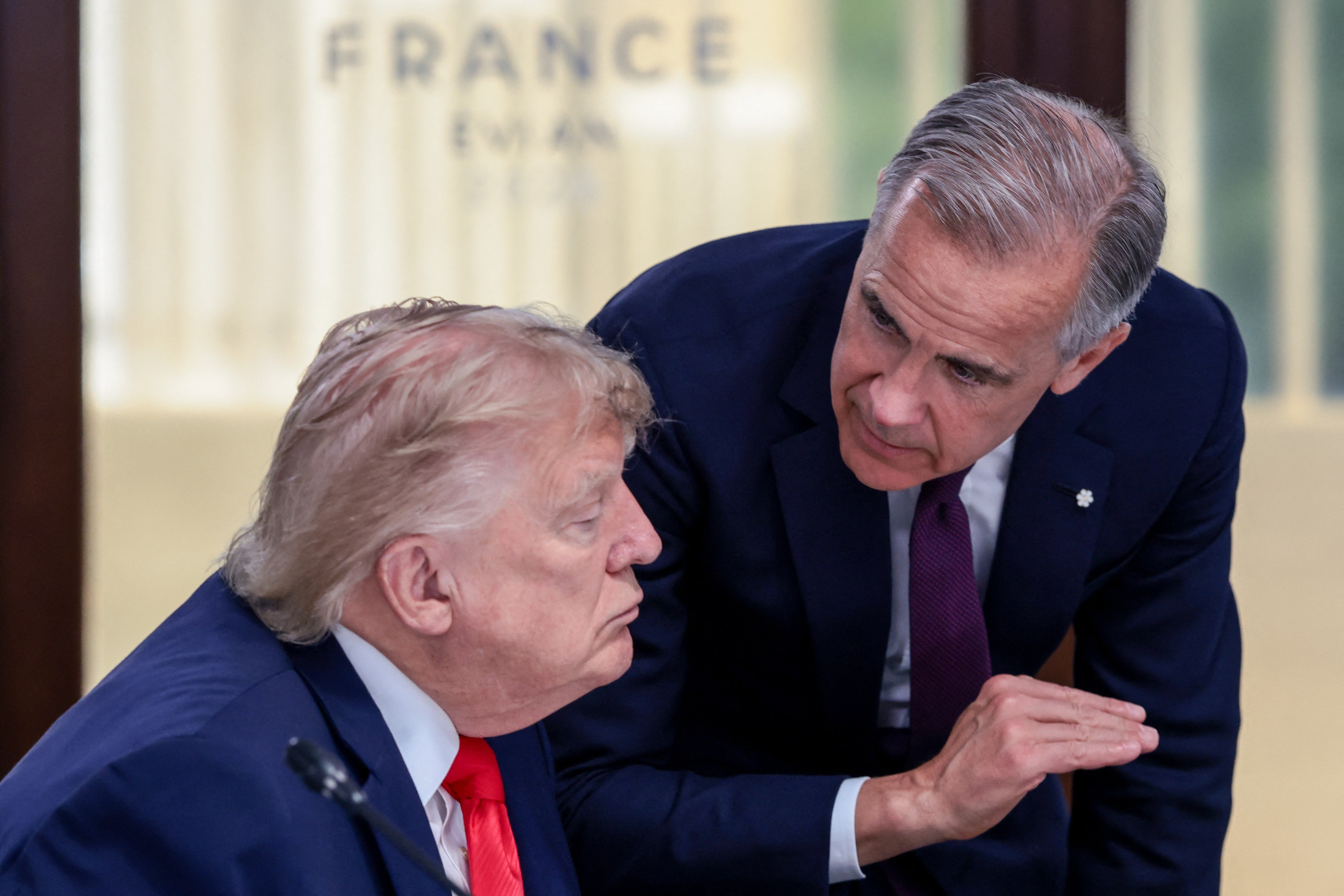
President Donald Trump has imposed 50 percent tariffs on Canada after taking Prime Minister Mark Carney to task over wildfire smoke drifting south into U.S. cities
President Donald Trump has imposed 50 percent tariffs on Canada after taking Prime Minister Mark Carney to task over wildfire smoke drifting south into U.S. cities (AFP/Getty)

Responding in a statement, Carney said his latest move came in “direct violation” of USMCA but that his country had made “detailed and comprehensive proposals to resolve this dispute” and stood ready to “intensify” its discussions with the U.S. in the weeks ahead.

Canada faces the risk of a broader trade war

Despite the PM’s appeal for calm, the tariffs could yet escalate into a wider trade war.

Ontario Premier Doug Ford has already pointed to a possible showdown. “If these tariffs proceed, Canada should respond tariff for tariff, dollar for dollar,” he posted on X.

Candace Laing, CEO of the Canadian Chamber of Commerce, said the Trump administration’s moves were “regrettable” but the two countries needed to use the 30-day window “to make meaningful progress in advancing formal talks.”

The tariffs also pose a threat to other U.S. trading partners, not just Canada, and inject “massive uncertainty” into the global economy, said Scott Lincicome, vice president of general economics at the Cato Institute, a libertarian think tank.

“We crossed the Rubicon,” he said. “The invocation of 338 is the nuclear option for Trump tariffs.”

Tariffs are also a political challenge for Trump

The new measures carry serious political and economic risks for Trump ahead of the November midterm elections for control of Congress.

His “Liberation Day” tariffs in April 2025 provoked a financial market meltdown, forcing him to walk back the rates for a period of negotiation.

The Supreme Court then ruled this February that Trump had lacked the legal authority to impose the tariffs by declaring an economic emergency, causing the administration to find alternative ways to raise import duties.

Canada was on 35 percent tariffs at that time but dropped back down to the standard 10 percent following the ruling.
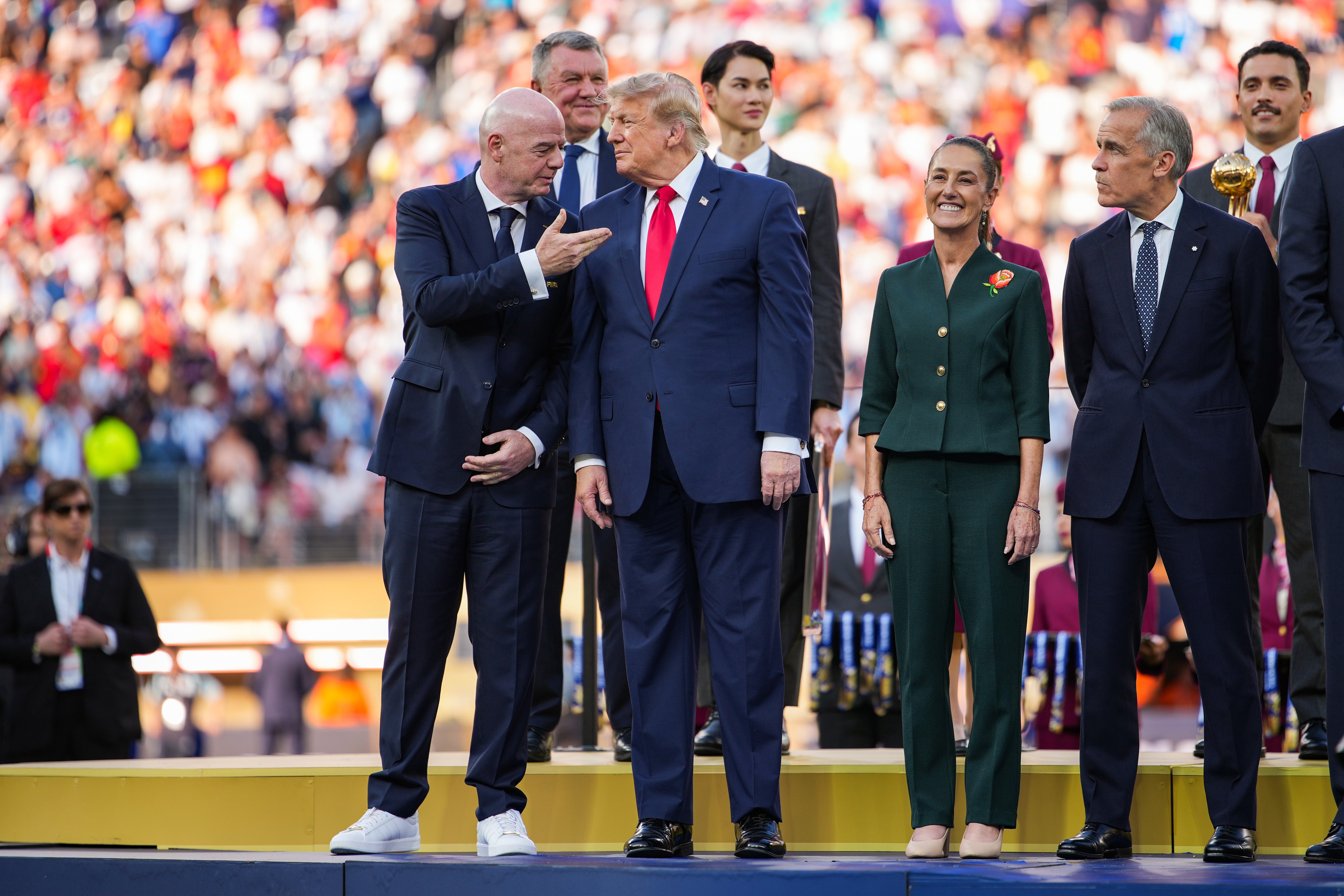
Trump and Carney at the World Cup final in New Jersey, where the two men joined Mexican President Claudia Sheinbaum in representing the three host nations
Trump and Carney at the World Cup final in New Jersey, where the two men joined Mexican President Claudia Sheinbaum in representing the three host nations (Getty)

The president maintains that the costs created by his tariffs strategy will prompt manufacturing to relocate to the U.S., although there is little evidence of that in the economic data.

The latest aggression could worsen Trump’s weak ratings on the economy. He promised voters when running for the presidency that he would bring prices down and deliver a new “golden age,” but the annual inflation rate has risen since he became president, with the tariffs and war in Iran are pushing up oil prices.

Trump has repeatedly targeted Canada on trade issues

Trump claims in the proclamations that Canada discriminates against American autos, alcohol and cheese relative to other nations, but his argument rests in large part on retaliatory actions taken by Canada after the U.S. president imposed tariffs on Canada under the pretext that it should do more to stop fentanyl smuggling.

Trump noted in his autos proclamation that Canada maintained, starting in April 2025, a 25 percent tariff on the imports of U.S. motor vehicles that did not qualify for preferential treatment under the USMCA.

The White House said that, regarding alcohol, all but two Canadian provinces and territories halted the purchase and retailing of American alcoholic beverages beginning last year, which was also a response to Trump's tariffs and taunts of making Canada the 51st state.

But Trump has long objected to Canada’s treatment of U.S. cheese, saying in his proclamation that Canada discriminates against the U.S. compared to Europe on dairy products.

Trump and Carney have had a frosty relationship, with Carney, a former central banker, who pledged to stand up for Canada during his election campaign last year.

At the World Economic Forum in Davos, Switzerland, in January, Carney called out Trump – without naming him – by saying that the “most powerful” countries are using the economy to coerce less powerful nations.

Trump responded at the time by saying: “Canada lives because of the United States.”


The Supreme Court Has Gone Off the Rails. There’s Actually a Fix. We Just Have to Go Through With It.

The Supreme Court Has Gone Off the Rails. There’s Actually a Fix. We Just Have to Go Through With It.

https://slate.com/news-and-politics/2026/07/monarchy-supreme-court-popular-constitution-by-the-people.html 

The Supreme Court Has Gone Off the Rails. There’s Actually a Fix. We Just Have to Go Through With It.

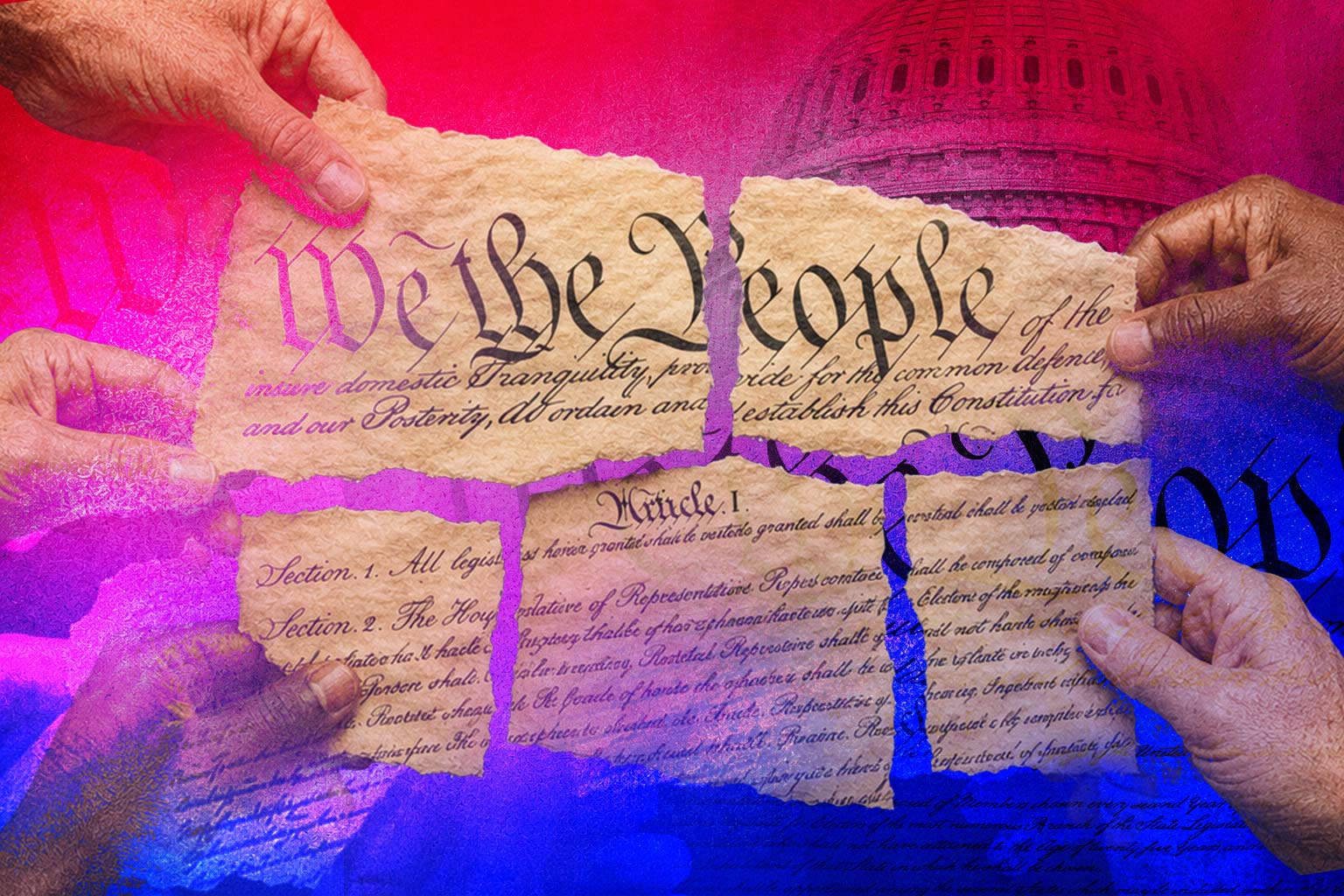
A number of people holding together torn-up pieces of the Constitution.
Illustration by Slate. Photos by Getty Images Plus.

This is part of Amicus and Slate’s “By the People” series, which explores how the American people can reclaim the Constitution—and the law—from this monarchical Supreme Court.

It has often occurred to me that if you were a visiting alien—or even, say, a visiting Norwegian—it might strike you as profoundly odd that many, if not most, Americans now mark the close of the Supreme Court term in the last two weeks of June by feeling abject horror that an unelected, life-tenured juristocracy has yet again made it harder to be a free, equal, and independent American. And then that same country immediately turns around on July Fourth and fetes itself as the best, freest democracy in the world.

After Citizens United came down in 2010, Americans were stunned that the high court had opened the spigot to pour big money into elections under the guise of free speech. They talked about reforming the court. Nothing happened. After Shelby County in 2013, Americans were shocked that the court had eviscerated the (recently reauthorized) Voting Rights Act on a dubious claim of state “dignity,” and vowed to do something about the overturning of popular statutes. They talked about court reform. Nothing happened. After Heller rewrote the entire scope of the Second Amendment from historical vapors; after Mitch McConnell stole a seat to lock in a conservative majority; after Clarence Thomas accepted endless bottomless glittering gifts from donors with interests in matters before the court, we had loud conversations about what might be done. Some sort of court reform, surely, it was discussed. Nothing happened. After Dobbs overturned 50 years of precedent and ended women’s legal right to abortion, there sure was talk of court reform. At least, people said, overturning Roe would have some consequences for this court, and the Republican Party that made it so. Nothing happened. After the murder of the Chevron doctrine, after the “major questions doctrine” was invented to block President Joe Biden’s agenda; after the Jan. 6 immunity decision and the demise of affirmative action; after the ethics violations, the leaks, and the shadow docket, Americans again came together and somehow agreed again that something should be done. And then Americans did nothing.

The Supreme Court as currently constituted is the United States’ abusive boyfriend, constantly asserting the power to control every aspect of our lives while ignoring the actual rules governing its own conduct. If this court were your partner, making it forever more difficult to express your own preferences as it persistently intoned that it’s you that was the problem, you would pack a go bag and find a motel room.

Listen to the first episode of the Amicus podcast miniseries By the People here:

And yet we stay. We wait for more. And with every term, that same Roberts Six ensures that the legislative branches have less power to make law, that lower courts have less authority to review presidential actions, and that all of the people have less access to the ballot box. The ratchet works in one direction: away from representative constitutional democracy.

For years, we have ended the Supreme Court term with our Slate readers and Amicus listeners imploring us: “But what can we do?” In this year’s special end-of-term series, we endeavor to answer that question. Our reply builds on the ideas we have tried to capture in our prior series on how to better cover the court, as well as how to think about the methodology of originalism: What can’t you do? You are not a spectator to American democracy, and you are not a passive recipient of American constitutional meaning.

To the extent that this whole machinery of law and justice and representative democracy was constructed for anyone, it was constructed for you. To be sure, that does not mean that you and your feelings get to decide the nature of birthright citizenship or the scope of equal protection. That is nihilism. It does not mean you get to do whatever you feel like and say it’s legal. That’s Donald Trump. What it does mean is that when the court persistently and methodologically undermines the established answers to material questions about our rights, it is not your obligation to nod and say thanks. It is, in fact, your democratic, even civic duty to find a way into the constitutional and statutory and structural conversation about what the Constitution means. That is the way out of the discourse doom loop and into the solution.

This series was born of decades of watching a Supreme Court that answers to nobody expand its own power. It is born of an American public that in 2026 lives with less liberty and justice for all than the generation that came before. It is born of watching a nation of immigrants judicially reverse-engineered into a nation of xenophobes. It is born of watching the project to expand the franchise to more voters morph into the means of throttling it. It is born of acknowledging an American public that overwhelmingly hates mass school shootings and big money in politics, and women bleeding out from miscarriages, and roving ICE raids, but must remain somehow forever trapped in these very horrors because we share the inexorable sense that if the Supreme Court does it, it’s not illegal.

This series is a gesture and a hope: What would it look like if the court worked for you? What would it feel like if the court took seriously the idea that the American public can foment and lobby and birth constitutional meaning in their own home kitchens? What would it require for an American public to simply reject the reflexive grant of authority to a court slowly entrenching the creeping authoritarianism of blanket immunity for a president, the shrinking of the franchise, or the rampant lawlessness of terminating the regulatory state? If you could imagine—for a second—that the justices weren’t the last word on what is lawful, what wouldn’t you do to make it so?

In this podcast series and the accompanying collection of essays, we try to look at the answers to those questions as a matter of history, proposed structural reform, popular contemporary movements, and legal and moral imagination. We try to suggest that if the only constitutional power left to “the people” is to sit around, waiting for a Supreme Court justice to die of old age, we live in a medieval monarchy, not a modern, dynamic constitutional system.

This series is also a reminder that long before the founding, it was the people who made constitutional and legal change with their own hands, through their own instruments of government. This is not just one part of American history but a cornerstone of it. It reminds us that the idea that a high court operates as the all-powerful final arbiter of all things is a wholly modern construction of modern constitutional history. And that, until relatively recently, the idea that the court had the final say and the people had no mechanism by which to respond was anathema. The status quo is a contract that no American would sign today. So why won’t we renegotiate?

The paradox of this age, in which six members of the high court have rejected all expertise—scientific, historical, economic—to privilege their own explorations in dictionaries and cherry-picked law review articles, is that they have somehow managed to convince the public that they are the only ones who understand everything. Somehow, they have become the sole experts on all subjects, from air pollution to monetary policy to human biology. We are here to remind you, as we do in all our special end-of-term series, that you too are entitled to contemplate and study and hold an opinion about what equal justice under the law might look like.

Finally, we offer this series as a provocation: So many of you have spent the past year attending No Kings protests, at which you embodied, physically, what it means to reject monarchical power. You have protested masked Immigration and Customs Enforcement raids in your neighborhoods. You have demonstrated on the steps of the court to protect a system of laws and statutes and constitutional promises that has meaning for you and your families and your communities. You have stood by your neighbors in immigration courts and in primary schools and detention centers. You have asserted your core First Amendment rights to speak, assemble, associate—to bear witness as a democratic check on an autocratic regime. We learn from our listeners and our readers every single day that the theoretical promise of making constitutional meaning from the words of the founding documents and the hard-fought dreams of the Second Founding is already being expressed on the streets and in your political actions. While Donald Trump has managed to convince himself that the law is his feelings, so many of our listeners have metabolized the idea that the fight for the Constitution is won via their shared commonsense understanding of justice. That the arc of the moral universe must bend toward justice is already a daily practice for so many Americans. Your emails remind us that you are teaching us how this happens in real time.

We bring you this series on popular constitutionalism—local, organic farm-to-table making of legal meaning—as a thought experiment in reclaiming agency and power, in ways that will only, in the long run, make the American experiment more robust. It is our fervent belief that this conversation about the role of the court in the U.S. legal firmament will serve to make the court more durable. The last two weeks of June need not be the end of something. They can, in fact, be the start of something. And it seems wildly apt that when the justices of the Supreme Court begin their vacations, the American public rolls up its sleeves and goes to work.

Imagine a Supreme Court with binding ethics obligations, with enforceable disclosure and recusal rules, or term limits, or age limits, or limited jurisdiction to strike down Congress’ handiwork. Imagine refusing to give up on that conversation in advance based on the general feeling that the Supreme Court would never allow those reforms, so why even try? Now imagine an America in which foundational ideas about liberty, or gun safety, or bodily autonomy, or family integrity, or religious freedom, were generated by the people, through representative government and focused political action, and protected with the promise of free and fair elections. That was the plan, and it can still be the promise. In the abiding spirit of the Americans who believed in and built that promise, this year’s series on how to think about constitutional meaning is limited only by what you, the people, can imagine.


Events, Petitions, and Volunteer Opportunities

Events, Petitions, and Volunteer Opportunities

https://www.mobilize.us/?from_map=true&lat=37.0902&lon=-95.7129&zoom=2.5 

Events, Petitions, and Volunteer Opportunities

Events and volunteer opportunities near map position

Find events and volunteer opportunities by type or cause

Part of a mission-driven organization that wants to host events on Mobilize?