Thursday, July 16, 2026

The Students Betting on a New Democratic Party

The Students Betting on a New Democratic Party

https://www.thenation.com/article/politics/students-dsa-mamdani-claire-valdez-brad-lander-darializa-avila-chevalier/ 

The Students Betting on a New Democratic Party

Gen Z is playing an instrumental role in propelling Mamdani, his slate of candidates, and his progressive vision to office.

Cate Latimer and Paul Hudes
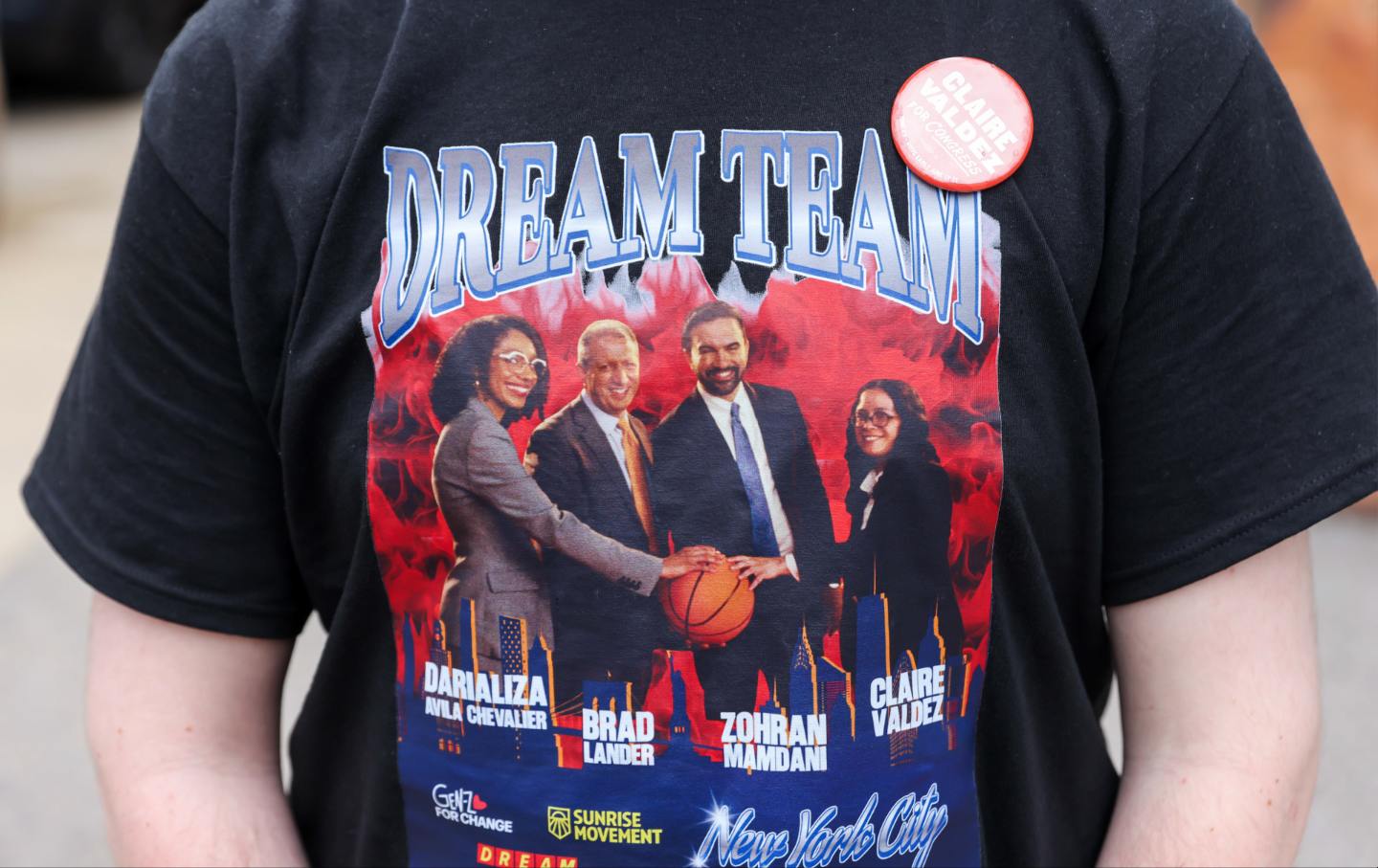
A “Dream Team” shirt featuring images of Democratic House candidate for New York Darializa Avila Chevalier, former New York City comptroller and Democratic House candidate for New York Brad Lander, New York City Mayor Zohran Mamdani, and New York State Representative and US House candidate Claire Valdez, outside a polling location at PS 84 during the primary election in New York City on Tuesday, June 23, 2026.

A “Dream Team” shirt featuring images of Democratic House candidate for New York Darializa Avila Chevalier, former New York City comptroller and Democratic House candidate for New York Brad Lander, New York City Mayor Zohran Mamdani, and New York State Representative and US House candidate Claire Valdez, outside a polling location at PS 84 during the primary election in New York City on Tuesday, June 23, 2026.

(Michael Nagle / Bloomberg via Getty Images)

On weekends, the graffitied auto garage-turned-nightclub Silo is packed with boozed-up Brooklynites intent on dancing the night away. But on the Monday before the Democratic congressional primaries, the crowd packed inside the converted hangar was more focused on a slate of progressive candidates winning some tight races.

Awash in neon light, candidates Brad Lander and Claire Valdez each took the stage, urging attendees to tell their communities to vote the next day.

“We have one more day, 6 am to 9 pm; at 9:01, it is too late,” Valdez said. “Until then, we are going to knock on every single door again.”

Hours earlier, Matthew Smith, a student from Fordham University, bounded up the steps to knock on another Upper West Side brownstone in the rain.

More from The Nation

American Dreams

American Dreams American Dreams

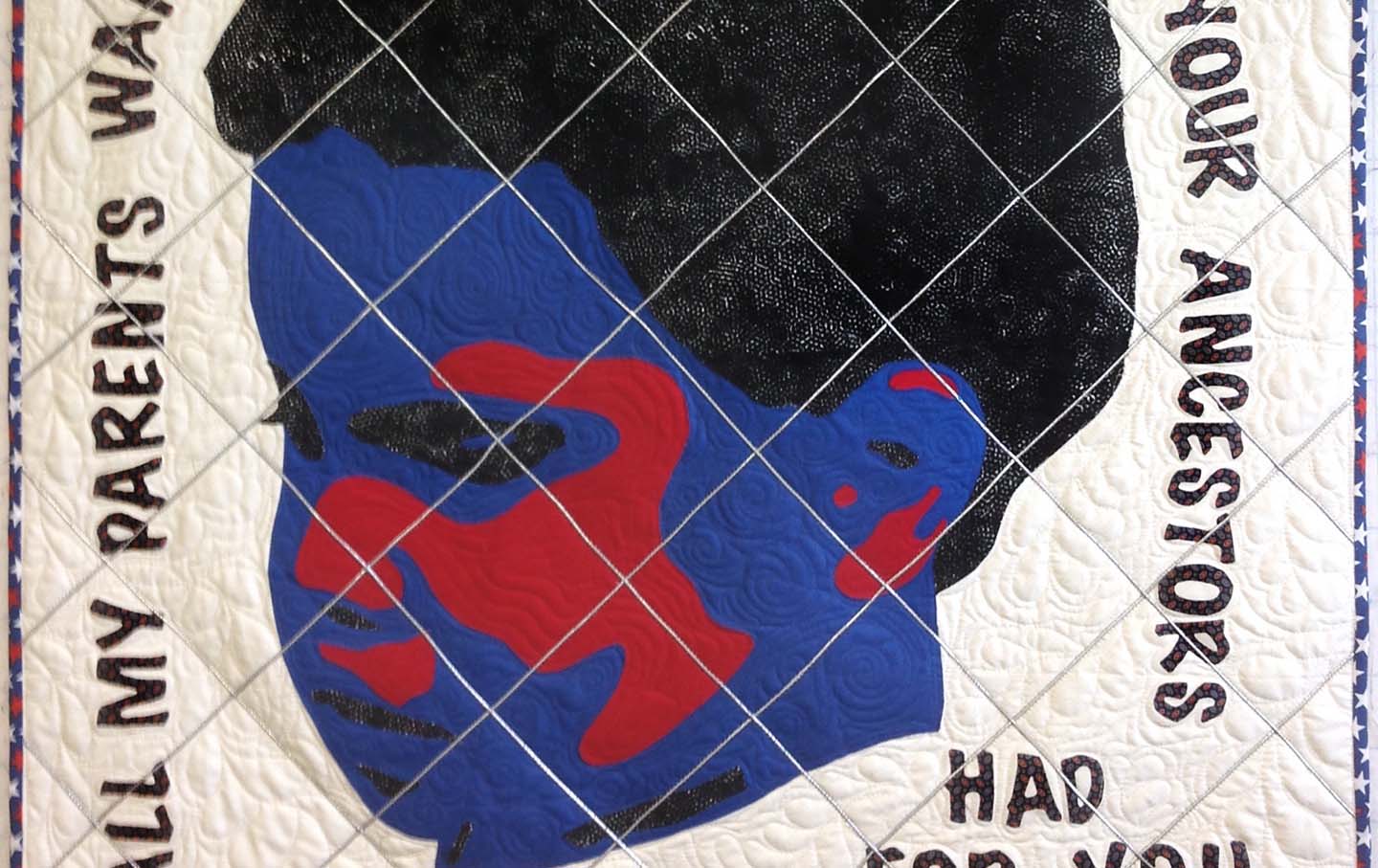
ICE enforcement actions continue to separate families, disrupting lives and communities across the country.

OppArt / Sylvia Hernández

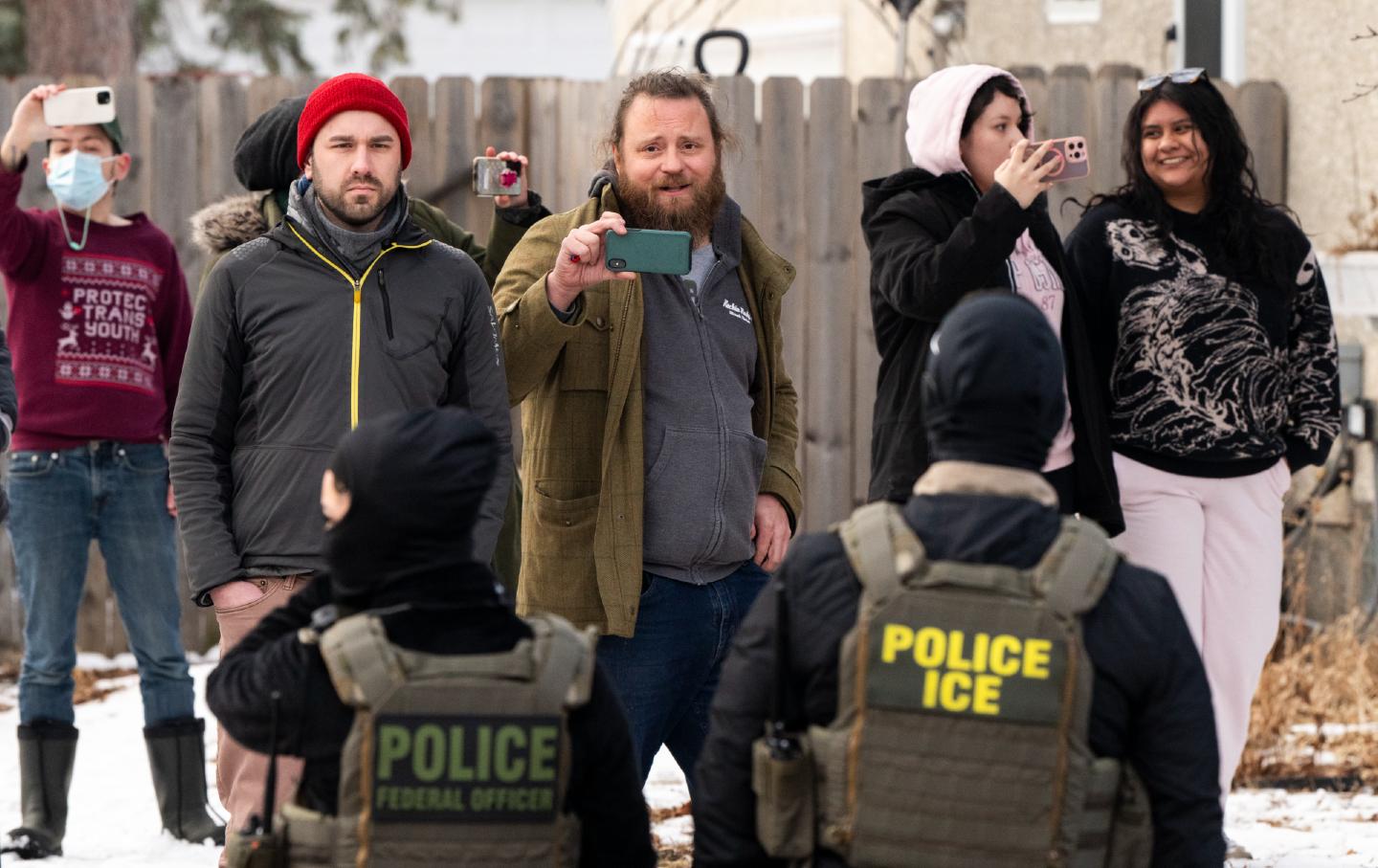
Thomson Reuters Is Profiting Off of ICE’S Reign of Terror

Thomson Reuters Is Profiting Off of ICE’S Reign of Terror Thomson Reuters Is Profiting Off of ICE’S Reign of Terror

And they’re trying to silence whistleblowers.

Carl Ginsburg

New York City Mayor Zohran Mamdani lights the Empire State Building on July 4, 2026.

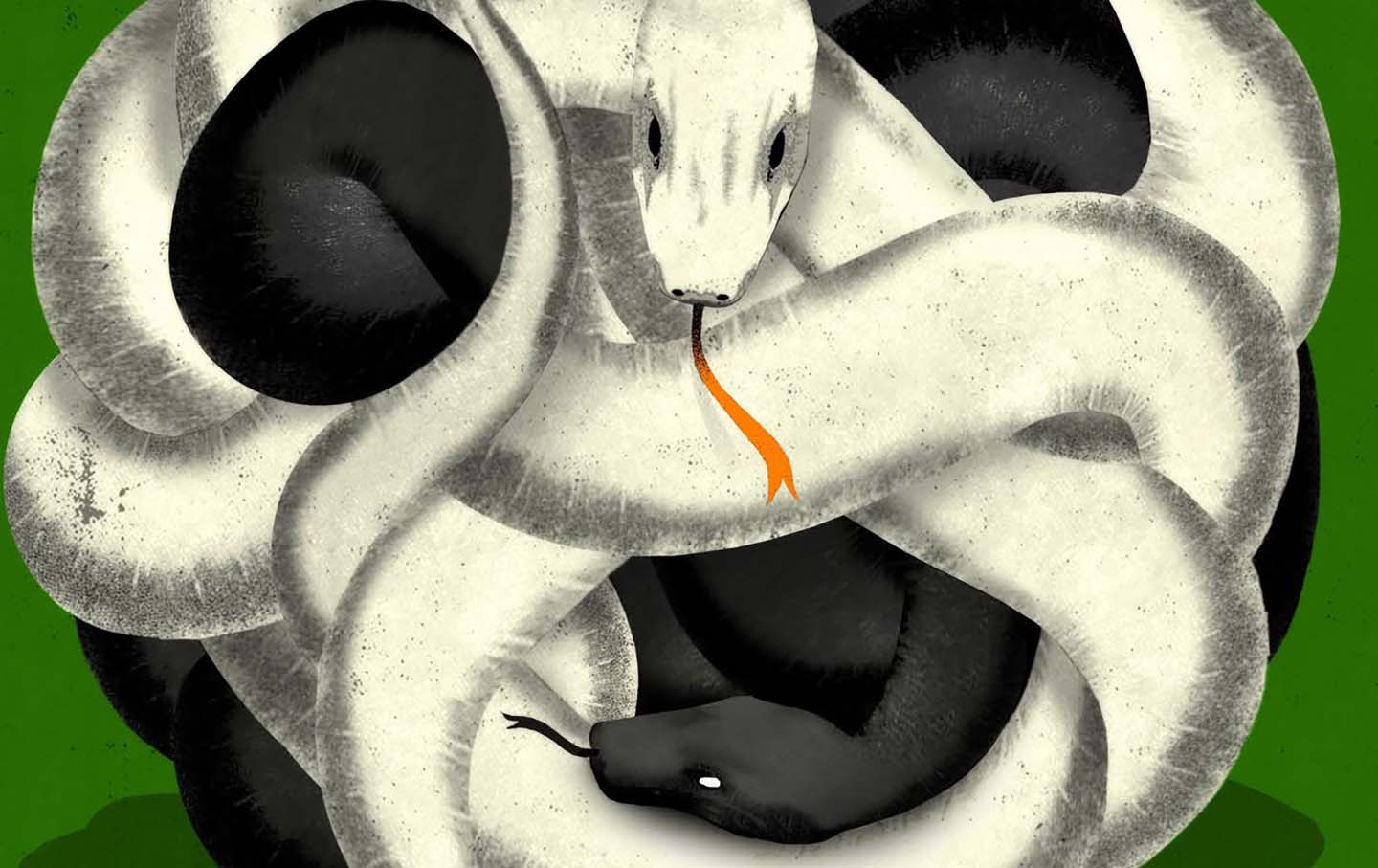
Mayor Mamdani vs. the “New York Post” (and Its Ilk) Mayor Mamdani vs. the “New York Post” (and Its Ilk)

The broad swath of centrist Democrats and conservatives who have hoped to wound Mamdani enough to sap him of political capital are still figuring out how to land real blows.

Ross Barkan

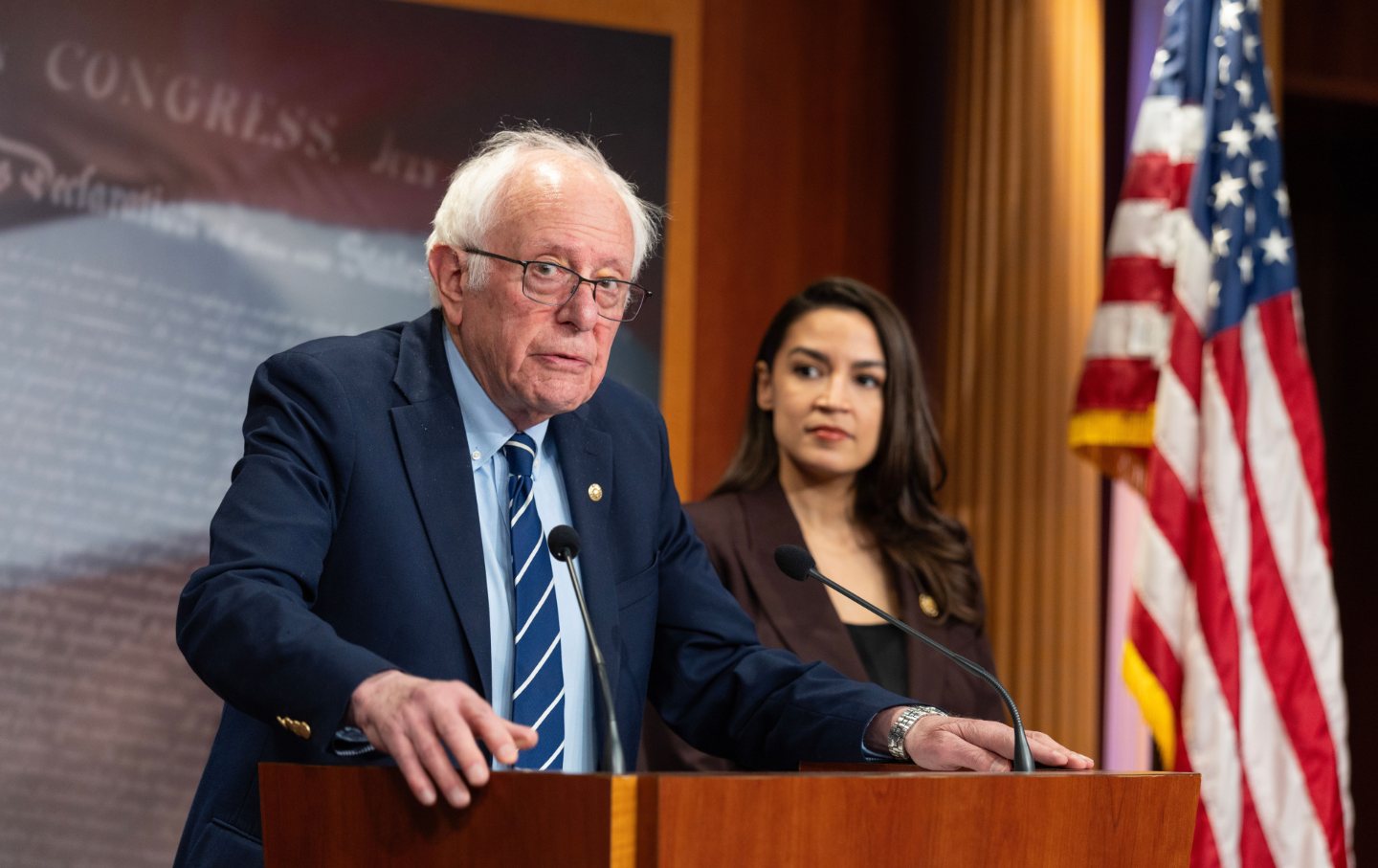
Senator Bernie Sanders (I-VT) and Representative Alexandria Ocasio-Cortez (D-NY) hold a press conference to announce the Artificial Intelligence Data Center Moratorium Act at the US Capitol on March 25, 2026.

Bernie and AOC Are Taking On AI. Only One of Them Is Doing It Right. Bernie and AOC Are Taking On AI. Only One of Them Is Doing It Right.

Sanders is responding to the deceptive narratives floated by the industry. AOC is talking to experts who really understand how AI works.

Paris Marx

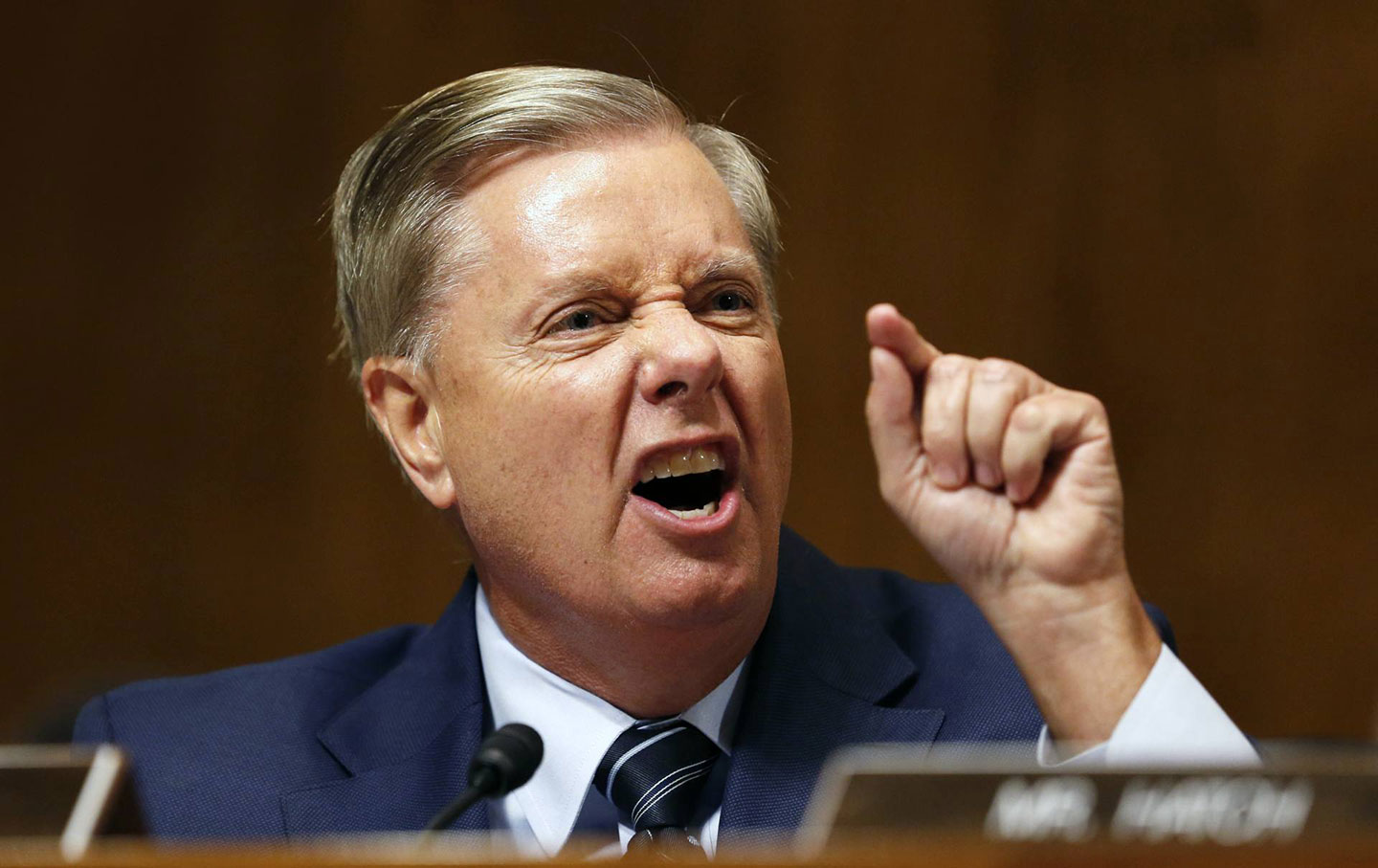
Senator Lindsey Graham speaks at the Senate Judiciary Committee hearing on the nomination of Brett Kavanaugh.

Lindsey Graham’s Defense of Brett Kavanaugh Told Us Everything Lindsey Graham’s Defense of Brett Kavanaugh Told Us Everything

The senator’s infamous cry of rage spoke not only to his cruelty but also to his larger role in changing the court.

Elie Mystal


Someone Finally Made Trump Pay for a Lifetime of Mistreating Women

Someone Finally Made Trump Pay for a Lifetime of Mistreating Women

https://slate.com/news-and-politics/2026/07/trump-carroll-sexual-assault.html 

Someone Finally Made Trump Pay for a Lifetime of Mistreating Women

It’s not nearly enough, but for once, it’s not nothing.

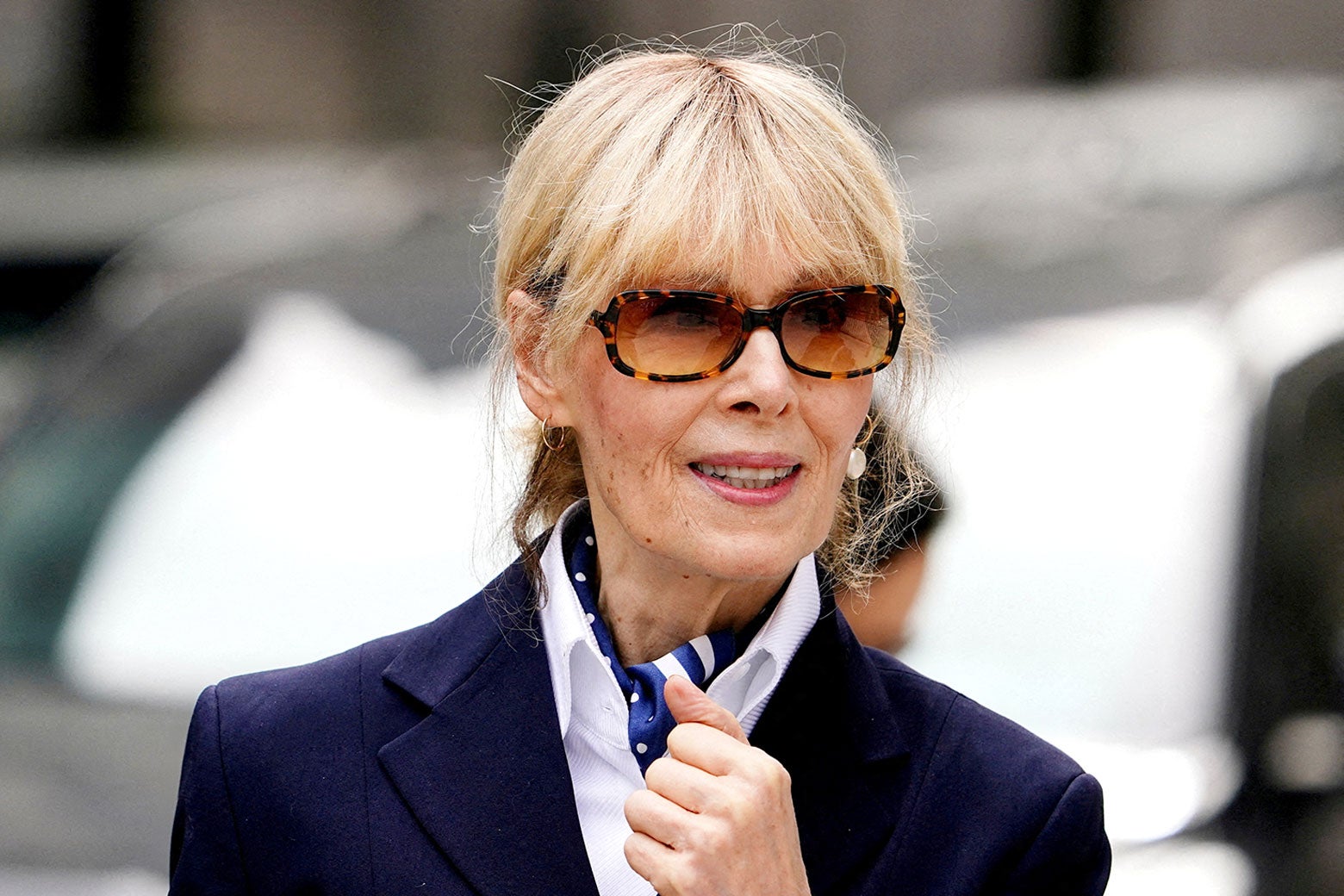
E. Jean Carroll appears in sunglasses and a blue blazer.
Adam Gray/Reuters

Sign up for the Slatest to get the most insightful analysis, criticism, and advice out there, delivered to your inbox daily.

It’s a little bit of good news in an otherwise bleak landscape for feminists: Donald Trump has finally paid E. Jean Carroll after a jury found him liable for sexual abuse and defamation, and ordered the president to pay her $5 million. After appeals and delays, that sum has accrued interest, and finally, $5.625 million was delivered to Carroll’s account.

Trump has denied Carroll’s allegation that he sexually assaulted her in a department store changing room, calling it “a Hoax and a lie.” But a jury disagreed, and the courts have upheld their decision.

Carroll’s claims first emerged publicly in 2019, at the height of the #MeToo reckoning, when it truly felt like feminists were making huge strides toward recognition of—and even accountability for—sexual violence and harassment. The men felled by the movement are now well known: Harvey Weinstein, R. Kelly, Les Moonves, Matt Lauer, Charlie Rose. Alabama Supreme Court Judge Roy Moore was accused of sexually pursuing and assaulting teenage girls when he was in his 30s; he lost his bid for an Alabama Senate seat to Doug Jones, handing Democrats their first Senate win in the state in 25 years. In 2020, Donald Trump lost his reelection bid, and Democrat Joe Biden took the White House.

Since then, much has changed.

The anti-feminist backlash has been swift, shocking, and severe. Donald Trump won the 2024 presidential election, after being found liable for sexual abuse in the Carroll case. His administration has gone on an anti-feminist and anti-DEI purge, creating a broad chilling effect across companies that has squelched so much as talking about discrimination. Women and people of color face overt discrimination by members of the administration itself, most notably Defense Secretary Pete Hegseth, who has blocked the promotion of women in the military and used social media to promote the idea that women shouldn’t be allowed to vote. The Supreme Court overturned Roe v. Wade and ended the era of legal abortion in the U.S.; the result of the ensuing abortion bans has been scores of women with devastating injuries, and some who have died. The aggressive manosphere that helped usher Trump back into power doesn’t just ignore violence against women; they often celebrate it, and some of them engage in it. A birth-rate panic has overtaken the right and much of the middle, with blame heaped squarely on women. The “tradwife” has ascended in American online culture, as influencers make heaps of money pretending they don’t have jobs and telling other women to quit theirs and focus on raising children. Politically and culturally, the boys are back in charge.

And yet, the long sweep of feminist history is never as simple as a winning–losing binary.

Trump has eviscerated America’s democratic institutions, and yet some of those institutions—the courts—upheld a jury verdict against him, and he indeed saw some consequences (even if $5 million is pocket change for a man who has exploited his position to make more than $1 billion in crypto schemes during his first year back in the White House). Roe v. Wade is dead, but reproductive rights activists have created vast networks of support to transfer abortion-seekers out of state and to get abortion pills into women’s hands even in states where abortion is criminalized. Republicans may have decided they’re OK with accused sexual assailants and confirmed misogynists holding higher office, but Democrats decidedly are not, as demonstrated by the recent downfall of Graham Platner and the partywide consensus that men credibly accused of sexual violence should not be in the Senate (or in the White House, or sitting on the Supreme Court bench).

This administration has attacked feminism and feminists, and yet feminism and feminists persist. This administration has attacked democracy and democratic institutions, and yet democracy and democratic institutions persist—battered, imperfect, and badly in need of scaffolding, but still standing. These two things are related: Where democracy is expanding, women’s rights tend to expand, too. And the inverse is also true: When authoritarianism rises and democracy wanes, feminists are often a target, and women’s rights often recede. For the past decade, Americans have been in a fight not just for and about equality, with movements like #MeToo and Black Lives Matter, but for the very nature and foundations of our political system. Are we a representative democracy with expansive civil liberties aiming to be a more perfect (or at least fairer) nation? Or are we a kleptocracy, led by a populist megalomaniacal wannabe autocrat seeking to remake America in his image? Whether women can be equal participants in society, which includes our ability to be treated fairly by the legal system when we seek recompense, is key to answering questions not just about women’s rights, but about American democracy itself.

One woman getting one $5 million award does not feminist victory make. But it’s also not nothing that one woman spent the past decade of her life fighting one of the most powerful men in the world, and she finally got him to pay up. Change is made by political and legal victories as much as by cultural and social shifts, and these things are often difficult to quantify. But when we track the zigzag of progress and backlash, we do so by pinning moments onto our mental timeline. This is one of those pins. It’s not at the far end, where the triumph of full gender equality sits. But it puts feminists a little bit ahead of where we were yesterday.


ICE should keep making traffic stops despite recent shootings, Trump says

ICE should keep making traffic stops despite recent shootings, Trump says

https://apnews.com/article/ice-immigration-enforcement-deaths-traffic-stops-3d614361d8354474bc4eb8e37ec26b28 

ICE should keep making traffic stops despite recent shootings, Trump says

Comments 1.07k

WASHINGTON (AP) — President Donald Trump wants Immigration and Customs Enforcement officers to keep pulling over vehicles, signaling his opposition Wednesday to plans announced just a day earlier to suspend most traffic stops following another string of fatal shootings.

It’s not clear whether ICE will quickly reverse course and resume most stops, which have been a key tool in Trump’s immigration crackdown.

Ending those stops, Trump wrote, would be “playing right into the criminal’s hands.”

“We CANNOT give up one of ICE’s most important and effective Crime Fighting tools, THE TRAFFIC STOP!” Trump wrote Wednesday on his social media site.

Hours after Trump made his views known, Homeland Security Secretary Markwayne Mullin issued his own statement saying people illegally in the country would be “arrested and deported wherever they are.” While Mullin didn’t directly say whether ICE officers will be allowed to carry out traffic stops, he later said in a statement that he and Trump “are on the same page,” and that they want ICE officers “to have all options available to keep them safe while executing our mission.”

ICE’s enforcement tactics are coming under renewed criticism after three people died during encounters with federal officers within a week. In Florida, a 28-year-old man was killed Tuesday after he was hit by a tractor trailer while running from immigration and other federal officers, authorities said.

Before that, two motorists were shot and killed by ICE officers — one in Texas last week and another in Maine on Monday.

Policy change for ICE traffic stops

After the Maine killing, Trump administration officials told ICE officers to suspend most vehicle stops, people familiar with the decision said Tuesday.

Since the immigration crackdown began, federal officers confronting drivers have opened fire several times, saying the drivers’ vehicles had posed a danger. Policing experts have long said that shooting into moving cars presents a danger of its own and should almost always be avoided.

There have been at least 10 deaths involving encounters with immigration agents since Trump launched his deportation campaign. At least four of them involved people in vehicles, a trend so troubling that Republican U.S. Sen. Susan Collins of Maine urged Department of Homeland Security leaders “to cease all non-urgent vehicle stops.”

Two shootings in a week, she said Wednesday, “raise very serious questions” and warrant a halt in that approach for the time being.

ICE has been under pressure to beef up arrest and deportation numbers. It says people being sought are increasingly staying in their homes, and it often blames immigration advocates who advise immigrants to stay in homes unless ICE produces a warrant signed by an independent judge.

ICE officers say that means they’re forced to find other ways to make arrests.

DHS says the man killed in Maine came to the US illegally

More protests are planned after hundreds gathered Tuesday to remember Johan Sebastián Durán Guerrero, the 25-year-old Colombian national who was shot in his car Monday.

Karolina Rojas, his partner and the mother of their young daughter, shared a photo on Instagram of the three hugging and smiling.

“I love you, my darling, my life. I love you. I have no words for this pain. You were my everything. Please watch over me. Help me find the strength to carry on. Stay with me always. Don’t leave me alone. I’m begging you, my love,” she wrote.

Durán Guerrero illegally entered the U.S. on Sept. 1, 2023, through the southern border, DHS said Wednesday. Advocacy groups said that when he was killed, he was authorized to work in the U.S.

Sen. Angus King, I-Maine, said the Homeland Security secretary told him on Monday that ICE officers were in Biddeford to serve an arrest warrant but that it wasn’t for the person who was shot.

When ICE tried to stop a vehicle driven by someone who came from a home under surveillance, the “vehicle attempted to flee the scene and, fearing for public safety, an officer discharged his weapon,” the department said.

In its statement Wednesday, DHS said Guerrero was released into the U.S. after crossing the border.

The department didn’t answer questions about the agent who shot him.

Photos showed bullet holes in Durán Guerrero’s car windshield, but the officers involved didn’t have body cameras, leaving many questions.

Texas state police will investigate Houston shooting

Republican Texas Gov. Greg Abbott, a staunch supporter of Trump’s immigration crackdown, said Wednesday that the state’s top law enforcement unit would investigate the fatal shooting of Lorenzo Salgado Araujo in Houston.

DHS’ account of the July 7 shooting is disputed by three other men who were riding in a van with Salgado Araujo at the time. A public viewing for Salgado Araujo, a homebuilder from Mexico, was set for Thursday in Houston.

More than a week after the shooting, new court records show the FBI is investigating if drugs were found in the van, according to a search warrant application signed by a federal judge Tuesday.

FBI special agent David McNeilly stated in an affidavit that he observed four plastic bags of a white substance appearing to be meth inside the van. DHS has not stated that suspected drugs were the reason why ICE officers engaged in the traffic stop. The FBI referred questions about the search warrant to the U.S. Attorney’s Office for the Southern District of Texas, which did not immediately respond to a request for comment.

The ACLU of Texas, which is providing legal representation for Salgado Araujo’s family, said the Trump administration “lacks credibility” to investigate itself.

Maine shooting puts a spotlight on ICE

Outgoing Colombian President Gustavo Petro called the shooting of Durán Guerrero in Maine a targeted killing “at the hands of the U.S. government.”

In Wednesday’s social media post, Trump told ICE to be “judicious, fair and smart, and go back and do your very important job.”

Border czar Tom Homan told reporters that the investigation needs to play out and that officers will be held accountable if they are found to have acted inappropriately or illegally.

Maine’s Democratic governor, Janet Mills, said ICE should be scrapped as a federal agency if it can’t be fixed.

Mills, who has criticized ICE before, said Wednesday that the agency needs changes “before more families are robbed of a loved one.”

___

Whittle reported from Biddeford, Maine. Associated Press reporters Jack Brook in New Orleans, Michael R. Sisak in New York, John Seewer in Toledo, Ohio, Isabel DeBre in Buenos Aires, Argentina, Elliot Spagat in Park City, Utah, Anna Wilder in Austin, Texas, and Darlene Superville in Washington contributed to this report.
Santana reports on the Department of Homeland Security, immigration policy and the federal agencies that touch on immigration. She’s reported on refugee resettlement, ICE operations and employment-based immigration and is reachable on Signal at RebeccaSantana.51.
Whittle is an Associated Press reporter based in Portland, Maine. He focuses on the environment and oceans.


What Is the Antiquities Act, and How Is the 120-Year-Old Law Being Tested by Trump?


What Is the Antiquities Act, and How Is the 120-Year-Old Law Being Tested by Trump?

 https://time.com/article/2026/07/14/what-is-the-antiquities-act-and-how-is-the-120-year-old-law-being-tested-by-trump-/

What Is the Antiquities Act, and How Is the 120-Year-Old Law Being Tested by Trump?


President Donald Trump speaks before signing proclamations modifying the Grand Staircase-Escalante and the Bears Ears national monuments in the White House, July 13, 2026.Julia Demaree Nikhinson—AP

President Donald Trump signed two proclamations Monday, dramatically reducing the size of two national monuments in Utah and reviving a long-running legal dispute over the limits of presidential authority under the Antiquities Act of 1906.

The proclamations reduced by 90% the protected areas of Bears Ears and the Grand Staircase-Escalante. 

Bears Ears is a pair of symmetrical buttes that dominate the horizon in southeast Utah. The monument spanned some 1.36 million acres before Trump reduced it to 131,100. The Grand Staircase-Escalante is a set of step-like sedimentary layers that connect to the rim of the Grand Canyon. Trump reduced the monument from some 1.87 million acres to 181,500. 

Together, the two presidential proclamations could open up more than 3 million acres of formerly protected land—including sacred tribal sites—to exploration for oil, minerals, and gas, as well as motorist and non-motorist recreation.

Preservation advocates and tribal representatives have criticized the changes, while suggesting that greater cooperation between the federal government and tribal leadership is required.

The Bears Ears Inter-Tribal Coalition—which includes the Hopi Tribe, Navajo Nation, Ute Mountain Ute Tribe, Pueblo of Zuni, and Ute Indian Tribe—said that the sites contain “thousands of sacred cultural sites and important areas of spiritual significance.” 

In a press release shared Tuesday, the coalition wrote, "Tribal Nations understand Bears Ears as an interconnected living cultural landscape, where the land itself—and the relationships among its cultural sites, waters, plants, animals, and sacred places—are what must be protected."

The coalition originally advocated for the designation of national monument status, which was granted by President Barack Obama in 2016. It then sued the Trump Administration in 2017 for attempting to resize the monument, though the case was suspended when President Joe Biden restored its original boundaries in 2021—and expanded the site by 12,000 additional acres. 

The coalition has since said that the governments it represents, going forward, require “a meaningful voice in the development of a land management plan” for Bears Ears.

“President Trump’s outrageous attack on Grand Staircase-Escalante and Bears Ears national monument was taken at the urging of Utah politicians,” Scott Braden, the Executive Director for the Southern Utah Wilderness Alliance (SUWA), said in a statement. “These two landscapes deserve to be protected for current and future generations of Utahns and Americans, not opened to exploitation.” 

The SUWA expressed plans to contest the proclamations in court.

The Wilderness Society also criticized the proclamations, accusing the administration of ignoring "the voices of Tribal Nations, local communities, and the millions of Americans who want these places protected for future generations,” according to a statement from its president, Tracy Stone-Manning, who was the Director of the Bureau of Land Management under Biden.

Utah politicians, however, expressed support for the measures, which returns the affected lands to their prior federal management status. 

“For too long, presidents have weaponized monument designations to lock up millions of acres, close roads, restrict grazing, and cut rural communities off from lands their families have lived on and worked for generations,” Republican Sen. Mike Lee said in a statement on Monday. 

Republican Governor Spencer Cox, who was present at the White House when the proclamations were signed, wrote on X that “the question has never been whether to protect Bears Ears and Grand Staircase-Escalante national monuments, but how to protect them best.”

He continued: “We deeply value these natural, cultural, and scientific treasures. The historic landmarks and other nationally significant resources remain under federal protection, while allowing agencies to direct limited resources toward caring for these specific sites rather than millions of surrounding acres.”

Trump’s proclamations challenge the limits of presidential authority when it comes to managing public lands, with implications that extend far beyond Utah. At the heart of the debate is the Antiquities Act of 1906.

What Is the Antiquities Act?

Unlike national parks, whose designations must be approved by Congress, national monuments are given that status by the sitting president under the Antiquities Act. It was signed into law by President Theodore Roosevelt in 1906. 

The Congressional Research Service (CRS) said ​​that the Antiquities Act has been used by 18 U.S. Presidents to establish 168 protected areas, including marine monuments. President Bill Clinton established Grand Staircase-Escalante in 1996, two decades before Obama established Bears Ears. 

While presidents have frequently used the Act to enlarge existing monuments, Trump is the first President since John F. Kennedy to reduce the scale of a monument. Several earlier presidents—including William Howard Taft, Woodrow Wilson, Calvin Coolidge, Franklin Delano Roosevelt, Harry S. Truman, Dwight D. Eisenhower, and John F. Kennedy—also reduced monument boundaries. However, Trump's reductions are unprecedented in scale and may therefore face greater legal scrutiny.

The legal debate centers on the fact that while the Antiquities Act expressly authorizes presidents to establish national monuments, it does not explicitly address whether later presidents may shrink or abolish them. 

“My position has long been that the president does not have that authority,” Mark Squillace, professor of law at the University of Colorado Law School, tells TIME. “If you read the statute, the Antiquities Act, it specifically gives the president the authority to reserve monuments that contain historic objects and of scientific interest, but it does not give the president the authority to modify or revoke monuments that have been declared by prior presidents.”

He says that it’s important to look at the exact wording included in the text, because there are contemporaneous laws that specifically give the president those kinds of authority—for example, the 1897 Organic Administration Act's amendment to the Forest Reserve Act, which expressly says the President may "revoke, modify, or suspend" national forest proclamations and "reduce the area or change the boundary lines."

“So the argument is simply that when Congress wants to give the president broader authority, it has specifically done so,” Squillace says. 

The Act’s exact language has been carefully scrutinized over the years. Of particular note is the line that says national monuments must be limited to the “smallest area compatible with proper care and management of the objects to be protected.”

The Trump Administration alleges that both Clinton and Biden sought to protect a sweeping landscape that overly broadened the scope of the legislation as it is written.

“Where the President determines that the structures and objects identified by a prior monument proclamation no longer are, or never were, deserving of the Antiquities Act’s protections, the Antiquities Act permits the President to remove land from the monument and return it to its prior federally managed status,” Trump wrote in a proclamation on Monday.

He also wrote that the previously established Bears Ears National Monument “suffers from several flaws under Antiquities Act analysis” and that “generic” features “are not historic landmarks, historic or prehistoric structures, or other objects of historic or scientific interest.” The proclamation also argues that the Bears Ears region “contains several resources that are vital to energy and resource independence and, in turn, critical to national security.” 

Similarly, a proclamation for the Grand Staircase-Escalante says that the region contains resources that are “essential to important sectors of the economy of the United States, including defense, manufacturing, and transportation.” It also says that most of the areas around the monument are “already adequately protected by Federal law and do not require a reservation of land under the Antiquities Act for protection.”

Historically, courts have upheld broad presidential authority to grant monument status under the Antiquities Act, but they have not definitively ruled on a President’s power to revoke or reduce that designation.

Were it to advance through the courts, however, Squillace believes that the text of the statute would stand on its own. “This particular Supreme Court has been very narrow in its interpretations about delegations of power, and has made clear that the authority to delegate power is limited by the specific text of the law,” he says. 

In its assessment, the CRS said, “Given the recurring controversies over presidential monument proclamations, Congress continues to evaluate whether to abolish, limit, or retain the President's authority under the Antiquities Act.” It does not go into further detail about what those assessments would entail or provide a timeline. 

However, “a few years ago Congress passed a law, which basically acknowledged the existence of the Grand Staircase Escalante National Monument,” Squillace says, explaining that it basically confirmed the existence of the monument as it stood at the time. “Utah's made hundreds of millions of dollars on the lands that they got in exchange for giving up lands within the Grand Staircase Escalante National Monument … so that's going to be a really tough one for the court to reverse.”

“But I certainly think that you're likely to see litigation sooner rather than later over these decisions,” he says.

The proclamations will go into effect in 60 days.


Events, Petitions, and Volunteer Opportunities

Events, Petitions, and Volunteer Opportunities

https://www.mobilize.us/?from_map=true&lat=37.0902&lon=-95.7129&zoom=2.5 

Events, Petitions, and Volunteer Opportunities

Events and volunteer opportunities near map position

Find events and volunteer opportunities by type or cause

Part of a mission-driven organization that wants to host events on Mobilize?