Saturday, May 31, 2025

Elon Musk's DOGE savings dwarfed by deficit-ballooning Trump bill

 https://www.axios.com/2025/05/30/doge-elon-musk-savings-big-beautiful-blill

Updated May 30, 2025 - Politics & Policy

Elon Musk's DOGE savings dwarfed by deficit-ballooning Trump bill


Go deeper

Musk "disappointed" in Trump's "big, beautiful bill"

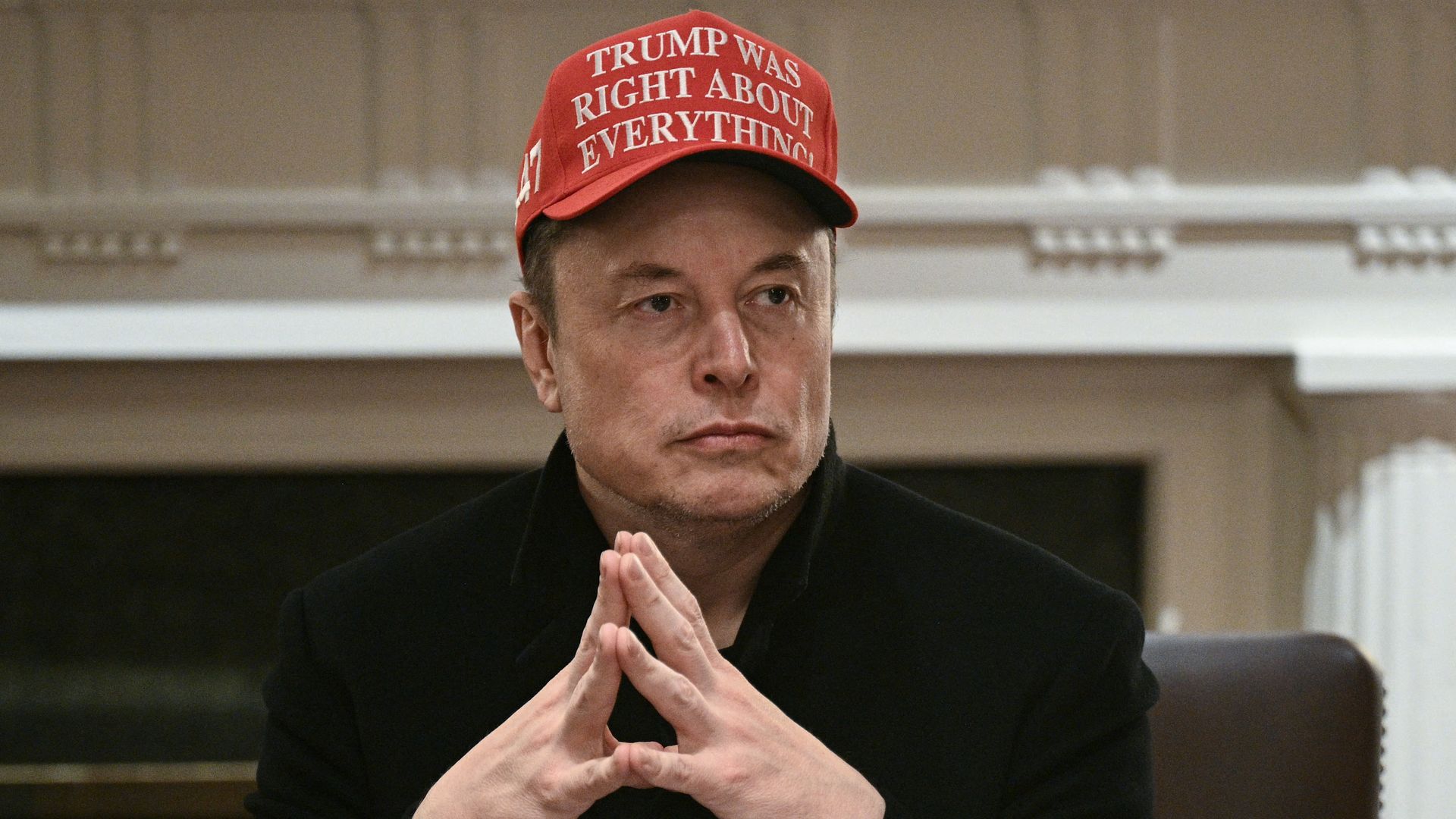
 Elon Musk looks on during a cabinet meeting hosted by US President Donald Trump in the Cabinet Room of the White House on March 24, 2025, in Washington, DC.

Elon Musk at the White House in March. Photo: Brendan Smialowski/AFP via Getty Images

Updated May 29, 2025 - Politics & Policy

Musk's real DOGE legacy will be decided by courts long after his departure

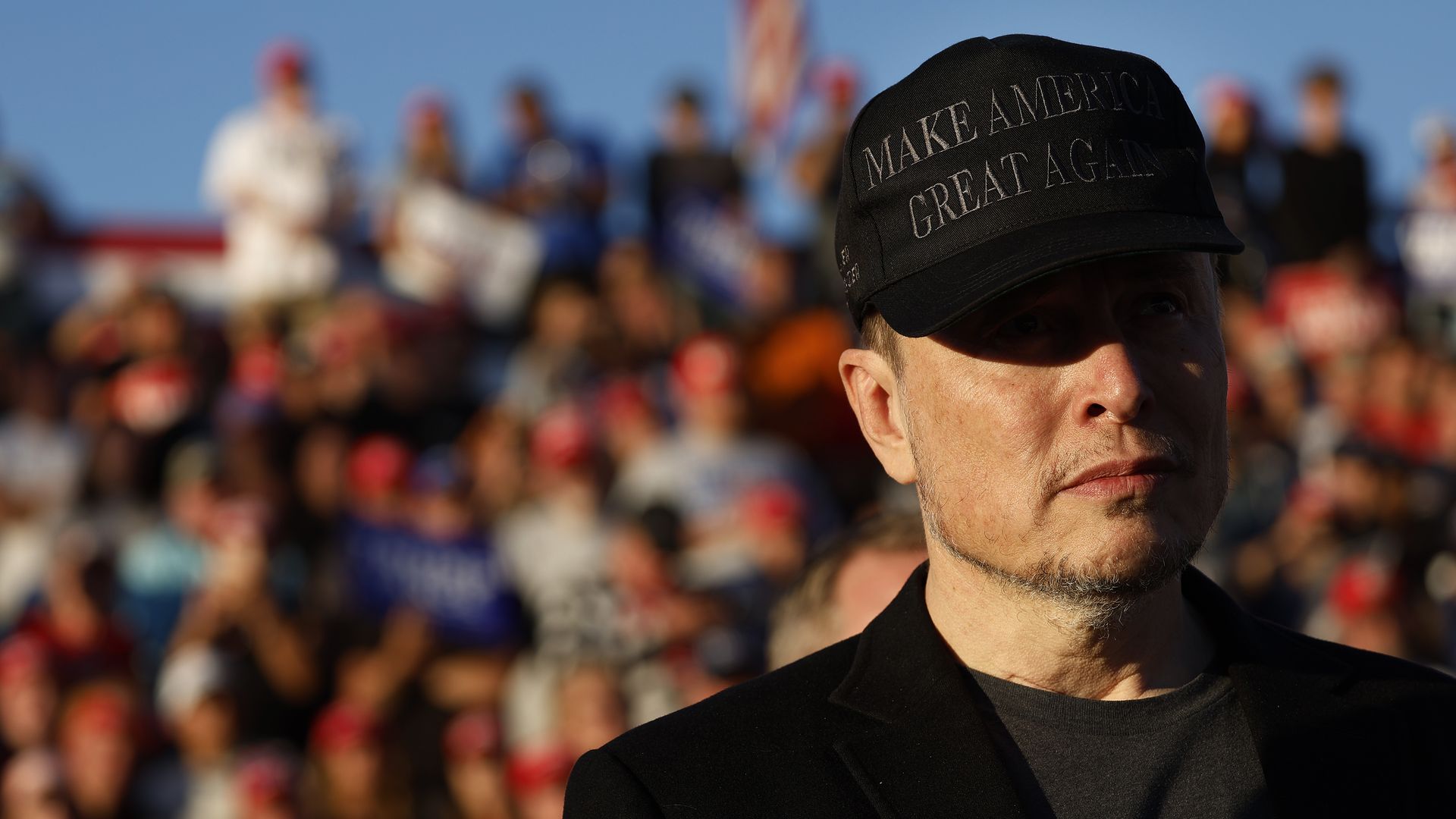
Elon Musk's eyes are covered in a shadow by his black "MAKE AMERICA GREAT AGAIN" hat as he stands in front of a Trump rally crowd.

Elon Musk wears a black "Make America Great Again" ball cap while attending a campaign rally with Donald Trump on Oct. 5, 2024. in Butler, Pa.(Photo by Anna Moneymaker/Getty Images)

  •  

    Corruption Watch: Trump’s SEC Drops Major Case Against Crypto Giant Binance After Its Former CEO Partnered With Trump Family On Lucrative Crypto Venture

    https://accountable.us/corruption-watch-trumps-sec-drops-major-case-against-crypto-giant-binance-after-its-former-ceo-partnered-with-trump-family-on-lucrative-crypto-venture/

    Corruption Watch: Trump’s SEC Drops Major Case Against Crypto Giant Binance After Its Former CEO Partnered With Trump Family On Lucrative Crypto Venture

    Trump Administration
    May 30, 2025

    Is a Trump Pardon for Convicted Binance Founder “CZ” Next?

    WASHINGTON, D.C. – In the latest egregious case of President Trump’s family business dealings apparently influencing Trump administration actions, last night, Trump’s SEC announced it had voluntarily dismissed its lawsuit against Binance, the world’s largest crypto exchange, for allegedly misleading investors about trading controls, among other accusations. 

    The dropped case comes as the Trump Family’s World Liberty Financial Inc. – a crypto venture that has alarmed ethics experts – has grown increasingly close with Binance Founder CZ, going so far as to post photos arm-in-arm with the man who just finished his prison sentence late last year. CZ was convicted of felony money laundering and who allegedly wants to trade a stake in Binance with the Trump family for an administration pardon in order to facilitate Binance’s return to the U.S. market, which Zhao has denied.

    Then on May 1, 2025, Zach Witkoff, a WLFI co-founder and son of Trump Special Envoy to the Middle East Steve Witkoff, announced that Emirati state-backed investment fund MGX would make a $2 billion business deal with Binance using WLFI’s cryptocurrency coins, potentially generating “tens of millions of dollars a year in revenue for the Trump family and its partners at World Liberty.”

    Then on May 22, Trump’s WLFl “announced that its USD1 stablecoin, a cryptocurrency whose value is pegged to the U.S. dollar, started trading on Binance.” – and which “would be used to facilitate [the] $2 billion investment from Abu Dhabi-backed MGX into Binance.”

    The SEC’s decision also comes a week after President Trump held an openly corrupt gala at his golf club for winners of a dubious competition for top holders of Trump’s cryptocurrency meme coin $TRUMP, in which 80% of the Top 25 winners appeared to be either foreign or regulation dodgers. Accountable.US found that the #1 holder was in fact Chinese crypto billionaire Justin Sun, whose SEC fraud case was paused in February 2025 after Sun bought $75 million in tokens offered by Trump crypto venture WLFI. 

    The Trump SEC’s dropping a case against a new Trump family crypto business partner reeks of pay-to-play shenanigans and abuse of power. No one should be surprised if President Trump’s next move is to grant the pardon that the former Binance CEO and convicted money laundering law violator has allegedly been begging for – which would fast track the crypto exchange’s return to the U.S. and open even more avenues for the Trump family to profit off its ballooning crypto grift operations."

    Accountable.US Executive Director Tony Carrk.


    A New Working-Class GOP? If “Working-Class” Means $4.3 Million a Year!

     https://newrepublic.com/article/195867/working-class-gop-trump-plutocrats

    The New Republic


    OLD “WHINE”

    A New Working-Class GOP? If “Working-Class” Means $4.3 Million a Year!

    Last year, Trump won praise for building a new GOP. But the Big, Beautiful Bill utterly shatters the illusion that he is some sort of brilliant policy innovator.

    Trump sits, leaning on the arm of an upholstered sofa.
    Oleg Nikishin/Getty Images 

    So much for a new, “populist” Republican Party. So much for the GOP as a brave band of fiscally prudent, anti-deficit hawks. The “Big, Beautiful Bill” is a declaration of intellectual bankruptcy, policy incoherence, and political vacuousness. That’s its formal name, by the way, and you’ve already admitted a problem when you have to sell something that hard.

    It’s no wonder that the only way the BBB passed the House was for one opponent to vote “present” and for two others to miss the vote. One of the absent members fell asleep and missed the vote, an entirely appropriate response to an exercise in philosophical exhaustion. Defending the bill requires twisting facts into the “alternative” variety and turning the plain meaning of words upside down.

    For example: The right wingers who demanded more cuts in programs for low-income people are regularly described as “deficit hawks.” But even if they had gotten all the changes they sought, the bill would have massively increased the deficit. And most of them voted for a final product that will add close to $4 trillion to the nation’s indebtedness.

    If these guys are hawks, I don’t know what a dove looks like.  

    Trump and his backers continue to insist that they are building a new working-class Republican coalition. But the astonishing thing about this bill is not only that it lavishes tax cuts on the very well-off; it also takes money away from Americans earning less than $51,000 a year once its cuts in Medicaid, the Affordable Care Act, SNAP, and student loans are counted for. Republicans who rail against “income redistribution” are doing an awful lot of redistribution themselves—to those who already have lots of money.

    The Penn Wharton budget model of the near-final version of the bill found that Americans earning less than $17,000 would lose $1,035 under its terms. Those earning between $17,000 and $50,999 would lose $705. But the small number of our fellow citizens who earn more than $4.3 million a year have a lot to cheer about: They pick up $389,280 annually.

    Please explain to me again why this is a “populist” Republican Party.

    It’s imperative not to miss what’s obvious about this billthat it ravages lower-income people to benefit the very privilegedand for progressives and Democrats to act on this.

    But it’s also essential to notice what doesn’t get enough attention: that so much of the commentary about how Trump has reinvented the GOP with a fresh set of ideas and commitments is poppycock. Trumpism is certainly dangerous and authoritarian in new ways. It is, well, innovative when it comes to a vast and unconstitutional expansion of presidential power.

    But it’s also an ideological mess riddled with contradictions. When you look below the hood, it’s primarily about the interests of people who can buy their way into Trump’s golf clubs and private pay-for-play dinnersand, especially, about the enrichment of Trump and his family.

    On the phony populism side, Democrats in the House did a generally good job of highlighting the costs of provisions in the bill that hurt so many of Trump’s voters, particularly the cuts in Medicaid and nutrition assistance, or SNAP. Senate Democrats have already ramped up similar efforts as that body’s Republican leaders prepare to grapple with the steaming pile of incongruities the House has sent their way.

    You can tell that Republicans know how unpopular the Medicaid cuts in the bill are because they delayed their effectiveness date to minimize their electoral effect, repeatedly denied they are cutting Medicaid—and don’t want to talk at all about how slashing subsidies within the Affordable Care Act would take health coverage away from millions more Americans.

    They are hiding the Medicaid cuts behind “work requirements” that are really bureaucratic paperwork requirements that would make it much harder for people with every right to coverage to access it. They would make it more difficult for others to maintain continuous coverage. And if these rules were not about “cutting” Medicaid, the GOP couldn’t claim to be “cutting” roughly $700 billion in Medicaid spending.

    But the GOP thinks it has a winner in its work argument. It’s a tired but tested replay of a very old (and, yes, offensive) trope about alleged grifters among supposedly “lazy” poor people. House Speaker Mike Johnson offered a remarkable version of this defense of the “work” provisions: He said they were aimed at “the young men who need to be out working instead of playing video games all day.” If ever there was a quote that should go viral, this is it. Young men, after all, shifted toward the Republicans in 2024. They should know what the party many of them voted for thinks of them.

    More important, progressives need to take the work argument on directly, not only by showing that the work provisions aren’t really about work but also by offering amendments replacing the Medicaid cuts with provisions that actually would expand the availability of well-paying opportunities for greater self-sufficiency. Restoring the clean energy tax credits are important not only to battling climate change; they’re also about preserving and creating well-paying jobs. A package of proposals on affordable housing, job training, and access to community colleges, particularly in economically depressed areas, would make a nice contrast to those who deny that government has the capacity to improve lives.

    What the Financial Times’ economics columnist Martin Wolf nicely termed “pluto-populism” when the GOP passed the 2017 tax cuts that this bill extends is alive and well. That populist rhetoric is being married to plutocratic policies is still not recognized widely enough. This is certainly a commentary on the rightward tilt of the media system the editor of this magazine has called out. But it also reflects a failure of Democrats to take the argument to the heart of Trump’s base.

    It’s political common sense that parties focus most of their energy on swing states and swing districts. Yet there will be no breaking the 50-50 deadlock in our politics without a concerted effort to change the minds of voters who have drifted to Trump out of frustration with their own economic circumstances and the condition of their regions. The fight over Medicaid and SNAP cuts directly implicates these voters and these places.

    And these voters pay more attention to these issues than either the Republicans who take them for granted or Democrats who have given up on them believe.

    When Andy Beshear won his first race for governor of Kentucky in 2019, he not only mobilized Democrats in urban areas; he also flipped many rural counties and cut the Republicans’ margins in others. Typical was Carter County in eastern Kentucky. The county went for Beshear even though it had backed his GOP opponent and then-incumbent Republican Governor Matt Bevin four years earlier and gave Trump 73.8 percent of its ballots in 2016. Breathitt County in Appalachia also flipped, having gone for Bevin and voted 69.6 percent for Trump.

    Fred Cowan, a former Kentucky attorney general and a shrewd student of his state’s politics, told me then that these voters understood where their interests lay. “In a lot of these counties, the school systems or the hospitals—or bothare the biggest employers,” he said “The Medicaid expansion helped a lot of people over there.”

    Sure, it’s easier for Democrats like Beshear with strong local profiles to make their case. But the national party needs to learn from these politicians that giving up on whole swaths of voters is both an electoral and moral mistake.

    The emptiness of Republican populism speaks to the larger problem of mistaking Trump’s ability to create a somewhat new electoral coalition with intellectual and policy  innovation. Some conservative commentators are honest enough to admit how the BBB demonstrates that the “old Republican Party is still powerful, the old ideas are still dominant,” as Ross Douthat observed in The New York Times.

    But even Douthat wants to cast the bill as an exception to a bolder transformation the president has engineered, particularly around immigration and a “Trumpian culture war.” The problem here is that none of this is new, either.

    The GOP was moving right on immigration well before Trumpwhen, for example, it killed George W. Bush’s immigration bill in 2007 as right-wing media cheered it on. The culture war and the battle against universities are old hat too. The real innovator here was the late Irving Kristol, whose columns in the 1970s introduced Wall Street Journal readers to the dangers posed to business interests by “the new class” of Hollywood, media, and university types, along with activist lawyers. True, Trump is taking this fight to extreme places Kristol would never have gone. But, again, there’s no new thinking here.

    And the attack on trans rights is just the latest front in the LGBTQ+ debates, now that the right has had to abandon its opposition to same-sex marriage because Americans have come to support it overwhelmingly.

    Even the contradictions aren’t new. Since the Reagan years, Republicans have always talked about the dangers of deficits when Democrats were in power but cast those worries aside when they had the power to cut taxes. “Reagan proved deficits don’t matter” is the canonical Dick Cheney quote from 2002 when he was pushing for more tax cuts in W.’s administration. The exception proves the rule: George H.W. Bush made a deal with Democrats in 1991 that included tax increases because he really did care about deficits—and conservatives never forgave him for it.

    In an odd way, you have to admire Cheney’s candor: At least he admitted what he was doing. The Freedom Caucus members have the gall to yell at the top of their lungs about how they care so very much about the debtand then vote in overwhelming numbers to pile on billions more.

    As the debate over the BBB moves to the Senate, the immediate imperative is to expose the damage the bill does to millions of Trump’s voters to benefit his Mar-a-Lago and crypto-wealthy friends. But it’s also an occasion to shatter the illusion that Trump is some sort of brilliant policy innovator. Extremism and authoritarianism are not new ideas, and his legislative program would be familiar to Calvin Coolidge. 

    Editor’s Picks