Saturday, July 18, 2026

What do Trump’s declassified election conspiracy documents show — and how much was known already?


What do Trump’s declassified election conspiracy documents show — and how much was known already?

https://www.independent.co.uk/news/world/americas/us-politics/trump-fact-check-election-speech-b3016584.html 

What do Trump’s declassified election conspiracy documents show — and how much was known already?

Newly published materials largely rehash previous intelligence while president fails to offer evidence of fraud that cost him 2020

Close
Trump throws US elections into chaos with ‘declassified’ voter fraud conspiracy claims

President Donald Trump has spent more than a decade spreading false and inflated claims about election outcomes and how the nation’s elections are run. His primetime address on Thursday was no exception.

The president alleged “shocking vulnerabilities in election infrastructure” and claimed our “election system” is “dangerously” exposed to “hacking, exploitation and foreign interference.”

But it appears much of the newly declassified material he announced Thursday evening echoes or reinterprets previously disclosed information that was already known to intelligence officials, including during his first administration.

Importantly, nothing in the materials supports any allegations that any votes were manipulated by fraud or foreign actors to have changed election outcomes.

Election officials and voting rights advocates fear the president’s remarks, which he says are meant to protect elections, will instead continue to sow deep distrust in their legitimacy to serve his own interests.
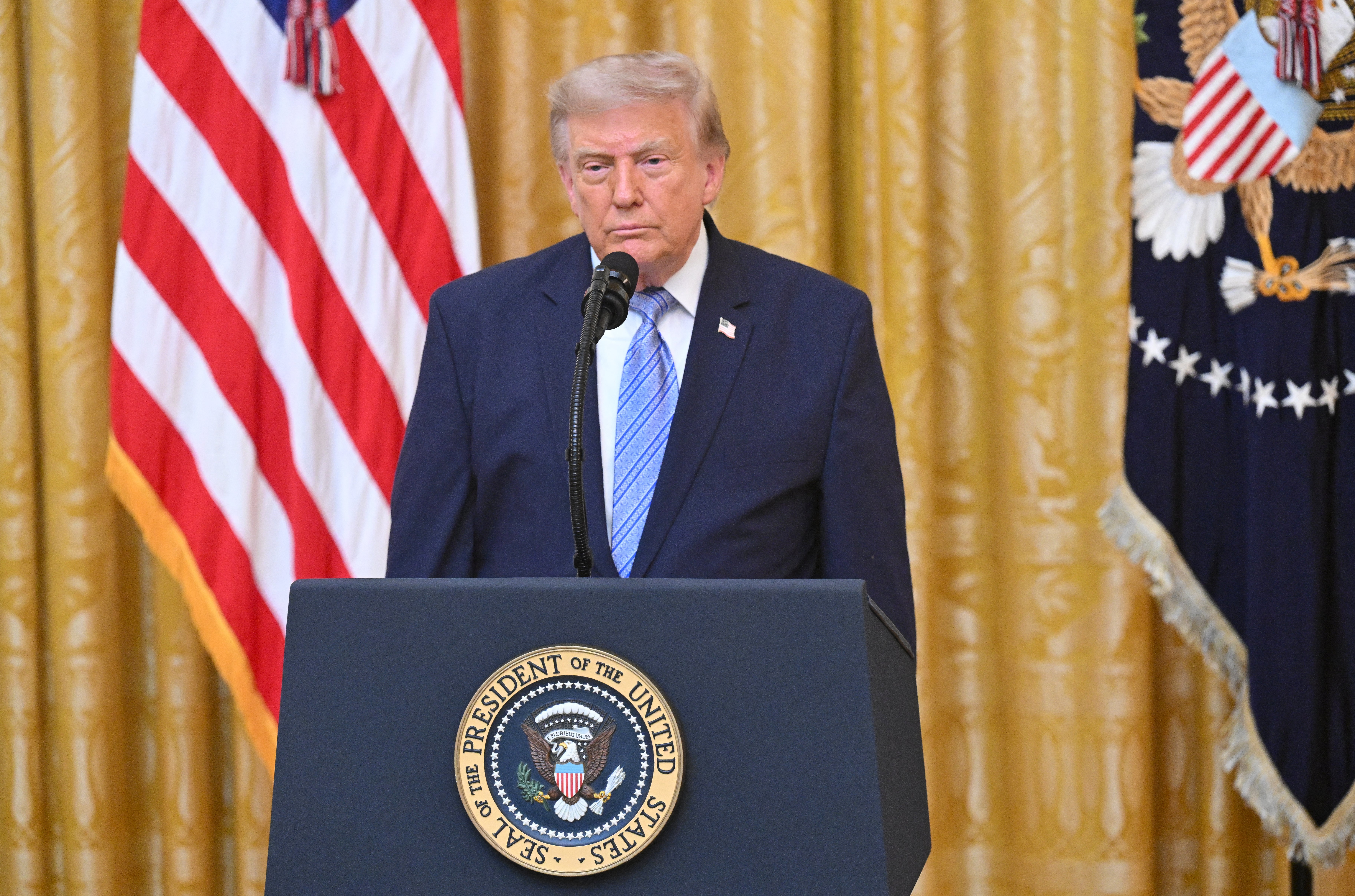
President Donald Trump outlined four findings from newly declassified reports that largely revisit previous intelligence about the nation’s election infrastructure
President Donald Trump outlined four findings from newly declassified reports that largely revisit previous intelligence about the nation’s election infrastructure (AFP/Getty)

"Once again, President Trump is attempting to undermine public confidence in our elections by repeating blatant, outlandish lies,” according to Sophia Lin Lakin, director of the American Civil Liberties Union’s Voting Rights Project. “He promised the nation ‘really big news,’ and instead used a primetime spot to spew the same tired rhetoric to shake Americans’ confidence in their own elections.”

Election vulnerabilities

In its declassified report, the White House claims American election infrastructure is vulnerable to interference from five foreign powers.

The nation’s intelligence community determined in January 2020 that China, Iran, Russia and North Korea “have the capability to access and potentially manipulate” U.S. election data, like centralized voter registration databases, but noted that it “would be difficult to manipulate on a wide enough scale to alter the election outcome.”

A long-running thesis among election conspiracy theorists claims election technology companies Dominion and Smartmatic were deployed in the U.S. to rig elections for Democrats. Those claims were also raised during an infamous news conference featuring Trump-allied lawyers Rudy Giuliani and Sidney Powell — which were later at the center of several successful defamation lawsuits brought by the companies.

The Trump administration’s analysis contends that Venezuelan officials have “some capability in manipulating electronic voting systems” to influence election outcomes, but did not determine there is evidence for “large-scale electronic fraud” in the country. The analysis determined that Venezuelan officials did not have the ability to manipulate votes outside the country.

“Neither Smartmatic nor the Venezuelan government had the capability to manipulate the outcome of an election outside Venezuela,” according to the analysis.

Geoff Halte, an election security fellow at the Center for Democracy and Technology who spent 10 years working for the Cybersecurity and Infrastructure Security Agency, stressed that “just because a vulnerability exists doesn’t prove that it’s been exploited, let alone that an exploitation altered something technically during an election.”

“Proving whether voting systems have been exploited in an election requires evidence. But the public should be aware that neither a mountain of documents nor technically complex claims are enough to credibly prove that an election security incident actually occurred,” he said Thursday.

But to date, “no evidence has shown that vulnerabilities in voting systems have been exploited to alter election outcomes in the U.S.”

China

In his address, Trump claimed Beijing “carried out what is believed to be the largest compromise of election data in history, resulting in China's illicit acquisition of 220 million U.S. voter files.”

That information includes “names, addresses, phone numbers, political party preferences, and other sensitive data that would be needed to register to vote and engage in other nefarious activities, which is exactly what was happening.”

Virtually anyone can buy up huge swaths of voter data, which is publicly available by many states. It doesn’t appear there is any evidence indicating China used the data to manipulate results, but China has a long and well-documented history and reputation among intelligence agencies of vacuuming up American data.
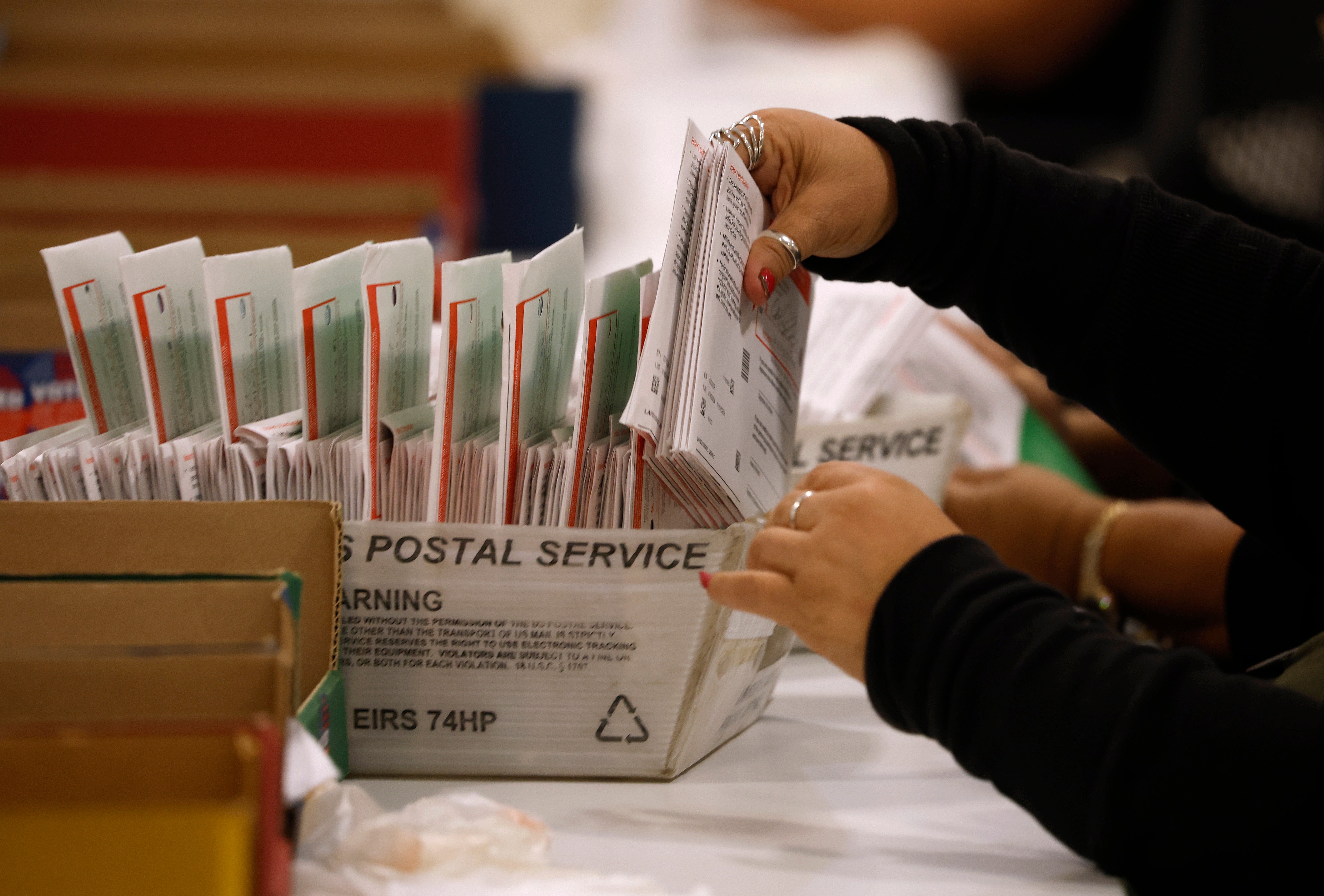
Trump has long sought to cast doubt on the legitimacy of the nation’s elections by elevating baseless or misleading claims about the ballots cast and how they are run
Trump has long sought to cast doubt on the legitimacy of the nation’s elections by elevating baseless or misleading claims about the ballots cast and how they are run (Getty)

Trump also said newly declassified intelligence — which was obtained in 2020 but “buried by rogue bureaucrats" while he was president — includes an alleged attempt to “manufacture illegal ballots for Joe Biden.”

The president appeared to misleadingly describe a 2020 memo from the FBI’s Albany, New York office that allegedly discovered China’s plans to send out thousands of fake driver’s licenses. Agents at the time had questioned whether it was a bogus tip or if the source was reliable, and there is no evidence that any votes were fraudulently cast a result.

That memo was released by Republican Senator Chuck Grassley’s office last year.

But Trump’s remarks revived a narrative that has been central to his political career. The president's persistent claim that the 2020 presidential election was stolen and rigged against him fueled January 6 riots, sustained partisan investigations intended to reverse the outcomes in states he lost, inspired Republican-led legislation in nearly every state to change how elections are run, and formed the basis of his 2024 campaign.

“We have no indications that any foreign actor attempted to alter any technical aspect of the voting process in the 2020 U.S. elections, including voter registration, casting ballots, vote tabulation, or reporting results,” intelligence officials wrote in their 2021 report.

“We assess that it would be difficult for a foreign actor to manipulate election processes at scale without detection by intelligence collection on the actors themselves, through physical and cyber security monitoring around voting systems across the country, or in post-election audits,” they added.

Foreign actors were more successful in their attempts to “spread false or inflated claims about alleged compromises of voting systems to undermine public confidence in election processes and results,” they wrote.

Last year, Trump issued an executive order stating that “there has been no evidence of a foreign power altering the outcome or vote tabulation in any United States election.”

Voter fraud

In his remarks, Trump alleged a “pay, play, and cheat” scheme in Michigan, where “some canvassers admitted to FBI agents that they signed voter registration forms in other people's names, submitted fraudulent registration for people who did not exist, and received gift cards tied to their number of applications that they produced.”

But an investigation into that alleged scheme, which was first alerted to law enforcement officials by an election worker, has long been known to authorities and prosecutors. No fraudulent votes or registrations were discovered.
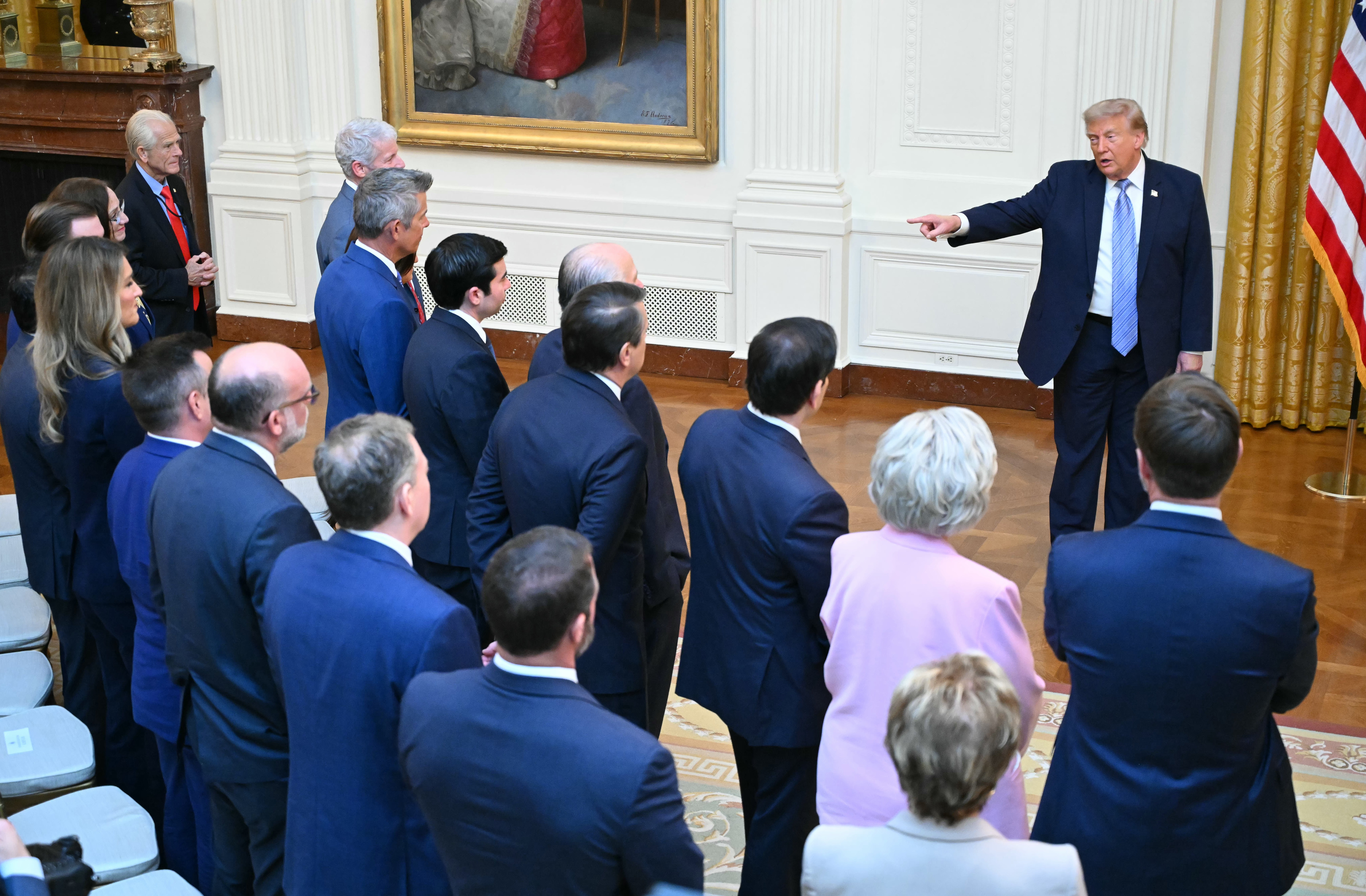
Trump has repeatedly framed the spurious idea of widespread noncitizen voting to urge passage of the SAVE Act ahead of midterm elections with the balance of power in Congress, and fate of his remaining years in office, at stake
Trump has repeatedly framed the spurious idea of widespread noncitizen voting to urge passage of the SAVE Act ahead of midterm elections with the balance of power in Congress, and fate of his remaining years in office, at stake (Getty)

Interviews published by the White House which had not previously been released to the public spell out the alleged scheme, though it does not appear any fraudulent voter registrations resulted in fake ballots — which would be noticed by election workers.

The investigation was referred to the FBI, though election officials contend the process has shown how election security works: election officials flag irregularities to authorities and they investigate.

The FBI closed the probe last year after investigators “did not identify a criminal violation or a priority threat to national security.”

Noncitizen voters

A persistent myth that millions of noncitizens are voting in federal elections — with the support of Democratic officials seeking to replace electorates — is driving the president’s demand for Congress to pass the SAVE Act, which would impose nationwide voter ID requirements and establish onerous in-person voting requirements that would make it more difficult to participate in elections by voting by mail.

According to the White House, the Department of Homeland Security has identified roughly 250,000 noncitizens who were on voter rolls in several states, including California, New Jersey, Nevada and Pennsylvania.

The agency determined 28,000 noncitizens were registered to vote, a figure that drew from data in 25 states that processed more than 68 million registration records in the Systematic Alien Verification for Entitlements, or SAVE.

Under Trump, Homeland Security has initiated a government-wide sweep of records to states to mass-verify voters’ citizenship status through the SAVE system. Election administrators have reported significant errors that have misidentified scores of eligible voters.


Trump’s rhetoric is more dangerous than voting machine flaws, experts say

Trump’s rhetoric is more dangerous than voting machine flaws, experts say

https://www.politico.com/news/2026/07/18/trumps-rhetoric-voting-machine-flaws-01004123 

Trump’s rhetoric is more dangerous than voting machine flaws, experts say

States have stepped up the security of voting machines over the past decade, and largely moved away from electronic devices.

By Maggie Miller

07/18/2026 10:00 AM EDT

Election officials are warning that President Donald Trump’s assertion that America’s voting machines aren’t safe is far more dangerous than the vulnerabilities he highlighted in his Thursday night address.

Flaws in electronic voting machines have been well-documented for more than a decade by researchers, and states have poured money into bolstering security. Still, none have ever been exploited by malicious actors to successfully change the outcome of an election.

Now officials are worried that Trump’s latest comments — when he claimed that “Americans were blatantly lied to about the security of our election infrastructure, including the security of electronic voting machines” — could undermine the electorate’s fundamental faith in voting. Without confidence in the system, the entire process could be called into question, as voters choose not to cast ballots or refuse to accept election results.

“There’s nothing wrong with pointing out vulnerabilities and therefore doing audits or therefore upgrading to a more modern system that uses a paper record,” said Gowri Ramachandran, director of elections and security at the Brennan Center for Justice’s Elections and Government Program. “What’s wrong is trying to use those vulnerabilities to spread distrust in elections.”

Colorado’s Democratic Secretary of State Jena Griswold stressed during a Center for American Progress event Friday that “nothing the president said was groundbreaking, new or actually a vulnerability that has been exploited or is not being addressed.”

There is no evidence that foreign or domestic hackers have ever exploited electronic voting machines to change votes or impact the outcome of an election. Investigators did find that Russian hackers successfully accessed the voter registration databases of a few U.S. states ahead of the 2016 elections, but they never changed any votes. To date, that’s the most intensive hacking effort documented by federal authorities involving U.S. elections.

Documents released by the White House on Thursday night did not back up Trump’s claims of widespread exploitation of electronic voting machines. One 2020 report from the National Intelligence Council detailed concerns that foreign hackers might seek to compromise U.S. election infrastructure, but did not conclude this occurred.

A separate report from the Cybersecurity and Infrastructure Security Agency also released Thursday night concluded that “U.S. election systems are subject to the same security concerns as most other software systems,” such as outdated certification efforts. CISA made no judgment calls on whether the machines had been compromised.

“I’m not aware of an incident in which a vote has been changed through a hack,” said Scott Algeier, executive director of the Information Technology Information Sharing and Analysis Center, which serves as a way for IT companies to share threat information. “There’s lots of opportunity for that to happen because we have lots of elections, and I think the fact that it hasn’t happened is an indication of how secure the overall election process is.”

But while electronic voting machines have not been exploited at scale, they do have vulnerabilities that researchers have pressed manufacturers and election officials alike to patch for more than 10 years.

Many of these vulnerabilities have been discovered during the annual Voting Village gathering at the DEFCON conference in Las Vegas, where hackers are able to physically rip apart some of the more common types of voting machines and poll books used across the country. Each time, they’ve found vulnerabilities.

At the 2017 event, each piece of equipment in the room was breached by participants within three days, including one electronic voting system that was hacked and remotely taken control of in minutes. Several machines were found to have Chinese hardware, raising concerns about supply chain vulnerabilities. In 2018, a voting tabulator used in 23 states at the time was remotely hacked. And the 2020 NIC report released by the White House referenced the modification of a poll book at the 2019 Voting Village to run the video game Doom.

Harri Hursti, co-founder of the Voting Village, stressed Friday that the mere presence of vulnerabilities in the equipment — often found by hackers physically accessing them — does not mean any sort of widespread compromise has ever taken place.

“Every system on the planet is almost guaranteed to have some vulnerabilities — but that doesn’t mean that the vulnerabilities are exploitable,” Hursti said Friday. “All vulnerabilities should be fixed, and prioritizing exploitable ones first — but just the presence of vulnerabilities is not in any shape or form an indication that the system has been breached.”

The Russian hacking efforts in 2016 actually contributed to making it even harder for hackers to make a dent in U.S. election outcomes. It spurred election officials across the country to move towards either using paper ballots or electronic machines with paper trails. As a result, only around 4 percent of registered voters currently live in regions where only direct recording electronic systems are used for voting, ensuring that there is a paper trail documenting how the vast majority of Americans voted.

“These are machines that very few Americans actually vote on anymore, where they would pick their selections on a touchscreen, and then the computer would record the selection in its internal system and not actually provide any kind of paper record,” Ramachandran said.

And if even hackers were to access one type of voting machine, it would be virtually impossible to scale that attack up to change the outcome of an election, since U.S. elections are run differently by each state and are often segmented further between counties.

“Elections are so decentralized in the United States, and each state has its own laws on what type of equipment can be used in elections, what type of certification or process has to be followed before doing that,” Ramachandran said.

The Trump administration may aim to take further measures ahead of November to address election security concerns. Homeland Security Secretary Markwayne Mullin said in a speech Friday that DHS is “going to make our security enhancements mandatory,” noting that if states wanted federal election security grants, they would need to adhere to changes including using a federal database to check their voter rolls for noncitizens.

Griswold said Friday that blocking the funds from states that didn’t comply with DHS rules was “likely unlawful” given that states have jurisdiction over elections, and noted that these DHS funds were largely used by law enforcement groups, not for upgrading equipment.

“We are not reliant on these DHS grants to secure our elections, but Colorado will be less secure as a result of an unlawful maneuver by the federal government,” Griswold said.

States and localities have long struggled to fund upgrades to election equipment, including enhancing the cybersecurity of the voting process. Congress has stepped in and appropriated around $1 billion in election security funds to states since 2018, used to buy new secure equipment and provide cybersecurity training to poll workers. But those funds have not been divided out evenly over the years, and only $45 million was given to states in the most recent fiscal year.

The funds are managed by the Election Assistance Commission, which is currently without any leaders after Trump dismissed its three remaining commissioners last week. Former EAC Commissioner Benjamin Hovland said on the same panel as Griswold Friday that if Trump wants states to further secure their machines against cyber threats, more money is needed.

“Election experts have been saying for years … to invest in the infrastructure of our democracy, give money to support these things, and despite the rhetoric, you never see support for funding, and certainly not the funding levels that are needed,” Hovland said.


ICE shared Medicaid data it wasn't supposed to have with Palantir


ICE shared Medicaid data it wasn't supposed to have with Palantir

https://www.npr.org/2026/07/17/nx-s1-5898504/ice-medicaid-palantir-data 

ICE shared Medicaid data it wasn't supposed to have with Palantir

ICE agents stand guard outside a immigrant detention center in Newark, New Jersey in May 2026. Medicaid officials improperly shared data about millions of people with ICE, who then shared that data with the data analytics firm Palantir, according to new court filings.

ICE agents stand guard outside a immigrant detention center in Newark, New Jersey in May 2026. Medicaid officials improperly shared data about millions of people with ICE, who then shared that data with the data analytics firm Palantir, according to new court filings.

Adam Gray/Getty Images

After Medicaid officials improperly shared data about millions of people in January with immigration officials, ICE then shared that data with the data analytics firm Palantir, according to new court filings. Palantir operates an app called ELITE that is used by ICE agents to show the addresses of noncitizens who may be subject to deportation.

That revelation was made public in a motion filed Thursday by more than 20 Democratic attorneys general who sued the Trump administration last year over its data-sharing agreement between the Centers for Medicare and Medicaid Services and ICE.

U.S. District Judge Vince Chhabria in California ruled in December that health officials could share with ICE certain details from Medicaid data about immigrants without lawful status from the states that had sued, such as home addresses, dates of birth and immigration status.

Chhabria, who was appointed by former President Obama, then temporarily paused data sharing between CMS and ICE for immigration enforcement purposes in late May after federal officials admitted CMS had shared data with ICE in January that went beyond what the court order allowed. One dataset of refugees in Minnesota included U.S. citizens, and another that was transferred on Jan. 7 contained data of millions of people, including those in the country legally.

ICE was supposed to delete the improperly shared data. Chhabria set a hearing for August to further clarify his order and clear up ambiguity regarding which categories of noncitizens' data could be lawfully shared with ICE.

But in recent days, federal officials have admitted to additional instances of improper data sharing.

In a court filing last week, the Justice Department said that CMS again inadvertently reshared with ICE the dataset with millions of names that CMS had first improperly shared with ICE in January. The government said the error occurred during an effort to share data from states not involved in the lawsuit.

Alberto Briseno, a section chief for ICE's Homeland Security Investigations, wrote in a declaration that ICE personnel deleted the file after it was discovered and it was not used for law enforcement purposes.

Then Briseno revealed that a day later, the agency had done a broader search and discovered that half a dozen users still had a copy of the Jan. 7 dataset.

In that most recent declaration, Briseno said he was not aware of any additional copies of the dataset, but said the recent searches have "highlighted technological difficulties of making a representation that every possible variation of the file has been searched for and located." He added, "ICE will continue to make good faith efforts to delete any copies that may be found in the future."

Meanwhile, the Department of Justice is asking the judge to expand his order to allow ICE to receive data on a broader category of noncitizens – to potentially include all immigrants who are not legal permanent residents, citizens or have another form of permanent status.

"ICE's inability to identify Medicaid records in its possession undercuts any claim that the agency should be entitled to more access to that data," the Democratic attorneys generals wrote in their motion filed late Thursday.

Their motion continued, "Each successive revelation of a violation of the Order makes it more difficult for Plaintiff States to have confidence in Defendants' ability to maintain and secure this data in compliance with the Order, and more difficult for Plaintiff States to communicate assurances to Medicaid providers, enrollees (and their counsel), and the public at large about the privacy and confidentiality of their healthcare data."

Palantir did not immediately return a request for comment about whether the company had deleted the Jan. 7 dataset that ICE had shared after improperly receiving it from CMS. DHS also didn't immediately return a request for comment about its transfer of data to Palantir.

According to a declaration filed by California deputy attorney general Anna Rich, when plaintiffs asked what federal officials did to ensure Palantir and other contractors had purged the data, defendants responded that the data had been shared over a Microsoft Teams chat and the shared data was deleted from the chat. Rich shared in her declaration a document turned over in discovery from federal officials that shows a redacted transcript of what appears to be ICE personnel asking Palantir to delete the file.

In an April 30 hearing, Chhabria had warned the federal government would not be able to continue using Medicaid data for deportation efforts if it continued improperly sharing the data of citizens and legal immigrants.

"If the federal government cannot be sufficiently careful then it can't use the information, ok?" Chhabria had said.