Representative Thomas Massie warned his party that their bill is an absolute disaster.
Kevin Dietsch/Getty Images
While
Republicans managed to pass their budget bill through the House
Thursday morning, one GOP representative was not happy, calling it a
“debt bomb ticking.”
Representative Thomas Massie warned his colleagues, still debating in the middle of the night, that he couldn’t vote for a bill that would cut taxes and increase spending.
“I’d
love to stand here and tell the American people, we can cut your taxes
and we can increase spending and everything’s going to be just fine. But
I can’t do that because I’m here to deliver a dose of reality,” Massie
said. “This bill dramatically increases deficits in the near term but
promises our government will be fiscally responsible five years from
now.
“Where have we heard that before? How do you
bind a future Congress to these promises? This bill is a debt bomb
ticking,” added the Kentucky congressmen, known for his libertarian
views. Massie was one of two Republican “no” votes on the bill,
along with Representative Warren Davidson of Ohio. One Republican,
Representative Andy Harris of Maryland, voted “present.” Every Democrat
voted against the bill.
Massie hammered the bill,
warning that “very soon, the government will be paying $16,000 of
interest, interest alone, per U.S. family,” and that the national debt
would skyrocket up to $30 trillion over the next 10 years.
“Congress can do funny math, fantasy math, if it wants,” Massie added. “But bond investors don’t.
“We’re not rearranging deck chairs on the Titanic
tonight. We’re putting coal in the boiler and setting a course for the
iceberg,” he added, to applause from other members in the room.
In
one final message, Massie laid into his colleagues and his party,
saying, “If something is beautiful, you don’t do it after midnight.”
Throughout
the budget reconciliation process, Massie has warned that he wouldn’t
support the bill, even taking attacks from Donald Trump, who threatened
to have him “voted … out of office” on Tuesday. While the GOP passed
the bill without him, Trump is known for holding grudges, and could turn
most of the Republican Party against Massie in the near future.
Only Two Republicans Were Brave Enough to Vote Against Medicaid Cuts
House Republicans just passed their disastrous tax bill.
Andrew Harnik/Getty Images
House Speaker Mike Johnson
House Republicans passed Trump’s “big, beautiful” spending bill by just one vote early Thursday morning.
After
hours of deliberation, the bill passed 215–214, an incredibly slim
margin that highlights the lack of political cohesion within the GOP.
Two Republican representatives—Thomas Massie of Kentucky and Warren
Davidson of Ohio—voted with the Democrats.
The
bill will include even more funding for the military and more funding
for Trump’s border crackdown, while slashing crucial programs like Medicaid, Medicare,
and the Supplemental Nutrition Assistance Program, or SNAP, and also
repealing clean energy credits put in place by the Biden administration.
Up to 15 million Americans will be uninsured by 2034 due to the bill’s
cuts, and 7.6 million will be at risk of losing Medicaid, according to estimates from the Congressional Budget Office.
“What
we’re going to do here this morning is truly historic, and it will make
all the difference in the daily lives of hardworking Americans.… To put
it simply, this bill gets Americans back to winning again, and it’s
been a long time coming,” Speaker Mike Johnson said, in a floor speech
prior to the vote.
Democrats are accusing the GOP of pushing the anti-working-class bill “under the cover of darkness.”
“Here’s
what it will mean for the American people,” Minority Leader Hakeem
Jeffries said, prior to the vote. “Children will get hurt. Women will
get hurt. Older Americans who rely on Medicaid for nursing home care and
for home care will get hurt. People with disabilities who rely on
Medicaid to survive, will get hurt. Hospitals in your districts will
close. Nursing homes will shut down. And people will die.”
Tucker Carlson Admits It: Trump Reeks of Corruption
Even one of Donald Trump’s biggest allies is upset by all of Donald Trump’s business deals.
Ivan Apfel/Getty Images
Donald Trump’s many deals during his trip to the Middle East last week have rankled one of his closest allies on the right.
Tucker Carlson called
out the president’s “corruption” on his podcast Tuesday while speaking
with his guest on the program, fellow right-wing influencer Shawn Ryan.
The pair were discussing their thoughts on the Trump administration, and
while Ryan was happy with certain things from the president, such as
his immigration crackdown and his war on diversity, equity, and
inclusion, Trump’s Middle East trip gave him pause.
“F---
it, I’m gonna get blasted for this,” Ryan said, “but I see all these
negotiations going on in the Middle East, and then I don’t know when
these buildings were approved or when these deals got done, but then I
also see like, ‘Oh, there’s a brand-new hotel going up in Dubai or Abu
Dhabi. And another one going up in Doha.’”
“I’m like,
‘Did these just get done also with the deals that just happened over
there, or was this earlier?’” Ryan continued, before telling Carlson,
“You would probably know.”
Carlson denied knowing
about Trump’s dealings, and Ryan said he thought the pundit was “a lot
more on the inside than I am,” adding about Trump’s deals, “That stuff
kind of worries me.”
“Well, it seems like corruption, yeah,” Carlson said.
It’s
surprising to see Carlson offering criticism of the president,
considering how close he is to Trump. He even spoke at a Trump campaign rally in late October, just days before the election.
Trump’s Middle East trip came with several announcements from his businesses in the region, as well as a $2 billion investment in his family’s cryptocurrency business from a firm backed by the United Arab Emirates government.
But the worst of it was the “gift” of a $400 million luxury plane from Qatar to
Trump, ostensibly to replace Air Force One, which drew criticism even from Republicans, such as Senator Rand Paul, Ben Shapiro, and Laura Loomer.
Now it seems even Carlson has some misgivings about Trump’s dealings.
Does this mean that there are cracks in Trump’s base, or will all of
these personalities forget Trump’s corruption the next time he panders
to them?
Here Are the Worst Things in Trump’s Big, Beautiful Bill
The GOP is struggling to
pass a budget bill that would threaten millions of poor Americans’
livelihoods and health care—to the benefit of the wealthy.
Kevin Dietsch/Getty Images
Speaker
of the House Mike Johnson arrives at a House Rules Committee meeting on
the One Big Beautiful Bill Act at the U.S. Capitol on May 21.
During his meeting with House Republicans on Wednesday, President Donald Trump shared a crucial message:
Don’t “fuck around” with Medicaid. But despite their seemingly
unwavering loyalty to the president, it seems increasingly likely that
GOP representatives will indeed approve a bill that would authorize
massive cuts to the program that provides health care for low-income
Americans—among other provisions that would slash federal spending while
adding trillions to the national debt and financing a substantial
windfall for the wealthiest Americans.
The
ever-encumbered House Speaker Mike Johnson and his charges are in
familiar territory: scrambling to pass the “big, beautiful bill”—which
would extend several tax breaks enacted during the first Trump
administration—amid the perennial factional infighting for which the GOP
caucus has become known. Despite their ostensible desire to reduce the
federal debt, the nonpartisan Congressional Budget Office found that
they may accomplish the opposite of that goal: It estimated that the measure would increase the federal deficit by $2.3 trillion over 10 years, triggering automatic cuts to Medicare absent congressional action. This would be in direct contradiction to Trump’s promises not to touch Medicare, a crucial campaign pledge.
The CBO also found
that the bill would increase resources for the top 10 percent of
Americans and lower incomes for the bottom 10 percent. The measure would
slash nearly $1 trillion from Medicaid
and the Supplemental Nutrition Assistance Program, formerly known as
food stamps. The CBO estimated that the loss in resources would be due
to the cuts to Medicaid and SNAP, while the wealthiest 10 percent would
see an increase in income “mainly because of reductions in the taxes
they owe.” Moreover, as many as 7.6 million Americans would be uninsured
by 2034 because of the cuts to Medicaid.
The CBO’s findings were echoed by researchers at the University of Pennsylvania’s Wharton School of Business last Friday, whose budget model
revealed that those in the lowest income quintile (annual income of
$17,000 or less) would see their after-tax income cut by $1,035.
Meanwhile, those in the top 0.1 percent of earners would take home an
additional $389,280.
“This is what Republicans are fighting
for—lining the pockets of their billionaire donors while children go
hungry and families get kicked off their health care,” said
Representative Brendan Boyle, the ranking member of the House Budget
Committee, in a statement. House Speaker Mike Johnson has struggled to
usher the bill through the lower chamber, partially due to moderate
Republicans’ desire to lift a cap on the state and local tax reduction, but also because some hard-line conservatives want to cut the social safety net by an even greater amount.
Republicans
argue that by tightening Medicaid and SNAP work requirements for
able-bodied adults without dependents, they will be reducing the amount
of fraud in the program—but evidence suggests
that work requirements are more likely to result in people losing
coverage without a corresponding meaningful boost in employment. A new report
by the Urban Institute found that the work requirements included in the
House bill would lead to 5.4 million people losing all or most of their
SNAP benefits. The bill would also shift a significant percentage of the cost of SNAP to the states, which would put a strain on state budgets and likely result in losses in benefits.
Despite a proposed increase in the child tax credit, the bill would also exclude millions of children, according to a report by the Center on Budget and Policy Priorities,
in part because of a provision that requires both parents to have
Social Security numbers—an attempt to prevent the children of
undocumented immigrants from receiving the benefits.
“Whatever
Republican policymakers may think, these policies aren’t popular with
the public because they aren’t consistent with core American values,
which include helping people when they fall on tough times and expecting
wealthy people to pay their fair share,” Sharon Parrott, the president
of the left-leaning CBPP, said in a statement.
Even
if the House bill is approved, it is likely to be changed in the
Senate, where even some Republicans have expressed concerns about the
proposed cuts to Medicaid. In an op-ed in The New York Times
earlier this month, GOP Senator Josh Hawley condemned the “corporatist
Republicans” who want to “build our big, beautiful bill around slashing
health insurance for the working poor.”
“That argument is both morally wrong and politically suicidal,” Hawley wrote.
Moreover, the House has yet to approve the bill given the recalcitrance of conservative Republicans, despite the Trump administration’s pressure.
Until it passes either chamber of Congress, the potential effects of
the bill remain theoretical—much to the Trump administration’s chagrin.
“The
House of Representatives should immediately pass this bill to show the
American people that they are serious about ‘promises made, promises
kept.’ President Trump is committed to keeping his promises, and failure
to pass this bill would be the ultimate betrayal,” the White House said in a statement Wednesday.
Trump’s 2-year reprieve gives coal plants ‘a free pass to pollute’
A former EPA official
warns exemption for some coal-fired power plants could be the first step
toward gutting pollution rules for all plants.
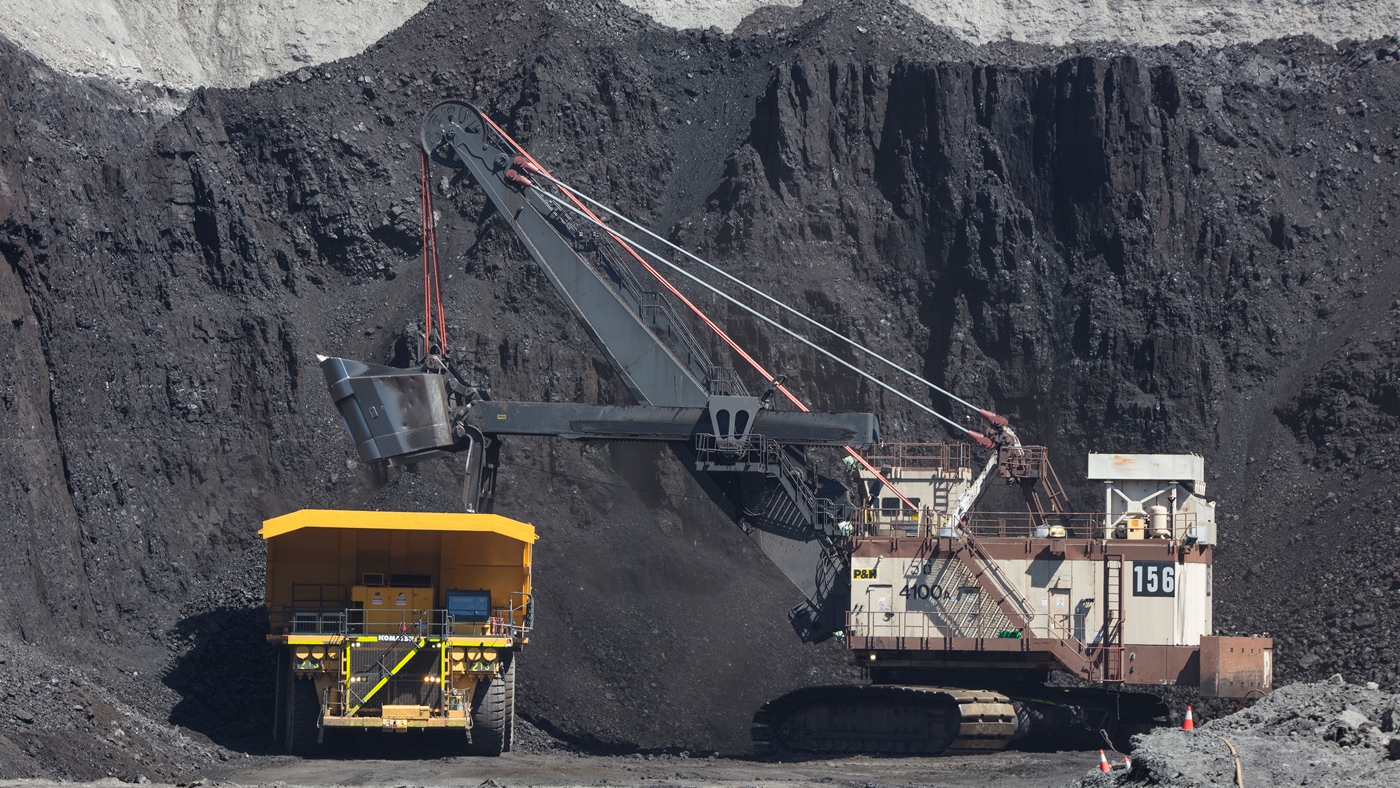
A truck prepares to haul coal at the North Antelope Rochelle Mine in Wyoming, the largest coal mine in the world.
Peabody Energy Inc.
This story was originally published by Floodlight, a nonprofit newsroom that investigates the powers stalling climate action.
Last year, the U.S. Environmental
Protection Agency gave this country’s nearly 200 remaining coal-fired
power plants until 2027 to install or improve air quality monitoring
devices on smokestacks to meet federal guidelines to cut hazardous
pollutants including mercury, arsenic, lead, and particulate matter.
But through executive action,
President Donald Trump last month granted a two-year reprieve to some
of those plants from the strengthened Mercury and Air Toxics Standards
(MATS), which required continuous monitoring of air pollutants.
It is part of Trump’s continuing
efforts to boost fossil fuel use and undermine President Joe Biden’s
push to reduce threats from climate change and improve the health of
people living in communities plagued by industrial pollution. The
exemption applies to roughly one-third of all U.S. coal plants.
These toxic and hazardous emissions
have been tied to cancer, neurological damage, and developmental
disorders, “even at extremely low levels of exposure,” said Margie
Kelly, a spokesperson for the nonprofit Natural Resources Defense
Council, calling the two-year pause “a free pass to pollute.”
“We’re looking at a
two-year extension as [a] step … to get rid of these mercury and
particulate matter standards and get rid of the continuous emissions
monitoring requirement altogether,” said Joseph Goffman, a former
assistant administrator of the EPA’s Office of Air and Radiation under
Biden.
The extension, which was among the list of deregulatory actions announced
by EPA Administrator Lee Zeldin, has drawn strong criticism from
environmental groups, including those in Louisiana, where three
coal-fired powered plants still operate. Burning fossil fuels to
generate electricity is one of the top contributors to greenhouse gas
emissions.
The state’s largest electric
provider, which owns one coal plant and shares ownership of a second —
has said it already complies with the existing standards and plans to
retire its coal-powered generation in the next five years. But advocates
worry the shift in the country’s regulatory landscape will worsen
health risks for fenceline communities — and that promises to shutter coal plants could be reversed — as projected electrical demand continues to sharply rise.
“I think that it
would be a mistake for us to rely on a corporation to do the right thing
just because they want to,” said Emory Hopkins, organizer for the
Sierra Club’s Beyond Coal Campaign in Louisiana.
“I think something
that might be worth noting is that we’re looking at a lot of load growth
in the coming years, which is a lot more electric demand, energy
demand,” primarily from data centers, Hopkins said.
President: Rules are ‘unattainable’
In his executive order, Trump said
granting the two-year extension would safeguard the nation’s power
supply by not forcing electric companies to comply with “unattainable”
emissions standards. The EPA under Trump now says the enhanced MATS rule
would cause “regulatory uncertainty” for many U.S. coal plants.
After Trump’s action, the Tennessee Valley Authority, a federal utility that generates power to seven states, announced it plans to walk back commitments to retire coal-powered plants by 2035.
By the EPA’s current estimates,
the strengthened MATS rule would cost energy companies more than $790
million over 10 years. Trump’s order stated that many coal-fired power
plants were at risk of shutting down to meet the compliance standards,
which would have led to significant job losses and weakened the
country’s electrical grid.
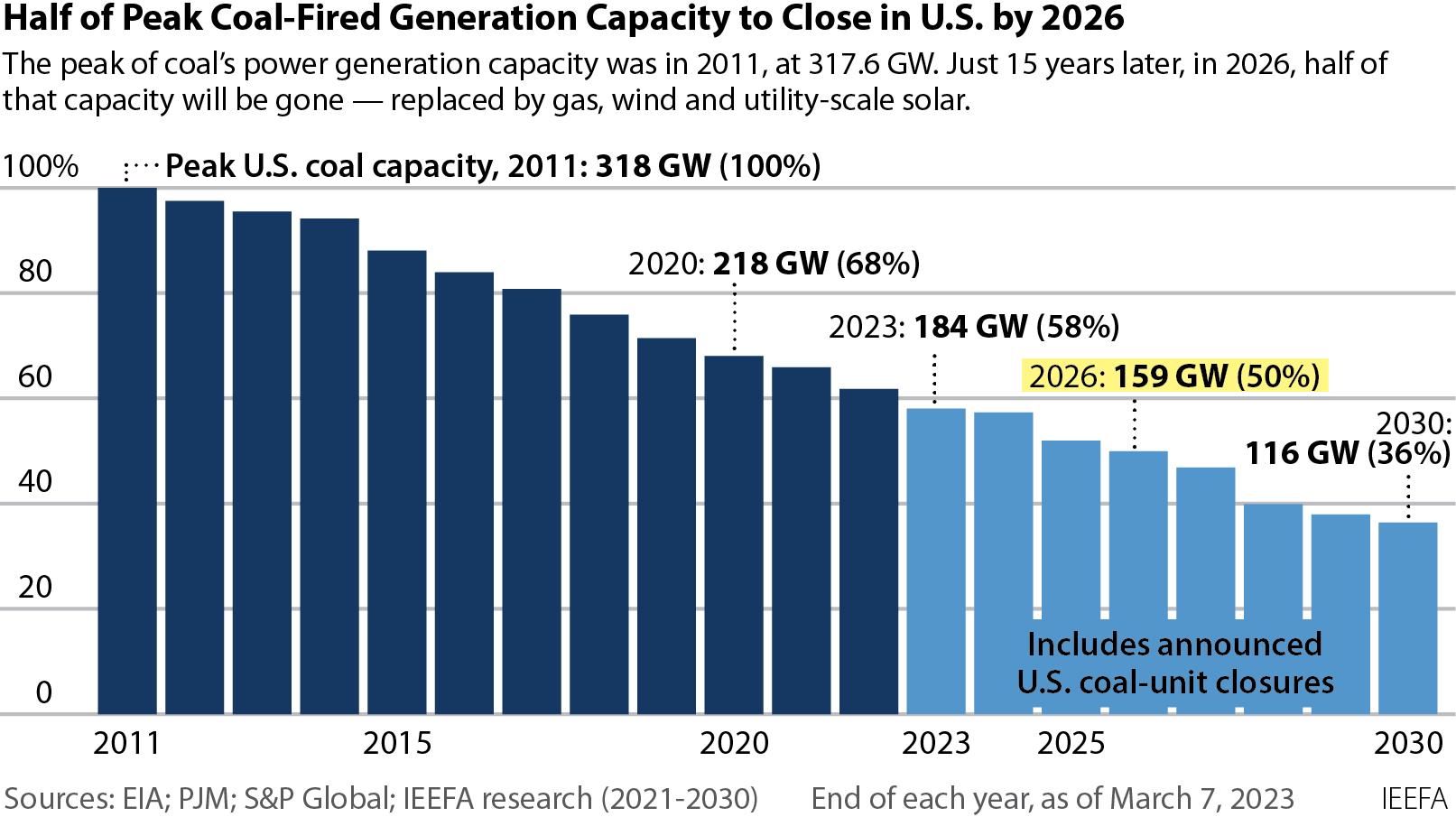
In reality, coal-powered plants were already on the decline
due to cheaper sources for electric power generation including natural
gas, wind, and solar — the latter two being the preferred option for
greenhouse gas reduction.
Goffman said the MATS rule changes
were projected to reduce mercury emissions by 1,000 pounds. The World
Health Organization has said even in small doses, mercury can cause serious health complications to a person’s nervous, digestive, and immune systems.
Goffman added that the changes passed
by the Biden administration last year incorporated advances in
filtering out particulates, which were not available when the mercury
rules were first enacted in 2012. The enhanced MATS rule would have
reduced particulate matter by 770 tons, and carbon dioxide — a potent
greenhouse gas — by 65,000 tons by 2028, resulting in millions of
dollars in benefits to human health and the climate, he said.
“If there’s one
pollutant that you would worry about more than any other, when it comes
to making people sick and killing them, it’s fine particles,” he said.
“So within reason, the more you can cut fine particles, the better off
everyone’s health is going to be.”
Biden’s EPA also projected there
would be little cost to electricity customers. The agency under Biden
also said no coal-fired plants would be forced to shut down, and there
would have been no major disruptions to energy production.
“I want to emphasize
that these rules were not intended to prompt coal plants to shut down,”
Goffman said. “The Clean Air Act doesn’t authorize EPA’s regulations to
do that, and the EPA certainly performed its analysis of the MATS
requirements on the assumption that these plants would, and in many
cases might need to, keep operating.”
‘Kick in the teeth’ to polluted communities
The Sierra Club, a nationwide grassroots environmental organization, noted in a 2020 report
that coal-fired power plants in Louisiana accounted for just 8 percent
of the state’s electric power but were to blame for an estimated 51
deaths and 349 asthma attacks annually.
The Roy S. Nelson, a coal-fired plant
mostly owned by Entergy Louisiana in Lake Charles, has the largest
number of people in the state living within a 12-mile radius — a
population of about 153,000.
Michael Tritico, a local
environmental advocate who grew up in Lake Charles, said people there
rarely oppose Entergy Louisiana, or any of the industrial facilities,
despite the impacts to their health.
“The company always
gets what it wants, and the neighbors never stand up,” he said. “They
figure industry is their bread and butter, so they let it go.”
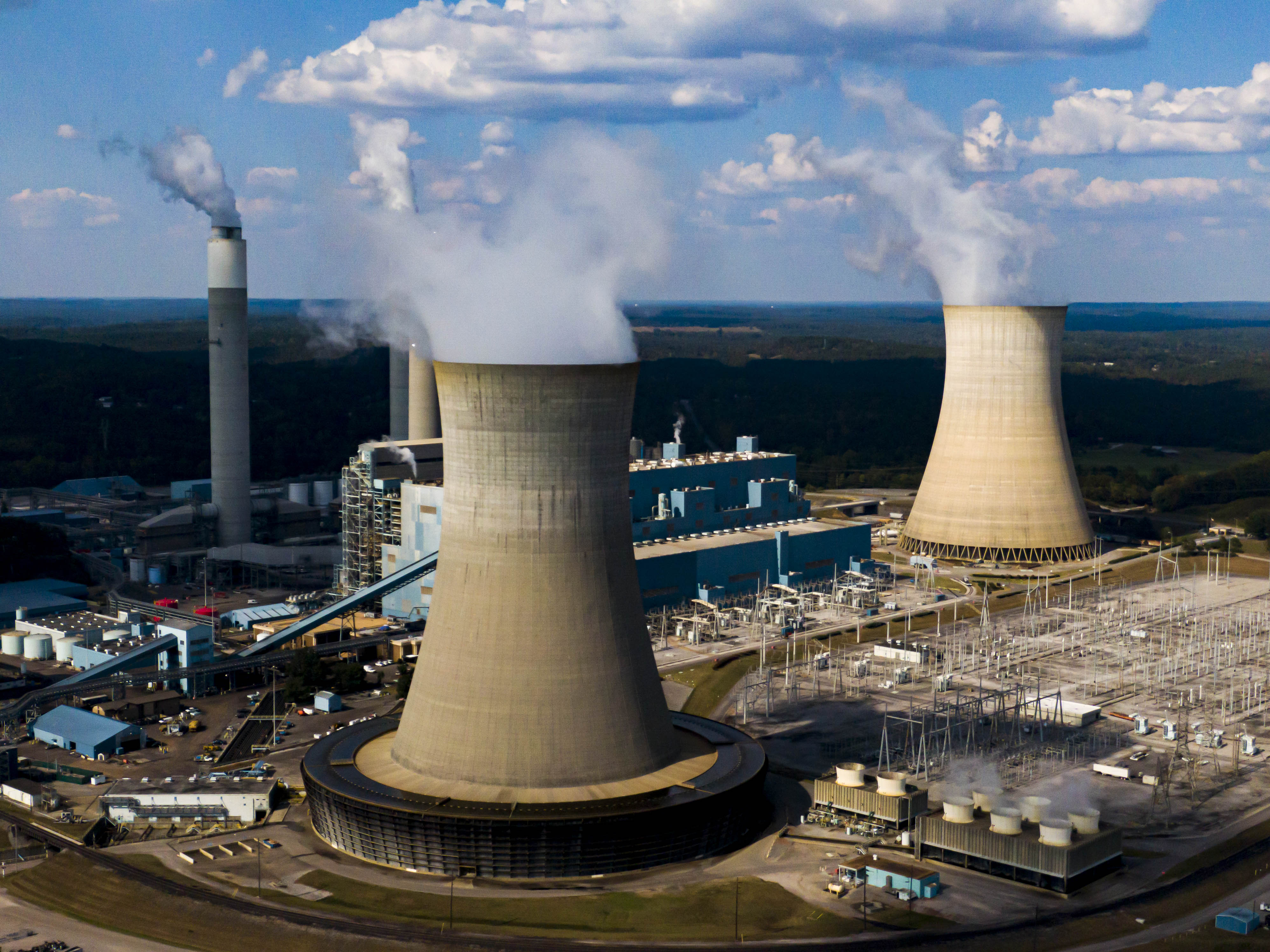
Smoke billows from the James H. Miller Jr. Electrical Generating Plant in Jefferson County, Alabama, owned by Alabama Power. Lee Hedgepeth / Inside Climate News
Brandon Scardigli, a spokesperson for
Entergy Louisiana, said the company remains committed to ending its
coal-generated power by the end of 2030. And as for its Nelson plant, he
said it will continue to operate under the current MATS standards until
then.
“This exemption does
not change the applicable EPA standard for mercury emissions control,
and Nelson 6 will continue to operate in compliance with this standard,”
he said. “We have continued to maintain and operate Nelson 6 in
compliance with existing environmental regulations.”
Joshua Smith, a senior attorney with
the Sierra Club’s Environmental Law Program, said it will be important
to press the company to keep those promises to an area already facing
increased pollution.
“That Lake Charles
area is already facing a pretty big buildout of liquefied natural gas
facilities and other types of industry,” Smith said. “In general with
these kinds of facilities, if they’re given flexibility and latitude,
they’ll take it.”
Smith added that the Sierra Club is
exploring legal actions it can take to push back against the exemption,
which could be extended beyond two years if Trump wants.
“I think it’s a
pretty destructive use of executive privilege,” he said. “What’s
happening here is the [Trump administration] is allowing these
facilities to pollute more at the very tail end of their life … [and]
damaging the community that has already been bearing the brunt of the
pollution for the better part of 40 or 50 years.
“It’s just like one more kick in the teeth on the way out the door.”