Saturday, May 9, 2026

Israeli attacks across Lebanon kill at least 19

Israeli attacks across Lebanon kill at least 19

https://www.aljazeera.com/news/2026/5/9/israeli-attacks-across-lebanon-kill-at-least-19 


Israeli attacks across Lebanon kill at least 19

No letup in deadly Israeli attacks despite a US-brokered ceasefire, with a new round of talks expected next week.

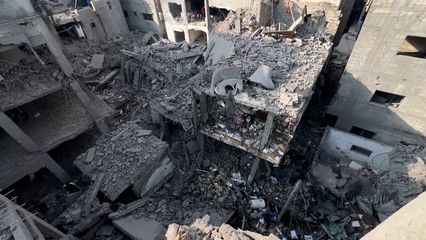
Aftermath of israeli attack on lebanon

Israeli attacks across Lebanon have killed at least 19 people despite a United States-brokered ceasefire, now in its third week.

In a statement on Saturday, the Lebanese Ministry of Public Health said an Israeli attack on the town of al-Saksakieh in the southern Sidon district killed at least seven people, including a child, and wounded 15, including three children.

Recommended Stories

list of 3 itemsend of list

Elsewhere, Israeli attacks killed a Syrian man and his daughter in Nabatieh; three people in Nahrain; three in Saadiyat; another three in Haboush; and one in Mefdoun.

The attacks come despite last month’s ceasefire that was meant to halt fighting with the armed group Hezbollah. Since April 16, Israeli forces have killed nearly 500 people, bringing the overall death toll since Israel’s invasion and bombardment of Lebanon began on March 2 to more than 2,750 people, according to the Health Ministry.

The Israeli army separately issued new forced displacement orders for several towns as it continued to occupy parts of southern Lebanon, maintaining a buffer zone that prevents the return of hundreds of thousands of displaced people and demolishing houses within it.

Reporting from Tyre, in southern Lebanon, Al Jazeera’s Obaida Hitto, said there were no signs of a ceasefire on the ground as the death toll from Israel’s “violent strikes” throughout the day “keeps rising”.

Later on Saturday, Lebanese state media reported additional air attacks on several towns across southern Lebanon. There was no immediate information about casualties.
1:13
  • Now Playing
    01:13
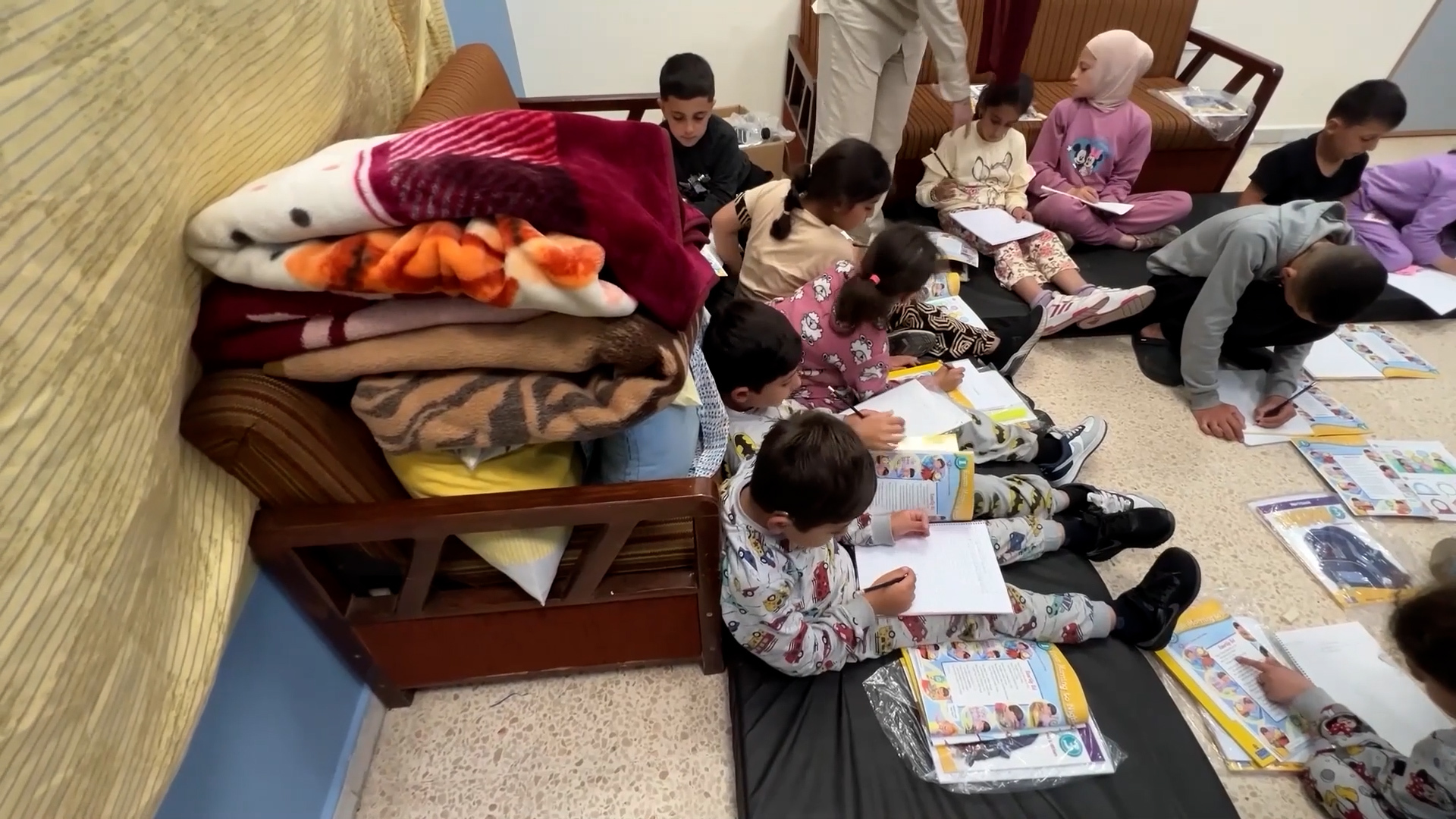
    Displaced Lebanese children keep learning amid displacement

    Displaced Lebanese children keep learning amid displacement

  • Next
    02:03
    “Nowhere left to go”: Gaza residents return to rubble after Israeli strike

    “Nowhere left to go”: Gaza residents return to rubble after Israeli strike


The intensified attacks come a day after the US announced it would mediate a second round of negotiations between Israel and Lebanon on May 14 and 15, despite demands by the Lebanese authorities that Israeli forces cease strikes before any talks.

The negotiations in Washington, DC will advance “a comprehensive peace and security agreement that substantively addresses the core concerns of both countries”, the US Department of State said in a statement on Friday.

Also on Friday, Lebanon’s President Joseph Aoun received former Ambassador Simon Karam, who is leading the Lebanese delegation for the talks, and provided him with “directives ahead of his trip to Washington”, according to a statement from the Lebanese presidency.

Meanwhile, Hezbollah, which is not included in the US-mediated talks, has continued to attack Israeli positions.

The group said on Saturday it had launched separate artillery shell attacks on Israeli positions in the southern Lebanese towns of Biyyada and Rachaf, as well as a drone attack in the border town of Misgav Am, according to state media. Hezbollah also claimed to have targeted a D9 bulldozer belonging to the Israeli army in al-Abbad town.

Separately, the Israeli army said on Saturday several explosive drones had entered Israeli territory, with some falling inside the country. It added that air defences intercepted multiple projectiles launched towards troops operating in southern Lebanon.

On Friday, drones launched by Hezbollah detonated in northern Israel near the Lebanese border, wounding at least three Israeli soldiers.
5:44
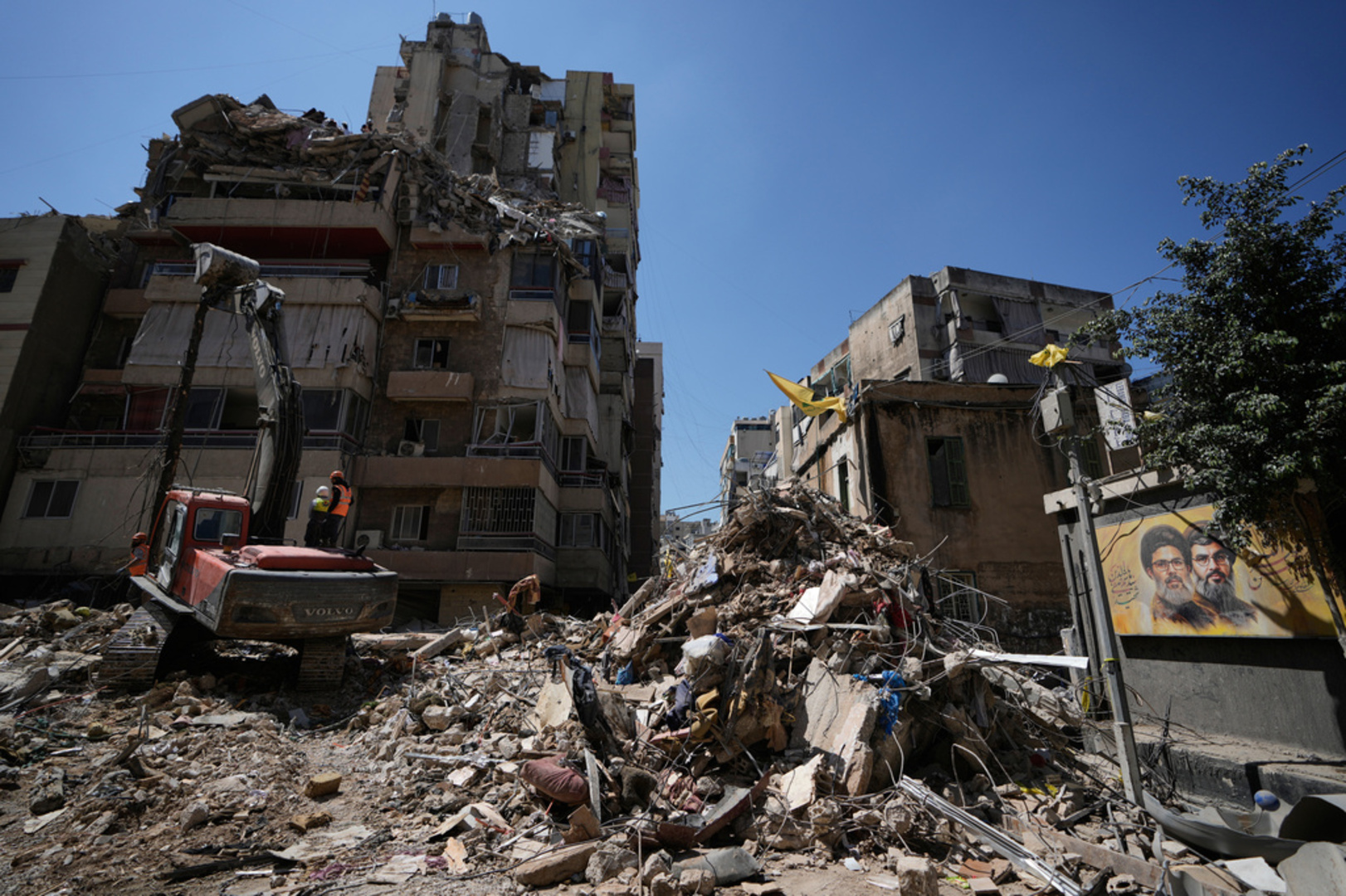
Israeli attacks on Lebanon: Strikes kill at least 11 people, Hezbollah retaliates


Rep. Hakeem Jeffries describes next steps after VA redistricting ruling: 'Our fight is not over'


Rep. Hakeem Jeffries describes next steps after VA redistricting ruling: 'Our fight is not over'


Poll: Republicans and Democrats agree on one big election issue

Poll: Republicans and Democrats agree on one big election issue

https://www.politico.com/news/2026/05/09/poll-americans-say-too-much-money-in-politics-00912455?_sp_pass_consent=true 


THE POLITICO POLL

Poll: Republicans and Democrats agree on one big election issue

As campaign spending hits record highs, voters across parties question how deeply money shapes elections.

Image of a protestor at a rally calling for an end to corporate money in politics and to mark the fifth anniversary of the Supreme Court's Citizens United decision, at Lafayette Square near the White House, January 21, 2015 in Washington, DC collaged on top of an image of protesters burn U.S. one dollar bills during an Occupy Los Angeles demonstration and march at the Federal Reserve Bank of Los Angeles on November 22, 2011 in Los Angeles, California. Another image of a one-dollar bill stamped with the words "Not to be used for bribing politicians."

Illustration by Anna Wiederkehr/POLITICO (source images via Getty)

By Anna Wiederkehr


Americans think cash rules more of the political system than it should — a concern that crosses party lines as midterm spending is projected to once again shatter records.

New results from The POLITICO Poll are stark: 72 percent of Americans say there is too much money in politics, with just 5 percent disagreeing. Across parties, majorities say billionaires wield outsized influence over U.S. politics and that special interest spending is a type of corruption that should be restricted, rather than protected as free speech. Nearly half of respondents say voters have too little power.

Outside money shows no sign of slowing. New groups tied to artificial intelligence, cryptocurrency and other emerging industries are rapidly entering the political arena, pouring millions into competitive primaries to shape who makes it to Washington. Each of the last three midterm elections has set new spending records, and ad tracking firm AdImpact projects advertising spending will once again reach new heights, to the tune of $10.8 billion.

“This type of astronomical spending corrodes people’s faith in our system of government, and I think people are really looking for changes to take some of this outrageous amount of spending and rein it in,” said Michael Beckel, the Money in Politics Reform Director at Issue One, a nonprofit advocacy group.


This article is part of an ongoing project from POLITICO and Public First, an independent polling company headquartered in London, to measure public opinion across a broad range of policy areas.


You can find new surveys and analysis each month at politico.com/poll.


Have questions or comments? Ideas for future surveys? Email us at poll@politico.com.

The poll — conducted in partnership with Public First — suggests many Americans see that influence as coming at voters’ expense, raising concerns not just about fairness, but about the health of the democratic system itself.

Still, there was some partisan disagreement, with Democrats tending to hold the strongest views against money in politics. Non-voters, meanwhile, were more likely to respond “I don’t know” to these questions, which lowered the overall shares of Americans who are critical of money in politics, compared with Harris voters and Trump voters.

Here’s a look at where Americans stand, starting with a place of unified skepticism:

CASH OVERLOAD


There’s a cross-party consensus that money in politics is too high

Americans overwhelmingly believe there is too much money in politics.

Cutting across party lines, nearly 3 out of 4 Americans agreed with the statement that “There is too much money in American politics,” while most others didn’t take a position.

ELECTIONS FOR SALE?


Most Americans say money shapes election results

They also see that money as powerful. A majority think it can shape election outcomes — with 39 percent saying money can outright buy results and another 34 percent saying it can influence but not buy them. That perception mirrors what’s already playing out in campaigns: wealthy donors and outside groups are pouring millions into competitive races, often through vehicles that can accept unlimited contributions and amplify a small group of voices.

There’s a partisan break in beliefs about how far that money can go. Trump voters lean toward saying people or organizations with a lot of money can influence elections without buying the outcomes, while Harris voters were more likely to say election outcomes can be bought.

POWER OF WEALTH


Voters think billionaires hold more power than them in elections

Americans agree: Voters don’t have enough power.

When asked how much sway different groups have over politics, about half of respondents said voters have too little — far greater than the shares that said voters have either too much influence or the right amount.

Meanwhile, 6 in 10 say billionaires have too much influence over U.S. politics — a view that’s more widespread among Democrats, with 75 percent of Harris voters agreeing, compared with 55 percent of Trump voters. A sizable share of respondents also see political parties, special interest groups and foreign governments as overly influential, far outweighing the number of Americans saying those groups have too little influence.

CORRUPTION CONCERNS


Most Americans see special interest spending as corruption

Concern about special interest money runs particularly deep. Not only do two-thirds of Americans say there is too much of it flowing into U.S. politics, a majority (53 percent) view that money as corrupt and in need of stricter regulation, instead of following the conservative legal principle that it is an act of free speech to be protected. That includes 56 percent of Trump voters.

MONEY OVER MESSAGE


Americans say campaign cash outweighs policy positions

Money plays a major role in shaping elections, including in determining candidates’ ability to run advertising to get their message in front of voters, to hold campaign events and to hire staff. It can even shape who runs in the first place.

Americans know that money matters, expressing a broad skepticism about how elections are decided. A plurality believes the candidate with the most money — not the most popular positions — wins.

That view is far more common among Democrats: Over half of 2024 Harris voters say money is the deciding factor, compared with a little over a third of Trump voters.

Erin Doherty contributed reporting.

About the survey

This edition of the POLITICO Poll was conducted by Public First from April 11 to 14, surveying 2,035 U.S. adults online. Results were weighted by age, race, gender, geography and educational attainment. The overall margin of sampling error is ±2.2 percentage points. Smaller subgroups have higher margins of error.