Tuesday, May 12, 2026

Israel kills, injures average of 4 children daily amid Lebanon ‘ceasefire’

Israel kills, injures average of 4 children daily amid Lebanon ‘ceasefire’ 

https://www.aljazeera.com/news/2026/5/12/israel-kills-injures-average-of-4-children-daily-amid-lebanon-ceasefire 


Israel kills, injures average of 4 children daily amid Lebanon ‘ceasefire’

The statistics shared by Save the Children refer to the first 25 days of the truce that came into effect on April 16. 

Israel-Hezbollah ceasefire: Why is Israel still in southern Lebanon?

Israel had agreed to pull all troops out of Lebanese territory over the 60 days of the now-expired ceasefire.

Israeli military vehicles drive past destruction in southern Lebanon, as seen from northern Israel, after a ceasefire between Israel and Hezbollah took effect, January 26, 2025. REUTERS/Gil Eliyahu ISRAEL OUT. NO COMMERCIAL OR EDITORIAL SALES IN ISRAEL TPX IMAGES OF THE DAY
Israeli military vehicles drive past destruction in southern Lebanon, as seen from northern Israel, after a ceasefire between Israel and Hezbollah took effect, January 26, 2025. [Gil Eliyahu/Reuters]

On the day Israeli forces were due to withdraw under a ceasefire deal, Lebanese health officials reported that the Israeli army killed at least 15 people in the south.

At least 83 people were also wounded as the Israeli army opened fire when people tried to return to their homes, Lebanon’s Ministry of Public Health said in a statement on Sunday.

Recommended Stories

list of 3 itemsend of list

The killings appear to be another violation of the ceasefire agreement between Israel and Hezbollah and mark the latest in a series of violent attacks that have occurred since it began in November.

The ceasefire brought a reduction in the number of daily attacks on Lebanon’s south, Bekaa Valley, and Beirut’s southern suburbs. However, Israeli forces have remained in south Lebanon to conduct demolishing operations in border villages.

Here’s a look at the situation in southern Lebanon on the last day of the ceasefire.

Lebanese army members gesture as they drive through a damaged site at the Lebanese village of Khiam, near the border with Israel
Lebanese army members gesture as they drive through a damaged site at the Lebanese village of Khiam, near the border with Israel, southern Lebanon, January 23, 2025 [Karamallah Daher/Reuters]

What are the terms of the Israel-Hezbollah ceasefire?

Under the terms of the Israel-Hezbollah ceasefire, Hezbollah agreed to pull back above the Litani River, which runs across south Lebanon, and Israel was supposed to pull all troops out of Lebanese territory over the 60-day period.

Once the Israeli military was out, United Nations Interim Force in Lebanon (UNIFIL) were to enter, followed by the Lebanese Armed Forces (LAF).

Furthermore, the LAF is supposed to ensure that they are the only Lebanese armed presence in south Lebanon.

However, Israeli forces were still in the south on Sunday with both sides firing off blame as to why the terms of the ceasefire have not been followed. Israel’s Prime Minister Benjamin Netanyahu had said in recent days that the Israelis would hold on to certain points in Lebanon’s southeast.

Lebanese women hold portraits of of slain Hezbollah leader Sayyid Hassan Nasrallah, as they check the destruction in their village caused by the Israeli air and ground offensive, in Aita al-Shaab, a Lebanese border village with Israel, south Lebanon, Sunday, Jan. 26, 2025. (AP Photo/Bilal Hussein)
Lebanese women hold portraits of slain Hezbollah leader Hassan Nasrallah in Aita al-Shaab [Bilal Hussein/AP]

When did the ceasefire expire?

Israeli forces were required to withdraw from Lebanon as the ceasefire expired at 02:00 GMT on Sunday.

Why is Israel refusing to withdraw from southern Lebanon?

A UN source told Al Jazeera on Friday that, while Israeli forces had withdrawn from large parts of the western and central areas of southern Lebanon, field data suggested they were preparing to retain points in the east.

Netanyahu blamed Lebanon for the delay, saying Hezbollah has not pulled back sufficiently from the border region. Lebanon denies the claim and has urged Israel to respect the deadline.

Israel also justified this by saying the LAF has not been quick enough in deploying to the entirety of the south. The LAF denied those claims, saying they are fully prepared to deploy.

UNIFIL, who has previously reported Israeli violations, has called on both sides to obey the terms of the ceasefire.

The Israeli Yedioth Ahronoth newspaper reported on Friday that Israel was asking US President Donald Trump’s new administration to extend the deadline, claiming the Lebanese army has deployed too slowly to the south and allowed Hezbollah to regroup.
4:16
  • Now Playing
    04:16
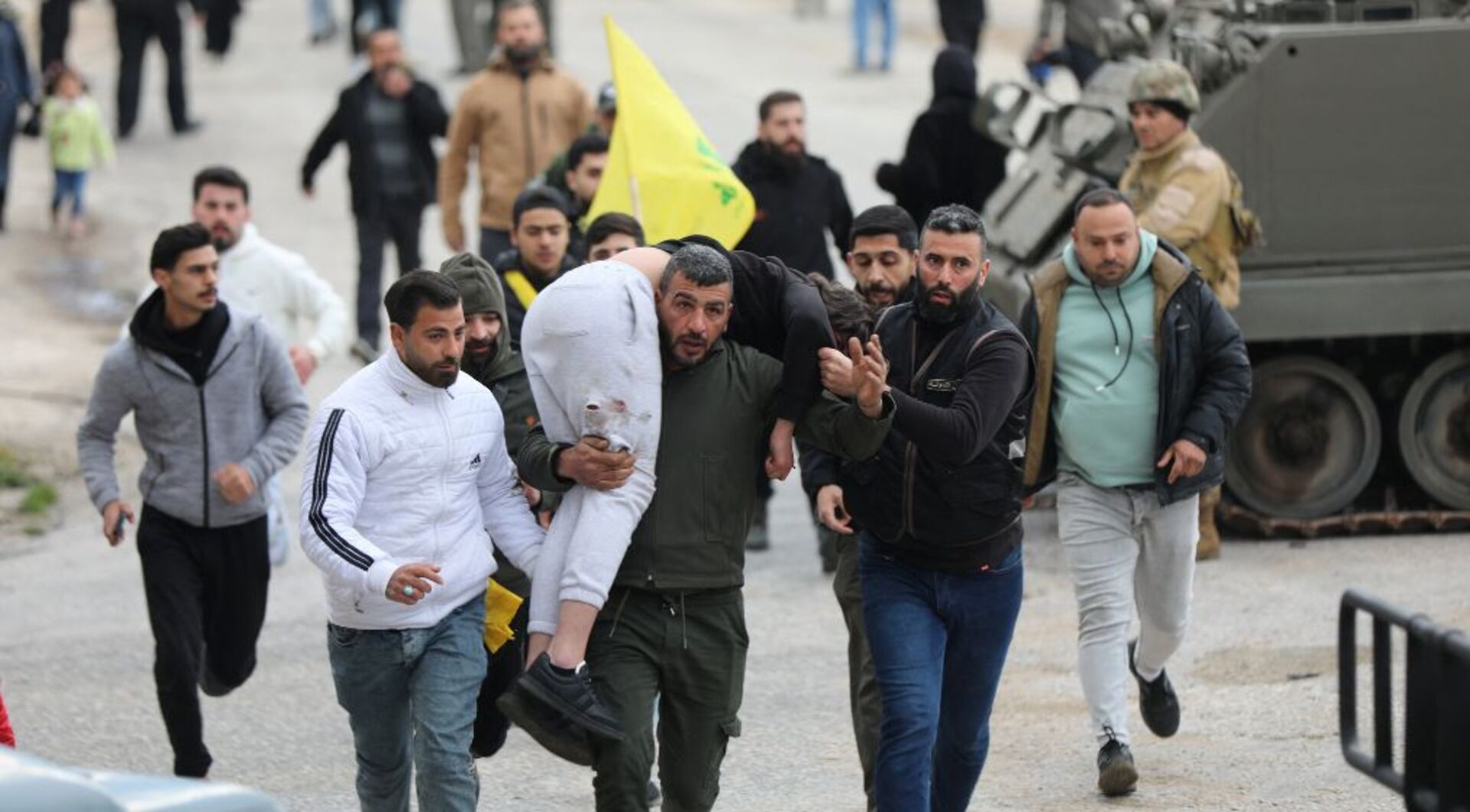
    Israeli fire injures civilians in southern Lebanon as forces miss ceasefire withdrawal deadline

    Israeli fire injures civilians in southern Lebanon as forces miss ceasefire withdrawal deadline

  • Next
    02:04
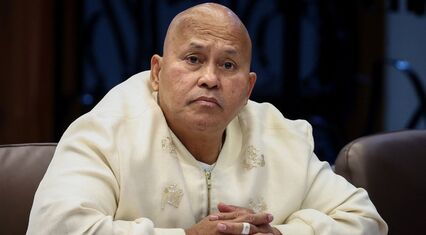
    Philippine senator flees ICC arrest over role in Duterte’s drug war

    Philippine senator flees ICC arrest over role in Duterte’s drug war


How many times has Israel violated the ceasefire agreement since November 27?

According to investigations by media organizations and think tanks, Israel has violated the ceasefire agreement hundreds of times.

Al Jazeera’s Sanad agency monitored the region and noticed that Israel did not withdraw troops during the period but used the truce to reinforce military positions seized during previous combat operations.

Sanad verified more than 30 videos and images of documented ground incursions and aerial attacks by Israel inside Lebanon during the ceasefire.

There have been at least 660 incidents, according to Anadolu Agency, while the Washington Institute for Near East Policy, a pro-Israel DC think tank, said Israel has committed at least 800 airspace violations since November 27.

The Israeli military also entered new areas it had been unable to penetrate before the ceasefire agreement and demolished numerous civilian homes. Sanad found that 4.5 square km (1.74 square miles) of land, primarily along frontline villages, were subject to demolishing and bulldozing by Israeli forces.

At least 90 people in Lebanon were killed by the Israeli military between the ceasefire and early December, according to Lebanon’s Health Ministry.

An Israeli soldier sits on top of a tank as it stands by near the Israel-Lebanon border in northern Israel, January 18, 2025. REUTERS/Avi Ohayon
An Israeli soldier sits on top of a tank as it stands by near the Israel-Lebanon border in northern Israel, January 18, 2025 [Avi Ohayon/Reuters]

What has Lebanon’s government said?

The country’s leaders have called for Israel to respect the terms of the agreement and for citizens to trust in the Lebanese Army.

Lebanese President Joseph Aoun, who is himself from southern Lebanon, sent a message to the residents of the area urging them to trust the army and to remain calm.

“Lebanon’s sovereignty and territorial unity are non-negotiable, and I am following this issue at the highest levels to ensure your rights and dignity,” he said in a statement.

These sentiments were echoed by Lebanon’s Prime Minister Nawaf Salam, who said he has full confidence in the LAF to protect Lebanon’s sovereignty and return residents to the south. Parliament Speaker Nabih Berri, also from southern Lebanon, called on the international community to pressure Israel to withdraw from occupied Lebanese territory.

Hezbollah has not put out a public statement, but Hassan Fadlallah, a parliamentarian linked to the group, appeared on local television station Al-Jadeed to praise people pushing into their southern villages. Hezbollah has so far not presented a military response.

Due to the cutting of its supply lines in Syria with the fall of the al-Assad regime, “Hezbollah’s military capabilities and regional influence have been diminished, leaving it more vulnerable to Israeli demands,” Imad Salamey, a political scientist at the Lebanese American University in Beirut, said.

Nawaf Salam shakes hands with Joseph Aoun
Lebanese Prime Minister-designate Nawaf Salam shakes hands with Lebanese President Joseph Aoun at the presidential palace in Baabda [Reuters]

What has been the international reaction?

On January 25, French President Emmanuel Macron spoke to his Lebanese counterpart, Joseph Aoun, and stressed the need for Israel to abide by the ceasefire agreement’s terms of withdrawal.

The UN’s special coordinator for Lebanon, Jeanine Hennis-Passchaert, and UNIFIL’s head of mission, Aroldo Lazaro, released a joint statement saying the “timelines envisaged in the November Understanding have not been met” and urged displaced communities to “exercise caution”.

During a visit a week earlier, UN Secretary-General Antonio Guterres emphasised the need for Israel’s military to withdraw.

United Nations Secretary-General Antonio Guterres meets with Lebanese President Joseph Aoun at the presidential palace, in Baabda, Lebanon January 18, 2025. REUTERS/Mohamed Azakir REFILE-QUALITY REPEAT
United Nations Secretary-General Antonio Guterres meets with Lebanese President Joseph Aoun at the presidential palace [Mohamed Azakir/Reuters]

Have Lebanese civilians been allowed to return to the region?

Thousands of Lebanese have returned to their homes in the south since November 27. In the hours after the ceasefire came into effect, tens of thousands of people headed south and visited their lands and homes.

However, an Israeli military spokesman declared a no-go zone across many villages in southern Lebanon. He warned against the return to prominent villages such as Shebaa, al-Habbariyeh, Marjayoun, Arnoun, Yohmor, Qantara, Chaqra, Braachit, Yatar, and al-Mansouri due to them being declared “restricted zones”.

On Saturday, the day before the ceasefire was to conclude, messages circulated amongst southerners who called for groups of people to gather near villages on Sunday morning and march towards them.

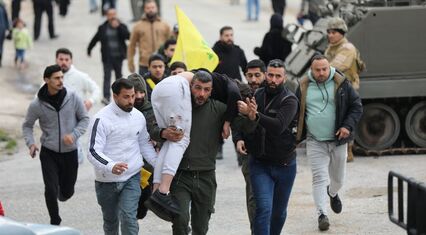
A member of Lebanon’s civil defence forces stationed near the southern town of Meiss el-Jabal told Al Jazeera early Sunday that Israeli tanks were still blocking the road and people were not being allowed through.

Israel, which claimed Hezbollah was behind the groups of residents assembling, opened fire on people moving towards their villages, though some villagers were able to push into their towns and were followed by the LAF.

2:41
Lebanon ceasefire: Israeli military withdrawal delayed

What will happen next?

The Lebanese Army has constructed checkpoints at many points near southern villages to try and manage the situation. The Army also entered certain villages, as did some villagers.

Videos on social media circulated of residents standing face to face with Israeli tanks or soldiers in some areas, while in others, they were filmed fleeing as gunfire was heard in the background.

Some villagers have been seen waving Hezbollah, or their ally Amal, flags and others carried images of the late Hezbollah Secretary-General Hassan Nasrallah.

As for Israel, Salamey, the political scientist, says its decision not to leave represents its long-term strategy to reshape the political and military landscape of Lebanon so as to “neutralise any threats emanating from a post-Syria Hezbollah”.

“This reflects a broader vision of ensuring Israel’s security and influence in the region while preventing Hezbollah from regaining its former strength,” he said.


Sen. Booker: Iran war has been a 'global economic shock' with 'no off-ramp'


Sen. Booker: Iran war has been a 'global economic shock' with 'no off-ramp'


As Republicans carve up Black districts, Democrats pivot to a new midterm message

As Republicans carve up Black districts, Democrats pivot to a new midterm message

https://www.politico.com/news/2026/05/12/republicans-redistricting-democrats-black-hispanic-districts-midterm-message-00915565 


As Republicans carve up Black districts, Democrats pivot to a new midterm message

Democrats will be unable to respond to the GOP’s redistricting gains before the November elections, and are now turning the mapmaking fight into a political messaging battle.

House Minority Leader Hakeem Jeffries and members of the Congressional Black Caucus speak to reporters

House Minority Leader Hakeem Jeffries, D-N.Y., and members of the Congressional Black Caucus speak in the wake of the Supreme Court ruling to strike down a majority Black congressional district in Louisiana, at the Capitol in Washington, on April 29, 2026. | J. Scott Applewhite/AP

By Andrew Howard05/12/2026 04:40 AM EDTUpdated: 


Democrats are changing their redistricting strategy — again.

Just two weeks after House Minority Leader Hakeem Jeffries promised to invoke “maximum warfare, everywhere, all the time,” his side has been forced to shift drastically into a defensive posture thanks to a pair of court rulings that moved the House map toward the GOP.

Now, with little to no chances left to redistrict ahead of November to counter GOP gains of 10 favorable House seats or more, Democrats are stuck doing something they know all too well: blaming President Donald Trump, and hoping it will spur voters to turn out for them in the midterms.

In statements and interviews since Virginia’s Supreme Court struck down state Democrats’ new congressional map and the high court narrowed the Voting Rights Act, the party is arguing that Republicans’ aggressive moves to dismantle Black- and Hispanic-majority districts in the South will outrage voters of color and spur them to the polls in record numbers.

“Given the highly unfavorable political environment confronting House Republicans, the extremists will not meaningfully benefit from their scandalous gerrymandering scheme,” Jeffries said in a Monday “Dear Colleague” letter. “Quite the opposite. Democratic enthusiasm and resolve have grown more intense.”

Democrats are looking to turn that argument into a political silver lining. The Democratic Congressional Campaign Committee has begun recruiting candidates to run in Southern states where GOP lawmakers are mulling redraws — like South Carolina, where the party is betting Republicans will miscalculate and accidentally create a new battleground seat, according to one person familiar with the effort granted anonymity to discuss it.

There are also numerous districts on the DCCC’s list of battleground seats where Black voters — who are being targeted by the Southern redraws — make up significant shares of the population and could be motivated to vote by what Democrats see as attempts to suppress the community’s sway.

“Democrats are gonna be able to go into African American communities and say, ‘Republicans are doing everything they can to take away your political power,’” said Democratic strategist Ian Russell, who served as the DCCC political director in 2014 and 2016 and still works on House races across the country. “That’s a really salient message.”

But Democrats are inarguably on worse footing in their bid to retake the House than they were less than one year ago. Republicans have drawn maps across the country, starting in Texas, in hopes of shoring up their majority.

Democrats have had some wins: California Gov. Gavin Newsom backed a measure in his state last year that gave Democrats an edge in five more seats, countering Texas. But the courtroom loss in Virginia was big, and it came after Democratic-aligned groups spent more than $60 million convincing voters to back the state’s redistricting effort.

Republicans are celebrating the redistricting push that once looked unlikely to create gains for the party.

“Two weeks ago people were dooming and asking wAs rEdIsTrIcTiNg wOrTh iT?” James Blair, a top political lieutenant for President Donald Trump who hatched the redistricting plan, wrote on X over the weekend. “…16 net seat swing to GOP…”

The party is still hoping for some legal victories. Virginia Democrats filed an emergency appeal with the U.S. Supreme Court on Monday, asking justices to issue a temporary stay on the state court’s decision. And Jeffries laid out other legal challenges in Missouri, Florida and Wisconsin in his “Dear Colleague” letter, something National Democratic Redistricting Committee President John Bisognano pointed to in an interview.

“I’m not ready to call 2026 completely closed yet,” Bisognano said. “But I recognize it’s obviously late in the year.”

On Saturday, Jeffries huddled by phone with the Virginia Democratic delegation to weigh next steps, according to one person briefed on the call and granted anonymity to discuss it. One theory floated on the call — though not taken too seriously — was lowering the forced retirement age of the Virginia Supreme Court in order to replace those judges and get a new ruling, the person said. But Virginia Gov. Abigail Spanberger and other top state Democrats have already rebuffed the idea.

The consensus among lawmakers on the call was to focus their resources on two GOP-held districts in the state that are already in play. Virginia GOP Reps. Jen Kiggans and Rob Wittman were already top targets for Democrats this cycle.

But that decision makes one thing clear. Democrats’ redistricting fight — at least in 2026 — will be played out in a political messaging war and not through mapmaking itself.

There’s also a growing blame game about failed efforts to redistrict in Illinois and Maryland, including frustration with Democratic Maryland Senate President Bill Ferguson and Illinois Democratic Gov. JB Pritzker, according to two national Democrats, who were granted anonymity to discuss internal conversations.

The party was unable to roll Ferguson in order to pass a new map, despite Gov. Wes Moore’s lobbying and pressure from other Democratic groups. In Illinois, one national Democratic operative was frustrated that Pritzker tied his state’s redistricting fight to Indiana, given the already-clear reality at the time that other GOP states — like Florida — would eventually move forward with redraws.

“Maryland could still take action,” Bisognano said. “People in the state could take action if they found the will — and so far they have not.”

But that move is still unlikely, and for now, Democrats are stuck placing the blame on Republicans and hoping it lands.

“The American people see that Republicans have been trying to rig the system because they know they are losing across the country,” DCCC Chair Suzan DelBene said in a Monday podcast appearance. “Instead of listening and actually sitting down with people across the country and understanding the struggles they’re facing … [Republicans] decided the only way that they can stay in power is to break the system.”

CORRECTION:A previous version of this article misspelled John Bisognano's name.